Key Takeaways
- Check responsiveness and breathing immediately when someone faints
- Help the person lie flat and raise their legs about 30 centimetres above heart level
- Call emergency services (112 in India) if the person does not recover within one to two minutes
- Never give food or water to an unconscious person
- If the person is breathing but remains unresponsive, place them in the recovery position if there are no signs of injury
- Encourage the person to see a doctor after any fainting episode to identify potential causes
Knowing first aid for fainting can help you respond calmly and effectively when someone suddenly collapses. Fainting, also known as syncope, occurs when blood flow to the brain temporarily decreases, causing a brief loss of consciousness[1]. While most fainting episodes resolve quickly on their own, some may indicate a serious underlying condition[2]. This article provides bystander first aid guidance for helping someone who has fainted. It does not replace professional medical evaluation or hands-on first-aid training. Understanding these steps can help you act confidently until the person recovers or emergency help arrives.
What to do when someone faints: first aid steps
When someone faints or appears to be fainting, quick action can help prevent injury and support recovery. Start by lowering the person to the ground or another flat surface while keeping them lying flat on their back. Once they are safely positioned, check for breathing and look for any injuries[3]. If the person fell, inspect for bumps, cuts, or signs of head trauma. Stay with them and monitor their condition until they regain consciousness or emergency help arrives.
Proper first-aid training provides hands-on practice for these skills.
Is fainting an emergency? When to call for help
Most fainting episodes are brief and harmless, but certain situations require emergency medical attention. Call 112 (India's emergency number) or your local emergency services if the person who fainted[4]:
- Fell from a height or sustained visible injuries
- Does not become alert within 1-2 minutes
- Is pregnant
- Is over 50 years old
- Has diabetes
- Experiences chest pain, pressure, or discomfort
Cardiac syncope, which is fainting caused by heart problems, accounts for approximately 15% of syncopal events but can carry a significantly higher risk[5]. This type of fainting requires immediate medical evaluation to rule out potentially life-threatening heart conditions.
If you are unsure whether the situation is an emergency, it is safer to call for help.
How to give first aid for fainting
Providing first aid for a fainted person involves a systematic approach to ensure their safety and recovery.
Check if the person is responsive
If someone is awake but appears drowsy or confused, ask a few simple questions, such as “What is your name?”, “What is the date?”, or "How old are you?"[6]. Call or ask someone nearby to call emergency services immediately if there is no response.
Check their breathing
Check that the person’s airway is clear and look for signs of breathing. Loosen any tight clothing or belts and keep them lying down for 10–15 minutes[2]. If they do not regain consciousness within one minute, call emergency services[3].
Help the person lie down safely
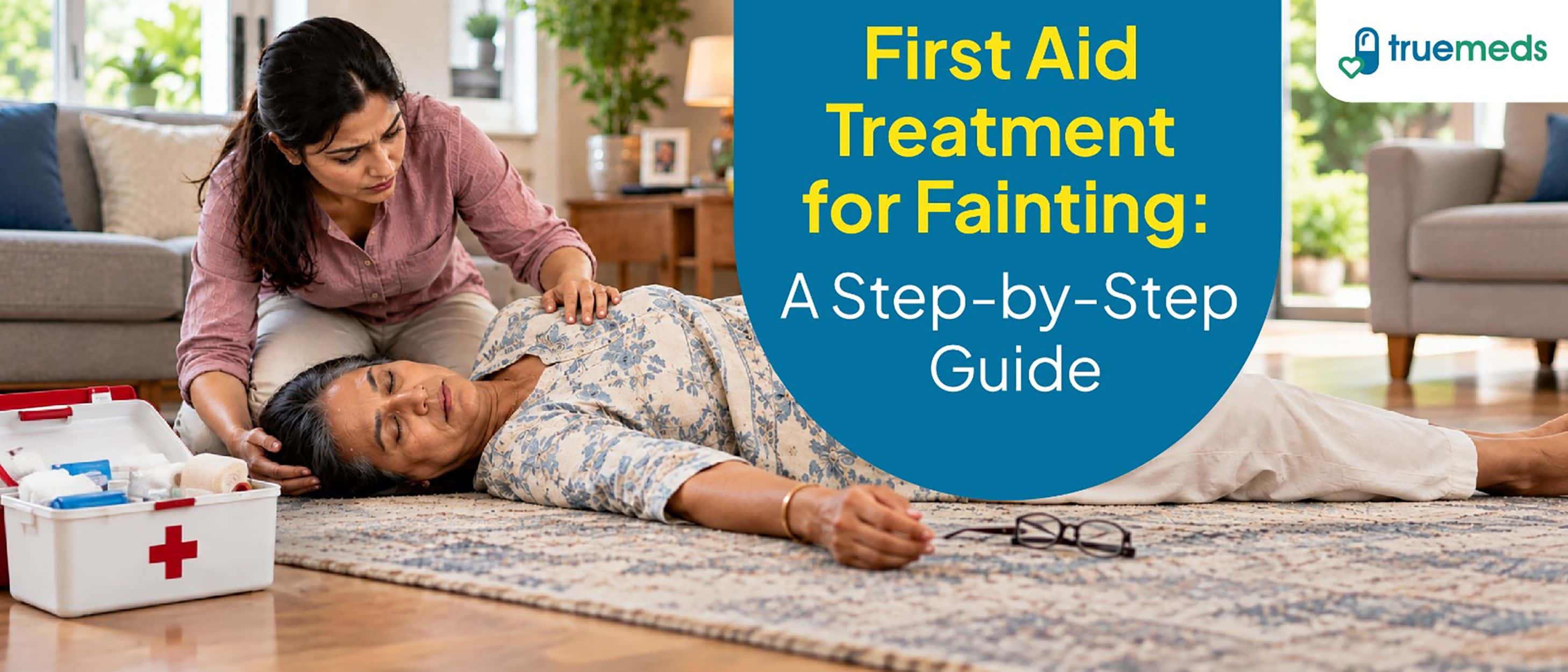
If the person has not already fallen, help them lie flat on their back on a safe surface. Raise their feet about 30 centimetres (12 inches) above heart level to help restore blood flow to the brain[4]. Loosen any tight clothing around their neck and waist.
Check for injuries
Examine the person for any injuries that may have occurred during the fall. Look for signs of head injury. If you suspect a spinal injury, avoid moving the person unless absolutely necessary, and wait for emergency medical services to arrive[6].
Monitor them until they recover or help arrives
Keep the person lying down for at least 10 to 15 minutes after they regain consciousness, preferably in a cool, quiet space[4]. This rest period helps prevent another fainting episode. Continue monitoring their breathing and alertness throughout.
What causes fainting?
Fainting occurs when blood flow to the brain drops suddenly, causing temporary loss of consciousness[1]. The most common type is vasovagal syncope, also called reflex syncope, which happens when the body's automatic blood pressure regulation fails temporarily[7]. This can be triggered by dehydration, low blood sugar, and temporary drops in blood pressure[6].
Some fainting episodes may signal more serious conditions, including cardiac, pulmonary or neurological disorders[5].
What NOT to do when someone faints
Certain actions can harm rather than help a person who has fainted. Avoid these mistakes [6]:
- Do not give anything to eat or drink
- Do not try to wake them by shaking vigorously or slapping their face
- Do not prop them up in a sitting position
- Do not splash cold water on their face
- Do not leave them alone while unconscious
First aid for a fainted person after they wake up
Once the person regains consciousness, reassure them and help them to sit up slowly over several minutes[8]. Rushing to stand can trigger another fainting episode. Offer small sips of water only when they are fully alert and able to swallow safely.
Encourage them to rest in a comfortable position until they feel steady. If they feel faint again, have them lie back down immediately with their legs elevated.
When should someone see a doctor after fainting?
Fainting should always prompt a medical evaluation, even if the person recovers quickly. Seeing a healthcare provider is important to identify the cause and rule out serious conditions.
Seek medical attention, particularly if the person has fallen from a height; is pregnant; has a chronic medical condition such as diabetes; experiences vision problems or loss of speech; is unable to move one or more limbs; or loses bladder or bowel control[4].
Cardiac syncope can indicate serious heart conditions such as abnormal heart rhythms[9].
Do not delay seeking medical advice after a fainting episode, especially if warning signs are present.
FAQs
How do you give first aid for fainting?
Help the person lie flat on their back and raise their legs about 30 centimetres above heart level. Check their breathing and loosen tight clothing. Call emergency services if they do not recover within one to two minutes or show signs of injury.
Should I give a fainted person water when they wake up?
Only offer water when the person is fully alert and able to swallow safely. Never give food or water to someone who is still unconscious or drowsy, as this creates a choking risk.
What if the person doesn't wake up after fainting?
Call emergency services immediately if someone remains unconscious for more than one to two minutes. Continue monitoring their breathing and keep their airway clear. Stay with them until help arrives.
Should I elevate the person's legs after they faint?
Yes, raising the legs about 30 centimetres above heart level may help improve blood flow to the brain. However, avoid leg elevation if you suspect the person has a leg injury, spinal injury, or difficulty breathing.
Can fainting be a sign of a serious heart problem?
Yes, cardiac syncope accounts for about 15% of syncopal events and may indicate a serious heart condition. Warning signs include chest pain, fainting during exercise, or sudden heart rate changes. Seek immediate medical attention for these symptoms.
What if the person starts vomiting while unconscious?
Turn the person on their side to prevent choking. This position, called the recovery position, helps keep the airway clear by allowing fluids to drain from the mouth rather than blocking breathing.
Medical Disclaimer
This article is for informational purposes only and does not constitute medical advice. The information provided should not be used for diagnosing or treating health conditions. Always consult a qualified healthcare provider for diagnosis, treatment, and personalised medical advice. Do not disregard professional medical advice or delay seeking it because of information found in this article. If you have a medical emergency, contact your doctor or emergency services immediately.
References
American Red Cross. (n.d.). Fainting: Symptoms, causes, and treatment. American Red Cross. https://www.redcross.org/take-a-class/resources/learn-first-aid/fainting
MedlinePlus. (n.d.). Fainting. National Library of Medicine. https://medlineplus.gov/fainting.html
American College of Emergency Physicians. (n.d.). Fainting — Know when to go to the ER. American College of Emergency Physicians. https://www.emergencyphysicians.org/article/know-when-to-go/fainting
MedlinePlus. (2025). Fainting. National Library of Medicine. https://medlineplus.gov/ency/article/003092.htm