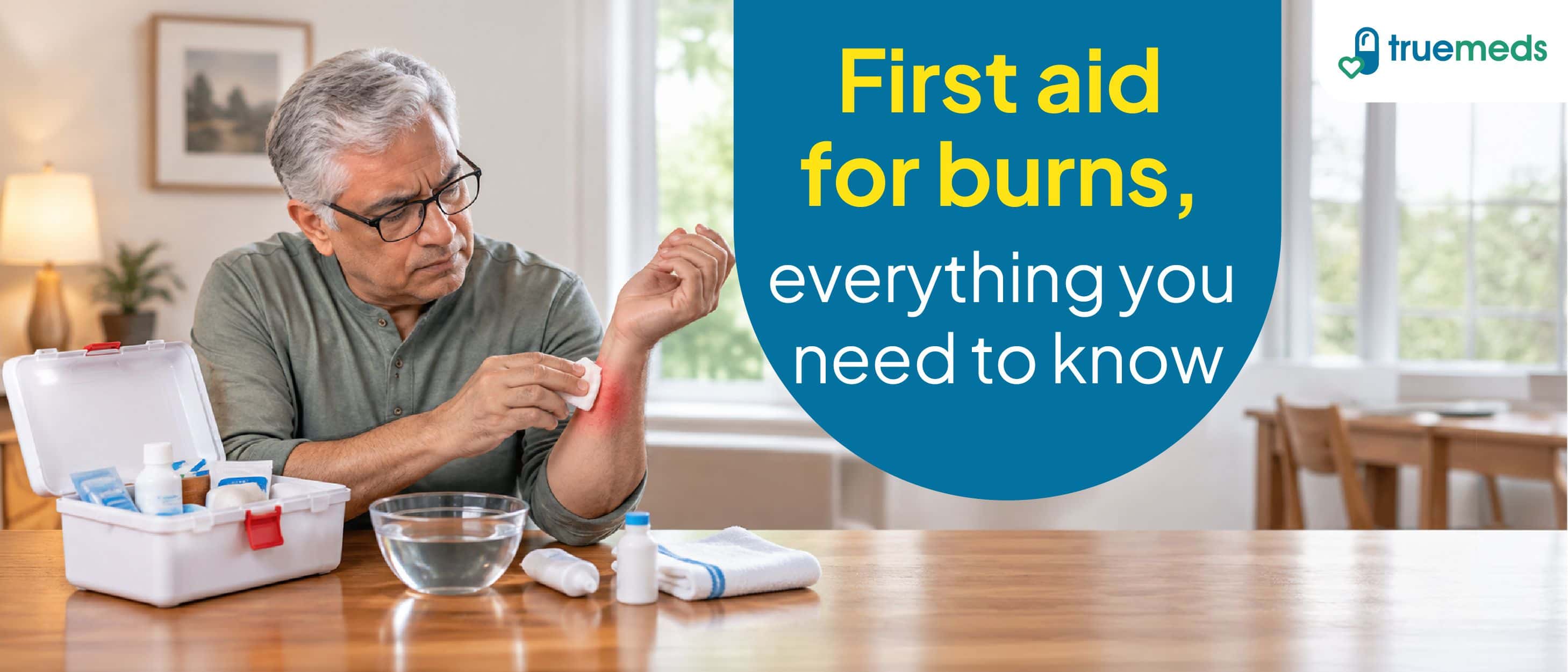
Knowing first aid for burns can make a significant difference in how well a burn injury heals. Burns are a global public health concern, accounting for an estimated 180,000 deaths annually, with the majority occurring in low- and middle-income countries. In India alone, over one million people experience moderate to severe burns every year[1]. Acting quickly with the correct first aid techniques can help limit skin damage, reduce pain, and prevent complications. This guide covers everything you need to know about treating burns safely and effectively.
Key Takeaways
- Cool burns immediately under running water for 20 minutes; never use ice
- Remove jewellery and loose clothing but leave anything stuck to the burn
- Do not apply home remedies like turmeric, oil, or butter to burns
- First-degree burns may be treated at home; deeper burns need medical attention
- Keep healing burns clean and protected; change dressings regularly
- Seek emergency care for burns on the face, hands, feet, or genitals, and for all electrical and chemical burns
- Minor burns typically heal within 14 days with proper care
- Watch for signs of infection: increasing pain, spreading redness, or pus
Quick burn first aid checklist
When a burn occurs, follow these essential steps immediately [2]:
- Move away from the heat source
- Cool the burn under running water for 20 minutes
- Remove jewellery and loose clothing near the area
- Cover with a clean, non-fluffy dressing
- Seek medical help if needed
Burned yourself? Here's what to do immediately
Burns and scalds require first aid as soon as possible to limit skin damage[2]. You can perform first aid for burns on yourself or someone else by following these steps.
Get away from the source of the burn
First, remove yourself or the injured person from the heat source. This prevents further injury and allows you to assess the situation safely.
Cool the burn the right way
Cool the burn with cold running water for 20 minutes as soon as possible after the injury. This is the most important step in burn first aid. Never use ice, iced water, or very cold water, as these can cause additional skin damage[2].
Remove jewellery, watches, and tight clothing
Remove any clothing or jewellery near the affected area. However, do not remove anything that is stuck to the burnt skin, as this can cause further injury[3].
Protect the burned area
After cooling, cover the burn with cling film to help reduce pain and protect the area. Avoid wrapping the burn too tightly[3].
Stay calm and assess the situation
Once immediate first aid is complete, evaluate whether the burn requires professional medical attention based on its size, depth, and location[3].
What degree is your burn?
Understanding burn severity helps you decide whether home care is sufficient or medical attention is necessary.
Understanding first, second, and third-degree burns
Burns are classified by how deeply they damage the skin[4]:
| Burn Type | Layers Affected | Characteristics |
|---|---|---|
| First-degree (superficial) | Epidermis only | Warm, painful, red, soft, blanches when touched, no blisters[4] |
| Second-degree (partial thickness) | Epidermis and part of dermis | Blisters, pain, redness, and swelling[5] |
| Third-degree (full thickness) | Epidermis and dermis, extending into deeper tissue | White or charred appearance, may be painless due to nerve damage[5] |
Signs of a minor burn
Minor burns typically involve small areas of first-degree damage. They appear red, feel painful, and do not usually blister[4].
Signs the burn may be more severe
Burns that develop blisters, appear red, or have white, charred, or leathery skin, or cause unusual numbness or painless areas, may indicate deeper tissue damage[5].
When a burn needs emergency attention
Seek emergency care for burns involving the face, hands, feet, genitals, or major joints. Third-degree burns, electrical burns, chemical burns, and burns with inhalation injury always require immediate professional treatment[6].
Read about - First Aid Kit Items List: A Complete Guide for Home, Travel and Workplace
Does the cause of the burn change the first aid steps?
While basic cooling principles apply to most burns, certain types require specific approaches.
Burns from hot liquids and steam
Scalds from hot water, tea, or steam should be cooled immediately under running water for 20 minutes[2]. Remove wet clothing carefully unless it is stuck to the skin.
Burns from hot objects
Contact burns from hot pans, irons, or other objects follow standard cooling procedures. The burn pattern may be clearly defined based on the shape of the object.
Burns caused by fire
For flame burns, ensure the fire is extinguished first. If clothing is on fire, stop, drop, and roll. Then cool the burn with water as usual[2].
Chemical burns
Most chemical burns require rinsing with a large amount of room-temperature water for at least 20 minutes. Do not use a hard spray of water, as this can damage the burnt area[7].
Certain chemicals, particularly dry powder chemicals, may require brushing off before rinsing. Always check the product label and contact poison control if unsure. Seek medical attention for all chemical burns.
Electrical burns
Electrical burns, including lightning injuries, require transfer to a specialised burn centre[6]. These injuries can cause internal damage not visible on the surface.
All electrical burns need medical evaluation regardless of how minor they appear externally. Do not touch the person if they are still in contact with the electrical source.
What should you never do after a burn?
Certain common practices can actually worsen burn injuries and delay healing.
Never apply ice to a burn
Never apply ice to a burn, as it can deepen the injury by causing frostbite to already damaged tissue[1]. Use cool running water instead, which provides gentle, safe cooling.
Never use home remedies on a burn
Do not apply paste, oil, turmeric (haldi), or raw cotton to the burn[1]. These home remedies can increase infection risk and make it difficult for healthcare providers to assess the wound.
Never open blisters yourself
Do not open blisters until topical antimicrobials can be applied by a healthcare professional [1]. Intact blisters protect the underlying tissue from infection.
Never cool the burn for too long
Avoid prolonged cooling with water beyond 20 minutes, as this may lead to hypothermia [1]. Also avoid tight bandages that restrict blood flow to the healing area.
Can you treat the burn at home?
Not all burns require hospital treatment, but knowing the difference is essential.
Situations where home care may be enough
Most small burns can be treated at home with basic first aid. This typically includes first-degree burns or minor second-degree burns without blistering. For minor burns, cool the area with running water, avoid using ice, and cover the burn loosely with sterile gauze or a clean cloth[8].
Basic supplies that can help
Keep these items available for home burn treatment[2],[3]:
- Clean, non-stick dressings
- Cling film for temporary covering
- Over-the-counter pain relief (paracetamol or ibuprofen)
- Sterile gauze for dressing changes
Always consult a healthcare provider before using any medications.
When home treatment is not appropriate
Seek professional care for burns covering large areas, deep burns, burns on sensitive body parts, chemical or electrical burns, or burns in children and elderly individuals[6].
How to care for a burn over the next few days
Proper aftercare supports healing and helps prevent complications.
Keeping the area clean
While the skin heals, keep the area clean and do not apply any creams or greasy substances [2]. Gentle cleaning with water is sufficient for most minor burns.
Changing dressings safely
Healthcare professionals typically check dressings after 24 hours to monitor for infection signs. Dressings are usually changed after 48 hours and then every 3 to 5 days until healing is complete[2].
Managing pain and discomfort
Over-the-counter pain medications can help manage discomfort during healing. Consult your doctor or pharmacist for appropriate pain management options.
Protecting the healing skin
Keep the burnt area protected from direct sunlight and avoid activities that might irritate or re-injure the healing tissue[2].
Is your burn healing as expected?
Understanding normal healing helps you recognise when something may be wrong.
What normal healing looks like
Minor burns normally heal in around 14 days and leave little scarring[2]. The skin may appear pink or lighter than surrounding tissue during healing.
Signs of infection to watch for
Watch for increasing pain after 2 to 3 days, spreading redness around the burn, pus or discharge, fever, or a wound that is not improving. These may indicate infection requiring medical attention.
When recovery is taking longer than expected
Burns that remain unhealed after 2 to 3 weeks may require additional treatment, including possible skin grafting[9]. Consult a healthcare provider if healing seems delayed.
Will the burn leave a scar?
Scarring depends on several factors, including burn depth and how well the wound heals.
Factors that influence scarring
Optimal management of the burn wound can minimise scarring[9]. Deeper burns, delayed healing, infection, and improper wound care increase scarring risk.
Caring for new skin during recovery
Keep healing skin moisturised and protected from sun exposure[2]. New skin is delicate and more susceptible to damage.
When to seek advice about scar management
For burns that remain open longer than 2 to 3 weeks, grafting should be considered to reduce hypertrophic scarring risk[9]. Speak with a healthcare provider about scar management options for significant burns.
When should you contact a doctor?
Recognising when professional help is needed can prevent complications.
Symptoms that need medical review
Seek medical attention for burns with signs of infection, burns that are not healing as expected, severe pain that is not controlled with over-the-counter medications, or any concerns about the healing process.
Burns on sensitive areas of the body
Burns on the face, hands, feet, genitals, perineum, or major joints require burn centre evaluation[6]. These areas have specialised functions that require expert care.
Special considerations for children and older adults
Burns in young children and elderly individuals may require lower thresholds for medical attention[6]. Their skin may be more delicate, and complications can develop more quickly.
Getting emergency help in India
India's National Program for Prevention and Management of Trauma and Burn Injuries aims to reduce burn-related mortality and raise awareness about prevention and first aid[10]. Contact your nearest government hospital or call emergency services for severe burns.
FAQs
How long should I cool a burn with water?
Hold the burn or scald under cool running water for 20 minutes as soon as possible, ideally within 3 hours of the injury. If running water is unavailable, use cool bottled water or a wet towel instead.
Do burns heal better wet or dry?
Burns generally should be kept clean and covered. Cover with a clean, non-stick dressing to protect the burn while it heals.
What helps a burn go away faster?
Proper cooling immediately after injury, keeping the area clean, appropriate dressings, and avoiding home remedies like turmeric or butter support faster healing.
Should I cover a burn or leave it uncovered?
Cover the burn with cling film or a clean, non-fluffy dressing. Do not wrap tightly. This protects against infection while allowing the wound to breathe.
Can I put antiseptic cream on a burn?
Avoid applying creams or greasy substances to fresh burns. Consult a healthcare provider before using any topical products on burn wounds.
How do I know if a burn is infected?
Signs of infection include increasing pain after 2 to 3 days, spreading redness, pus or discharge, fever, or a wound that is not improving. Seek medical attention if these occur.
Is it safe to pop a burn blister?
No. Do not pop burn blisters, as this increases infection risk. Intact blisters protect the underlying tissue while it heals.
How long does a minor burn take to heal?
Minor burns typically heal within about 14 days with proper care. Deeper burns take longer and may require professional treatment.
Can burns leave permanent scars?
Burns can leave scars, particularly deeper burns or those that become infected. Proper wound care and timely medical treatment help minimise scarring.
When should I go to the emergency room for a burn?
Seek emergency care for burns on the face, hands, feet, or genitals; electrical or chemical burns; or burns where smoke was inhaled.
Medical Disclaimer
This article is for informational purposes only and does not constitute medical advice. The information provided should not be used for diagnosing or treating health conditions. Always consult a qualified healthcare provider for diagnosis, treatment, and personalised medical advice. Do not disregard professional medical advice or delay seeking it because of information found in this article. If you have a medical emergency, contact your doctor or emergency services immediately.
References
World Health Organisation. (2023). Burns. World Health Organisation. https://www.who.int/news-room/fact-sheets/detail/burns
NHS Inform. (2026). Burns and scalds. NHS Inform. https://www.nhsinform.scot/illnesses-and-conditions/injuries/skin-injuries/burns-and-scalds/
National Health Service. (2026). Burns and scalds. NHS. https://www.nhs.uk/conditions/burns-and-scalds/
Schaefer, T. J., & Szymanski, K. D. (2023). Burn evaluation and management. In StatPearls. StatPearls Publishing. https://www.ncbi.nlm.nih.gov/books/NBK430741/