Key Takeaways
- Biotin is a B-vitamin involved in metabolism, and deficiency can cause hair loss alongside other symptoms
- Scientific evidence does not support biotin supplementation for hair growth in people without deficiency
- True biotin deficiency is rare in individuals eating a balanced diet
- Other nutritional deficiencies (iron, zinc, vitamin D) are more commonly linked to hair fall
- High-dose biotin can interfere with laboratory tests; inform your doctor before bloodwork
- A comprehensive approach addressing nutrition, lifestyle, and underlying conditions is more effective than biotin alone
- See a doctor for sudden hair loss, scalp symptoms, or progressive thinning
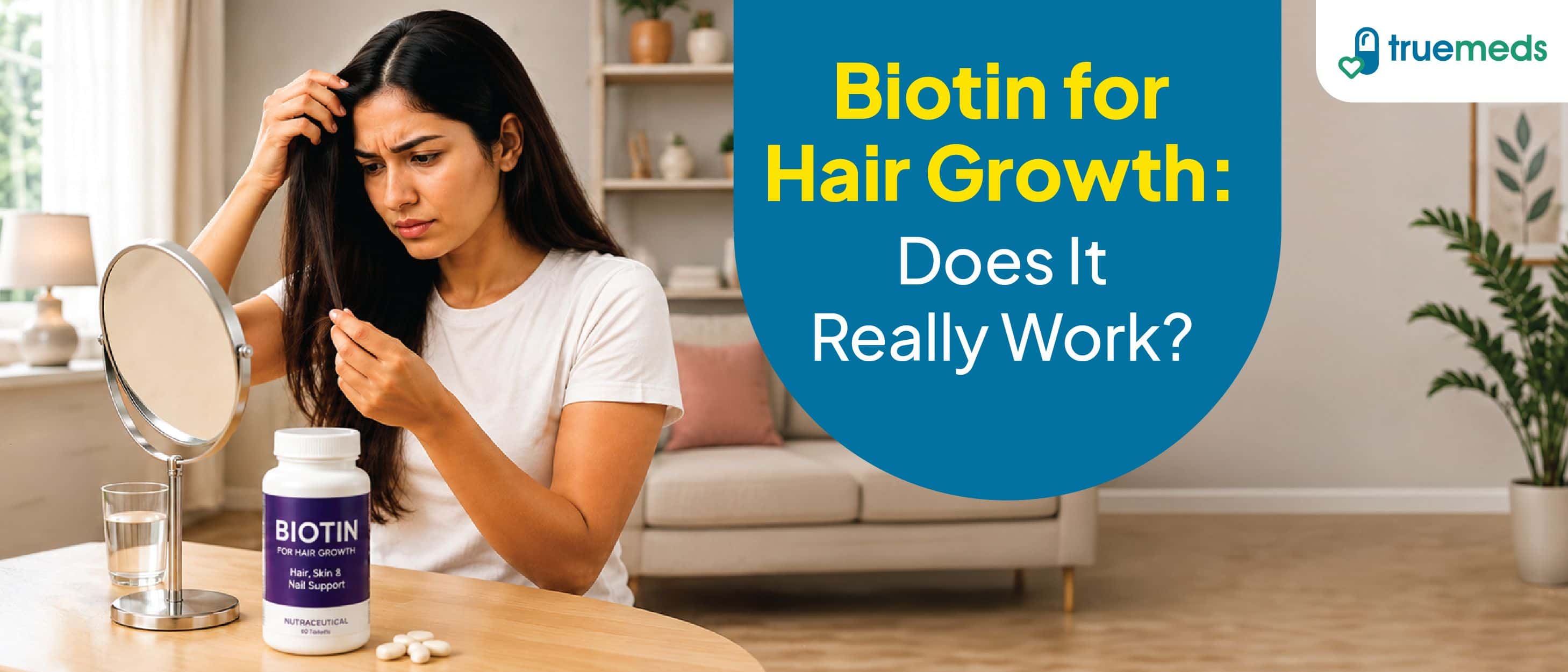
If you have been searching for solutions to hair fall, you have likely come across claims about biotin for hair growth. This B vitamin has become one of the most popular supplements marketed to improve hair health, with countless products promising thicker, stronger strands. However, the scientific reality may differ from marketing claims. Biotin helps convert carbohydrates, fats, and proteins into energy your body can use [1]. Understanding what research says about biotin and hair fall can help you decide whether supplementation is right for you.
What is biotin, and why is it linked to hair growth?
Biotin, also known as vitamin B7, is an essential nutrient that plays a key role in your body's metabolic processes [1]. Your body requires biotin to break down macronutrients and convert them into usable energy [2].
The connection between biotin and hair stems from its role in producing keratin, the protein that forms the structural foundation of hair, skin, and nails. When biotin levels are severely deficient, hair thinning and loss can occur [1]. This biological link has led to widespread marketing of biotin supplements for hair improvement, despite limited evidence supporting this use in people without deficiency.
Does biotin really help with hair growth?
Biotin may play a role in supporting healthy hair, but it’s important to understand what the research says about its effectiveness for hair growth.
What research says about biotin for hair growth
Despite biotin's popularity as a hair supplement, scientific evidence does not strongly support its effectiveness for people with normal biotin levels. Research reviews highlight a significant gap between public perception and actual scientific findings [3].
Current evidence suggests that biotin may benefit only specific populations: those with uncombable hair syndrome, biotinidase deficiency, documented insufficient biotin intake, or individuals taking certain medications that affect biotin levels. No high-quality studies have demonstrated that biotin supplementation improves hair growth in otherwise healthy individuals [3].
A systematic review found that biotin monotherapy did not show consistent benefits on objective hair growth outcomes in controlled studies. The review also noted that clinically meaningful biotin deficiency is uncommon in people consuming a balanced diet [4].
Consult your doctor before starting any supplement for hair concerns.
Can biotin help reduce hair fall?
The evidence for biotin reducing hair fall remains limited. To date, high-quality clinical evidence has not supported claims that biotin supplementation improves hair quality or quantity or reduces shedding in the general population [2]. The supplement may benefit people with biotin deficiency.
This means if your hair fall is caused by factors other than biotin deficiency, such as genetics, hormonal changes, stress, or other nutritional deficiencies, taking biotin supplements may not address the underlying cause [3].
How do you know if your hair fall could be related to low biotin?
Hair fall can have many possible causes, and knowing the signs of a biotin deficiency can help you understand whether low biotin may be a contributing factor.
Signs that may indicate a biotin deficiency
Biotin deficiency is rare, particularly in people eating varied diets. However, when it does occur, the following signs may appear [1, 2]:
- Thinning hair and loss of body hair
- A red, scaly rash around the eyes, nose, mouth, and anal area
- Brittle nails that break easily
- Neurological symptoms such as depression or fatigue
If you experience multiple symptoms, particularly the characteristic facial rash alongside hair changes, speak with your healthcare provider about whether you may need further evaluation for biotin deficiency.
Other common causes of hair fall
Most hair loss has causes unrelated to biotin deficiency. Common factors include:
- Telogen effluvium: Increased shedding triggered by stress, illness, or hormonal changes, causing temporary but often alarming hair loss [5]
- Androgenetic alopecia: Male or female pattern hair loss caused by genetic and hormonal factors, resulting in receding hairlines or thinning at the crown [5]
- Nutritional deficiencies: Inadequate levels of vitamin D, iron, zinc, and other B vitamins can contribute to hair problems [6]
- Medical conditions: Thyroid disorders, autoimmune conditions, and scalp infections can all trigger hair loss [5]
Should you take a biotin supplement for hair?
Before taking biotin for hair concerns, consider whether supplementation is necessary and when it may or may not be beneficial.
When a biotin supplement may be helpful
A biotin supplement for hair may be appropriate in specific circumstances:
- Confirmed biotin deficiency through medical testing [1]
- Genetic conditions affecting biotin metabolism, such as biotinidase deficiency [3]
- Taking medications known to reduce biotin levels, including certain anticonvulsants [2]
- Conditions causing malabsorption that may affect nutrient uptake [4]
Discuss any supplementation with a healthcare provider who can assess your individual situation.
When biotin may not be the right solution
Biotin supplementation is unlikely to help when the following are true:
- You consume a balanced diet providing adequate biotin [1]
- Your hair loss results from genetic factors like androgenetic alopecia [5]
- Other nutritional deficiencies, such as iron or vitamin D, are the underlying cause [6]
- Hormonal imbalances, stress, or medical conditions are responsible for your hair changes [5]
Research supports routine supplementation of only vitamin D, iron, and vitamin C (to enhance iron absorption) for hair growth and maintenance rather than biotin [6].
How long does biotin take to show results?
The available evidence on biotin and hair health comes from case reports in children with uncombable hair syndrome, a rare disorder of the hair shaft. In these cases, 300 mcg three times daily to 5,000 mcg daily significantly improved hair health after three to four months [3].
Are there any side effects of taking biotin?
Many biotin supplements marketed for hair and beauty contain 5,000 to 10,000 micrograms per serving, far exceeding the 30 micrograms daily adequate intake recommended for adults [7].
While biotin is generally considered safe and excess amounts are excreted through urine, high-dose supplementation carries an important risk: biotin can significantly interfere with certain laboratory tests. This interference may cause incorrect results that go undetected, potentially affecting tests for thyroid function, cardiac markers, breast cancer and fertility [8].
If you take biotin supplements, inform your healthcare provider before any blood tests. Depending on the dose and the specific laboratory test, your healthcare provider may advise you to stop biotin before testing.
What else can support healthy hair growth besides biotin?
Supporting healthy hair growth involves more than just biotin, with several nutrients and everyday lifestyle habits playing a role.
Nutrients important for hair health
Several nutrients play critical roles in hair growth and maintenance. Deficiencies in these may increase hair loss risk [9]:
- Iron: Essential for oxygen delivery to hair follicles
- Vitamin D: Supports hair follicle cycling
- Zinc: Important for tissue growth and repair
- B vitamins: Support overall cellular metabolism
- Protein: Provides amino acids needed for keratin production
Lifestyle habits that affect hair growth
Beyond nutrition, these factors influence hair health [10]:
- Managing stress: Chronic stress can trigger telogen effluvium
- Adequate sleep: Supports overall cellular repair and hormone regulation
- Gentle hair care: Avoiding excessive heat, tight hairstyles, and harsh chemicals reduces mechanical damage
- Regular scalp care: Keeping the scalp clean and healthy supports follicle function
When should you see a doctor about hair fall?
Certain signs indicate the need for professional evaluation rather than self-treatment with supplements [11]:
- Sudden, severe shedding that differs from your normal hair loss
- Bald patches appearing on the scalp or elsewhere on the body
- Scalp tenderness, itching, or burning sensations
- Visible skin changes such as redness, scaling, sores, or pus
- Hair loss that occurs with other signs of an underlying medical problem
A dermatologist can identify the underlying cause through history, scalp examination, and, when needed, blood tests or biopsy, and then recommend evidence-based treatment instead of trial-and-error supplementation.
FAQs
Does biotin really help hair growth?
Biotin may help hair growth only if you have a genuine biotin deficiency. For most people with adequate biotin levels, supplementation is unlikely to improve hair growth. Scientific research does not support biotin's effectiveness for non-deficient individuals.
Is biotin effective for hair fall?
Biotin can reduce hair fall only when hair loss is caused by biotin deficiency. Since deficiency is rare in people eating balanced diets, biotin is often not the solution for common causes of hair fall, such as hormonal changes or other nutritional deficiencies.
Why is my hair falling out after taking biotin?
If your hair continues falling after taking biotin, the cause is likely unrelated to biotin deficiency. Consider other factors such as iron deficiency, hormonal imbalances, stress, or genetic conditions. Consult a healthcare provider for proper evaluation.
Who should take a biotin supplement for hair?
Biotin supplements may benefit individuals with confirmed deficiency or those at risk, including people on prolonged antibiotics, certain anticonvulsants, or with specific genetic conditions. Most healthy individuals do not require supplementation.
What happens if I take biotin every day?
Daily biotin is generally safe but may interfere with laboratory tests at high doses. Always inform your doctor about biotin use before blood tests, particularly cardiac tests. Most people get sufficient biotin from food.
Can biotin help with thinning hair?
Biotin can help with thinning hair only if it is caused by biotin deficiency. For thinning related to genetics, hormones, or other deficiencies, biotin alone is unlikely to help. A comprehensive evaluation can identify the actual cause.
What causes hair fall besides biotin deficiency?
Common causes include iron deficiency, vitamin D deficiency, zinc deficiency, hormonal imbalances, stress, genetic factors, and underlying medical conditions. These factors are more frequently responsible for hair fall than biotin deficiency.
Which foods are rich in biotin?
Good biotin sources include egg yolks, liver, yeast, nuts, seeds, salmon, avocados, and sweet potatoes. Most adults obtain adequate biotin from a balanced diet, which generally meets their requirements.
When should I see a doctor for hair fall?
Seek medical attention for sudden or patchy hair loss, scalp symptoms like itching or redness, progressive thinning, or hair loss accompanied by other symptoms. Early evaluation prevents potential permanent damage.
Medical Disclaimer
This article is for informational purposes only and does not constitute medical advice. The information provided should not be used for diagnosing or treating health conditions. Always consult a qualified healthcare provider for diagnosis, treatment, and personalised medical advice. Do not disregard professional medical advice or delay seeking it because of information found in this article. If you have a medical emergency, contact your doctor or emergency services immediately.
References
National Institutes of Health Office of Dietary Supplements. (2021). Biotin: Fact sheet for consumers. NIH. https://ods.od.nih.gov/factsheets/Biotin-Consumer/
Bistas, K. G., & Tadi, P. (2023). Biotin. StatPearls. NCBI Bookshelf. https://www.ncbi.nlm.nih.gov/books/NBK554493/
Yelich, A., Jenkins, H., Holt, S., & Miller, R. (2024). Biotin for hair loss: Teasing out the evidence. Journal of Clinical and Aesthetic Dermatology, 17(8), 56–61. https://pmc.ncbi.nlm.nih.gov/articles/PMC11324195/
Moltó-Balado, P., Simeó-Monzo, A., & del Barrio-Gonzalez, A. (2026). Effectiveness of biotin supplementation for hair growth in patients with alopecia: A systematic review. Hair, 6(2), 17. https://www.mdpi.com/2673-6179/6/2/17