

- Medicines
- Personal Care
- Skin Cream
- Sunscreen
- Face Wash
- Skin and Body Soap
- Acne Care
- Body Lotions
- Moisturising Lotion
- Moisturising Cream
- Mosquito Repellent
- Moisturising Gel
- Body Wash
- Hair Oils
- Hair Shampoo
- Hair Conditioners
- Hair Supplements
- Hair Colour
- Hair Serum
- Hair Mask
- Hair Solutions
- Baby Diapers and Wipes
- Baby Lotion and Moisturising Cream
- Baby Bath Essentials
- Baby Skin Care
- Baby and Infant Food
- Baby Healthcare
- Women Multivitamins
- Ovulation Test Kit and Women Intimate Care
- Sanitary Pads
- Nutritional Drinks
- Condoms
- Lubricants
- Massage Gels
- Personal Body Massagers
- Men Performance Booster
- Sexual Health Supplements
- Massage Oils
- Ayurveda
- Tooth Paste
- Mouth Ulcer Gel
- Mouthwash
- Toothache and Gum Pain
- Tooth Brush
- Gargle Solution
- Orthopaedic Supports
- Adult Diapers
- Footwear
- Mobility and Support Accessories
- Urinary Support and Care
- Health Conditions
- Bone and Joint Care
- Digestive Care
- Eye Care
- Pain Relief
- Smoking Cessation
- Liver Care
- Stomach Care
- Cold and Cough
- Heart Care
- Kidney Care
- Piles, Fissures & Fistula
- Respiratory Care
- Mental Wellness
- Derma Care
- Pre and Probiotics
- Acidity
- Gas
- Constipation
- Loose Motion/Diarrhoea
- Digestive Fibres
- Digestive Enzymes
- Eye Lubricant Drops
- Lens Solution
- Safety Eye Wear
- Eye Cream
- Eye Vitamins and Supplements
- Eye Drops
- Eye Ointment and Gel
- Nicotine Patch
- Nicotine Gum
- Nicotine Lozenges
- Cough Syrups
- Chest Rubs and Balms
- Nasal Spray
- Lozenges
- Inhalant Capsules
- Cold and Cough Tablets
- Vitamins & Supplements
- Diabetes Care
- Healthcare Devices
- Homeopathic Medicine
- Health Guide
Wart
Warts are skin growths that develop due to strains of the human papillomavirus (HPV). There are several types, like plantar warts, common warts, and flat warts. They are benign, contagious, and can appear on various parts of the body, including the hands, feet, face, and genitals. Treatment options vary depending on the type and location of the wart and may include topical medications, cryotherapy, or surgical removal.
 50
50Last updated on : 26 May, 2026
Read time : 14 mins
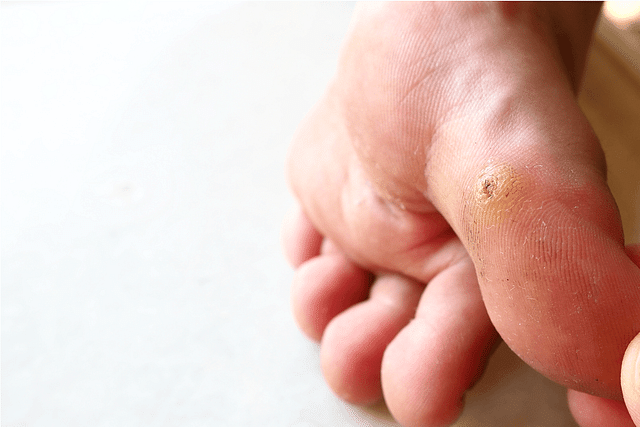
Overview of Disease
Warts are a common skin condition that affects people of all ages, although they are more prevalent in children and young adults. These noncancerous growths are caused by different strains of the human papillomavirus (HPV), which can be transmitted through direct or indirect contact with an infected person or surface. In this article, we will delve into the causes, symptoms, and treatment options for warts.
What are Warts?
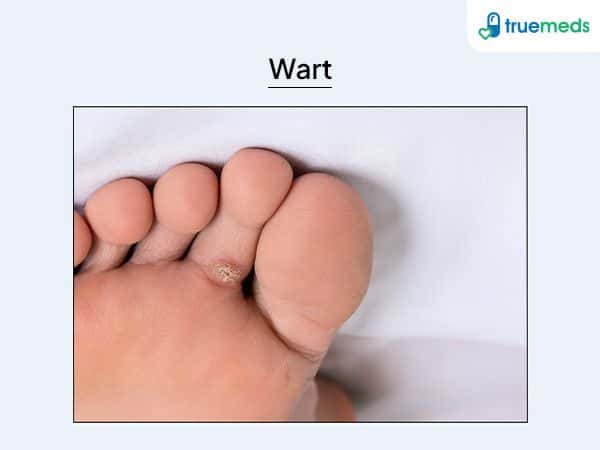
Warts are small, benign, rough skin growths caused by the human papillomavirus (HPV) IQWiG (2023). The virus spreads through direct contact or contaminated surfaces, especially on soft or broken skin.
Warts often appear as irregular, grainy bumps and may sometimes itch, hurt, or bleed. Children, adolescents, and those with weak immunity are more prone to them.
Studies have shown that half of the warts that appear go away by themselves within a year Harvard Health (2023). Treatment may be recommended in some cases to reduce transmission or for symptomatic relief. Options include topical medications, cryotherapy, or laser therapy. In-clinic options, such as cryosurgery and photodynamic therapy, can also be helpful.
Key Factors about Wart
| Category | Details |
| Also Referred as | Verruca |
| Commonly Occurs In | Children, adolescents, and young adults |
| Affected Organ | Skin |
| Type | Common warts, plantar warts, flat warts, and genital warts (caused by HPV) |
| Common Signs | Rough, grainy bumps; flat, smooth bumps; or elongated, stalk-like protrusions |
| Consulting Specialist | Dermatologist |
| Treatment Procedures | Topical treatments, cryotherapy, surgical removal, or observation |
| Managed By | Topical agents (salicylic acid, tretinoin, dibutyl squaric acid, diphenylcyclopropenone (DCP), imiquimod, 5-fluorouracil, & cidofovir), intralesional injections (skin test antigens of Candida, mumps, or Trichophyton, bleomycin) |
| Mimicking Condition | Corns, seborrhoeic keratoses, skin tags |
Types of Wart
There are several types of warts, which include:
- Common warts (Verruca Vulgaris): These rough, round, and firm warts are caused by HPV types 1, 2, 4, and 7. They often appear on fingers, elbows, knees, and the face, ranging in diameter from 2 to 10 mm. Common warts may spread to other parts of the body.
- Plantar warts: Caused by HPV types 1, 2, 4, 27, and 57, plantar warts grow on the soles of the feet. They appear as flat growths with small clotted blood vessels resembling tiny black dots. Plantar warts can be painful and may grow deeper into the foot, becoming larger and more uncomfortable.
- Mosaic warts: A subtype of plantar warts, mosaic warts are flat, white, pinhead-sized marks that appear in clusters on the balls of the feet and under the toes. They are caused by HPV type 2.
- Flat warts: Smoother, flatter, and smaller than other warts, flat warts often occur in groups on the face, back of the hands, neck, or legs. They are more common in teens and children and are caused by HPV types 3, 10, and 28.
- Filiform warts: These threadlike growths form around the eyes, nose, and mouth and are caused by HPV types 1, 2, 4, 27, and 29.
- Genital warts: Appearing in the pubic area, on the genitals, in or around the anus, and sometimes in the mouth, genital warts are a sexually transmitted infection caused by HPV types 6 and 11. They can be flat or raised, small or large, and single or multiple.
- Butcher's warts: These warts are common among butchers and others who handle raw meat. They are caused by HPV type 7 and appear as rough, elevated growths on the hands and fingers.
- Focal epithelial hyperplasia (Heck's disease): This rare condition, caused by HPV types 13 and 32, is characterised by multiple, flat-topped, pinkish-white bumps on the inside of the cheeks, lips, and tongue (Bendtsen et al., 2021). It is more common in children and young adults of Native American and Inuit descent.
Symptoms of Wart
Warts are rough, grainy growths that appear on the skin or mucous membranes (such as the mouth or genital areas). They have a long incubation period, taking 1 to 6 months (sometimes up to a year) before symptoms appear.
Key signs of warts include:
- Small, rough bumps on the skin
- Thin, thread-like projections on the surface
- Black dots that resemble tiny seeds
- Mild bleeding from the bumps
- Itching or discomfort
- A feeling of tightness or pressure
Causes of Wart
Warts are benign growths on the skin caused by viral infections, primarily from the human papillomavirus (HPV). Certain strains of HPV cause warts by entering the skin through small cuts or abrasions, leading to abnormal and rapid cell growth in the upper layers of the skin. The following factors contribute to the development of warts:
- Human papillomavirus (HPV): Various strains of HPV are responsible for different types of warts. The virus infects the top layer of skin, prompting rapid cell growth and resulting in the formation of warts. Common strains include HPV types 1, 2, 3, 4, 6, and 11.
- Direct skin contact: Warts can spread through direct contact with an infected person or by touching contaminated surfaces, such as floors in communal showers, swimming pools, or shared personal items like towels.
- Weakened immune system: Individuals with compromised immune systems due to conditions like HIV/AIDS or those taking immunosuppressive medications are more susceptible to HPV infections and may be more likely to develop warts.
- Skin injuries: Cuts, scratches, or other forms of trauma can provide an entry point for the virus, thereby increasing the likelihood of wart development.
- Age: Warts are more common in children and young adults, as their immune systems may not have encountered HPV before, making them more susceptible to infection.
- Genetics: A family history of warts may increase an individual's likelihood of developing them, suggesting a genetic predisposition to HPV infections or the immune response to the virus.
Risk Factors
Several factors can increase an individual's risk of developing warts:
- Skin injuries, which provide an entry point for the virus
- Skin conditions like hyperhidrosis (excessive sweating)
- Activities involving frequent exposure to moist environments, such as public swimming pools
- Habits like nail biting
- A weakened immune system
Who's at Risk?
Certain groups of people are more likely to develop warts compared to others:
- Children and young adults, especially those aged 12 to 16
- Individuals with weakened immune systems due to conditions like HIV/AIDS or those undergoing immunosuppressive therapy
- People who frequently use public showers, swimming pools, or gyms without proper foot protection
- Those working in occupations that involve handling meat, poultry, or fish
Complications
Warts can lead to various complications depending on the type and location of the wart. These include:
- Pain and discomfort: Warts, particularly those located on the soles of the feet (plantar warts), can cause significant pain and discomfort. This discomfort is often exacerbated by activities such as walking or running, which put pressure on the affected area.
- Spreading: Warts can spread through direct skin contact with the wart or by touching objects that have been contaminated with the HPV virus. As a result, individuals may develop multiple warts in various locations on their bodies.
- Genital warts: Genital warts can present unique complications, especially during pregnancy. Hormonal changes during pregnancy can cause genital warts to bleed, grow larger, or multiply. While genital warts themselves do not turn into cancer, they are caused by low-risk HPV strains.
- Weakened immune system: Individuals with compromised immune systems, such as those with HIV/AIDS or organ transplant recipients, may experience more persistent or severe wart outbreaks.
Prevention of Wart
Preventing warts involves a combination of good hygiene practices and protective measures. Some of the preventative measures include:
- Avoid direct contact: One of the most effective ways to prevent the spread of warts is to avoid direct contact with the affected area. This means not touching or picking at warts, including your own, as this can transfer the HPV virus to other parts of your body or to other people.
- Use disposable tools: When caring for warts, it is crucial to use disposable tools, such as emery boards, pumice stones, or nail clippers, rather than using the same tools on both the wart and healthy skin. This helps prevent the spread of the virus from the affected area to other parts of the body.
- Maintain good hygiene: Avoid sharing personal items, such as washcloths, towels, or other items that may come into contact with the wart. Additionally, avoid using shared facilities such as hot tubs or walking barefoot in communal showers, as these environments can facilitate the transmission of HPV.
- Proper skin care: Keeping your skin well moisturised can help reduce the risk of developing warts. Use a hand moisturiser daily to prevent dry, cracked skin, which can make it easier for the HPV virus to enter the body.
By following these preventive measures, individuals can significantly reduce their risk of developing warts and prevent the spread of the disease to others.
Diagnosis & Tests
Diagnosing warts typically involves a clinical examination, as doctors can often identify them based on their characteristic appearance and location. Some of the tests include:
Physical examination: During this examination, the doctor will visually inspect the suspicious growth, evaluating its appearance, size, and location on the body. Warts often have a characteristic rough, cauliflower-like appearance that aids in their identification.
Skin biopsy: This involves removing a small sample of the affected skin for laboratory analysis. The biopsy can help rule out other skin conditions that may resemble warts, such as skin cancers or other benign growths.
Differential diagnosis: When diagnosing warts, doctors must consider other skin conditions that may present similar symptoms. These include seborrhoeic keratosis, corns, calluses, and certain types of skin cancer. By carefully evaluating the characteristics of the growth and performing necessary tests, doctors can accurately differentiate warts from these other conditions.
An accurate diagnosis of warts is crucial for determining the most appropriate treatment plan and ensuring the best possible outcomes for patients.
Treatment & Management
No treatment offers a guaranteed cure, and recurrence is possible. However, a wide range of therapies is available to eliminate or reduce warts depending on their type, size, location, and resistance to prior treatments.
1. Topical Treatments
These are commonly used for treating superficial or early-stage warts and are applied directly to the skin:
- Salicylic acid: First-line over-the-counter treatment for common and plantar warts. Works by breaking down keratin and promoting gradual exfoliation.
- Tretinoin: A retinoid effective in treating flat warts, especially on the face and hands.
- Imiquimod: An immune-response modifier effective for genital, flat, and resistant warts; stimulates local cytokine production.
- Fluorouracil (5-FU): A chemotherapeutic agent, often used for flat or periungual warts; interferes with DNA synthesis.
- Cidofovir (topical or intralesional): An antiviral for recalcitrant or immunocompromised patients’ warts.
- Cantharidin: A blistering agent applied in clinics, especially for plantar or common warts.
- Podophyllotoxin (0.5%): Commonly used for external genital warts; cytotoxic and anti-mitotic.
- Dibutyl squaric acid (SADBE) and Diphenylcyclopropenone (DPCP): Immunotherapy agents used to trigger delayed-type hypersensitivity reactions and wart resolution.
2. Intralesional Injections
These therapies are used when warts do not respond to topical treatments:
- Bleomycin: An antineoplastic agent injected into resistant warts to destroy virus-infected cells. Painful but effective.
- Interferon alfa-2b: Stimulates the immune system and is occasionally used for refractory genital or plantar warts.
- Skin test antigens (e.g., Candida, Mumps, Trichophyton): Stimulate cell-mediated immunity to target the HPV-infected tissue.
3. In-Clinic Destructive & Surgical Procedures
Performed by dermatologists or trained healthcare providers, especially for stubborn, resistant, or cosmetically concerning warts:
- Cryotherapy (Cryosurgery): Freezing the wart with liquid nitrogen; causes blistering and destruction of the wart tissue. Often requires multiple sessions.
- Electrosurgery and Curettage: Burning off warts, followed by scraping the base. Common for larger warts.
- Laser Ablation (CO₂ or Pulsed-Dye Laser): Destroys wart tissue using focused light energy, making it useful for resistant or recurrent warts.
- Photodynamic Therapy (PDT): Combines a photosensitiser (e.g., aminolevulinic acid) with light to destroy wart cells.
- Trichloroacetic Acid (TCA, 80–90%): A chemical cautery agent that coagulates wart proteins; used primarily for genital and periungual warts.
- Surgical Excision: Physically removing the wart with a scalpel under local anaesthesia; reserved for resistant cases or when a biopsy is needed.
4. Adjunctive or Systemic Therapies
- Oral Cimetidine: An H2-blocker with immunomodulatory properties, sometimes used off-label for recalcitrant warts in children.
- Zinc (oral or topical): May enhance immune response against HPV.
- Levamisole: An immunomodulator occasionally used in combination with other agents.
- Isotretinoin: In selected cases of flat or extensive warts, primarily when associated with acne or sebaceous disorders.
5. Preventive Measures & Follow-up
- Avoid picking warts: This prevents the spread to other areas or people.
- Keep skin dry: Warts thrive in moist environments.
- Use separate towels or footwear: Especially in shared spaces like gyms or swimming pools.
- HPV vaccination (e.g., Gardasil 9): Though not a treatment, the vaccine may help reduce the risk of genital warts and certain HPV strains that cause cancer.
When to See a Doctor?
If warts do not respond to over-the-counter treatments or are spreading, it is advisable to consult a doctor for further evaluation and treatment options. Additionally, if warts become painful or cause significant discomfort, especially in areas such as the soles of the feet, it is advisable to consult a doctor for alternative treatments. Warts located on sensitive areas such as the face, neck, or genitals should also be treated under medical supervision due to the risk of complications and the need for precise treatment.
Key Takeaways
- Warts are caused by various strains of the human papillomavirus (HPV) and can appear on different parts of the body.
- Common types of warts include common warts, plantar warts, flat warts, and genital warts, each with its own distinct characteristics and locations.
- Warts are typically diagnosed through visual examination, but in some cases, a biopsy may be necessary to confirm the diagnosis and rule out other conditions.
- Treatment options for warts include over-the-counter medications like salicylic acid, cryotherapy, prescription medications, and, in some cases, surgical removal.
- To prevent the spread of warts, it is essential to avoid direct contact with warts, keep the affected area clean and dry, and refrain from sharing personal items such as towels or razors.
- If warts persist, spread, or cause significant discomfort, it is important to consult a doctor for proper evaluation and treatment.
FAQs
Can warts spread by touch?
Warts can be transmitted through direct skin contact with an infected person or by touching surfaces contaminated with the HPV virus, such as public pools.
Will warts go away on their own?
Are warts painful?
Warts are generally not painful, but they may cause discomfort if located in areas subjected to frequent pressure, like the soles of the feet or fingers.
How to remove warts permanently?
Can warts be cancerous?
How to naturally remove warts?
While not scientifically proven, some people try natural methods like applying duct tape, tea tree oil, or garlic to the wart, but consulting a doctor is recommended for effective treatment.
How to stop warts from spreading?
To stop warts from spreading, avoid touching other people's warts, keep personal items like towels and razors separate, and cover warts with bandages or clothing when in public areas.
What are the primary causes of wart development in individuals?
Warts are caused by the human papillomavirus (HPV), which enters the body through small cuts or abrasions in the skin and can be contracted through direct contact with infected individuals or contaminated surfaces.
What is the best treatment for warts?
The best treatment for warts depends on factors like the type and location of the wart, but common effective options include cryotherapy, topical medications, and surgical removal.
Can the disease be cured with ayurveda?
While ayurvedic medicine may offer some remedies for warts, there is limited scientific evidence to support their effectiveness, and it is advisable to consult with a qualified doctor for proper treatment.
References
- American Academy of Dermatology Association. (n.d.). Warts: Overview. https://www.aad.org/public/diseases/a-z/warts-overview
- National Health Service. (2021). Warts and verrucas. https://www.nhs.uk/conditions/warts-and-verrucas/
- MedlinePlus. (2020). Warts. https://medlineplus.gov/ency/article/000885.htm
- Better Health Channel. (n.d.). Warts. https://www.betterhealth.vic.gov.au/health/conditionsandtreatments/warts
- Institute for Quality and Efficiency in Health Care (IQWiG). (2023). Overview: Warts. InformedHealth.org - NCBI Bookshelf. https://www.ncbi.nlm.nih.gov/books/NBK279586/
- Harvard Health. (2023). How to get rid of warts. https://www.health.harvard.edu/diseases-and-conditions/how-to-get-rid-of-warts
- Bendtsen, S. K., Jakobsen, K. K., Carlander, A. F., Grønhøj, C., & Von Buchwald, C. (2021). Focal epithelial hyperplasia. Viruses, 13(8), 1529. https://doi.org/10.3390/v13081529
Check Related Salts
Latest health articles

Top Health Essentials
















Disclaimer
Top-Selling Medicines:
Top-OTC medicines:
...View more
Company
About UsHealth ArticleHealth StoriesHealth LibraryDiseases & Health ConditionsAyurvedaUnderstanding Generic MedicinesAll MedicinesAll BrandsNeed HelpFAQSecuritySavings CalculatorAdvertise with UsSubscribe
Registered Office Address
Grievance Officer
Download Truemeds


Contact Us
Our customer representative team is available 7 days a week from 9 am - 9 pm.
v4.28.9

2026 - Truemeds | All rights reserved. Our content is for informational purposes only. See additional information.

Our Payment Partners




