

- Medicines
- Personal Care
- Skin Cream
- Sunscreen
- Face Wash
- Skin and Body Soap
- Acne Care
- Body Lotions
- Moisturising Lotion
- Moisturising Cream
- Mosquito Repellent
- Moisturising Gel
- Body Wash
- Hair Oils
- Hair Shampoo
- Hair Conditioners
- Hair Supplements
- Hair Colour
- Hair Serum
- Hair Mask
- Hair Solutions
- Baby Diapers and Wipes
- Baby Lotion and Moisturising Cream
- Baby Bath Essentials
- Baby Skin Care
- Baby and Infant Food
- Baby Healthcare
- Women Multivitamins
- Ovulation Test Kit and Women Intimate Care
- Sanitary Pads
- Nutritional Drinks
- Condoms
- Lubricants
- Massage Gels
- Personal Body Massagers
- Men Performance Booster
- Sexual Health Supplements
- Massage Oils
- Ayurveda
- Tooth Paste
- Mouth Ulcer Gel
- Mouthwash
- Toothache and Gum Pain
- Tooth Brush
- Gargle Solution
- Orthopaedic Supports
- Adult Diapers
- Footwear
- Mobility and Support Accessories
- Urinary Support and Care
- Health Conditions
- Bone and Joint Care
- Digestive Care
- Eye Care
- Pain Relief
- Smoking Cessation
- Liver Care
- Stomach Care
- Cold and Cough
- Heart Care
- Kidney Care
- Piles, Fissures & Fistula
- Respiratory Care
- Mental Wellness
- Derma Care
- Pre and Probiotics
- Acidity
- Gas
- Constipation
- Loose Motion/Diarrhoea
- Digestive Fibres
- Digestive Enzymes
- Eye Lubricant Drops
- Lens Solution
- Safety Eye Wear
- Eye Cream
- Eye Vitamins and Supplements
- Eye Drops
- Eye Ointment and Gel
- Nicotine Patch
- Nicotine Gum
- Nicotine Lozenges
- Cough Syrups
- Chest Rubs and Balms
- Nasal Spray
- Lozenges
- Inhalant Capsules
- Cold and Cough Tablets
- Vitamins & Supplements
- Diabetes Care
- Healthcare Devices
- Homeopathic Medicine
- Health Guide
Oligomenorrhoea
Oligomenorrhoea is a menstrual disorder characterised by infrequent periods, typically occurring in women of reproductive age. While some variation in menstrual cycles is normal, a woman who consistently experiences menstrual cycles longer than 35 days or has fewer than 6–8 menstrual cycles per year may be diagnosed with oligomenorrhea.
This condition may be caused by hormonal imbalances, excessive exercise, stress, or underlying health conditions such as polycystic ovary syndrome (PCOS). Proper evaluation and treatment can help regulate the menstrual cycle and address any underlying causes.
 50
50Last updated on : 05 May, 2026
Read time : 14 mins

Overview of Disease
Menstrual disorders are a common concern among women of reproductive age, and oligomenorrhea is one such condition that affects many women worldwide. This condition can cause distress and may be a sign of an underlying health issue that requires medical attention. In this article, we will explore the causes, symptoms, and treatment options for oligomenorrhea.
What is Oligomenorrhoea?
Oligomenorrhoea refers to a condition where menstrual periods are irregular. While many individuals have a regular cycle roughly every 28 days, with bleeding lasting between four and seven days, it’s perfectly normal for cycles to vary from 21 to 35 days and still be considered healthy. In most cases, the gap between periods remains relatively steady, varying by only a day or two.
When someone has oligomenorrhoea, their periods tend to be irregular and difficult to predict. It is common to go longer than 35 days without menstruating (Attia et al., 2023). In this condition, females may experience only 6 to 8 periods per year, rather than a monthly cycle.
Key Factors about Oligomenorrhoea
| Category | Details |
| Also Referred to as | Oligomenorrhoea |
| Commonly Occurs In | Women of childbearing age, early adolescence, perimenopause, fertility issues |
| Affected Organ | Reproductive organs (ovaries, uterus), hypothalamus, pituitary gland |
| Type | Abnormal menstruation |
| Common Signs | Infrequent periods (>35 days apart), 4-9 periods/year, oestrogen deficiency symptoms (loss of libido, breast atrophy, vaginal dryness, hot flushes) |
| Consulting Specialist | Gynaecologist |
| Treatment Procedures | Depends on the underlying cause; lifestyle changes, hormone therapy, medication, and surgery if needed |
| Managed By | Medications such as spironolactone, finasteride |
| Mimicking Condition | Amenorrhoea (absence of menstruation), other menstrual disorders |
Early Signs of Disease
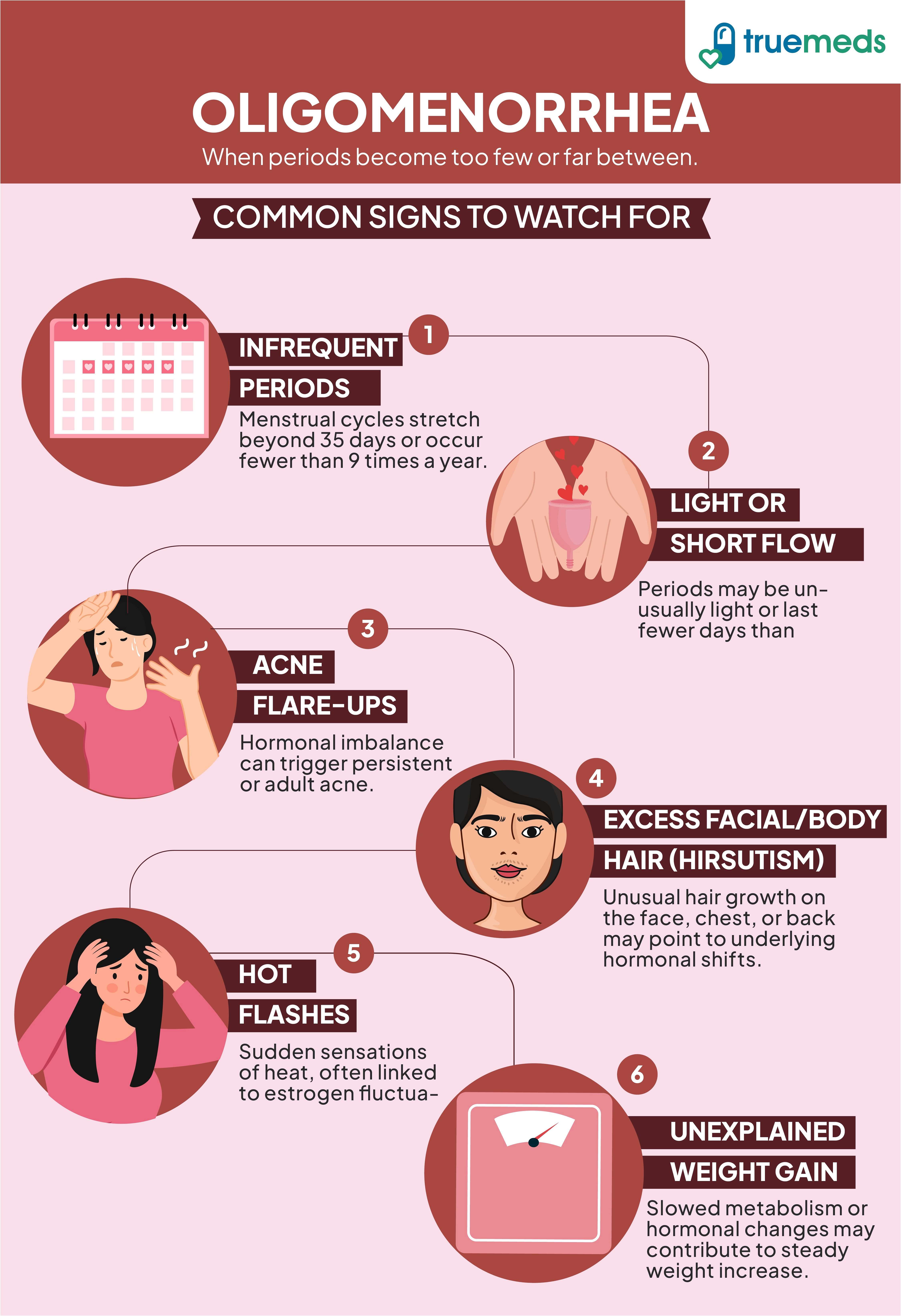
The primary sign of oligomenorrhea is infrequent or irregular menstrual periods. However, some indications that you may be experiencing oligomenorrhea include:
- Menstrual cycles longer than 35 days or fewer than 6–8 periods per year
- Acne
- Hot flashes
- Excessive facial or body hair (hirsutism)
- Weight gain
- Difficulty conceiving (infertility)
Symptoms of Oligomenorrhoea
Symptoms may include:
- Missed or delayed periods
- Light or short periods
- Heavy or prolonged periods (in some cases)
- Headaches
- Abdominal pain
- Vaginal discharge
- Impaired vision
- Other symptoms related to the underlying cause, such as hormonal imbalances, infections, or structural abnormalities in the reproductive organs
These symptoms can vary depending on the underlying cause of the condition. If you experience any of these symptoms along with infrequent periods, consult a doctor for proper diagnosis and treatment.
Stages of Oligomenorrhoea
Oligomenorrhoea does not have defined stages; however, it progresses as follows:
- Initially: Initially there are occasional irregularities in menstrual cycles, which may not immediately indicate oligomenorrhea. However, if the irregularity persists, it's essential to monitor your cycles closely.
- Established Oligomenorrhoea: At this stage, you may regularly experience menstrual cycles longer than 35 days or have fewer than nine periods per year. This is a clear indication of oligomenorrhea and warrants medical attention.
- Potential Complications: If left untreated, oligomenorrhea can lead to various health issues, such as endometrial hyperplasia (thickening of the uterine lining), endometrial cancer, osteoporosis (weakening of the bones), and cardiovascular problems.
Causes of Oligomenorrhoea
Hormonal imbalances are a major cause of oligomenorrhea. The reproductive system, along with the glands in the brain, produces hormones that regulate the menstrual cycle. When these hormones are balanced, periods occur regularly.
However, any disruption can make the cycle unpredictable. Additionally, infections and structural issues in the reproductive organs can also interfere with menstruation.
The common causes of oligomenorrhea are: (Europe PMC, n.d.)
- Polycystic Ovary Syndrome (PCOS): PCOS leads to excessive production of androgens (male hormones like testosterone), disrupting ovulation and menstrual cycles. This is one of the main causes of oligomenorrhoea.
- Androgen-secreting Tumours: Tumours in the ovaries or adrenal glands release androgens, causing irregular periods and symptoms similar to PCOS.
- Cushing’s Syndrome: Excessive production of cortisol can create hormonal imbalances that disturb the menstrual cycle.
- Prolactinoma: This tumour in the pituitary gland causes excess prolactin production, reducing oestrogen levels and affecting menstruation.
- Primary Ovarian Insufficiency: The ovaries stop releasing eggs before menopause, leading to estrogen deficiency and irregular periods.
- Thyroid disorders (both hypothyroidism and hyperthyroidism): It can disrupt menstrual cycles through hormonal imbalance.
- Congenital Adrenal Hyperplasia: A genetic condition that prevents the adrenal glands from producing essential hormones needed for menstruation.
- Pelvic Inflammatory Disease (PID): Untreated sexually transmitted infections (STIs) can cause inflammation and menstrual irregularities.
- Asherman’s Syndrome: Scar tissue in the uterus or cervix (often due to surgery like dilation and curettage) can block or reduce menstrual flow.
- Diabetes: Both Type 1 and Type 2 diabetes are linked to oligomenorrhea, especially in underweight individuals or those who are overweight.
- Eating Disorders: Conditions like anorexia, bulimia, and binge eating can cause nutritional deficiencies that delay or stop periods.
- Extreme Physical Activity: Over-exercising can stress the body, leading to menstrual irregularities.
- Medications: Certain medications can also contribute to infrequent periods, including Hormonal contraceptives (e.g., birth control pills), antipsychotics, and antiepileptics.
Risk Factors
Several factors increase the risk of developing oligomenorrhea. Family history plays a role, with genetic predisposition making some women more susceptible to menstrual irregularities. Age is another factor, as adolescents and women approaching menopause are more likely to experience oligomenorrhea due to hormonal changes.
Certain lifestyle choices, such as excessive exercise, low body weight, and eating disorders, can disrupt the menstrual cycle. Chronic stress and medical conditions like PCOS, thyroid disorders, and pituitary tumours also elevate the risk. Women with a history of uterine infections or pelvic surgeries may be more prone to developing oligomenorrhea. Recognising these risk factors aids in early detection and prevention strategies.
Complications
While oligomenorrhea itself may not pose immediate health risks, it can be a symptom of underlying conditions that may lead to complications if left untreated.
- Underlying Health Risks: Oligomenorrhoea may indicate serious conditions, such as PCOS, thyroid disorders, or metabolic syndromes, which require medical attention.
- Infertility: Irregular ovulation can lead to difficulty conceiving, especially in conditions like PCOS, primary ovarian insufficiency, Asherman’s syndrome, and uncontrolled diabetes.
- Endometrial Hyperplasia: Prolonged irregular cycles may lead to excessive endometrial growth, increasing the risk of abnormal uterine bleeding.
- Endometrial Cancer: Untreated endometrial hyperplasia can progress to endometrial cancer. Oral contraceptive pills containing estrogen and progesterone may offer protection.
- Osteoporosis: Estrogen deficiency due to anovulation weakens bones, increasing the risk of osteoporosis and fractures.
- Cardiovascular Issues: Prolonged hypoestrogenism (in specific causes) may increase cardiovascular risk.
- Neuropsychiatric Effects: Hormonal imbalance may contribute to mood changes such as anxiety or depression.
- Hormonal Dysregulation: Dysfunction of the hypothalamic-pituitary-gonadal axis can lead to irregular periods, bone loss, and reproductive health issues.
- Thyroid-Related Complications: Both hypothyroidism and hyperthyroidism can disrupt menstrual cycles and contribute to cardiovascular and metabolic disorders.
- Metabolic Syndrome: Conditions like PCOS, which cause oligomenorrhea, are linked to obesity, insulin resistance, type 2 diabetes, and heart disease.
Prevention of Oligomenorrhoea
Preventing oligomenorrhea often involves a combination of lifestyle modifications and medical management.
- Maintaining a healthy weight through a balanced diet and regular exercise can help regulate menstrual cycles. This is because being overweight or underweight can contribute to menstrual irregularities.
- Managing stress levels is also important, as high stress can affect the hypothalamic-pituitary-gonadal axis and lead to irregular periods. Engaging in stress-reducing practices like yoga, meditation, or counselling can be beneficial.
- From a medical perspective, hormonal treatments such as birth control pills may be prescribed for conditions like PCOS to help regulate menstrual cycles.
- Addressing underlying health issues is important for normalising menstrual cycles. This includes managing thyroid disorders and reducing insulin resistance through diet and exercise.
- Additionally, treating other contributing factors can help prevent oligomenorrhea. Working with a healthcare provider to identify and manage underlying causes is essential for preventing oligomenorrhea and its complications.
Diagnosis & Tests
Diagnosing oligomenorrhea involves a multi-step approach that combines medical history, physical examinations, imaging techniques, and laboratory tests to identify the underlying cause.
1. Medical History
Your healthcare provider will ask you for detailed information about your menstrual patterns, lifestyle, and family history to identify potential risk factors.
- Menstrual Cycle Details: You should track your periods for at least two months, noting cycle length, flow intensity, and any accompanying symptoms. This helps assess the severity of irregularity.
- Family Medical History: A history of PCOS, thyroid disorders, or early menopause in close relatives may increase the likelihood of similar conditions.
- Lifestyle and Habits: Your doctor will ask about diet, exercise habits, stress levels, and weight changes, as extreme physical activity or eating disorders can contribute to irregular periods.
- Sexual and Reproductive Health: Questions about contraceptive use, unprotected sex, and past infections help rule out sexually transmitted infections (STIs) or other reproductive health concerns.
- Medications: Certain medicines, such as hormonal contraceptives, antipsychotics, antiepileptics, and steroids, have been linked to menstrual irregularities.
2. Physical Examination
A thorough physical exam helps identify signs of underlying hormonal imbalances or structural abnormalities affecting menstruation.
- General Physical Exam: The doctor inspects your face, neck, breasts, and abdomen for symptoms like excessive hair growth (hirsutism), acne, obesity, or signs of hormonal disorders.
- Abdominal Palpation: The provider checks for masses, cysts, or tenderness, which may indicate an underlying reproductive condition.
- Pelvic Examination: A bimanual exam (using two fingers) allows the provider to feel the uterus and ovaries for abnormalities such as ovarian cysts, fibroids, or inflammation.
- Vaginal Speculum Exam: A speculum is used to widen the vagina, allowing the doctor to inspect the cervix and vaginal walls for any signs of inflammation, scarring, or infections. A cervical swab may be collected to check for STIs.
- Rectovaginal Examination: This involves inserting one gloved finger into the vagina and another into the rectum to feel for any internal masses or abnormalities.
3. Imaging Techniques
If physical examinations and medical history suggest an underlying reproductive or hormonal disorder, imaging tests can provide a clearer picture.
- Pelvic and Abdominal Ultrasound: Detects ovarian cysts (PCOS), uterine abnormalities, endometrial thickness, and signs of inflammation.
- Computed Tomography (CT) Scan: Helps detect tumours, abnormal masses, or structural issues in the pelvic region.
- Magnetic Resonance Imaging (MRI): Used in cases where a prolactinoma (pituitary gland tumour) is suspected, as it provides a detailed view of the brain and pituitary gland.
4. Laboratory Tests
Blood tests help measure hormone levels, blood sugar, and overall metabolic function to pinpoint potential causes of oligomenorrhea.
- Thyroid-Stimulating Hormone (TSH): Low levels may indicate hypothyroidism, which can disrupt menstrual cycles.
- Follicle-Stimulating Hormone (FSH): Elevated levels suggest primary ovarian insufficiency (early menopause).
- Luteinizing Hormone (LH): High LH levels relative to FSH can indicate PCOS, a common cause of irregular periods.
- Prolactin: Elevated levels may suggest prolactinoma, a benign tumour of the pituitary gland that affects hormone balance.
- 17-Hydroxyprogesterone (17-OHP): Helps diagnose congenital adrenal hyperplasia (CAH), a condition that affects hormone production.
- Blood Glucose & HbA1c Test: Determines insulin resistance or diabetes, which are often associated with PCOS and metabolic disorders.
Treatment & Management
The treatment for oligomenorrhea varies depending on the underlying cause of the condition. Some standard treatment approaches include:
Medications for Associated Symptoms
1. Hormonal Therapy
Hormonal treatments are often the first-line option to regulate menstrual cycles and address hormone imbalances.
a. Combined Oral Contraceptive Pills (COCPs):
- Regulate menstrual cycles
- Decrease androgen levels to improve symptoms like acne and hirsutism
- Common formulations include ethinylestradiol combined with:
- Levonorgestrel, Drospirenone: These medicines help regulate menstrual cycles by providing consistent hormone levels and suppressing the hormonal imbalances common in conditions like PCOS.
- Cyproterone acetate (especially useful in PCOS with hirsutism): It specifically helps reduce excess androgens, improving symptoms like acne and excessive hair growth (hirsutism).
b. Progestin-only therapies:
- Medroxyprogesterone (oral or injectable), Norethisterone: These progestins induce withdrawal bleeding and help establish regular menstrual cycles in women with infrequent periods, especially in those not suitable for estrogen therapy.
c. Hormonal intrauterine devices (IUDs):
- Levonorgestrel-releasing IUDs help reduce menstrual bleeding but do not regulate ovulation.
2. Insulin-Sensitising Agents
(Useful especially in PCOS-associated oligomenorrhea)
- Metformin
- Improves insulin resistance
- Helps restore ovulation and regular periods
- May assist with weight loss and reduce androgen levels
- Myo-inositol and D-chiro-inositol (nutraceuticals)
- Non-prescription insulin sensitisers that support menstrual regularity in PCOS
3. Anti-Androgen Medications
Used to manage symptoms like hirsutism (excessive hair growth), acne, and androgenic alopecia.
- Spironolactone
- Blocks androgen receptors and inhibits androgen production
- Often combined with COCPs to prevent menstrual irregularities
- Finasteride
- A 5-alpha-reductase inhibitor that reduces the conversion of testosterone to DHT
- Flutamide (less commonly used due to hepatotoxicity risk)
- A non-steroidal anti-androgen
4. Medications for Pain Relief
If painful periods are associated with oligomenorrhea, pain management may be required.
- NSAIDs (Nonsteroidal Anti-inflammatory Drugs):
- Ibuprofen, Naproxen, Mefenamic acid: These are not used to regulate cycles but may help manage menstrual pain (dysmenorrhea) that can accompany induced or irregular periods.
5. Thyroid or Pituitary Dysfunction Management
If endocrine disorders cause oligomenorrhea, specific treatments are used:
- Levothyroxine: For hypothyroidism
- Antithyroid medications (e.g., carbimazole, methimazole): For hyperthyroidism
- Cabergoline or bromocriptine: Dopamine agonists for hyperprolactinemia
Lifestyle Changes
Reducing stress and improving diet can be beneficial, particularly for women with conditions like polycystic ovary syndrome (PCOS). Women with eating disorders or excessive exercise may need to increase body fat to stimulate gonadotropin-releasing hormone (GnRH) production. It can help re-establish menstrual cycles.
Surgery
In some cases, surgical treatment may be necessary to remove tumours that are producing excess androgens. These tumours may be benign (non-cancerous) or malignant (cancerous), and their removal can help restore normal hormone levels and regulate menstrual cycles.
Other Treatments
Intrauterine systems (IUS) can be helpful for women with heavy, irregular periods by reducing the duration and flow of menses. For structural causes or ineffective medical management, surgical options such as the removal of polyps or uterine fibroids may be considered.
Living with Disease
Living with oligomenorrhea involves managing the symptoms and addressing the underlying causes to prevent long-term complications. Here are some key aspects to consider:
- Monitoring and Tracking: Keeping a menstrual calendar or using an app to track periods can help identify patterns and aid in diagnosis.
- Health Risks: Untreated oligomenorrhea can lead to health concerns such as osteoporosis, acne, cardiovascular issues, infertility, endometrial hyperplasia, and endometrial cancer. Regular check-ups with a healthcare provider are essential to monitor hormone levels and overall health.
- Lifestyle Modifications: Maintaining a healthy weight, engaging in regular exercise, managing stress, and following a balanced diet can help regulate menstrual cycles and improve overall health. Women with eating disorders or excessive exercise habits may need professional support to address these issues.
- Emotional Well-Being: Oligomenorrhoea and its underlying causes can have an emotional impact on women. Seeking support from loved ones, joining support groups, or consulting with a mental health professional can help cope with the emotional aspects of the condition.
When to See a Doctor?
You should see a doctor if you are experiencing symptoms of oligomenorrhea, such as:
- Having fewer than nine periods per year
- Missing periods for more than three months (if you previously had regular periods)
- Periods that are more than 35 days apart
- Experiencing symptoms of PCOS, such as excessive hair growth, acne, and weight gain
It's important to see a doctor if you are trying to conceive, as oligomenorrhea can impact fertility. Your doctor can perform a physical exam and order blood tests or imaging studies. This helps to determine the underlying cause of your oligomenorrhea.
Early diagnosis and treatment of oligomenorrhea and any underlying conditions are important for preventing complications and managing symptoms effectively. Don't hesitate to discuss any concerns about your menstrual cycle with your doctor. They are there to help you find the best treatment approach for your individual situation.
FAQs
What is the main difference between dysmenorrhea and oligomenorrhea?
Is polycystic ovary syndrome (PCOS) synonymous with oligomenorrhea?
How do metrorrhagia and oligomenorrhea differ?
Is it normal to have a 37-day gap between periods?
What does the term "oligomenorrhea" mean?
Which factors can contribute to a 21-day menstrual cycle?
Is pregnancy possible for women with oligomenorrhea?
How can oligomenorrhea be managed or treated?
Can engaging in fingering lead to delayed periods?
References
- Europe PMC. (n.d.). Europe PMC. https://europepmc.org/article/NBK/nbk560575
- Attia, G. M., Alharbi, O. A., & Aljohani, R. M. (2023). The Impact of Irregular Menstruation on Health: A Review of the literature. Cureus, 15(11), e49146. https://doi.org/10.7759/cureus.49146
Check Related Salts
Browse Other Conditions
Latest health articles

Top Health Essentials




















Disclaimer
Top-Selling Medicines:
...View more
Top-OTC medicines:
...View more
Company
About UsHealth ArticleHealth StoriesHealth LibraryDiseases & Health ConditionsAyurvedaUnderstanding Generic MedicinesAll MedicinesAll BrandsNeed HelpFAQSecuritySavings CalculatorAdvertise with UsSubscribe
Registered Office Address
Grievance Officer
Download Truemeds


Contact Us
Our customer representative team is available 7 days a week from 9 am - 9 pm.
v4.28.13

2026 - Truemeds | All rights reserved. Our content is for informational purposes only. See additional information.

Our Payment Partners




