

- Medicines
- Personal Care
- Skin Cream
- Sunscreen
- Face Wash
- Skin and Body Soap
- Acne Care
- Body Lotions
- Moisturising Lotion
- Moisturising Cream
- Mosquito Repellent
- Moisturising Gel
- Body Wash
- Hair Oils
- Hair Shampoo
- Hair Conditioners
- Hair Supplements
- Hair Colour
- Hair Serum
- Hair Mask
- Hair Solutions
- Baby Diapers and Wipes
- Baby Lotion and Moisturising Cream
- Baby Bath Essentials
- Baby Skin Care
- Baby and Infant Food
- Baby Healthcare
- Women Multivitamins
- Ovulation Test Kit and Women Intimate Care
- Sanitary Pads
- Nutritional Drinks
- Condoms
- Lubricants
- Massage Gels
- Personal Body Massagers
- Men Performance Booster
- Sexual Health Supplements
- Massage Oils
- Ayurveda
- Tooth Paste
- Mouth Ulcer Gel
- Mouthwash
- Toothache and Gum Pain
- Tooth Brush
- Gargle Solution
- Orthopaedic Supports
- Adult Diapers
- Footwear
- Mobility and Support Accessories
- Urinary Support and Care
- Health Conditions
- Bone and Joint Care
- Digestive Care
- Eye Care
- Pain Relief
- Smoking Cessation
- Liver Care
- Stomach Care
- Cold and Cough
- Heart Care
- Kidney Care
- Piles, Fissures & Fistula
- Respiratory Care
- Mental Wellness
- Derma Care
- Pre and Probiotics
- Acidity
- Gas
- Constipation
- Loose Motion/Diarrhoea
- Digestive Fibres
- Digestive Enzymes
- Eye Lubricant Drops
- Lens Solution
- Safety Eye Wear
- Eye Cream
- Eye Vitamins and Supplements
- Eye Drops
- Eye Ointment and Gel
- Nicotine Patch
- Nicotine Gum
- Nicotine Lozenges
- Cough Syrups
- Chest Rubs and Balms
- Nasal Spray
- Lozenges
- Inhalant Capsules
- Cold and Cough Tablets
- Vitamins & Supplements
- Diabetes Care
- Healthcare Devices
- Homeopathic Medicine
- Health Guide
Fibroids
Fibroids, or uterine leiomyomas, are non-cancerous growths that develop in or around the uterus. They are composed of muscle and fibrous tissue and can vary significantly in size. Fibroids are very common, with a majority of women developing at least one fibroid by age 50.
 50
50Last updated on : 14 Apr, 2026
Read time : 12 mins
Overview of Disease
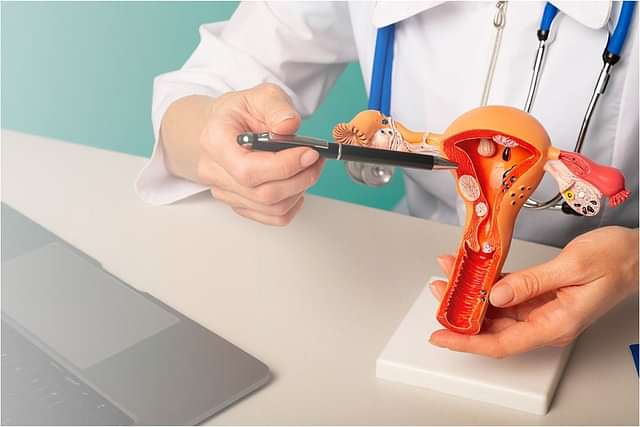
Fibroids, medically known as uterine myomas or leiomyomas, are benign growths that originate in or around the womb (uterus). They are the most common benign gynaecological tumours, affecting 50% to 70% of women by menopause (Barjon et al., 2025). These tumours are made up of muscle and fibrous tissue and can range in size from a tiny seed to a large melon. While fibroids are not cancerous, they can cause a variety of symptoms and may require treatment in some cases.
What is Fibroids?
Fibroids are muscular tumours that develop within the wall of the uterus. These growths are almost always benign, meaning they are not cancerous. Fibroids can vary greatly in size, from being as small as an apple seed to as large as a melon. They can grow as a single tumour or in multiples. Fibroids are extremely common. Despite their prevalence, the exact causes of fibroids remain unknown (Volovsky & Segars, 2021).
However, research suggests that hormonal factors, particularly oestrogen and progesterone levels, play a significant role in their growth. Unlike some other conditions, such as cancer, fibroids do not have specific stages. However, they can grow and change over time.
Fibroids tend to grow during the reproductive years when oestrogen levels are high and may shrink after menopause when oestrogen levels decrease. The size and location of fibroids can also impact the severity of symptoms and the need for treatment.
Key Factors about Fibroids
| Category | Details |
| Also Referred as | Leiomyomas, myomas, fibromyomas |
| Commonly Occurs In | Women in their 30s and 40s, especially women of African descent |
| Affected Organ | Uterus (womb) |
| Type | Intramural, Submucosal, Subserosal, Pedunculated |
| Common Signs | Heavy menstrual bleeding, back pain, frequent urination, pain during sex |
| Consulting Specialist | Gynaecologist, Urogynaecologist |
| Treatment Procedures | Medications, surgery (myomectomy, hysterectomy), uterine artery embolisation (UAE) |
| Managed By | Medications such as painkillers (ibuprofen, naproxen) |
| Mimicking Condition | Other uterine abnormalities, ovarian cysts and endometriosis |
Types of Fibroids
There are several types of fibroids, classified based on their location in the uterus:
- Intramural Fibroids: These are the most common type, developing in the muscle wall of the uterus.
- Subserosal Fibroids: These fibroids grow outside the wall of the uterus into the pelvis and can become very large.
- Submucosal Fibroids: These fibroids develop in the muscle layer beneath the womb's inner lining and grow into the cavity of the uterus.
- Pedunculated Fibroids: These fibroids grow on a stalk and can protrude into the abdominal cavity or the uterine cavity.
Symptoms of Fibroids
The symptoms of uterine fibroids can vary significantly from one woman to another. One in every three women with fibroids experiences symptoms (NHS UK, 2024). Some women with fibroids may not experience any symptoms at all, while others may have severe and debilitating symptoms. Common symptoms of fibroids include:
- Heavy Menstrual Bleeding: Fibroids can cause prolonged and heavy menstrual bleeding, which can lead to anaemia.
- Pelvic Discomfort or Pain: Large fibroids can cause a feeling of heaviness or pressure in the lower abdomen or pelvis. In some cases, acute and severe pain may occur due to degeneration of a fibroid.
- Bladder Problems: Fibroids that press against the bladder can cause frequent urination or difficulty emptying the bladder.
- Low Back Pain: Fibroids located on the back surface of the uterus can cause back pain.
- Rectal Pressure: Fibroids pressing against the rectum can cause a sensation of rectal fullness, difficulty with bowel movements, or pain during bowel movements.
- Discomfort or Pain During Sexual Intercourse: Fibroids can make sexual intercourse painful or uncomfortable.
- A Feeling of Fullness in the Pelvic Area: Enlargement of the lower abdomen can occur with large fibroids.
While these symptoms can be indicative of fibroids, they can also be caused by other gynaecological conditions. Therefore, it is essential to consult a healthcare professional for an accurate diagnosis.
Causes of Fibroids
Despite extensive research, the exact cause of uterine fibroids remains unknown. However, several factors are believed to contribute to the development and growth of these non-cancerous tumours:
- Hormonal Influence: Oestrogen and progesterone, the primary female reproductive hormones, appear to play a significant role in the growth of fibroids. These tumours tend to grow rapidly during pregnancy when hormone levels are high and shrink after menopause when hormone levels decline.
- Genetic Factors: Studies suggest that fibroids may have a genetic component, as they often run in families. Women with a family history of fibroids are more likely to develop them.
Risk Factors
Certain factors can increase a woman's risk of developing uterine fibroids. These include:
- Age: Fibroids are most commonly diagnosed in women of reproductive age, particularly those in their 40s and early 50s.
- Family History: Having a close female relative, such as a mother or sister, with fibroids increases the likelihood of developing them.
- Obesity: Women with a high body mass index (BMI) or who are overweight are at a higher risk of developing fibroids.
- Diet: Consuming a diet high in red meat and low in green vegetables, fruits, and dairy products may increase the risk of fibroid development.
- Ethnicity: Studies have shown that women of African descent are more likely to develop fibroids compared to women of other ethnicities.
Complications
Uterine fibroids can lead to various complications, although these are relatively rare. Some of the potential complications associated with fibroids include:
- Emergency Surgery Needs: Severe pain and heavy bleeding may require immediate surgical intervention.
- Twisting of Fibroids: When fibroids twist, they can obstruct blood vessels that supply the tumour, leading to intense pain and potentially necessitating surgery.
- Anaemia Risks: Heavy bleeding caused by fibroids can lead to anaemia, which is characterised by a deficiency of red blood cells.
- Urinary Tract Complications: Fibroids can exert pressure on the bladder, leading to urinary retention, urinary tract infections, and difficulty emptying the bladder.
- Impact on Fertility: Large fibroids, especially submucosal ones, can hinder fertility by interfering with sperm transport or embryo implantation.
- Pregnancy Complications: Fibroids can lead to various pregnancy-related issues, including premature labour, the need for caesarean delivery if the fibroid obstructs the birth canal, and heavy postpartum bleeding. In rare cases, they may also contribute to an increased risk of miscarriage. Although rare, acute urinary retention and renal failure can occur as serious complications during pregnancy.
- Red Degeneration: During pregnancy, fibroids may experience red degeneration, a haemorrhagic infarction that can cause significant pain.
- Rare Vascular Complications: Thrombo-embolism and other vascular issues, such as mesenteric vein thrombosis and intestinal gangrene, are extremely rare but can occur.
Prevention of Fibroids
There are no known methods to completely prevent the development of fibroids, as the exact cause is still not fully understood. However, several factors are thought to influence the risk of developing these benign tumours:
- Hormonal Factors: Exposure to higher amounts of endogenous oestrogen is believed to be a significant risk factor for developing fibroids. Maintaining a healthy body weight and avoiding excessive alcohol consumption may help regulate hormonal levels.
- Genetic Factors: Fibroids may run in families, suggesting a genetic component. While you cannot change your genetic makeup, being aware of your family history can help you stay vigilant about potential symptoms.
- Dietary Factors: Some studies suggest that a diet high in red meat and low in fruits and vegetables may increase the risk of developing fibroids. Adopting a balanced diet rich in fruits, vegetables, and whole grains may be beneficial.
- Lifestyle Factors: Regular exercise and maintaining a healthy body weight may help lower the risk of developing fibroids, as obesity has been linked to an increased risk.
Diagnosis & Tests
Diagnosing uterine fibroids usually starts with a pelvic exam. Your doctor will check for any unusual lumps or changes in the shape of your uterus. However, small fibroids can be hard to detect this way.
If fibroids are suspected, your doctor may recommend one or more of the following tests:
- Ultrasound: This is the most common tool used to diagnose fibroids. It uses sound waves to create a picture of your uterus, allowing your doctor to see its internal structure. Ultrasound can be done abdominally (over your belly) or transvaginally (with a probe inserted into your vagina).
- Magnetic Resonance Imaging (MRI): An MRI uses a strong magnetic field and radio waves to produce detailed images of the uterus and surrounding structures. This test can provide more information about the size and location of fibroids than an ultrasound.
- Hysteroscopy: This procedure involves inserting a small, lighted telescope called a hysteroscope through the cervix into the uterus. This allows your doctor to see the inside of the uterus and take a tissue sample (biopsy) if needed.
- Laparoscopy: In this surgical procedure, a small incision is made in the abdomen, and a thin, lighted telescope called a laparoscope is inserted to view the outside of the uterus and other pelvic organs. This can help identify fibroids on the outer surface of the uterus.
- Hysterosalpingography: This is an X-ray of the uterus and fallopian tubes. A dye is injected into the uterus, and an X-ray is taken. This test can show if the fallopian tubes are open and if the inside of the uterus is a normal shape.
- Hysterosonography: This test involves injecting saline into the uterus before an ultrasound. The saline helps outline the uterine cavity, making it easier to see fibroids inside the uterus (submucosal fibroids).
In some cases, imaging tests may be inconclusive, and a biopsy may be necessary to confirm the diagnosis. This involves removing a small sample of tissue from the uterus for laboratory analysis.
Treatment & Management
1. Pain Management (NSAIDs – Nonsteroidal Anti-inflammatory Drugs)
- Ibuprofen, naproxen, mefenamic acid, diclofenac, and ketoprofen help alleviate menstrual pain and cramping associated with fibroids by reducing inflammation and prostaglandin production.
2. Hormonal Therapy (Gonadotropin-Releasing Hormone Agonists/Antagonists)
- Medications such as Leuprolide mesylate, degarelix, Firmagon, and goserelin acetate suppress oestrogen production, shrinking fibroids and controlling heavy menstrual bleeding. These are often used as a pre-surgical treatment or for short-term symptom relief.
3. Hormonal Contraceptives (Progestin-Based Therapy)
- Medications such as Desogestrel and Etonogestrel help regulate menstrual cycles, reduce excessive bleeding, and provide symptomatic relief for women with fibroids.
4. Heavy Menstrual Bleeding Control (Antifibrinolytics)
- Tranexamic acid is used to reduce excessive menstrual bleeding by stabilising blood clots, making it a key medication for fibroid-related menorrhagia.
5. Myomectomy
- This procedure removes the fibroids while preserving the uterus, making it suitable for women who wish to maintain their fertility.
6. Hysterectomy
- The removal of the entire uterus is often recommended for women who are not interested in future pregnancies. It is the most effective method to ensure that fibroids do not recur.
7. Radiologically Guided Interventions
- Procedures such as uterine artery embolisation (UAE) and magnetic resonance-guided focused ultrasound surgery (MRgFUS) can be considered for symptomatic fibroids.
Living with Fibroids
Living with uterine fibroids can be challenging, but there are ways to manage the condition and maintain a good quality of life. For women with asymptomatic fibroids, regular monitoring by a healthcare provider is often sufficient to ensure that the fibroids do not grow or cause symptoms.
Women experiencing symptomatic fibroids may need to manage symptoms such as heavy menstrual bleeding, pain, and urinary or bowel problems. Medicines and hormonal treatments can help alleviate these symptoms, allowing women to continue their daily activities with minimal disruption.
Fertility considerations are essential for women with fibroids who wish to maintain their ability to conceive. Discussing treatment options carefully with a healthcare provider is crucial, as some treatments, such as a hysterectomy, can permanently impact fertility. Myomectomy, which preserves the uterus, may be a more suitable option for women who desire future pregnancy.
Maintaining a healthy lifestyle can also help manage fibroid symptoms and improve overall well-being. This includes:
- Eating a balanced diet rich in fruits, vegetables, and whole grains
- Exercising regularly to maintain a healthy weight and reduce stress
- Managing stress through relaxation techniques, such as meditation or yoga
- Staying hydrated and avoiding excessive alcohol and caffeine consumption
When to See a Doctor?
If you suspect that you may have fibroids or are experiencing symptoms that are affecting your daily life, it is essential to consult a doctor. Here are some signs that indicate you should seek medical attention:
- Heavy or prolonged menstrual bleeding that interferes with daily activities or causes anaemia
- Pelvic pain or pressure that is not relieved by medicines
- Frequent urination or difficulty emptying the bladder
- Pain during intercourse
- An enlarged abdomen or a palpable mass in the lower abdomen
- Infertility or recurrent miscarriages
FAQs
What are the primary factors contributing to the development of fibroids?
Is treatment always necessary for fibroids?
Can women manage their lives with fibroids?
How can fibroids impact a woman's daily life?
Are fibroids a serious health concern?
Is there a permanent cure for fibroids?
Can fibroids shrink or disappear without medical intervention?
Is pregnancy possible with fibroids?
Are there any at-home methods to diagnose fibroids?
What size of fibroids typically requires surgical intervention?
References
- American College of Obstetricians and Gynecologists. (2021). Uterine Fibroids. https://www.acog.org/womens-health/faqs/uterine-fibroids
- Johns Hopkins Medicine. (2023). Uterine fibroids. https://www.hopkinsmedicine.org/health/conditions-and-diseases/uterine-fibroids
- Merck Manual Consumer Version. (2023). Uterine fibroids. https://www.merckmanuals.com/home/women-s-health-issues/fibroids/uterine-fibroids
- Office on Women's Health. (2021). Uterine fibroids. U.S. Department of Health and Human Services. https://www.womenshealth.gov/a-z-topics/uterine-fibroids
- UCSF Health. (2023). Fibroids. https://www.ucsfhealth.org/conditions/fibroids
- Volovsky, M., & Segars, J. (2021). A simplistic approach to fibroids is outdated. F&S Reports, 3(1), 11–12. https://doi.org/10.1016/j.xfre.2021.12.001
- Barjon, K., Kahn, J., & Singh, M. (2025). Uterine Leiomyomata. StatPearls - NCBI Bookshelf. https://www.ncbi.nlm.nih.gov/books/NBK546680/
- National Health Service. (2024). Fibroids. https://www.nhs.uk/conditions/fibroids/
Check Related Salts
Browse Other Conditions
Latest health articles

Top Health Essentials

























Disclaimer
Top-Selling Medicines:
...View more
Top-OTC medicines:
...View more
Company
About UsHealth ArticleHealth StoriesHealth LibraryDiseases & Health ConditionsAyurvedaUnderstanding Generic MedicinesAll MedicinesAll BrandsNeed HelpFAQSecuritySavings CalculatorAdvertise with UsSubscribe
Registered Office Address
Grievance Officer
Download Truemeds


Contact Us
Our customer representative team is available 7 days a week from 9 am - 9 pm.
v4.28.13

2026 - Truemeds | All rights reserved. Our content is for informational purposes only. See additional information.

Our Payment Partners




