

- Medicines
- Personal Care
- Skin Cream
- Sunscreen
- Face Wash
- Skin and Body Soap
- Acne Care
- Body Lotions
- Moisturising Lotion
- Moisturising Cream
- Mosquito Repellent
- Moisturising Gel
- Body Wash
- Hair Oils
- Hair Shampoo
- Hair Conditioners
- Hair Supplements
- Hair Colour
- Hair Serum
- Hair Mask
- Hair Solutions
- Baby Diapers and Wipes
- Baby Lotion and Moisturising Cream
- Baby Bath Essentials
- Baby Skin Care
- Baby and Infant Food
- Baby Healthcare
- Women Multivitamins
- Ovulation Test Kit and Women Intimate Care
- Sanitary Pads
- Nutritional Drinks
- Condoms
- Lubricants
- Massage Gels
- Personal Body Massagers
- Men Performance Booster
- Sexual Health Supplements
- Massage Oils
- Ayurveda
- Tooth Paste
- Mouth Ulcer Gel
- Mouthwash
- Toothache and Gum Pain
- Tooth Brush
- Gargle Solution
- Orthopaedic Supports
- Adult Diapers
- Footwear
- Mobility and Support Accessories
- Urinary Support and Care
- Health Conditions
- Bone and Joint Care
- Digestive Care
- Eye Care
- Pain Relief
- Smoking Cessation
- Liver Care
- Stomach Care
- Cold and Cough
- Heart Care
- Kidney Care
- Piles, Fissures & Fistula
- Respiratory Care
- Mental Wellness
- Derma Care
- Pre and Probiotics
- Acidity
- Gas
- Constipation
- Loose Motion/Diarrhoea
- Digestive Fibres
- Digestive Enzymes
- Eye Lubricant Drops
- Lens Solution
- Safety Eye Wear
- Eye Cream
- Eye Vitamins and Supplements
- Eye Drops
- Eye Ointment and Gel
- Nicotine Patch
- Nicotine Gum
- Nicotine Lozenges
- Cough Syrups
- Chest Rubs and Balms
- Nasal Spray
- Lozenges
- Inhalant Capsules
- Cold and Cough Tablets
- Vitamins & Supplements
- Diabetes Care
- Healthcare Devices
- Homeopathic Medicine
- Health Guide
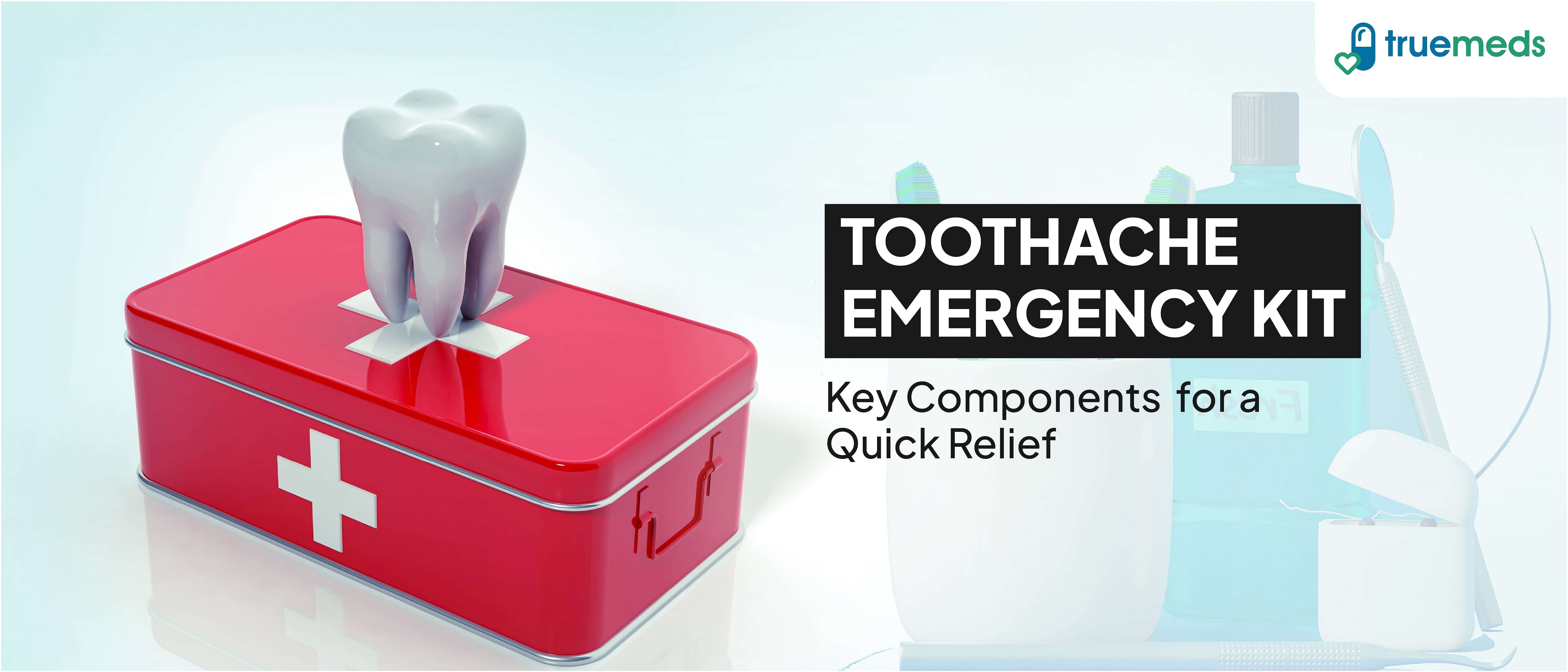
Essential First Aid Kit For Toothache: Must-Have Items
Last updated on : 01 Dec, 2025
Read time : 10 min
Toothaches are a common yet highly distressing aspect of dental health. The sudden onset of tooth pain can disrupt your daily routine, making even simple tasks like eating and drinking a challenge. This guide offers essential first-aid measures and items to provide temporary relief from tooth pain, but it is crucial to understand that these steps do not replace professional dental care. For long-term tooth pain relief and appropriate treatment, you must consult a dentist promptly [1].
Common Causes of Toothache
Toothaches can be caused by various dental issues. Let’s take a closer look at some of these:
- Tooth Decay (Cavities): Tooth decay is the most common cause of toothaches. It happens when acids produced by bacteria in your mouth wear away your tooth enamel, leading to cavities. If not treated promptly, these cavities can deepen and infect the tooth, causing substantial pain.
- Abscessed Tooth: An abscessed tooth refers to a painful infection at the root of a tooth or in between the gums. It usually results from untreated tooth decay, gum disease, or injury. Those suffering from an abscessed tooth often experience severe pain and swelling, and may even run a fever. An abscess is a serious medical condition that requires immediate professional treatment [2].
- Gum Disease: Gum diseases, such as gingivitis and periodontitis, can also lead to toothaches. When your gums are inflamed and infected, it can cause pain and sensitivity in the affected teeth.
- Tooth Fracture: A fractured or cracked tooth, often resulting from an injury, grinding teeth (known as bruxism), or excessive pressure from chewing hard foods, is another common culprit of toothache. Such fractures can cause sharp pain, especially when biting down or exposing the tooth to hot or cold temperatures.
- Impacted Wisdom Teeth: Wisdom teeth that don’t have enough room to emerge or grow properly can become impacted, leading to pain and discomfort. This issue often requires an intervention from your dentist or oral surgeon, such as an extraction.
Remember, if you’re experiencing persistent or severe tooth pain, particularly with fever or facial swelling (signs of an abscess), it’s essential to consult a dentist promptly for a proper diagnosis and treatment [2].
Symptoms of a Toothache
A toothache can be quite discomforting, and recognising the symptoms is the first step towards managing the pain and seeking professional dental care. You might be wrestling with a toothache if you notice:
- Persistent Pain: This might be continuous or intermittent discomfort in or around the troubled tooth.
- Sensitivity: You might experience heightened sensitivity when consuming hot, cold, or sweet foods and beverages.
- Swelling: You may experience swelling in your gums or face in the area around the affected tooth.
- Redness: Inflammation and redness of gums near the affected tooth are common, too.
- Bad Breath/Unpleasant Taste: A foul-smelling breath or an unpleasant taste in your mouth could also indicate an infection related to a toothache.
- Difficulty Chewing: Experiencing pain or discomfort when biting down or consuming food signifies a potential toothache.
Must-Have Items At Home for First Aid
Here are some must-have items at home that can aid in providing temporary, symptomatic relief from discomfort while you wait for your dental appointment:
1. Pain Relievers
Over-the-counter pain relievers, such as ibuprofen or acetaminophen (paracetamol), can help alleviate pain and reduce inflammation. Always follow the package directions for dosage and usage, and consult with a doctor or dentist if you have underlying health conditions or are taking other medications [2, 3].
2. Oral Anaesthetics
Oral anaesthetics containing ingredients like benzocaine can offer temporary relief by numbing the affected area. Apply them directly to the sore tooth and surrounding gums for quick respite, strictly adhering to the product instructions. Note that benzocaine should not be used in children under 2 years of age [2].
3. Salt and Warm Water
A saltwater rinse can help decrease inflammation and cleanse the affected area. Take a glass of warm water, mix half a teaspoon of salt in it, and swish it around your mouth before spitting it out [2].
4. Clove Oil
Clove oil possesses a chemical called eugenol, which has natural analgesic properties that can temporarily numb toothache pain [4]. Apply a small amount to a cotton ball and gently place it against the affected tooth or gum for relief. Do not swallow clove oil.
5. Cold Compress
Applying a cold compress to the cheek on the side of your painful tooth can help reduce swelling and numb the pain. Wrap some ice in a cloth, and apply it for 15–20 minutes at a time, resting between applications [2].
6. Dental Floss
Dental floss can help remove food particles lodged between teeth that may be irritating the gums and causing or exacerbating the discomfort. Be gentle to avoid causing further pain.
7. Temporary Filling Material
In case you’ve lost a filling or have a cracked tooth, temporary filling material can provide a short-term barrier to protect the sensitive area until you visit a dentist. You can find these kits at most chemists, but they are not a substitute for professional dental repair [5].
8. Hydrogen Peroxide Solution
A diluted solution of hydrogen peroxide, when used as a mouth rinse, may help disinfect your mouth and provide temporary relief from the pain of an infected tooth [6]. Mix equal parts of 3% hydrogen peroxide with water, swish around in your mouth, and spit out immediately (do not swallow).
Home Remedies for Toothache Relief
When a toothache strikes, here are a few other home remedies that you may find quite handy:
1. Teabags
When a chilled, wet teabag is applied to the affected area, it may help reduce swelling and provide temporary relief. This is often attributed to compounds like tannins in black tea, which can have mild astringent properties [7].
2. Garlic
Garlic has been recognised for its antimicrobial properties [8]. To use it, crush a garlic clove and mix it with a pinch of salt. The resulting paste can then be applied directly to your problematic tooth. While it may help with localised bacteria, its effect is temporary, and it should not delay professional treatment.
3. Onion
Similar to garlic, onions also possess antimicrobial and antiseptic properties [9]. While strong-tasting, a small piece of raw onion can be chewed or placed directly on the painful tooth to potentially kill bacteria and provide temporary relief from a toothache. It’s important to note that these remedies are not scientifically proven cures for toothaches and should only be used as a short-term measure.
Preventive Measures and Long-Term Solutions
While seeking instant relief is crucial during an episode of tooth pain, it’s equally vital to focus on preventive measures and long-term solutions. Some of these steps include:
1. Maintain Good Oral Hygiene
Maintaining good oral hygiene is crucial in preventing dental issues. This includes brushing your teeth at least twice daily with fluoride toothpaste, flossing every day to remove plaque and food particles between your teeth, and using an antibacterial mouthwash to reduce plaque buildup [1].
2. Regular Dental Check-Ups
Regular dental check-ups can help detect early signs of dental issues, preventing them from escalating into serious problems. Aim to visit your dentist every six months for professional cleaning and examination, or as recommended by your provider [1].
3. Healthy Diet
Your diet plays a significant role in your oral health. It’s advisable to limit the intake of sugary foods and drinks to prevent tooth decay. Instead, incorporate calcium and vitamin D-rich foods into your diet to fortify your teeth and bones. Staying well-hydrated is also essential in washing away harmful bacteria and food particles from your mouth.
4. Avoid Teeth Grinding
If you’re prone to grinding your teeth, a condition known as bruxism, consider wearing a custom-fitted mouthguard at night to protect your teeth. This will protect your teeth from unnecessary wear and tear that could lead to a toothache.
Conclusion
Toothache can occur unexpectedly, causing intense discomfort and disrupting daily life. While professional dental care is essential for long-term treatment, a well-stocked first aid kit offers immediate and temporary relief. Items such as over-the-counter pain relievers, clove oil, saltwater, and cold compresses can manage symptoms temporarily until professional help is available.
Incorporating simple home remedies and preventive strategies, such as good oral hygiene, regular dental check-ups, and a balanced diet, ensures long-term dental wellness. Being prepared allows you to act quickly when tooth pain occurs, but immediate consultation with a dentist is the only way to treat the underlying cause.
Frequently Asked Questions (FAQs)
How does clove oil help in relieving a toothache?
Clove oil, a common remedy for toothaches, contains eugenol, which has been shown to act as a local, temporary topical analgesic [4]. It numbs the area, providing short-term relief from a toothache.
Can a cold compress really help with a toothache?
Absolutely! A cold compress can help reduce local inflammation and numb pain, making it a simple yet effective first-aid treatment for toothaches [2].
Is it safe to use hydrogen peroxide for a toothache?
Yes, when diluted correctly (equal parts 3% hydrogen peroxide and water) and used only as a rinse (not swallowed), it can safely help disinfect your mouth and temporarily alleviate pain associated with infection [6].
How do I temporarily relieve my toothache before seeing a dentist?
Over-the-counter pain relievers, a saltwater rinse, or natural remedies like clove oil and cold compresses can provide temporary, symptomatic relief from tooth pain until you can see a dental professional [2].
What natural remedies are effective for tooth pain relief?
Common natural remedies include clove oil, which contains eugenol, and a saltwater rinse, which helps cleanse the area. Their effectiveness is temporary and may vary by individual [7].
How can I prevent toothaches from occurring?
Regular dental check-ups, brushing twice daily with fluoride toothpaste, flossing daily, and limiting sugary food and drink intake can significantly help in preventing toothaches [1].
What should I do if my toothache persists despite home treatment?
If your toothache persists despite home treatment, or if you experience fever, difficulty swallowing, or severe facial swelling, it’s critical to consult a dentist or seek urgent dental care immediately [2].
DISCLAIMER
This blog is intended for general informational and educational purposes only and is not a substitute for professional dental or medical advice, diagnosis, or treatment. Always seek the advice of a qualified dentist or other healthcare provider with any questions you may have regarding a medical condition or dental emergency.
References
[1] Mayo Clinic. (2024, February 20). Toothache: First aid. Retrieved October 2, 2025, from https://www.mayoclinic.org/first-aid/first-aid-toothache/basics/art-20056628
[2] Cleveland Clinic. (2022, November 11). What Is a Dental Emergency and Where To Go for Care. Retrieved October 2, 2025, from https://my.clevelandclinic.org/health/articles/11368–dental-emergencies-what-to-do
[3] American Dental Association (ADA). (n.d.). Oral Analgesics for Acute Dental Pain. Retrieved October 2, 2025, from https://www.ada.org/resources/ada-library/oral-health-topics/oral-analgesics-for-acute-dental-pain
[4] Elgendy, H., & Hussin, H. (2021). Clove Essential Oil (Syzygium aromaticum L. Myrtaceae): Extraction, Chemical Composition, Food Applications, and Essential Bioactivity for Human Health. Molecules, 26(21), 6387. https://doi.org/10.3390/molecules26216387
[5] American Dental Association (ADA). (n.d.). Dental Emergencies | MouthHealthy. Retrieved October 2, 2025, from https://www.mouthhealthy.org/all-topics-a-z/dental-emergencies
[6] WebMD. (n.d.). Remedies For a Toothache. Retrieved October 2, 2025, from https://www.webmd.com/oral-health/remedies-for-toothache
[7] Dis-Chem. (2024, October 9). Managing toothache and teething pain. Retrieved October 2, 2025, from https://www.dischem.co.za/articles/post/managing-toothache-and-teething-pain
[8] Ansari, H. R., & Soroush, Z. (2021). Antibacterial Properties of Organosulfur Compounds of Garlic (Allium sativum). International Journal of Food Properties, 24(1), 1332-1349. https://doi.org/10.1080/10942912.2021.1983058
[9] Ramesh, M., & Manian, R. (2022). Allium cepa: A Treasure of Bioactive Phytochemicals with Prospective Health Benefits. International Journal of Molecular Sciences, 23(3), 1184. https://doi.org/10.3390/ijms23031184














Disclaimer
Our healthcare experts have carefully reviewed and compiled the information presented here to ensure accuracy and trustworthiness. It is important to note that this information serves as a general overview of the topic and is for informational purposes only. It is not intended to diagnose, prevent, or cure any health problem. This page does not establish a doctor-patient relationship, nor does it replace the advice or consultation of a registered medical practitioner. We recommend seeking guidance from your registered medical practitioner for any questions or concerns regarding your medical condition.
Popular Articles


Recommended Articles



Recent Articles







Company
About UsHealth ArticleHealth StoriesDiseases & Health ConditionsAyurvedaAll MedicinesAll BrandsNeed HelpFAQSecuritySubscribe
Registered Office Address
Grievance Officer
Download Truemeds


Contact Us
Our customer representative team is available 7 days a week from 9 am - 9 pm.
v4.8.0

2025 - Truemeds | All rights reserved. Our content is for informational purposes only. See additional information.

Our Payment Partners