

- Medicines
- Personal Care
- Skin Cream
- Sunscreen
- Face Wash
- Skin and Body Soap
- Acne Care
- Body Lotions
- Moisturising Lotion
- Moisturising Cream
- Mosquito Repellent
- Moisturising Gel
- Body Wash
- Hair Oils
- Hair Shampoo
- Hair Conditioners
- Hair Supplements
- Hair Colour
- Hair Serum
- Hair Mask
- Hair Solutions
- Baby Diapers and Wipes
- Baby Lotion and Moisturising Cream
- Baby Bath Essentials
- Baby Skin Care
- Baby and Infant Food
- Baby Healthcare
- Women Multivitamins
- Ovulation Test Kit and Women Intimate Care
- Sanitary Pads
- Nutritional Drinks
- Condoms
- Lubricants
- Massage Gels
- Personal Body Massagers
- Men Performance Booster
- Sexual Health Supplements
- Massage Oils
- Ayurveda
- Tooth Paste
- Mouth Ulcer Gel
- Mouthwash
- Toothache and Gum Pain
- Tooth Brush
- Gargle Solution
- Orthopaedic Supports
- Adult Diapers
- Footwear
- Mobility and Support Accessories
- Urinary Support and Care
- Health Conditions
- Bone and Joint Care
- Digestive Care
- Eye Care
- Pain Relief
- Smoking Cessation
- Liver Care
- Stomach Care
- Cold and Cough
- Heart Care
- Kidney Care
- Piles, Fissures & Fistula
- Respiratory Care
- Mental Wellness
- Derma Care
- Pre and Probiotics
- Acidity
- Gas
- Constipation
- Loose Motion/Diarrhoea
- Digestive Fibres
- Digestive Enzymes
- Eye Lubricant Drops
- Lens Solution
- Safety Eye Wear
- Eye Cream
- Eye Vitamins and Supplements
- Eye Drops
- Eye Ointment and Gel
- Nicotine Patch
- Nicotine Gum
- Nicotine Lozenges
- Cough Syrups
- Chest Rubs and Balms
- Nasal Spray
- Lozenges
- Inhalant Capsules
- Cold and Cough Tablets
- Vitamins & Supplements
- Diabetes Care
- Healthcare Devices
- Homeopathic Medicine
- Health Guide
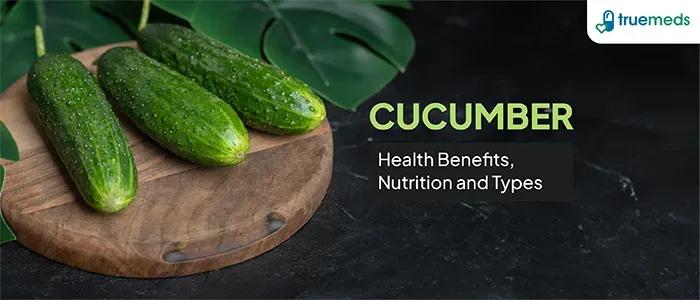
Top 13 Health Benefits of Cucumbers: Nutrition Facts & Side Effects
Last updated on : 01 Dec, 2025
Read time : 10 min
Cucumbers (Cucumis sativus) are a popular, low-calorie vegetable recognized for their high water content and rich profile of essential nutrients, including potassium, magnesium, and Vitamins C and K. They are often utilized to help promote hydration, support digestive health, and contribute to overall well-being. This guide explores the nutritional profile, evidence-based benefits, and potential side effects of incorporating cucumbers into your diet.
Cucumber Nutritional Facts
Cucumbers are notable for their high water content and minimal calories, making them a popular food choice for those managing weight. The table below presents the estimated nutritional content for a 99-gram (approximately 3.5 oz) serving of sliced cucumber:
| Nutrient | Amount (per 99 g / 3.5 oz) | %DV |
| Calories | 15 kcal | – |
| Total Fat (g) | 0 | 0% |
| Sodium (mg) | 2 mg | 0% |
| Potassium (mg) | 147 mg | 3% |
| Total Carbohydrate (g) | 3.6 g | 1% |
| Dietary Fibre (g) | 0.5 g | 2% |
| Sugars (g) | 1.7 g | – |
| Protein (g) | 0.7 g | 1% |
| Vitamin A | – | 1% |
| Vitamin C | – | 3% |
| Vitamin K | – | 16% |
| Calcium | – | 1% |
| Iron | – | 1% |
Top 13 Potential Health Benefits of Cucumbers
Incorporating cucumbers into your diet, especially during warmer months, can contribute to staying hydrated and maintaining a balanced nutrient intake. Here are some of the potential benefits associated with eating cucumbers:
1. Reducing Temporary Eye Puffiness
Cucumbers are a traditional remedy for soothing the delicate skin around the eyes. Applying cold cucumber slices can provide a cooling effect that may temporarily reduce the appearance of puffiness. This effect is often attributed to the cucumber’s low temperature and high water content, which can help constrict blood vessels and reduce swelling [1].
2. Supporting Skin Hydration and Soothing
Cucumber contains beneficial compounds, including Vitamin C and caffeic acid, which possess antioxidant properties [2]. Cucumber extracts are commonly used in topical products to help soothe irritated skin, such as that caused by sunburn or general irritation, and improve its overall moisture content [3]. However, there is limited clinical evidence that it can directly treat serious conditions like eczema.
3. Aiding in Body Temperature Regulation
Due to their remarkable water content—approximately 95%—cucumbers have a natural cooling effect when consumed [4]. Consuming cucumbers or cucumber-infused water can be a refreshing and simple way to support hydration and help the body regulate its temperature, which is particularly important during periods of heat exposure. However, it is not a substitute for standard medical treatment in cases of heat stroke.
4. Supporting Weight Management
Cucumbers are an excellent addition to a weight management plan because they are very low in calories (approximately 15 kcal per 100 grams) and high in water [5]. Eating foods with high water and fibre content can increase feelings of fullness (satiety), which may help reduce overall calorie intake.
5. Potential Soothing Effect on Oral Mucosa
While there is no robust clinical evidence to support the claim of “clearing throat infections,” some traditional practices suggest that boiling cucumber leaves and combining them with roasted cumin seed powder can offer a soothing effect for throat discomfort [6]. This should not replace prescribed medical treatment for bacterial or viral infections.
6. Hydration and Natural Detoxification
Comprising around 95% water, cucumbers significantly contribute to daily fluid intake, which is essential for maintaining hydration and supporting the body’s natural detoxification processes [4]. Adequate hydration is crucial for kidney function, nutrient transport, and waste removal.
7. Contribution to Blood Pressure Management
Cucumbers are a good source of potassium, an essential electrolyte that plays a key role in balancing sodium levels in the body and regulating blood pressure [7]. Consuming potassium-rich foods, as part of a balanced diet, may help support healthy blood pressure levels [8].
8. Digestive Health Support
The high water content and presence of dietary fibre in cucumbers help bulk up stool and support regular bowel movements, which can aid in preventing constipation [9]. The soluble fibre also contributes to a slower digestion process.
9. Supporting Healthy Blood Sugar Levels
Cucumbers have a low Glycemic Index (GI) and are low in carbohydrates, making them a suitable food for individuals with diabetes [10]. Studies have suggested that extracts from cucumber may play a role in reducing blood sugar levels, although these findings are mostly based on animal studies, and human clinical trials are needed to confirm this benefit [11].
10. Nutrients for Skin Health
Applying cucumber extract or juice to the skin has been studied for its potential to help moisturize and soothe the skin [3]. Its content of antioxidants, such as Vitamin C and manganese, may help protect skin cells from oxidative stress and environmental damage [2].
11. Antioxidant and Potential Protective Compounds
Cucumbers contain compounds called cucurbitacins and antioxidants like flavonoids, which are being investigated for their potential protective cellular effects [12]. The fibre in cucumbers supports digestive health, which is an important component of overall cancer risk reduction, especially for colorectal cancer. However, cucumbers should not be viewed as a standalone cancer preventative or treatment.
12. Benefits for Hair, Nails, and Breath
Cucumbers contain silica, a trace mineral that is thought to be beneficial for strengthening connective tissues, including those in hair and nails [13]. Furthermore, chewing on a cucumber slice may help temporarily refresh breath by increasing saliva production and potentially neutralizing odour-causing bacteria [14].
13. Supporting Electrolyte Balance during Pregnancy
Cucumbers are a source of electrolytes, notably potassium, which are important for maintaining fluid balance and healthy blood pressure. For pregnant women, ensuring adequate electrolyte and fluid intake is crucial for maternal health and fetal development.
How to Consume Cucumbers?
Cucumbers are versatile and can be enjoyed in many forms:
- Raw: Sliced and eaten as a snack, or added to fresh salads.
- Pickled: Prepared by soaking slices in a brine of vinegar, salt, and spices.
- Tzatziki: Grated cucumber mixed into a Greek dip with yoghurt, garlic, and dill.
- Infused Water: Sliced cucumber added to water for a refreshing, hydrating drink.
- Raita: A traditional Indian side dish with grated cucumber, yoghurt, salt, cumin, and mint.
Who Should Exercise Caution with Cucumbers?
While generally safe, individuals with specific health conditions should be mindful of their cucumber intake:
People with Allergies: Those with known allergies to cucumbers or other related foods (such as melons or ragweed pollen) should avoid them.
Individuals with Kidney Concerns: Due to their potassium content, individuals with pre-existing kidney conditions or those on a potassium-restricted diet should consult their physician regarding appropriate intake.
Side Effects of Consuming Cucumbers
Cucumbers are generally safe in moderation. Potential side effects primarily occur with excessive consumption or due to natural compounds:
- Toxicity (Cucurbitacins): Some cucumbers contain high levels of cucurbitacins, bitter-tasting compounds that can be toxic in large amounts and cause stomach discomfort. It is best to avoid consuming excessively bitter parts of the cucumber.
- Digestive Discomfort: Some people may experience bloating or gas due to the fibre content, especially if consumed in very large quantities or if they have a sensitive digestive system.
- Diuretic Effect: The high water content can lead to increased urination. While this helps hydration, excessive intake combined with inadequate fluid replacement could theoretically lead to mild electrolyte imbalance or temporary discomfort, though this is rare with typical dietary consumption.
Conclusion
Cucumbers are an excellent, low-calorie, and highly hydrating food rich in essential vitamins, minerals (like Vitamin K and potassium), and antioxidants. A single cup of sliced cucumber (with peel) provides about 15 calories, contributing modestly to your daily intake of key nutrients. Including cucumbers in your diet is a sensible choice for promoting hydration, supporting digestive regularity, and adding valuable nutrients without a significant caloric burden. It is a valuable component of a healthy diet but should not be relied upon as a primary treatment for chronic diseases like diabetes or hypertension.
Frequently Asked Questions (FAQs)
Is it good to eat a cucumber every day?
It is generally beneficial to eat a cucumber every day as part of a balanced diet. Its low-calorie and high-water content, along with its vitamins and minerals, make it a healthy addition. However, individuals with specific health conditions (like kidney issues) should consult a healthcare professional.
What are the key health benefits of cucumbers?
Key health benefits include maintaining hydration levels due to high water content, supporting weight management due to low calories, contributing to blood pressure regulation via potassium content, aiding digestion with fibre, and providing antioxidants for overall health.
What is the best time to eat a cucumber?
There is no “best” time; however, consuming it during the day, such as a snack or part of a meal, can help maintain hydration and provide a refreshing boost. Eating it very late at night might occasionally lead to mild digestive discomfort in sensitive individuals.
What organs are cucumbers good for?
Cucumbers are generally beneficial for the skin (due to hydration and antioxidants) and the digestive system (due to water and fibre), which supports overall gut health.
Can I eat cucumber skin?
Yes, you can eat the cucumber peel. The peel contains additional nutrients, antioxidants, and fibre compared to the flesh. Ensure the cucumber is thoroughly washed to remove dirt or potential pesticide residues.
References
[1] Akhtar, N., Mehmood, A., Khan, B. A., Mahmood, T., Muhammad, H., Khan, S., & Saeed, T. (2011). Exploring cucumber extract for skin rejuvenation. African Journal of Biotechnology, 10(7), 1206-1216. https://www.ajol.info/index.php/ajb/article/view/92859
[2] Mukherjee, P. K., Nema, N. K., Maity, N., & Sarkar, B. K. (2012). Phytochemical and therapeutic potential of cucumber. Fitoterapia, 84, 227–236. https://doi.org/10.1016/j.fitote.2012.10.003 (Reference discusses antioxidants and general therapeutic potential).
[3] Akhtar, N., Mehmood, A., Khan, B. A., Mahmood, T., Muhammad, H., Khan, S., & Saeed, T. (2011). Exploring cucumber extract for skin rejuvenation. African Journal of Biotechnology, 10(7), 1206-1216. https://www.ajol.info/index.php/ajb/article/view/92859
[4] Chakraborty, S., & Rayalu, S. (2021). Health beneficial effects of cucumber. Cucumber Economic Values and its cultivation and breeding. IntechOpen. https://doi.org/10.5772/intechopen.96053
[5] U.S. Department of Agriculture. (2024). Cucumber, with peel, raw. FoodData Central. https://fdc.nal.usda.gov/fdc-app.html#/food-details/168407/nutrients
[6] Akhtar, P., Ahmad, I., Jameela, A., Ashfaque, M., & Begum, Z. (2020). Energizing effectiveness of cucumber (Khayarain) for health. A review article. Journal of Emerging Technologies and Innovative Research, 7(11), 906-917. https://alameenunanimch.org/wp-content/uploads/2021/08/1.pdf
[7] Proboningsih, J., Najib, M., & Zamroni, M. (2024). Use of cucumber as a complementary intervention for preventing complications in hypertension. Gaceta Médica de Caracas, 132. https://saber.ucv.ve/ojs/index.php/rev_gmc/article/view/29734
[8] World Health Organization. (2012). Guideline: Potassium intake for adults and children. https://www.who.int/publications/i/item/9789241504829
[9] Mukherjee, P. K., Nema, N. K., Maity, N., & Sarkar, B. K. (2012). Phytochemical and therapeutic potential of cucumber. Fitoterapia, 84, 227–236. https://doi.org/10.1016/j.fitote.2012.10.003
[10] Glycemic Index Foundation. (n.d.). Glycemic Index Food Search. https://www.gisymbol.com/low-gi-foods/
[11] Mukherjee, P. K., Nema, N. K., Maity, N., & Sarkar, B. K. (2012). Phytochemical and therapeutic potential of cucumber. Fitoterapia, 84, 227–236. https://doi.org/10.1016/j.fitote.2012.10.003
[12] Mukherjee, P. K., Nema, N. K., Maity, N., & Sarkar, B. K. (2012). Phytochemical and therapeutic potential of cucumber. Fitoterapia, 84, 227–236. https://doi.org/10.1016/j.fitote.2012.10.003
[13] Akhtar, P., Ahmad, I., Jameela, A., Ashfaque, M., & Begum, Z. (2020). Energizing effectiveness of cucumber (Khayarain) for health. A review article. Journal of Emerging Technologies and Innovative Research, 7(11), 906-917. https://alameenunanimch.org/wp-content/uploads/2021/08/1.pdf
[14] Akhtar, P., Ahmad, I., Jameela, A., Ashfaque, M., & Begum, Z. (2020). Energizing effectiveness of cucumber (Khayarain) for health. A review article. Journal of Emerging Technologies and Innovative Research, 7(11), 906-917. https://alameenunanimch.org/wp-content/uploads/2021/08/1.pdf














Disclaimer
Our healthcare experts have carefully reviewed and compiled the information presented here to ensure accuracy and trustworthiness. It is important to note that this information serves as a general overview of the topic and is for informational purposes only. It is not intended to diagnose, prevent, or cure any health problem. This page does not establish a doctor-patient relationship, nor does it replace the advice or consultation of a registered medical practitioner. We recommend seeking guidance from your registered medical practitioner for any questions or concerns regarding your medical condition.
Popular Articles



Recommended Articles




Recent Articles









Company
About UsHealth ArticleHealth StoriesHealth LibraryDiseases & Health ConditionsAyurvedaUnderstanding Generic MedicinesAll MedicinesAll BrandsNeed HelpFAQSecuritySubscribe
Registered Office Address
Grievance Officer
Download Truemeds


Contact Us
Our customer representative team is available 7 days a week from 9 am - 9 pm.
v4.10.2

2025 - Truemeds | All rights reserved. Our content is for informational purposes only. See additional information.

Our Payment Partners




