

- Medicines
- Personal Care
- Skin Cream
- Sunscreen
- Face Wash
- Skin and Body Soap
- Acne Care
- Body Lotions
- Moisturising Lotion
- Moisturising Cream
- Mosquito Repellent
- Moisturising Gel
- Body Wash
- Hair Oils
- Hair Shampoo
- Hair Conditioners
- Hair Supplements
- Hair Colour
- Hair Serum
- Hair Mask
- Hair Solutions
- Baby Diapers and Wipes
- Baby Lotion and Moisturising Cream
- Baby Bath Essentials
- Baby Skin Care
- Baby and Infant Food
- Baby Healthcare
- Women Multivitamins
- Ovulation Test Kit and Women Intimate Care
- Sanitary Pads
- Nutritional Drinks
- Condoms
- Lubricants
- Massage Gels
- Personal Body Massagers
- Men Performance Booster
- Sexual Health Supplements
- Massage Oils
- Ayurveda
- Tooth Paste
- Mouth Ulcer Gel
- Mouthwash
- Toothache and Gum Pain
- Tooth Brush
- Gargle Solution
- Orthopaedic Supports
- Adult Diapers
- Footwear
- Mobility and Support Accessories
- Urinary Support and Care
- Health Conditions
- Bone and Joint Care
- Digestive Care
- Eye Care
- Pain Relief
- Smoking Cessation
- Liver Care
- Stomach Care
- Cold and Cough
- Heart Care
- Kidney Care
- Piles, Fissures & Fistula
- Respiratory Care
- Mental Wellness
- Derma Care
- Pre and Probiotics
- Acidity
- Gas
- Constipation
- Loose Motion/Diarrhoea
- Digestive Fibres
- Digestive Enzymes
- Eye Lubricant Drops
- Lens Solution
- Safety Eye Wear
- Eye Cream
- Eye Vitamins and Supplements
- Eye Drops
- Eye Ointment and Gel
- Nicotine Patch
- Nicotine Gum
- Nicotine Lozenges
- Cough Syrups
- Chest Rubs and Balms
- Nasal Spray
- Lozenges
- Inhalant Capsules
- Cold and Cough Tablets
- Vitamins & Supplements
- Diabetes Care
- Healthcare Devices
- Homeopathic Medicine
- Health Guide
Reetha
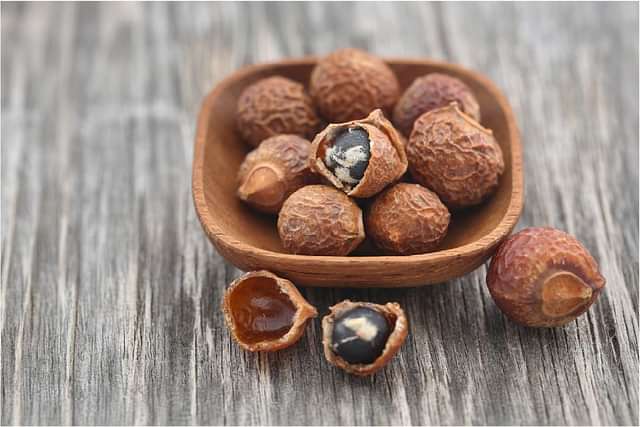
Reetha, also called soapnut, is the dried fruit of the Sapindus mukorossi tree, used in Ayurveda and traditional Indian households as a natural, saponin-rich cleanser. It is applied externally to wash and condition hair, care for the scalp and gently cleanse the skin, and is a common base for herbal shampoos, hair packs and soaps. This page covers its Ayurvedic properties, traditional uses, potential benefits, side effects, precautions and safe use.
 50
50Last updated on : 29 Jul, 2026
Read time : 12 mins
What is Reetha?
In Ayurveda, reetha is known as Arishtaka, a name tied to its long reputation as a purifying, protective agent. It is the fruit of the Sapindus mukorossi tree of the Sapindaceae family, which grows across the sub-Himalayan tracts, the Shivaliks and the upper Indo-Gangetic plains of northern India, usually between 200 and 1,500 metres. The tree fruits from about July and the drupes ripen by November to December. The part traditionally used is the dried fruit rind (pericarp), prized for its natural foaming, cleansing action.
Classical Ayurvedic texts place reetha among the cleansing herbs that act mainly on the hair and scalp, and describe it by its taste (rasa), potency (virya), post-digestive effect (vipaka) and action on the doshas.
Key Facts
| Feature | Details |
| Botanical name | Sapindus mukorossi Gaertn. (North Indian soapnut). The South Indian soapnut is Sapindus trifoliatus |
| Family | Sapindaceae |
| Part used | Dried fruit rind (pericarp) |
| Ayurvedic name / category | Arishtaka; classed among cleansing herbs acting on the hair and scalp |
| Ayurvedic properties | Rasa, Virya, Vipaka and dosha action
|
| Key active compounds | Triterpenoid saponins (oleanane, dammarane and tirucallane types), flavonoids, tannins and sugars |
| Traditional uses | Natural hair wash, scalp care and gentle skin cleansing; also a traditional household cleanser |
| Common forms | Dried fruit/pods, powder, decoction (liquid), and blends in shampoos, soaps and hair packs |
| General use | External use, about 2 to 3 times a week for hair; not intended to be swallowed |
| Best used | Applied externally to hair, scalp or skin and rinsed off; kept well away from the eyes |
| Key safety note | For external use only. Saponins can irritate the eyes and, if swallowed, the stomach; overuse can dry the hair and scalp |
Alternative Names of Reetha
Reetha is known by several names across India:
- Botanical name: Sapindus mukorossi
- Sanskrit: Arishtaka, Phenila
- Hindi: Reetha, Ritha, Aritha
- English: Soapnut, Soapberry, Washnut, Indian soapberry
- Telugu: Kunkudukaya
- Gujarati: Arithi, Aritho, Arithu
- Malayalam: Chavakkay, Pasakkottamaram, Uruvanchi
Chemical Constituents of Reetha
Reetha contains several naturally occurring compounds, with triterpenoid saponins being the primary bioactive constituents responsible for its cleansing properties. The main constituents include:
- Triterpenoid saponins: The principal bioactive compounds found mainly in the fruit rind. These natural surfactants produce the characteristic lather and cleansing action. Reported types include oleanane, dammarane and tirucallane saponins.
- Flavonoids: Plant compounds with antioxidant properties.
- Tannins: Naturally occurring astringent compounds traditionally associated with scalp and skin care.
- Sugars and mucilage: Present in the fruit pulp.
- Seed oil: The seeds contain a fatty oil composed mainly of triglycerides, including glycerides of oleic, palmitic and arachidic acids. This oil is found in the seed and is not responsible for Reetha's cleansing properties.
Medicinal Properties of Reetha
Reetha (Sapindus mukorossi), commonly known as soapnut, is a traditional medicinal plant used in Ayurveda and Unani medicine. In Ayurveda, it is described as supporting respiratory health, skin care and digestion. It is also traditionally associated with balancing Kapha dosha and promoting Lekhana (cleansing) action. Reetha is commonly available as a powder (churna) and is also used in hair and skin care preparations. Reetha is associated with the following properties:
- Anti-inflammatory: May help soothe mild inflammation and support the body's natural healing response.
- Antimicrobial: Traditionally believed to help inhibit the growth of certain bacteria and fungi on the skin.
- Antioxidant: May help protect body cells from damage caused by free radicals.
- Expectorant: Traditionally believed to support the loosening and clearing of mucus from the airways.
- Carminative: May help ease mild gas and bloating after meals.
- Antispasmodic: Is traditionally believed to help relax mild muscle spasms in the digestive tract.
These properties are based largely on traditional Ayurvedic knowledge and preliminary laboratory studies, and further research is needed to confirm them in humans. This information is for educational purposes only and does not replace professional medical advice. Please consult a qualified Ayurvedic practitioner or physician before using Reetha for any health concern.
Key Health Benefits of Reetha
Most of reetha’s value for health and beauty comes from its saponins, which cleanse gently without stripping the hair and skin. Its main benefits are:
Hair and Scalp Cleansing
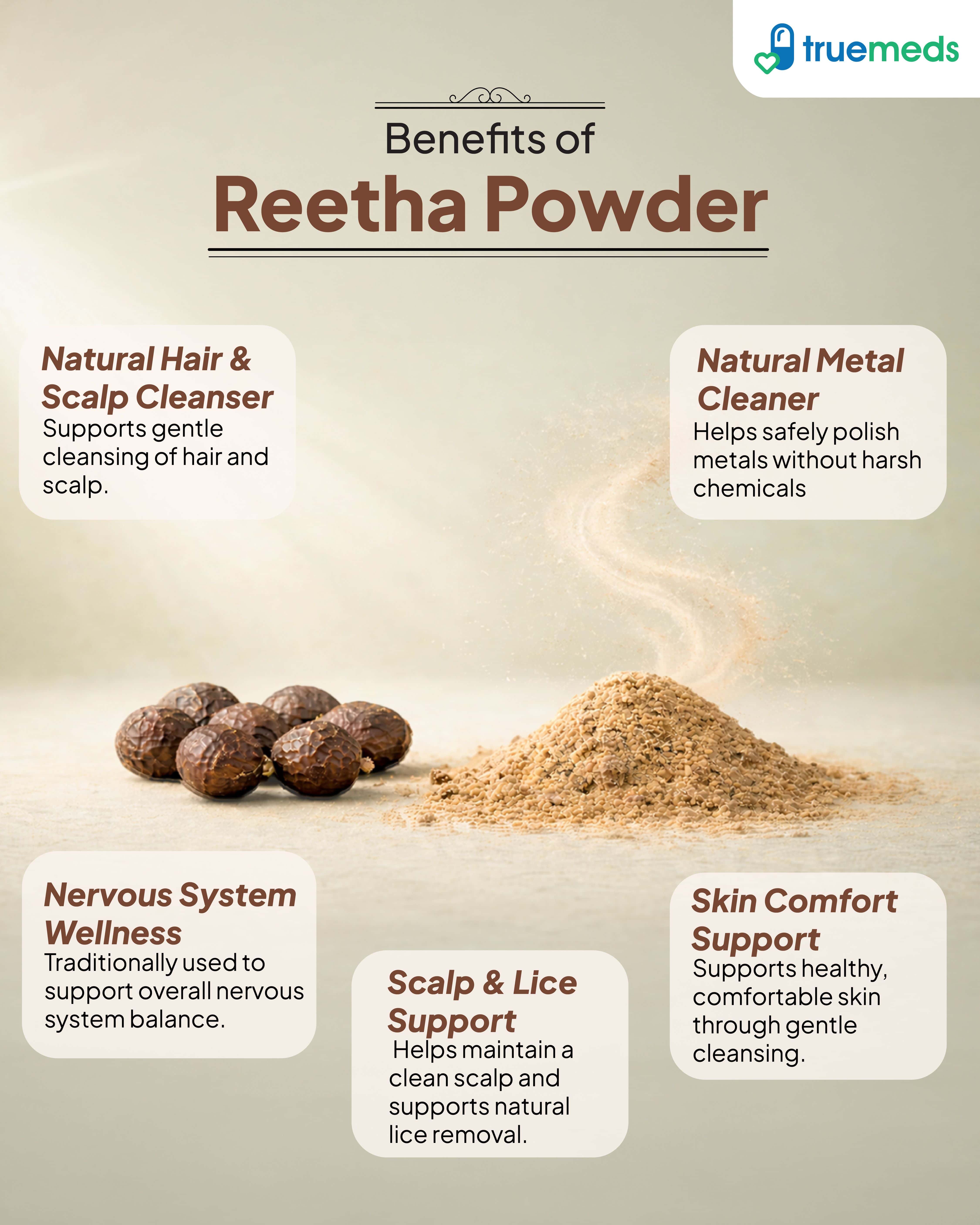
Reetha’s saponins act as a mild natural surfactant, lifting away oil, sweat and product build-up while leaving some of the scalp’s protective sebum in place. This makes it a gentle alternative to harsh shampoos and one of the oldest natural hair washes in Indian tradition.
Scalp Health Support
By loosening dead skin and excess oil, reetha helps keep the scalp clean and can reduce the flaking linked with mild dandruff. A clean scalp is a more comfortable base for healthy hair, though reetha is a wash-off cleanser rather than a cure for scalp disease.
Reetha for Hair Softness and Shine
Regular gentle washing with reetha removes the dulling film of residue on the hair shaft, so hair tends to look cleaner, softer and more lustrous. It is often blended with shikakai and amla in hair packs to add extra smoothness and manageability.
Traditional Use for Head Lice
Reetha has a long traditional use for washing lice from the scalp, and laboratory work suggests its saponins have insecticidal activity. It can be a gentler-smelling option than chemical treatments, but for an active infestation a proven medicated treatment is more reliable.
Skin Cleansing
As a mild cleanser, reetha paste can lift everyday dirt and excess oil from the skin without the tightness some soaps cause, which is why it features in traditional face and body washes. People with sensitive skin should patch-test first, as saponins can irritate.
Common Uses of Reetha
Beyond its benefits, reetha is used day to day in a few well-established ways, mostly around cleansing:
As an Natural Shampoo and Hair Wash
Reetha pods, boiled or soaked to release their saponins, are traditionally used as a sulfate-free alternative to commercial shampoo. The liquid is worked into the scalp and hair, then rinsed out, leaving hair cleansed without the heavier stripping effect of some detergent-based shampoos.
Ingredient in Ayurvedic Hair and Skin Formulations
Reetha is a common component in herbal hair oils, hair packs, and cleansing powders, often combined with shikakai, amla, or neem. In these blends it primarily contributes cleansing action, while other herbs are typically responsible for additional effects such as conditioning or scalp soothing.
Mild Face and Body Cleanser
A diluted reetha paste or decoction is sometimes used as a gentle face or body wash in traditional practice. As with any saponin-based cleanser, it's best patch-tested first, since saponins can be irritating for some skin types, particularly sensitive or broken skin.
Precautions While Using Reetha
Reetha is generally well tolerated on the skin and hair, but a few simple precautions keep it safe:
Keep it away from the eyes
Reetha’s saponins sting and irritate the eyes. When washing hair, keep the lather from running into the eyes, and if it does, rinse with plenty of clean water straight away.
Dry or Sensitive Scalp
Reetha's natural cleansing action may leave a dry or sensitive scalp feeling tighter. If you have a dry scalp, consider mixing the powder with yoghurt or a small amount of oil, and limit its use to once or twice a week.
Patch-test before first use
If you have sensitive skin, dab a little of the reetha mixture on your inner forearm and wait 24 hours. Only use it on the scalp or face if there is no redness, itching or irritation.
Do not overuse it
Washing too often strips the natural oils that protect hair and scalp, leaving hair dry and rough. Two to three washes a week is enough for most people.
Do not swallow it
Reetha is for external use. If swallowed, its saponins can irritate the mouth and stomach and cause nausea, so keep it out of reach of children.
How to Use
Here’s a step-by-step guide on how to use reetha and the forms in which it is available:
1. Reetha Powder
- How to Use:
- Mix reetha powder with water to create a smooth paste.
- Mix it with other herbal powders like shikakai or amla for extra benefits.
- Apply the paste to your scalp and hair, leaving it on for 10-15 minutes.
- Rinse thoroughly with water.
- Benefits:
- Reetha powder for hair acts as a natural shampoo, cleansing the scalp, removing dandruff, and promoting shiny, healthy hair without stripping away natural oils.
2. Reetha Oil
- How to Use:
- Warm 5-10 drops of reetha oil and gently massage it into your scalp using circular motions.
- Leave it on for a few hours or overnight for deeper nourishment.
- Wash it off with mild shampoo the next day.
- Benefits:
- Reetha oil nourishes the scalp, strengthens hair roots, reduces hair fall, and adds natural shine.
3. Reetha Liquid Shampoo
- How to Use:
- Boil reetha fruits in water for 30 minutes and strain the liquid.
- Use this liquid as a natural shampoo.
- Apply it on wet hair and massage for a few minutes before rinsing thoroughly.
- Benefits:
- The natural shampoo cleanses the hair gently, promotes hair growth, and prevents scalp infections.
4. Reetha Hair Pack
- How to Use:
- Mix reetha powder with yoghurt, honey, or aloe vera gel to create a nourishing hair mask.
- Apply the mask to your scalp and hair.
- Leave it on for 20-30 minutes, then wash off with lukewarm water.
- Benefits:
- This reetha hair pack deep cleanses the scalp, adds shine, improves hair texture, and strengthens hair roots.
Herbs Traditionally Used With Reetha
Reetha is rarely used alone in hair care. It is usually blended with a few companion herbs that add cleansing, conditioning or strengthening effects:
| Herb | How it is used with reetha |
| Shikakai (Acacia concinna) | The classic partner to reetha. Shikakai adds mild, low-lather cleansing and helps detangle and soften hair, balancing reetha’s stronger foaming action for an everyday hair wash. |
| Amla (Phyllanthus emblica) | Added for its vitamin C and antioxidants. In traditional hair packs amla is used to support shine and scalp health and to temper the drying effect of reetha. |
| Hibiscus (Hibiscus rosa-sinensis) | Flowers and leaves are blended in for their natural mucilage, which conditions and smooths hair. Hibiscus is a common addition to reetha-based masks for softness. |
| Bhringraj (Eclipta alba) | A traditional hair herb often combined with reetha in oils and packs, valued in Ayurveda for supporting the scalp and the look of fuller hair. |
| Fenugreek / Methi (Trigonella foenum-graecum) | Soaked seeds add slip and conditioning to a reetha wash and are traditionally used to soothe the scalp and reduce flaking. |
Dosage
Reetha is measured by how it is applied and how often, not by an oral dose. Use these simple guides:
For hair care
- Powder: Mix 2 to 3 tablespoons with water (and shikakai or amla if you like) into a paste, and use on the scalp and hair two to three times a week.
- Liquid: Boil 5 to 6 pods in water to make a natural shampoo and use it in place of commercial shampoo two to three times a week.
For skin care
- Paste: Mix 1 to 2 tablespoons of powder with water and apply to the area once or twice a week as a gentle cleanser. Patch-test first.
Disclaimer: These are traditional external-use guides, not medical doses. If you have sensitive skin, allergies, a scalp condition or any health concern, speak to a doctor or qualified Ayurvedic practitioner before use.
Side Effects of Reetha
Used sensibly on the outside of the body, reetha rarely causes problems. The side effects that do occur are usually mild:
Skin irritation
People with sensitive skin may notice redness or itching, especially on the face. Patch-test before using reetha over a larger area.
Dry hair and scalp
Frequent use strips natural oils and can leave hair dry. Limit washing to two or three times a week and add a moisturiser such as yoghurt or aloe vera to the mix.
Eye irritation
The saponins sting the eyes. Keep reetha away from the eyes while washing, and rinse at once with water if any gets in.
Interaction of Reetha With Other Drugs
There are no well-documented interactions between reetha and prescription medicines when it is used externally on the hair or skin. It is commonly combined with amla and shikakai without trouble. As a sensible precaution, anyone using medicated scalp or skin treatments, or applying reetha to broken or inflamed skin, should check with a doctor or qualified Ayurvedic practitioner first.
Storage of Reetha
Store reetha pods and powder in a cool, dry place, out of direct sunlight and away from moisture, which can cause clumping or mould. Keep powder and any prepared liquid in clean, airtight containers. Use freshly boiled reetha liquid within a few days, as it has no preservatives and can spoil.
Key Takeaways
- Reetha (soapnut) is a natural, saponin-rich cleanser used mainly to wash and condition hair, care for the scalp and gently cleanse the skin.
- It is for external use. It suits most people but can irritate sensitive skin, so patch-test first.
- Overuse dries the hair and scalp; two to three washes a week is usually enough.
- Keep it away from the eyes, and do not swallow it.
- Reetha is not a treatment for any medical condition; see a doctor for scalp, skin or other health problems.
FAQs
Can I use Reetha with Amla?
Is it safe to use reetha every day?
Can reetha help with hair fall?
Does reetha remove grey hair?
Can reetha be used with amla and shikakai?
Is reetha safe to swallow?
References
- Suhagia, B. N., Rathod, I. S., & Sindhu, S. (2011). Sapindus mukorossi (Areetha): An overview. International Journal of Pharmaceutical Sciences and Research, 2(8), 1905–1913. https://doi.org/10.13040/IJPSR.0975-8232.2(8).1905-13
- Sochacki, M., & Vogt, O. (2022). Triterpenoid saponins from washnut (Sapindus mukorossi Gaertn.), a source of natural surfactants. Plants, 11(18), 2355. https://doi.org/10.3390/plants11182355
- Singh, S., & Ali, M. (2019). Sapindus mukorossi: A review. The Pharma Innovation Journal, 8(12), 88–96. https://www.thepharmajournal.com/archives/2019/vol8issue12/PartB/8-11-1-318.pdf
Other Ayurvedic Ingredients


Explore other categories
Latest health articles





Top Health Essentials




Top-selling ayurvedic products














Disclaimer
Top-Selling Medicines:
...View more
Top-OTC medicines:
...View more
Top-selling healthcare devices:
...View more
Company
About UsHealth ArticleHealth StoriesHealth LibraryDiseases & Health ConditionsAyurvedaUnderstanding Generic MedicinesAll MedicinesAll BrandsNeed HelpFAQSecuritySavings CalculatorAdvertise with UsSubscribe
Registered Office Address
Grievance Officer
Download Truemeds


Contact Us
Our customer representative team is available 7 days a week from 9 am - 9 pm.
v4.28.13

2026 - Truemeds | All rights reserved. Our content is for informational purposes only. See additional information.

Our Payment Partners