Key Takeaways
- Non-stick pans are safe when used correctly at temperatures below 260°C and kept undamaged
- PFOA, the chemical linked to cancer, was phased out of non-stick cookware manufacturing
- Scratched coatings may release thousands of microplastic particles into food
- Replace pans showing deep scratches, peeling, flaking, or warping
- Avoid overheating empty non-stick pans, and use wooden or silicone utensils when possible
- Pet birds are extremely vulnerable to fumes from overheated non-stick cookware
If you have been wondering whether a non-stick pan is good for health, the answer depends on how you use and maintain it. Non-stick pans become unsafe when overheated above 260°C, when the coating is scratched or damaged, or when older cookware may contain PFOA[1]. Under normal cooking conditions with proper care, modern non-stick cookware poses minimal health risks. However, damaged or overheated pans can release toxic fumes and microplastic particles into your food and air.
This article explains when non-stick pans transition from safe to unsafe, the difference between PFOA and PTFE, signs your pan needs replacement, and practical guidelines for safe use. This is general consumer safety education, not a recommendation for or against any specific brand.
How non-stick coatings work
Non-stick pans are coated with polytetrafluoroethylene (PTFE), commonly known by the brand name Teflon. PTFE creates an extremely smooth surface that prevents food from sticking, allowing cooking with minimal oil[2].
Under normal cooking temperatures, PTFE remains stable and chemically inert. The coating does not react with food or dissolve into your meals during typical cooking. However, this stability has limits: when heated beyond certain temperatures, the coating begins to break down and release fumes[2].
Are non-stick pans safe under normal use?
For everyday cooking at normal temperatures, modern non-stick pans are generally considered safe. When you cook on medium to medium-high heat and the pan remains undamaged, the PTFE coating stays stable[1].
The primary safety concerns arise from overheating the cookware or cooking with scratched or damaged coatings. When heated above 260°C, the non-stick coating can break down and release harmful fumes. Although modern non-stick pans are mostly PFOA-free, avoiding excessive heat and replacing old or damaged cookware can help reduce potential health risks[1].
PFOA vs PTFE: what's actually the concern?
Understanding the difference between PFOA and PTFE is essential when evaluating whether non-stick pans are toxic to your health.
PTFE (the coating itself): This is the actual non-stick surface on your pan. PTFE is stable under normal cooking conditions and does not pose health risks when used properly[1].
PFOA (previously used in manufacturing): Perfluorooctanoic acid was historically used to help bond PTFE to pan surfaces during manufacturing. In November 2023, the International Agency for Research on Cancer (IARC) classified PFOA as carcinogenic to humans (Group 1), with limited evidence linking it to renal cell carcinoma and testicular cancer. PFOS, a related compound, was classified as possibly carcinogenic (Group 2B)[3].
The important distinction: PFOA and PFOS have been phased out and replaced in the United States with other PFAS in recent years. Modern non-stick cookware does not contain these compounds. However, one characteristic of these per- and polyfluoroalkyl substances (PFAS) is that they break down very slowly and can accumulate in people, animals, and the environment over time[4].
When do non-stick pans become unsafe?
The following table outlines specific conditions that can make non-stick pans harmful[2],[5],[6]:
| Condition | What Happens | Health Risk |
|---|---|---|
| Overheating above 260°C | PTFE coating breaks down and releases fumes | flu-like symptoms including fever, chills, and headache |
| Surface cracks or scratches on coating | Approximately 9,100 microplastic and nanoplastic particles may release during cooking | Potential microplastic ingestion; long-term effects still being studied |
| Significant damage (cracks or fractures) | Up to 2.3 million particles may release from heavily damaged areas | Increased microplastic exposure with food |
| Peeling or flaking coating | Coating fragments may mix with food | Risk of PFAS and other chemicals leaching into food during cooking |
If your pan shows any of these signs, consider replacing it promptly.
Signs it's time to replace your non-stick pan
Knowing when to discard your non-stick cookware can help you avoid the risks outlined above. Replace your pan when you notice[1],[2]:
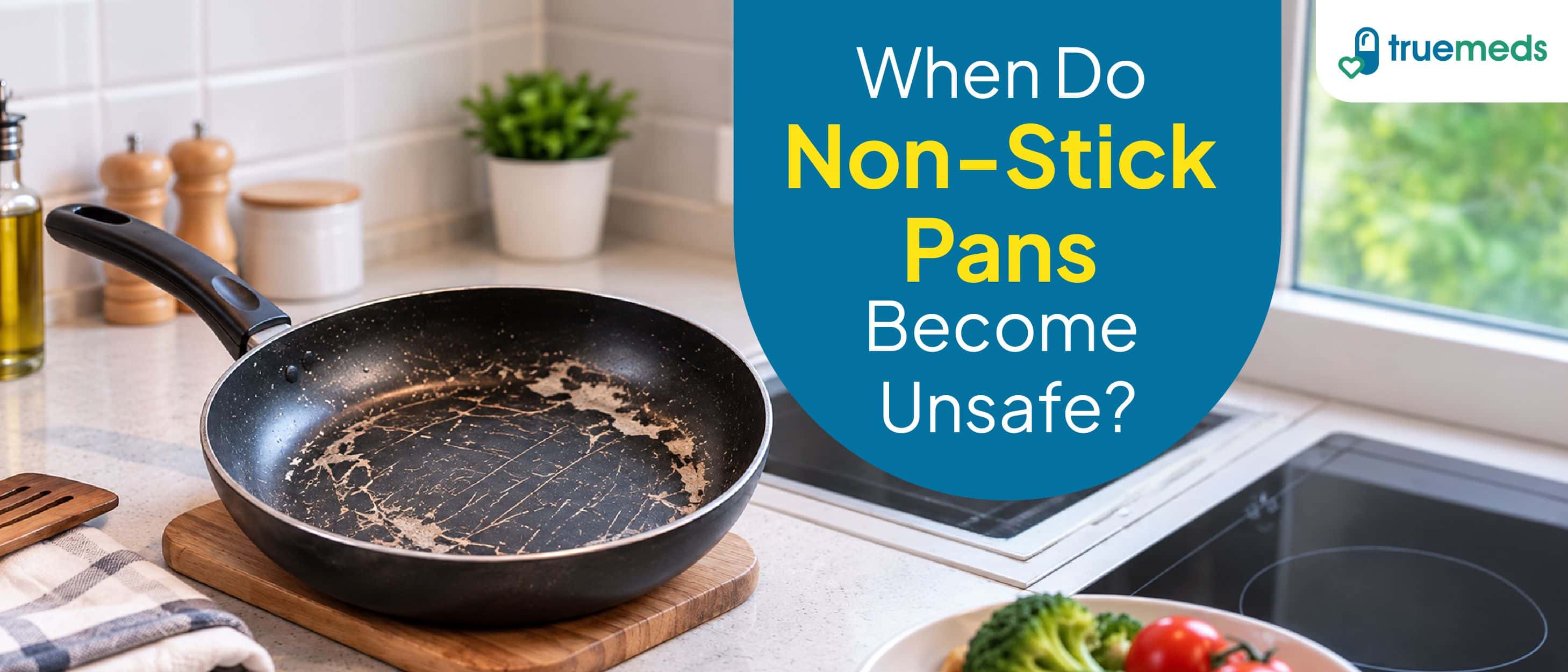
- Visible scratches or damage to the non-stick coating, which can compromise the coating’s integrity and increase the likelihood of particles or chemicals being released
- Peeling or flaking of the coating, which is a clear sign that the pan should be replaced
- A coating that has deteriorated significantly after repeated use or damage
- A pan that has been strongly overheated while empty, as PTFE coatings can break down at very high temperatures and produce hazardous gases
Consult manufacturer guidelines for specific replacement recommendations for your cookware.
How to use non-stick pans safely
Following these practices can help you minimise health risks while using non-stick cookware[1],[2]:
- Avoid overheating non-stick pans. Do not cook at very high temperatures, as overheated PTFE coatings can break down and release harmful fumes.
- Never heat an empty non-stick pan. Strongly heating an unfilled PTFE-coated pan can produce hazardous gases at around 360°C.
- Use low to medium heat for everyday cooking and follow the manufacturer’s temperature recommendations.
- Use wooden or silicone utensils to avoid scratching or damaging the non-stick coating.
- Replace pans that are badly scratched, peeling or damaged.
- Clean gently with a soft sponge and mild dish soap. Avoid abrasive scrubbers and harsh cleaning chemicals.
- Let the pan cool before washing it. Do not put a hot non-stick pan directly into cold water, as this can damage the coating.
- Do not use non-stick cookware on very high-heat sources such as grills or direct flames unless the manufacturer specifically permits it.
Why non-stick pans are a special risk for pet birds
If you keep birds as pets, non-stick cookware requires particular caution. Birds have a unique, highly efficient respiratory system that makes them extremely sensitive to inhaled toxins[7].
When PTFE is heated to high temperatures, it releases toxic particles and acidic gases that are colourless and odourless. At temperatures above 349°C (660°F), these fumes can cause immediate and fatal respiratory distress in birds[7]. This can occur even when humans in the same environment experience no symptoms.
Bird owners should consider these precautions[7]:
- Keep birds in rooms far from the kitchen
- Ensure excellent kitchen ventilation
- Never leave non-stick cookware unattended on heat
- Consider using alternative cookware materials such as stainless steel or cast iron
If your bird shows signs of respiratory distress after exposure to heated non-stick cookware, seek immediate veterinary attention.
Conclusion
Non-stick pans remain safe for everyday cooking when used properly. The key safety boundaries are clear: maintain temperatures below 260°C, replace pans when coating shows visible damage, and never overheat empty pans. PFOA, the chemical once linked to health concerns, was phased out over a decade ago and is not present in modern cookware.
For most households, these pans offer convenient, safe cooking. However, homes with pet birds should exercise extra caution or consider alternative cookware. By following temperature guidelines and replacing damaged pans promptly, you can enjoy the convenience of non-stick cooking without health concerns.
FAQs
Do non-stick pans cause cancer?
PTFE itself is not classified as carcinogenic. However, PFOA, a chemical previously used in manufacturing non-stick cookware, is classified as a Group 1 carcinogen by IARC. PFOA has been phased out of production, and many modern non-stick pans are made without intentionally added PFOA.
What temperature is too hot for a non-stick pan?
Temperatures above 260°C can cause the PTFE coating to break down and release harmful fumes. This temperature can be reached quickly when preheating an empty pan. Stick to low and medium heat settings for safe cooking.
Are ceramic pans safer than Teflon pans?
Ceramic-coated pans are PFAS-free and can tolerate higher heat without releasing fumes. However, ceramic coatings typically wear down faster than PTFE. Both types are considered safe when undamaged and used correctly within their temperature limits.
Are non-stick pans still unsafe?
Modern non-stick pans are considered safe under normal cooking conditions. The primary concerns arise from overheating, using damaged pans, or cooking with older pans that may contain PFOA from the manufacturing process.
How long is it safe to use a non-stick pan?
With proper care, non-stick pans typically last a few years. Replace them sooner if you notice scratching, flaking, peeling, or any coating damage. Regular inspection helps ensure you retire pans before they become unsafe.
When should I stop using a nonstick pan?
Stop using a non-stick pan immediately when you see deep scratches, peeling or flaking coating, dark discolouration from heat damage, or warping that prevents even contact with the cooktop.
Can I still use an old non-stick pan if it looks fine?
If your pan was manufactured when PFOA was still used, it may have been exposed to or contain residual PFOA. Older pans may be worth replacing even if they appear undamaged, particularly if you are concerned about potential exposure to chemicals used during manufacturing.
Is it safe to use a pan with a small scratch?
Small scratches may release thousands of microplastic particles during cooking. While occasional use may pose minimal risk, continued use of scratched pans increases exposure. Consider replacing pans with visible scratches, especially if they are deep enough to expose the metal beneath.
Are non-stick pans safe to use around pet birds?
Birds are extremely vulnerable to fumes from overheated non-stick cookware. Even at temperatures that cause no symptoms in humans, these fumes can be rapidly fatal to birds. If you have pet birds, use alternative cookware like stainless steel or cast iron, or ensure excellent ventilation.
Medical Disclaimer
This article is for informational purposes only and does not constitute medical advice. The information provided should not be used for diagnosing or treating health conditions. Always consult a qualified healthcare provider for diagnosis, treatment, and personalised medical advice. Do not disregard professional medical advice or delay seeking it because of information found in this article. If you have a medical emergency, contact your doctor or emergency services immediately.
References
University of Queensland. (2024). Is non-stick cookware making you sick? UQ Contact Magazine. https://stories.uq.edu.au/contact-magazine/mythbusters-nonstick/index.html
German Federal Institute for Risk Assessment. (2023). Selected questions and answers on cookware, ovenware, and frying pans with a non-stick coating made of PTFE. BfR. https://www.bfr.bund.de/en/service/frequently-asked-questions/topic/selected-questions-and-answers-on-cookware-ovenware-and-frying-pans-with-a-non-stick-coating-made-of-ptfe/
International Agency for Research on Cancer. (2023). IARC Monographs evaluate the carcinogenicity of perfluorooctanoic acid (PFOA) and perfluorooctanesulfonic acid (PFOS). World Health Organisation. https://www.iarc.who.int/news-events/iarc-monographs-evaluate-the-carcinogenicity-of-perfluorooctanoic-acid-pfoa-and-perfluorooctanesulfonic-acid-pfos
United States Environmental Protection Agency. (2026). Our current understanding of the human health and environmental risks of PFAS. US EPA. https://www.epa.gov/pfas/our-current-understanding-human-health-and-environmental-risks-pfas