Key Takeaways
- Studies have found an association between coffee and a lower liver fibrosis risk in people with fatty liver disease.
- Coffee contains several compounds, including caffeine and chlorogenic acids, that may contribute to its effects on liver health.
- The way coffee is consumed also matters. Added sugar can increase overall sugar and calorie intake.
- Coffee may be associated with better liver health, but it should not be considered a treatment for fatty liver disease.
- People with health conditions that may be affected by caffeine should discuss their coffee intake with a healthcare professional.
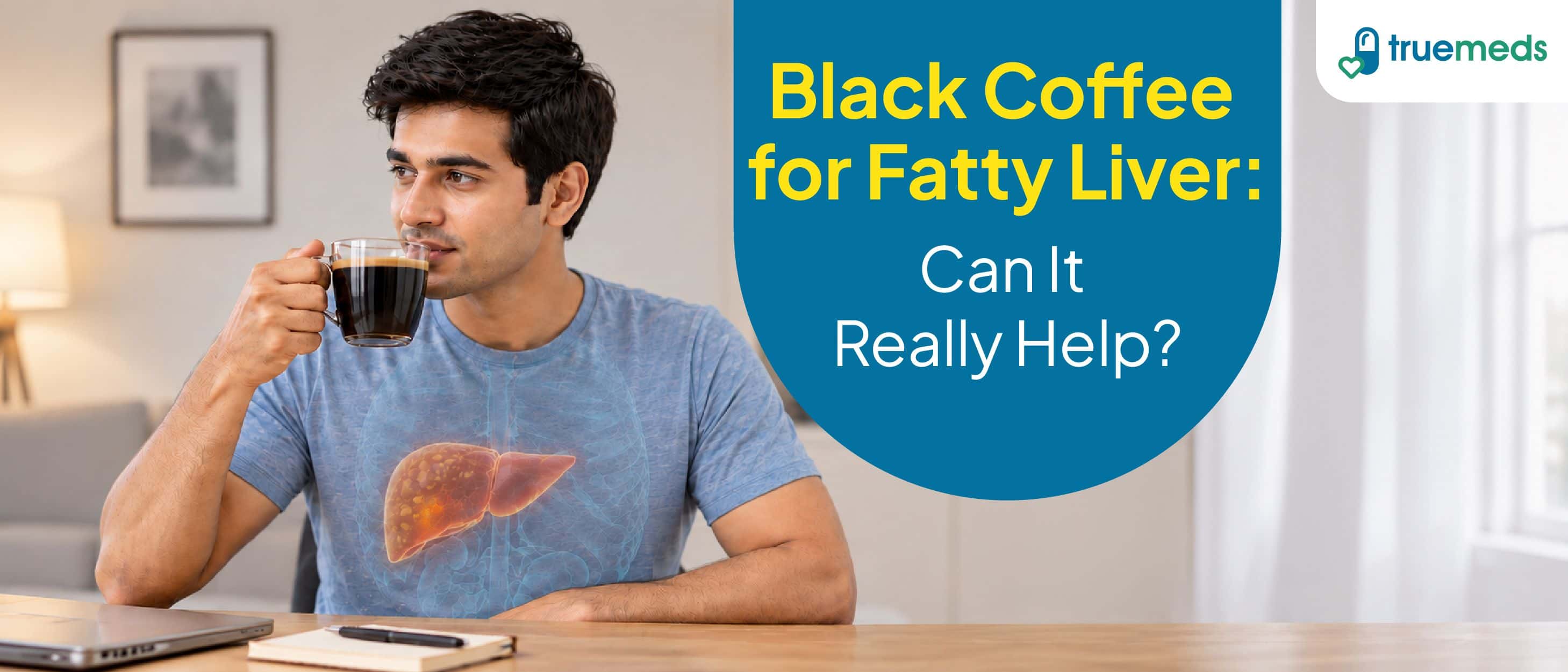
If you have fatty liver disease, you may have heard that black coffee could offer some liver-related benefits. Studies have associated coffee consumption with several positive liver outcomes, including a lower risk of liver fibrosis[1]. Earlier research often referred to these conditions as non-alcoholic fatty liver disease (NAFLD) and non-alcoholic steatohepatitis (NASH). These terms are now increasingly replaced by metabolic dysfunction-associated steatotic liver disease (MASLD) and metabolic dysfunction-associated steatohepatitis (MASH), respectively[2].
The evidence does not mean that coffee treats or reverses fatty liver disease. Instead, research suggests that coffee consumption may be one factor associated with liver health. This article looks at the available evidence and what is currently known about coffee, caffeine, and liver disease.
What is fatty liver disease?
Fatty liver disease refers to a build-up of excess fat in the liver. Metabolic dysfunction-associated steatotic liver disease (MASLD) is one type, which is associated with metabolic health and develops in individuals who drink little or no alcohol. A pooled analysis estimated that MASLD affects around 38.6% of Indians[2].
MASLD can range from simple fat accumulation in the liver to inflammation and liver scarring. More advanced disease may lead to fibrosis, cirrhosis, and, in some cases, liver cancer[3]. Many individuals with fatty liver disease have no noticeable symptoms, particularly in its earlier stages.
Does black coffee help fatty liver? What research says
Research has found a link between coffee consumption and better liver-related outcomes. The 2023 guidance from the American Association for the Study of Liver Diseases (AASLD) suggests that coffee may be linked with a decreased risk of liver fibrosis and other chronic liver complications[4].
The possible benefit does not appear to depend only on caffeine. Coffee contains several naturally occurring compounds, and researchers are studying how these substances may influence processes involved in liver health. However, the evidence does not establish coffee as a treatment for fatty liver disease.
Some studies have also reported stronger associations among people who drink larger amounts of coffee. In one study, compared with not drinking coffee, consuming five or more cups a day was linked to a 32% lower risk of cirrhosis, a 47% lower risk of liver cancer, and a 42% lower risk of death from liver disease[5].
Please note that these findings come largely from observational research. They show an association between coffee consumption and liver outcomes but cannot establish that coffee itself caused the lower risk.
Consult your doctor about incorporating coffee into your liver health plan.
How coffee compounds affect liver fat
Coffee contains many naturally occurring compounds. Researchers are studying whether some of these substances contribute to the associations seen between coffee consumption and liver health.
- Chlorogenic acids: These compounds have antioxidant properties and may help reduce oxidative stress, a process that can damage cells[6].
- Caffeine: Caffeine may also play a role in the effects associated with coffee consumption. Research suggests that its activity may influence metabolic processes linked to liver health[7].
Coffee contains many other compounds, so its effects on the liver are unlikely to depend on a single component. Studies have linked regular coffee consumption with lower risks of conditions such as liver fibrosis, cirrhosis, and hepatocellular carcinoma, although the strength of these associations varies across studies[7].
How much black coffee is recommended?
Studies have looked at different amounts of coffee consumption, but they have not established one ideal amount for liver health. The findings are based mainly on observational research, so they describe associations rather than a proven cause-and-effect relationship.
Daily coffee intake | What research has found |
3 or more cups | Some studies have linked this with a lower risk of fatty liver disease and liver fibrosis[4] |
3 to 4 cups | This range is commonly included in studies examining coffee consumption and liver health[7] |
Higher amounts | Larger amounts have also been studied, but more coffee does not necessarily translate into greater liver benefits[5] |
There is currently no established number of cups that guarantees a liver benefit. Coffee consumption also needs to be considered in the context of a person's overall health and tolerance to caffeine. Adding large amounts of sugar to coffee can increase overall sugar and calorie intake. This is relevant when considering coffee as part of the diet of someone with MASLD.
Individual tolerance varies. Start gradually and observe how your body responds. If coffee causes symptoms such as anxiety, palpitations, or sleep disturbance, consider reducing your intake.
Who should be cautious with coffee intake?
Coffee is tolerated differently from person to person. Caffeine can affect the heart, nervous system, sleep, and digestive system, so some people may be more sensitive to it[8].
Certain groups may need to pay particular attention to their caffeine intake:
- Heart conditions: Caffeine can cause temporary changes in heart rate or palpitations in some people. Those who are sensitive to caffeine may notice these effects more readily.
- Anxiety: Caffeine can cause nervousness, restlessness, or feelings of anxiety in some people. These effects may be more noticeable in people who are sensitive to caffeine.
- Sleep problems: Caffeine can interfere with sleep, particularly when consumed later in the day. Its effects can vary depending on the amount consumed and individual sensitivity.
- Acid reflux or gastro-oesophageal reflux disease (GERD): Coffee may worsen heartburn or reflux symptoms in some people. Individual responses can differ.
- Pregnancy: The American College of Obstetricians and Gynaecologists advises limiting caffeine during pregnancy to less than 200 mg per day[9].
- Breastfeeding: Small amounts of caffeine can pass into breast milk. The amount that reaches the infant is generally low, although younger or premature babies may be more sensitive to caffeine[10].
- Medicines: Caffeine can interact with some medicines or affect how certain medicines work. Anyone taking regular medication should check the relevant medicine information or discuss potential interactions with a pharmacist or doctor.
Consult your doctor before significantly increasing coffee consumption, especially if you have pre-existing health conditions.
Beyond coffee: what else supports liver health
Coffee is only one factor that has been studied in relation to liver health. For people with MASLD, diet and physical activity are important parts of overall management[11].
Research and clinical guidance highlight several areas that may influence the course of MASLD:
- Weight management: Weight loss can reduce liver fat and inflammation. Greater weight loss has been associated with improvements in liver scarring (fibrosis) in some people.
- Metabolic health: Conditions such as diabetes, high cholesterol, high triglycerides, and high blood pressure commonly occur alongside MASLD. Managing these conditions forms part of overall care.
- Added sugars: Frequent consumption of sugary drinks and foods high in added sugars can contribute to excess calorie intake and may affect metabolic health.
- Physical activity: Regular physical activity can reduce the amount of fat stored in the liver. These changes can occur even when there is little change in body weight.
- Alcohol: Alcohol can add to liver injury, particularly when significant liver disease is already present. Its effect may depend on the amount consumed and the extent of existing liver damage.
These lifestyle changes work alongside coffee consumption, not as replacements for each other.
Conclusion
Research supports that black coffee may offer protective benefits for people with fatty liver disease. Regularly consuming 3 or more cups daily has been associated with a lower risk of disease progression, fibrosis, and liver-related complications. The antioxidant compounds in coffee, particularly chlorogenic acids and caffeine, appear to protect liver cells from damage.
However, coffee is a supportive habit, not a cure. Weight loss, dietary changes, and regular exercise remain the primary approaches for managing fatty liver. If you are considering increasing your coffee intake, speak with your doctor, especially if you have heart conditions, anxiety, or take medications.
FAQs
Is decaf coffee also good for fatty liver?
Yes, decaf coffee may also benefit liver health. The AASLD guidelines suggest that coffee consumption, irrespective of caffeine content, could be advantageous. This suggests that the potential benefits of coffee may not be limited to caffeine alone.
Can too much coffee harm the liver or make things worse?
There is no evidence that coffee itself harms the liver. However, excessive caffeine can cause side effects like anxiety, sleep problems, and heart palpitations in sensitive individuals, which may indirectly affect overall health.
Can too much coffee harm the liver or make things worse?
There is no evidence that coffee itself harms the liver. However, excessive caffeine can cause side effects like anxiety, sleep problems, and heart palpitations in sensitive individuals, which may indirectly affect overall health.
How much black coffee to reduce fatty liver?
Research suggests 3 or more cups daily may be beneficial. Studies show that this intake level is associated with reduced MASLD prevalence and lower risk of fibrosis progression. Individual tolerance varies, so start gradually.
What other drinks or foods should I avoid with fatty liver?
Avoid sugary beverages, including soft drinks and sweetened juices, as fructose has been linked to liver inflammation. Limit alcohol completely, reduce processed foods, and minimise foods high in saturated fats.
Can black coffee reverse or cure fatty liver disease?
Coffee cannot reverse or cure fatty liver disease. It is a supportive habit that may help slow progression. Weight loss of 7% or more and lifestyle changes remain the primary treatments for improving liver health.
Does adding milk or sugar cancel out coffee's liver benefits?
Adding sugar is not recommended, as fructose and excess sugar intake are linked to worsening fatty liver. Small amounts of milk are unlikely to negate benefits, but black coffee remains the preferred choice.
Is it safe to drink coffee on an empty stomach with fatty liver?
Coffee on an empty stomach is generally safe but may cause digestive discomfort in some people. If you experience acidity or stomach upset, try having coffee with or after a light meal instead.
Medical Disclaimer
This article is for informational purposes only and does not constitute medical advice. The information provided should not be used for diagnosing or treating health conditions. Always consult a qualified healthcare provider for diagnosis, treatment, and personalised medical advice. Do not disregard professional medical advice or delay seeking it because of information found in this article. If you have a medical emergency, contact your doctor or emergency services immediately.
References
Ebadi, M., Ip, S., Bhanji, R. A., & Montano-Loza, A. J. (2021). Effect of Coffee Consumption on Non-Alcoholic Fatty Liver Disease Incidence, Prevalence and Risk of Significant Liver Fibrosis: Systematic Review with Meta-Analysis of Observational Studies. Nutrients, 13(9), 3042. https://doi.org/10.3390/nu13093042
De, A., Mehta, M., & Duseja, A. (2024). Substantial overlap between NAFLD and MASLD with comparable disease severity and non-invasive test performance: An analysis of the Indian consortium on MASLD (ICOM-D) cohort. Journal of Hepatology, 81(4), e162-e164. https://doi.org/10.1016/j.jhep.2024.05.027
Asadullah, M., Shivashankar, R., Shalimar, Kandasamy, D., Kondal, D., Rautela, G., Peerzada, A., Grover, B., Amarchand, R., Nayak, B., Sharma, R., Ramakrishnan, L., Prabhakaran, D., Krishnan, A., & Tandon, N. (2022). Rural-urban differentials in prevalence, spectrum and determinants of non-alcoholic fatty liver disease in north Indian population. PLOS ONE, 17(2), e0263768. https://doi.org/10.1371/journal.pone.0263768
Kositamongkol, C., Ngaohirunpat, S., Samchusri, S., Chaisathaphol, T., Srivanichakorn, W., Washirasaksiri, C., Auesomwang, C., Sitasuwan, T., Tinmanee, R., Sayabovorn, N., Charatcharoenwitthaya, P., & Phisalprapa, P. (2024). Beverage consumption in patients with metabolic syndrome and its association with non-alcoholic fatty liver disease: A cross-sectional study. Frontiers in Nutrition, 11. https://doi.org/10.3389/fnut.2024.1257969