

- Medicines
- Personal Care
- Skin Cream
- Sunscreen
- Face Wash
- Skin and Body Soap
- Acne Care
- Body Lotions
- Moisturising Lotion
- Moisturising Cream
- Mosquito Repellent
- Moisturising Gel
- Body Wash
- Hair Oils
- Hair Shampoo
- Hair Conditioners
- Hair Supplements
- Hair Colour
- Hair Serum
- Hair Mask
- Hair Solutions
- Baby Diapers and Wipes
- Baby Lotion and Moisturising Cream
- Baby Bath Essentials
- Baby Skin Care
- Baby and Infant Food
- Baby Healthcare
- Women Multivitamins
- Ovulation Test Kit and Women Intimate Care
- Sanitary Pads
- Nutritional Drinks
- Condoms
- Lubricants
- Massage Gels
- Personal Body Massagers
- Men Performance Booster
- Sexual Health Supplements
- Massage Oils
- Ayurveda
- Tooth Paste
- Mouth Ulcer Gel
- Mouthwash
- Toothache and Gum Pain
- Tooth Brush
- Gargle Solution
- Orthopaedic Supports
- Adult Diapers
- Footwear
- Mobility and Support Accessories
- Urinary Support and Care
- Health Conditions
- Bone and Joint Care
- Digestive Care
- Eye Care
- Pain Relief
- Smoking Cessation
- Liver Care
- Stomach Care
- Cold and Cough
- Heart Care
- Kidney Care
- Piles, Fissures & Fistula
- Respiratory Care
- Mental Wellness
- Derma Care
- Pre and Probiotics
- Acidity
- Gas
- Constipation
- Loose Motion/Diarrhoea
- Digestive Fibres
- Digestive Enzymes
- Eye Lubricant Drops
- Lens Solution
- Safety Eye Wear
- Eye Cream
- Eye Vitamins and Supplements
- Eye Drops
- Eye Ointment and Gel
- Nicotine Patch
- Nicotine Gum
- Nicotine Lozenges
- Cough Syrups
- Chest Rubs and Balms
- Nasal Spray
- Lozenges
- Inhalant Capsules
- Cold and Cough Tablets
- Vitamins & Supplements
- Diabetes Care
- Healthcare Devices
- Homeopathic Medicine
- Health Guide
Ringworm
Ringworm, also known as tinea corporis, is a highly contagious fungal skin infection that affects various parts of the body. It is identified by a ring-shaped, itchy, and scaly rash that can spread through direct contact with infected individuals, animals, or contaminated objects. Proper treatment is essential to prevent the spread of the infection.
 50
50Last updated on : 26 May, 2026
Read time : 11 mins
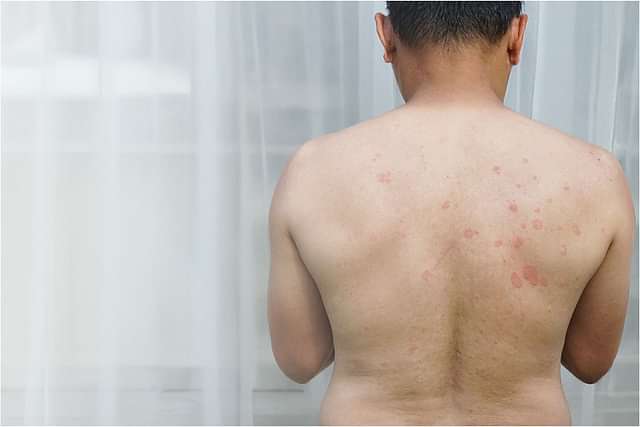
Overview of Disease
Ringworm is a common fungal skin infection that can affect people of all ages. It is not caused by a worm but by a group of fungi called dermatophytes. These fungi feed on keratin, a protein found in skin, hair, and nails, leading to the characteristic ring-shaped rash. Understanding the causes, symptoms, and available treatment options for this infection is crucial for effective management.
What is Ringworm?
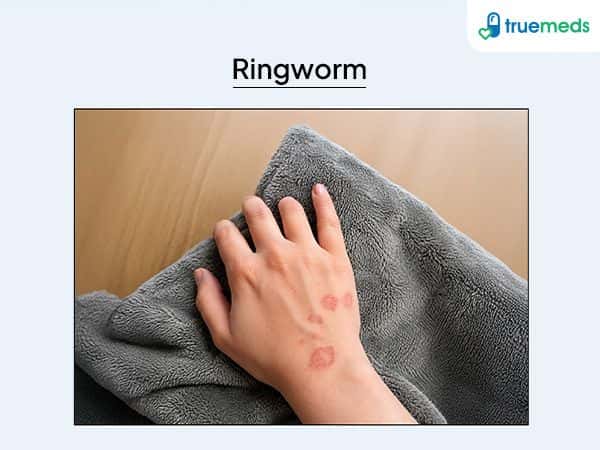
Ringworm is a superficial fungal infection that primarily affects the skin on the body, such as the torso, arms, legs, and neck. The disease is caused by dermatophytes, which are fungi that thrive in warm, moist environments.
One of the most common dermatophyte responsible for tinea corporis is Trichophyton rubrum (Yee et al., 2025). The fungi spread through direct contact with infected individuals, animals, or contaminated objects, such as clothing or towels. Ringworm can affect people of all ages, but it is more common in children and those with weakened immune systems.
Key Factors about Ringworm
| Category | Details |
| Also Referred as | Tinea corporis, dermatophytosis |
| Commonly Occurs In | Skin of the face, trunk, arms, and legs |
| Affected Organ | Skin |
| Type | Superficial fungal infection caused by dermatophytes |
| Common Signs | Itchy, red, raised, scaly patches; sharply defined edges in a ring shape; central clearing; blistering and oozing |
| Consulting Specialist | Dermatologist |
| Treatement Procedures | Topical or oral antifungal medications; in severe cases, oral antifungal medicines may be required for several weeks |
| Managed By | Antifungal medications |
| Mimiciking Condition | Pityriasis rosea, candidiasis, psoriasis, other dermatitides |
Types of Ringworm
Different types of fungal (tinea) infections are named for the areas of the body where they occur. The most common types are:
- Scalp ringworm (tinea capitis): This type of ringworm affects the scalp, causing red, scaly, and itchy patches. It can also lead to hair loss in the affected areas.
- Jock itch (tinea cruris): Jock itch is a ringworm infection that affects the groin area, causing red, scaly, and itchy patches. It is more common in men and athletes.
- Athlete's foot (tinea pedis): This type of ringworm affects the feet, particularly between the toes. It causes dry, scaly skin and can lead to itching, stinging, and blistering.
- Nail infection (tinea unguium): Ringworm can also affect the fingernails and toenails, causing thickening, discolouration, and brittleness of the nails.
- Body ringworm (tinea corporis): Body ringworm is a common fungal infection of the skin, caused by dermatophyte fungi. It appears as a red, circular, itchy rash with raised, scaly edges and a clear or normal skin tone centre, resembling a ring.
The infection spreads through direct contact with infected individuals, animals, or contaminated surfaces and thrives in warm, moist environments. Treatment typically includes antifungal creams or oral medications.
Early Signs of Ringworm
- A red, itchy, ring-shaped rash on the skin
- The rash may have a clear or scaly area inside the ring
- The skin may flake, peel, or crack and can be intensely itchy, painful, or uncomfortable
- The rash can appear anywhere on the body, but looks different on the feet, nails, groin, beard area, and scalp
- On light-coloured skin, the patches tend to be red or pink, while on darker skin, they are usually brown or grey
Symptoms of Ringworm
Symptoms normally appear between 4 and 14 days after contact with the fungi that cause ringworm.
- Ring-shaped rash: A circular rash with a clear centre, often itchy and scaly.
- Itchiness: Affected areas are usually itchy, causing discomfort.
- Scaly patches: Red or scaly patches on the skin that may crack and peel.
- Hair loss: In some cases, especially when the scalp is affected, hair loss may occur in the infected area.
- Overlapping rings: In severe cases, multiple rings may overlap, creating a more extensive rash.
Redness and swelling: The edges of the rash may be red and swollen, indicating active inflammation.
Causes of Ringworm
Ringworm is caused by common mould-like parasites that live on the cells in the outer layer of your skin. The infection can be spread in several ways, including: CDC (2026)
- Human-to-human: Direct, skin-to-skin contact with an infected person can transmit the fungus responsible for ringworm.
- Animal-to-human: Touching an animal with ringworm, such as dogs, cats, or cows, can lead to the development of ringworm on the body.
- Object-to-human: Contact with objects or surfaces that an infected person or animal has touched, such as clothing, towels, or bedding, can spread the infection.
- Soil: Working or standing barefoot in soil infected with dermatophytes can also cause ringworm.
Risk Factors of Ringworm
Several factors can increase your risk of developing ringworm on the body, including:
- Direct contact with an infected person or animal
- Sharing personal items such as towels, clothing, and grooming tools
- Participating in activities that cause excessive sweating, such as sports
- Living in warm and humid climates
- Not keeping the skin clean and dry
- Having a weakened immune system
Complications of Ringworm
If left untreated or not managed properly, ringworm can lead to several complications, including: WHO (2025)
- Kerion: This severe inflammation of the scalp can cause permanent hair loss and scarring, making it crucial to seek prompt treatment for scalp ringworm (tinea capitis).
- Hyperpigmentation: After the rash has healed, dark marks may appear on the skin, particularly in people of African, Asian, or Hispanic descent.
- Nail deformities: Ringworm can cause thickened, deformed, and discoloured nails that may be painful, emphasising the importance of finding the best treatment for ringworm on the body.
- Secondary infections: Bacterial infections can enter through skin cracks caused by ringworm, leading to fever, chills, and possible discharge.
Prevention of Ringworm
Preventing ringworm on the body involves a combination of good hygiene practices and lifestyle adjustments. Here are some key preventive measures you can take: CDC (2026)
- Keep your skin clean and dry. Regularly wash your hands, especially after coming into contact with someone or an animal that might be infected.
- Avoid wearing tight or restrictive clothing, especially in warm, humid weather, as this can create a conducive environment for fungal growth.
- Do not share personal items such as clothing, towels, or hairbrushes to prevent the spread of the fungus through direct contact.
- Wear protective footwear, such as sandals, in locker rooms or around pools to avoid direct contact with potentially infected surfaces.
- If you have pets, especially cats and dogs, ensure they are checked regularly by a veterinarian for ringworm, as infected pets can spread the infection to humans.
- Practice good sports hygiene. If you participate in contact sports, shower immediately after practice or a match, and keep your uniform and gear clean.
- Educate others, especially children, on how to avoid infection by being aware of the risk of ringworm from infected people or pets.
Diagnosis & Tests of Ringworm
If you suspect you have ringworm on your body, your doctor can often diagnose it by examining the characteristic ring-shaped rash with a clear centre and a red, raised border. However, to confirm the diagnosis, they may perform some additional tests:
- Skin scraping: Your doctor may take a skin scraping from the rash and examine it under a microscope using potassium hydroxide (KOH) preparation to look for fungal elements.
- Skin culture: A skin culture for fungus may be performed to confirm the presence of dermatophytes, the fungi responsible for causing ringworm.
- Skin biopsy: In some cases, a skin biopsy might be necessary for a definitive diagnosis, although this is less common.
Treatment & Management of Ringworm
The treatment options for ringworm include:
1. Topical antifungal creams
For most cases of ringworm, over-the-counter antifungal creams, lotions, or powders can be effective. These include medications like clotrimazole, ketoconazole, miconazole, and terbinafine.
2. Oral antifungal medications
If the ringworm infection is severe or widespread, or if it does not respond to topical treatment, your doctor may prescribe oral antifungal medications. These include griseofulvin, terbinafine, itraconazole, and fluconazole. The duration of treatment depends on the specific medication and the severity of the infection.
3. Lifestyle changes
In addition to medication, it is important to keep the affected area clean and dry. Avoid wearing tight clothing that can irritate the skin, and wash your hands frequently to prevent spreading the infection to other parts of your body or to other people.
Living with Disease
If you have been diagnosed with ringworm, there are several steps you can take to manage the condition and prevent its spread. These include:
- Keep the affected area clean and dry, as moisture can promote fungal growth.
- Avoid scratching the rash, as this can lead to secondary bacterial infections and spread the infection to other parts of the body.
- Wash your hands frequently, especially after touching the affected area, to prevent spreading the infection to others.
- Avoid sharing personal items such as towels, clothing, or bedding with others to prevent the spread of ringworm.
- Continue using antifungal medication for the full recommended duration, even if the rash appears to have cleared, to prevent recurrence.
- Maintain a healthy lifestyle, including a balanced diet and regular exercise, to support your immune system and promote faster healing.
- Keep your skin cool and dry, as sweat can aggravate the rash and create a favourable environment for fungal growth.
When to See a Doctor?
If the rash does not improve within two weeks of using over-the-counter antifungal products, or if you have ringworm on your scalp, which usually requires prescription medication, consult a doctor. Individuals with weakened immune systems should also seek medical attention, as they may have difficulty clearing the infection and are at higher risk of complications.
Severe symptoms, such as high fever, chills, or discharge from the affected area, as well as multiple or widespread infections, also warrant immediate medical attention.
Key Takeaways
- Ringworm of the body, or tinea corporis, is a contagious fungal skin infection that can be transmitted through various means. It is crucial to be aware of its infectious nature and take steps to prevent its spread.
- The infection can be contracted through direct skin-to-skin contact with an infected person or animal, or by touching contaminated surfaces, objects, or soil.
- Recognising the symptoms of ringworm is key to prompt treatment and management. The infection typically presents as an itchy, ring-shaped rash with a clear or scaly centre, although symptoms can vary depending on the location of the infection.
- Mild cases can often be treated with over-the-counter antifungal creams, while more severe cases may require prescription antifungal medications.
- To prevent the spread of ringworm, it is essential to maintain good hygiene practices, such as avoiding sharing personal items, washing hands frequently, and keeping the affected area clean and dry.
- By understanding the causes, symptoms, and prevention methods for ringworm, you can effectively manage the infection and minimise its impact on your daily life.
FAQs
What causes ringworms on the body?
How can I treat ringworm on my body?
Can ringworm spread on your body?
Is ringworm harmful to the body?
What attracts ringworm?
What food causes ringworm?
What kills ringworm the fastest?
Is coconut oil good for ringworm?
How do I stop ringworm from spreading?
How long does ringworm last?
References
- Centers for Disease Control and Prevention. (2026). Causes of ringworm. https://www.cdc.gov/ringworm/causes/index.html
- NHS. (2023). Ringworm. https://www.nhs.uk/conditions/ringworm/
- MedlinePlus. (2024). Ringworm of the body. https://medlineplus.gov/ency/article/000877.htm
- Yee, G., Syed, H. A., & Aboud, A. M. A. (2025). Tinea corporis. StatPearls. https://www.ncbi.nlm.nih.gov/books/NBK544360/
World Health Organization. (2025). Ringworm (tinea). https://www.who.int/news-room/fact-sheets/detail/ringworm-(tinea)

Check Related Salts
Browse Other Conditions
Latest health articles
Top Health Essentials
















Disclaimer
Top-Selling Medicines:
...View more
Top-OTC medicines:
...View more
Company
About UsHealth ArticleHealth StoriesHealth LibraryDiseases & Health ConditionsAyurvedaUnderstanding Generic MedicinesAll MedicinesAll BrandsNeed HelpFAQSecuritySavings CalculatorAdvertise with UsSubscribe
Registered Office Address
Grievance Officer
Download Truemeds


Contact Us
Our customer representative team is available 7 days a week from 9 am - 9 pm.
v4.28.13

2026 - Truemeds | All rights reserved. Our content is for informational purposes only. See additional information.

Our Payment Partners




