

- Medicines
- Personal Care
- Skin Cream
- Sunscreen
- Face Wash
- Skin and Body Soap
- Acne Care
- Body Lotions
- Moisturising Lotion
- Moisturising Cream
- Mosquito Repellent
- Moisturising Gel
- Body Wash
- Hair Oils
- Hair Shampoo
- Hair Conditioners
- Hair Supplements
- Hair Colour
- Hair Serum
- Hair Mask
- Hair Solutions
- Baby Diapers and Wipes
- Baby Lotion and Moisturising Cream
- Baby Bath Essentials
- Baby Skin Care
- Baby and Infant Food
- Baby Healthcare
- Women Multivitamins
- Ovulation Test Kit and Women Intimate Care
- Sanitary Pads
- Nutritional Drinks
- Condoms
- Lubricants
- Massage Gels
- Personal Body Massagers
- Men Performance Booster
- Sexual Health Supplements
- Massage Oils
- Ayurveda
- Tooth Paste
- Mouth Ulcer Gel
- Mouthwash
- Toothache and Gum Pain
- Tooth Brush
- Gargle Solution
- Orthopaedic Supports
- Adult Diapers
- Footwear
- Mobility and Support Accessories
- Urinary Support and Care
- Health Conditions
- Bone and Joint Care
- Digestive Care
- Eye Care
- Pain Relief
- Smoking Cessation
- Liver Care
- Stomach Care
- Cold and Cough
- Heart Care
- Kidney Care
- Piles, Fissures & Fistula
- Respiratory Care
- Mental Wellness
- Derma Care
- Pre and Probiotics
- Acidity
- Gas
- Constipation
- Loose Motion/Diarrhoea
- Digestive Fibres
- Digestive Enzymes
- Eye Lubricant Drops
- Lens Solution
- Safety Eye Wear
- Eye Cream
- Eye Vitamins and Supplements
- Eye Drops
- Eye Ointment and Gel
- Nicotine Patch
- Nicotine Gum
- Nicotine Lozenges
- Cough Syrups
- Chest Rubs and Balms
- Nasal Spray
- Lozenges
- Inhalant Capsules
- Cold and Cough Tablets
- Vitamins & Supplements
- Diabetes Care
- Healthcare Devices
- Homeopathic Medicine
- Health Guide
Scarlet Fever
Scarlet fever is a highly contagious bacterial illness that primarily affects children aged 5 to 15. It is caused by group A Streptococcus (GAS) bacteria and is characterised by a distinctive red rash, high fever, and sore throat. Early diagnosis of scarlet fever and treatment with antibiotics are essential to prevent complications and the spread of the infection.
 50
50Last updated on : 26 May, 2026
Read time : 9 mins
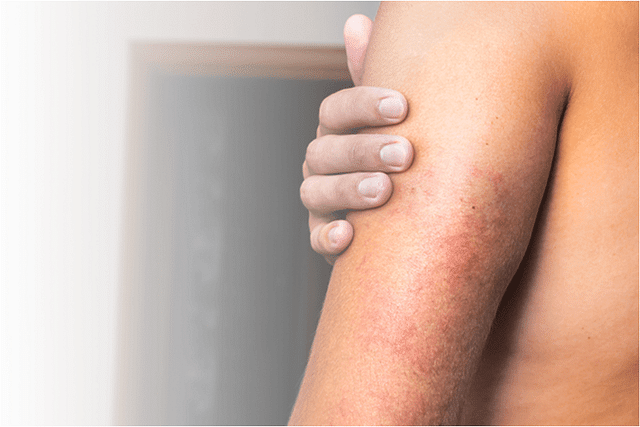
Overview of Disease
Scarlet fever, also known as scarlatina, is a bacterial infection that can cause a range of symptoms, including a characteristic red rash, fever, and sore throat. It is most common in children but can affect people of all ages. Understanding the causes, symptoms, and treatment options for scarlet fever is crucial for early diagnosis and effective management.
What is Scarlet Fever?
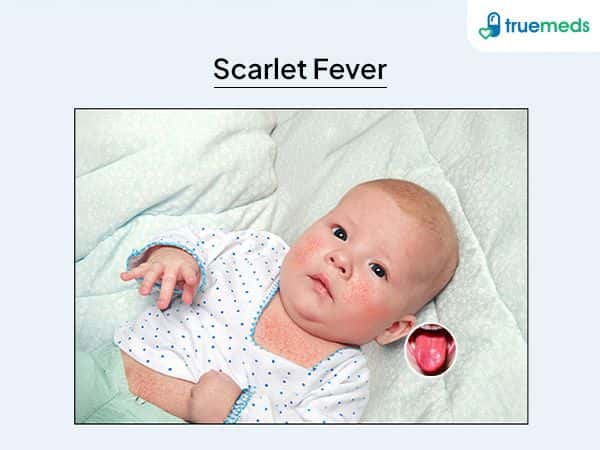
Scarlet fever is caused by an infection with group A Streptococcus (GAS), the same bacteria responsible for strep throat CDC (2026).
When the bacteria release a specific toxin, it triggers the characteristic red rash of scarlet fever. The illness is highly contagious and can spread through respiratory droplets when an infected person coughs or sneezes.
Children between the ages of 5 and 15 are most susceptible to scarlet fever, particularly if they have a history of strep throat or strep skin infections CDC (2026). While the condition is generally manageable with antibiotics, it is essential to recognise the early signs and symptoms of scarlet fever to prevent complications and the spread of the infection to others.
Key Factors about Scarlet Fever
| Category | Details |
| Also Referred to as | Scarlatina |
| Commonly Occurs In | Children between 5 and 15 years of age |
| Affected Organ | Skin, throat, and sometimes other areas like the tongue and lymph nodes |
| Type | Bacterial infection caused by group A Streptococcus (Streptococcus pyogenes) |
| Common Signs | Fever, sore throat, chills, headache, vomiting, abdominal pain, white-coated tongue followed by a “strawberry tongue”, sandpaper-like rash |
| Consulting Specialist | Infectious disease specialist, primary care physician |
| Managed By | Antibiotics (penicillin or amoxicillin as first-line treatment; alternatives include azithromycin, cephalexin, clindamycin, or erythromycin) and supportive care (rest, hydration, and fever management) |
Symptoms of Scarlet Fever
The scarlet fever symptoms usually develop within 1 to 4 days of infection and can include NHS (2025).
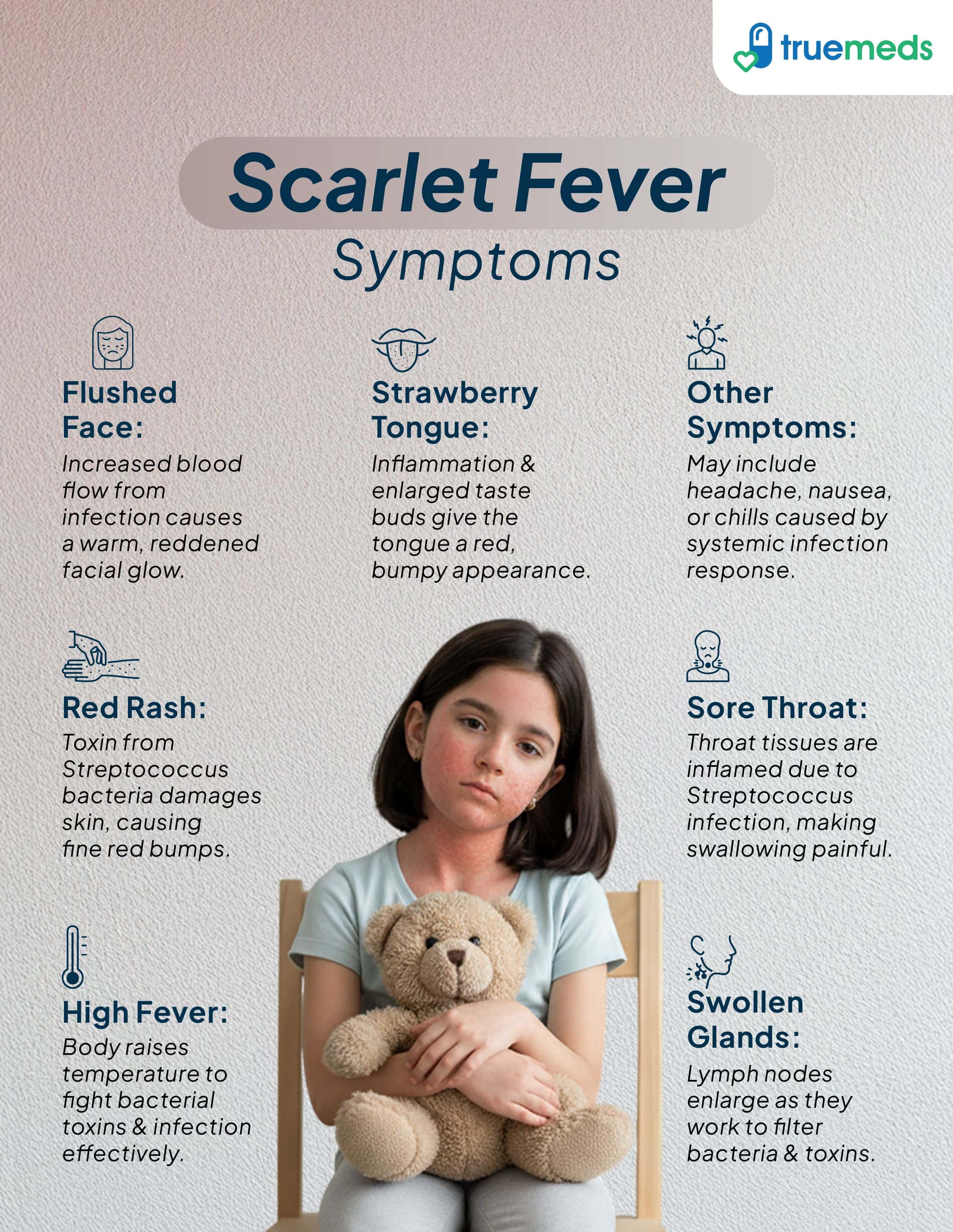
- Red Rash: A characteristic red, sandpaper-like rash that typically begins on the chest and stomach before spreading to other parts of the body. The rash may be more difficult to see on darker skin tones, but the rough texture remains noticeable.
- Strawberry Tongue: The tongue may initially appear white and coated, then turn red and bumpy, resembling a strawberry.
- Flushed Face: The face may appear flushed with a pale area around the mouth.
- High Fever: A fever of 38°C (100.4°F) or higher is common, often accompanied by chills.
- Sore Throat: The throat may feel sore and appear red, sometimes with white or yellow patches.
- Swollen Glands: The lymph nodes in the neck may become swollen and tender to the touch.
- Other Symptoms: Some individuals may experience nausea, vomiting, abdominal pain, headaches, and a general sense of unwellness.
As the illness progresses, the skin may begin to peel, particularly on the fingertips, toes, and groin area. This peeling usually occurs after the rash has subsided, about 1 to 3 weeks after symptom onset. Seeking medical attention and receiving appropriate treatment for scarlet fever can help alleviate symptoms and prevent the spread of the infection to others.
Causes of Scarlet Fever
Scarlet fever is caused by a bacterial infection with group A Streptococcus (GAS). The bacteria produce erythrogenic toxins, which trigger the characteristic red rash associated with the disease.
The infection is typically transmitted through respiratory droplets released when an infected person coughs or sneezes. It can also spread through contact with contaminated surfaces or by touching someone who is infected. Transmission through food is rare and not a common route.
Risk Factors
Several factors can increase the risk of developing scarlet fever, particularly among certain age groups and in specific settings.
Who's at Risk?
- Children between the ages of 5 and 15 are most susceptible to scarlet fever, although it can affect people of all ages.
- People who have close contact with someone infected with scarlet fever are at a higher risk of contracting the disease.
- Outbreaks of scarlet fever can occur in schools, daycare centres, and other settings where people are in close proximity.
- Family members of an infected person are at risk, particularly if they share utensils and drinking glasses or have close contact with the infected person.
Recognising the risk factors associated with scarlet fever can help individuals take appropriate precautions to prevent the spread of the disease and seek prompt medical attention if symptoms develop.
Complications
If left untreated or if the infection spreads to other parts of the body, scarlet fever can lead to several serious complications. Some potential complications of scarlet fever include:
- Rheumatic Fever: It is a concerning complication that can cause inflammation and damage to the heart valves.
- Glomerulonephritis: The bacteria can also spread to the kidneys, causing inflammation and reduced function, a condition known as post-streptococcal glomerulonephritis.
- Abscesses: Collections of pus that can develop near the tonsils, leading to pain and difficulty swallowing.
- Pneumonia: If the bacteria spread to the lungs, it can cause pneumonia, a serious respiratory infection.
- Joint Pains: The bacteria can cause joint inflammation and pain, a condition known as post-streptococcal reactive arthritis.
- Middle-ear Infections: Bacteria can also cause middle-ear infections, leading to pain, fever, and hearing difficulty.
Prompt diagnosis and treatment of scarlet fever with antibiotics can help prevent complications and ensure a full recovery.
Prevention of Scarlet Fever
Preventing the spread of scarlet fever is crucial to reducing its incidence. Some preventive measures for scarlet fever include:
- Good Hand Hygiene: Washing hands frequently with soap and water or using alcohol-based hand sanitiser can help reduce the spread of group A Streptococcus.
- Respiratory Etiquette: Covering the mouth and nose when coughing or sneezing and using tissues or the elbow can help prevent transmission.
- Avoid Sharing Personal Items: Do not share utensils, food, or drinking glasses with infected individuals.
- Precautionary Measures for Infected Individuals: Individuals diagnosed with scarlet fever should stay home from school, work, or daycare until they are fever-free and have been on appropriate antibiotic therapy for at least 24 hours.
- Environmental Hygiene: Washing utensils, bedding, and frequently touched items can help prevent the spread.
Diagnosis & Tests
Diagnosing scarlet fever involves a combination of clinical evaluation and laboratory tests.
- Clinical Evaluation: Doctors look for symptoms such as a red, sandpaper-like rash, strawberry tongue, Pastia’s lines, and a flushed face with a pale ring around the mouth.
- Laboratory Tests: To confirm the presence of group A Streptococcus, a throat swab (rapid antigen detection test [RADT]) is performed. If the RADT is negative but clinical suspicion remains high, a throat culture may be performed to confirm the diagnosis.
Treatment & Management
The mainstay of treatment for scarlet fever includes antibiotics to eliminate the bacterial infection and supportive care to relieve symptoms and prevent complications.
1. Medications for Scarlet Fever
- Antibiotics such as Penicillin V or Amoxicillin: These are first-line antibiotics that kill Streptococcus pyogenes, the bacteria responsible for scarlet fever, by inhibiting bacterial cell wall synthesis.
For individuals allergic to penicillin, alternatives may include:
- Azithromycin: A macrolide antibiotic that inhibits bacterial protein synthesis; used for treating scarlet fever in patients allergic to penicillin.
- Clarithromycin: A macrolide that effectively treats group A Streptococcus infections when penicillin cannot be used.
- Erythromycin: A first-generation macrolide antibiotic used as an alternative to penicillin for treating scarlet fever.
- Cephalexin: A first-generation cephalosporin that destroys bacterial cell walls, commonly used for group A Streptococcus infections.
- Cefadroxil: A cephalosporin antibiotic effective against Streptococcus pyogenes, helping eliminate the bacteria causing scarlet fever.
- Clindamycin: An antibiotic used in resistant or severe cases of scarlet fever, especially in penicillin-allergic individuals.
Completing the full antibiotic course is essential to fully clear the infection and prevent complications, such as rheumatic fever or kidney inflammation.
2. Supportive Care and Home Remedies
Over-the-counter medications include:
- Acetaminophen: A common analgesic and antipyretic used to reduce fever and relieve sore throat pain in scarlet fever.
- Ibuprofen: A nonsteroidal anti-inflammatory drug (NSAID) that helps relieve fever, inflammation, and throat pain.
For itching Relief, antihistamines may be used, such as:
- Cetirizine: A non-drowsy antihistamine used to relieve itching and rash caused by scarlet fever.
- Loratadine: An antihistamine that helps manage itching and allergic symptoms associated with the scarlet fever rash.
- Hydration and Rest: Staying well-hydrated and getting sufficient rest supports recovery.
- Saltwater Gargle: A warm saltwater gargle (¼ teaspoon of salt in a glass of warm water) can soothe throat irritation.
In more severe cases or when complications arise, additional interventions and close medical monitoring may be required. Prompt treatment and adherence to the prescribed regimen are vital for full recovery and minimising long-term risks.
When to See a Doctor?
It is crucial to see a doctor if you or your child exhibits the following symptoms:
- Severe pain or symptoms that last for more than 3 to 5 days
- If your child has difficulty swallowing, is drooling excessively, or is not drinking enough to stay hydrated
- If your child has blood in their urine, a fever that persists despite antibiotic treatment, or develops additional symptoms such as swollen glands, nausea, vomiting, stomach pain, headache, or body aches
Key Takeaways
- Scarlet fever is caused by group A Streptococcus (GAS), the same bacteria that cause strep throat, and is diagnosed through a throat swab or rapid strep test.
- Symptoms of scarlet fever include a bright red, bumpy rash (often described as a "sandpaper rash"), fever, sore throat, swollen glands, nausea, vomiting, stomach pain, headache, and body aches. The tongue may appear red and swollen with white spots.
- Treatment involves antibiotics, primarily penicillin or amoxicillin, to eliminate the bacterial infection. Alternatives are available for those with penicillin allergies.
- Over-the-counter scarlet fever medications can help manage fever and throat pain, while saltwater gargles can relieve throat discomfort.
FAQs
How many times can someone contract scarlet fever?
What is the mortality rate of scarlet fever?
Is scarlet fever a common illness?
Is there a cure for scarlet fever?
What tests are used to diagnose scarlet fever?
Can scarlet fever spread from person to person?
Does scarlet fever require medical intervention to resolve?
Which antibiotics are prescribed for managing scarlet fever?
References
- Centers for Disease Control and Prevention. (2026). Clinical guidance for scarlet fever. https://www.cdc.gov/group-a-strep/hcp/clinical-guidance/scarlet-fever.html
- NHS. (2024). Scarlet fever. https://www.nhs.uk/conditions/scarlet-fever/
- MedlinePlus. (2024). Scarlet fever. https://medlineplus.gov/ency/article/000974.htm
- Pardo, S., & Perera, T. B. (2023). Scarlet fever. StatPearls. https://www.ncbi.nlm.nih.gov/books/NBK507889/
Check Related Salts
Browse Other Conditions
Latest health articles

Top Health Essentials
























Disclaimer
Top-Selling Medicines:
...View more
Top-OTC medicines:
...View more
Company
About UsHealth ArticleHealth StoriesHealth LibraryDiseases & Health ConditionsAyurvedaUnderstanding Generic MedicinesAll MedicinesAll BrandsNeed HelpFAQSecuritySavings CalculatorAdvertise with UsSubscribe
Registered Office Address
Grievance Officer
Download Truemeds


Contact Us
Our customer representative team is available 7 days a week from 9 am - 9 pm.
v4.28.14

2026 - Truemeds | All rights reserved. Our content is for informational purposes only. See additional information.

Our Payment Partners




