

- Medicines
- Personal Care
- Skin Cream
- Sunscreen
- Face Wash
- Skin and Body Soap
- Acne Care
- Body Lotions
- Moisturising Lotion
- Moisturising Cream
- Mosquito Repellent
- Moisturising Gel
- Body Wash
- Hair Oils
- Hair Shampoo
- Hair Conditioners
- Hair Supplements
- Hair Colour
- Hair Serum
- Hair Mask
- Hair Solutions
- Baby Diapers and Wipes
- Baby Lotion and Moisturising Cream
- Baby Bath Essentials
- Baby Skin Care
- Baby and Infant Food
- Baby Healthcare
- Women Multivitamins
- Ovulation Test Kit and Women Intimate Care
- Sanitary Pads
- Nutritional Drinks
- Condoms
- Lubricants
- Massage Gels
- Personal Body Massagers
- Men Performance Booster
- Sexual Health Supplements
- Massage Oils
- Ayurveda
- Tooth Paste
- Mouth Ulcer Gel
- Mouthwash
- Toothache and Gum Pain
- Tooth Brush
- Gargle Solution
- Orthopaedic Supports
- Adult Diapers
- Footwear
- Mobility and Support Accessories
- Urinary Support and Care
- Health Conditions
- Bone and Joint Care
- Digestive Care
- Eye Care
- Pain Relief
- Smoking Cessation
- Liver Care
- Stomach Care
- Cold and Cough
- Heart Care
- Kidney Care
- Piles, Fissures & Fistula
- Respiratory Care
- Mental Wellness
- Derma Care
- Pre and Probiotics
- Acidity
- Gas
- Constipation
- Loose Motion/Diarrhoea
- Digestive Fibres
- Digestive Enzymes
- Eye Lubricant Drops
- Lens Solution
- Safety Eye Wear
- Eye Cream
- Eye Vitamins and Supplements
- Eye Drops
- Eye Ointment and Gel
- Nicotine Patch
- Nicotine Gum
- Nicotine Lozenges
- Cough Syrups
- Chest Rubs and Balms
- Nasal Spray
- Lozenges
- Inhalant Capsules
- Cold and Cough Tablets
- Vitamins & Supplements
- Diabetes Care
- Healthcare Devices
- Homeopathic Medicine
- Health Guide
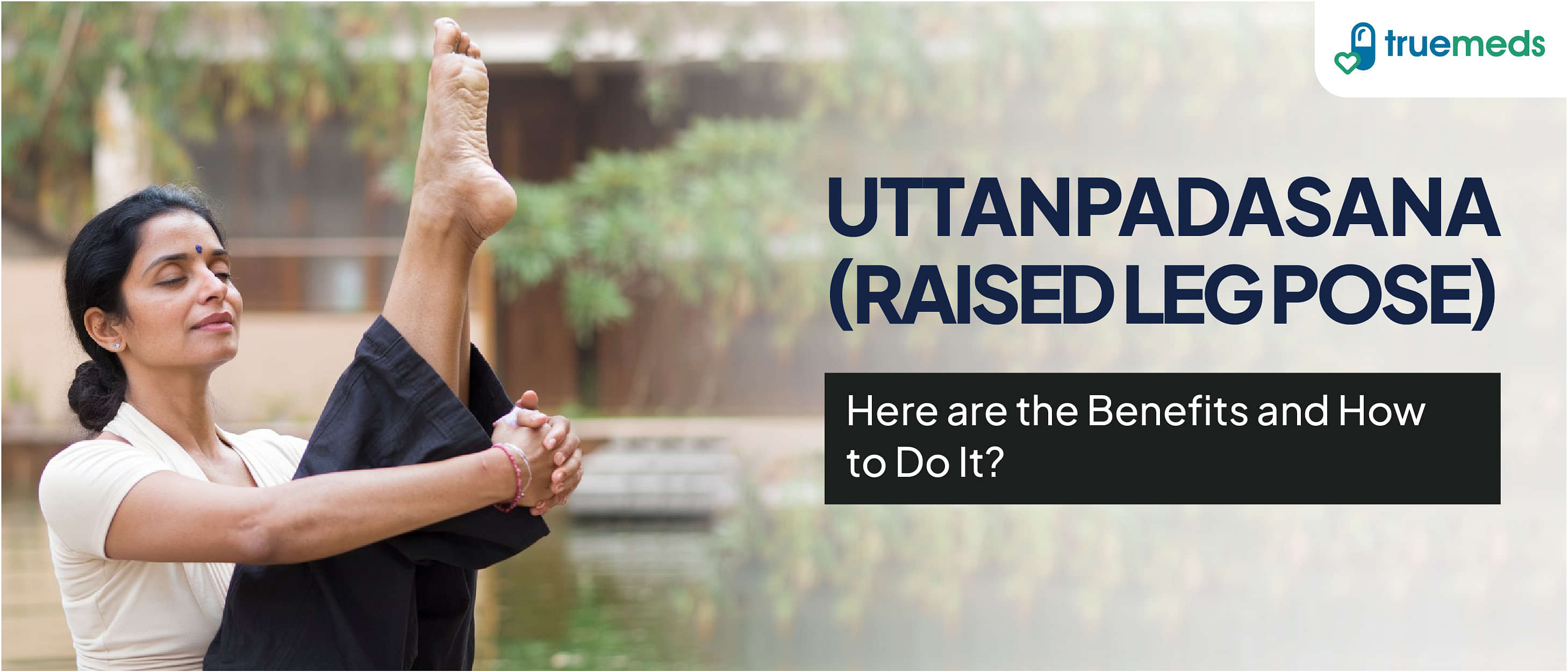
Benefits of Uttanpadasana (Raised Leg Pose) and How to Do It
Last updated on : 30 Nov, 2025
Read time : 7 min
Uttanpadasana, or the Raised Leg Pose, is a foundational supine yoga asana that offers a wide range of benefits for both the body and mind. This pose, performed while lying on your back, is designed to strengthen the core and lower back, improve digestion, and promote overall stability. By adding it to your regular yoga practice, you can experience significant improvements in your physical and mental health. Let’s explore the essence of this powerful asana.
What is Uttanpadasana (Raised Leg Pose)?
Uttanpadasana, derived from the Sanskrit words ‘uttana’ (extended or intense stretch), ‘pada’ (leg), and ‘asana’ (pose or posture), is a supine yoga pose (performed lying on the back) that focuses on strengthening the spine and deep abdominal muscles while improving spinal flexibility and reducing lower back strain. This pose also targets the pelvis, hips, and may help activate the perineum muscles, potentially enhancing digestive system function and blood circulation in the lower extremities [1]. Additionally, it supports core strength and improves balance. By engaging multiple muscle groups and promoting overall well-being, this asana is a valuable addition to any yoga practice.
How to Do It: Step-by-Step Instructions
To perform Uttanpadasana, follow these steps:
Initial Position:
- Lie on your back with your legs and arms stretched out alongside your body, palms facing down.
- Ensure your feet and knees are together, and your breathing is steady.
Lifting the Legs:
- Inhale and lift both legs straight up, keeping them together and toes pointing towards the ceiling. You can begin by lifting them to lifting them to a lifting them to a 30° or 45° angle, depending on your core strength.
- Keep your lower back pressed firmly into the mat.
- Avoid bending the knees.
Body Alignment:
- Keep the upper body relaxed, especially the shoulders and face.
- Tuck your chin towards your neck and engage your core muscles.
Holding the Pose:
- Hold the posture for a comfortable duration, starting with 4-5 breaths or 30 seconds, and gradually increase up to 2 minutes.
- Maintain normal breathing and focus on the lower abdomen.
Releasing the Pose:
- Exhale and slowly lower your legs back to the ground.
- Relax and breathe normally in Savasana (Corpse Pose).
Variations for Beginners:
- Start with one leg (Single Leg Raise) and gradually move to both legs.
- Use a wall for support or place your hands under the lower back for assistance if discomfort is felt.
Health Benefits of Uttanpadasana
Uttanpadasana is a highly beneficial asana that offers advantages for physical and mental well-being when practiced correctly. Let’s look at some of its benefits in detail, supported by academic evidence.
1. Support for Digestive Function
This pose gently compresses the abdominal area, which may help stimulate digestive organs and support gastrointestinal motility (peristalsis) [3]. This action can be useful in managing mild digestive discomfort, such as bloating and sluggish digestion, by improving blood circulation and mechanical stimulation of the organs [4]. It is important to understand that it should not replace medical treatment for chronic gastrointestinal issues.
2. Strengthening Abdominal Muscles
Lifting the legs while engaging the abdominal muscles helps to strengthen the deep core muscles, specifically activating the rectus abdominis, obliques, and hip flexors [5]. A strong core is essential for maintaining posture, stability, and reducing the risk of spinal injury.
3. Improving Circulation in Legs
By raising the legs against gravity, this pose assists in venous return (blood flow back to the heart), which may help improve blood circulation and reduce mild swelling (edema) in the lower extremities [1]. Studies have indicated that this asana can significantly impact hemodynamic parameters, suggesting a beneficial effect on circulatory health [1]. While it supports circulation, it should not be considered a standalone treatment for varicose veins or serious cardiovascular conditions.
4. Other Key Advantages
In addition to its specific benefits for the digestive system, abdominal muscles, and blood circulation, Uttanpadasana provides a range of other advantages for practitioners.
- Relief from Lower Back Strain: This pose can help to reduce non-specific lower back pain by strengthening the supporting core muscles, which indirectly stabilize the lumbar region [2]. A strong core is critical in mitigating excessive load on the lumbar spine [5].
- Enhanced Stability and Balance: Regular practice of Uttanpadasana also improves core strength, which is foundational to flexibility and balance, promoting better overall physical performance.
- Stress Reduction: Moreover, the focused attention required to maintain this pose can activate the parasympathetic nervous system, contributing to a calming effect on the mind, which is a key component of yoga’s benefits in managing stress [4].
Risks and Safety Considerations
While Uttanpadasana is generally a safe and beneficial exercise, it is vital to be aware of the potential risks associated with any physical activity, especially when involving the core and spine. Minor muscle strains and discomfort are the most common issues that may arise when practising this pose.
Contraindications: Individuals with pre-existing medical conditions, such as:
- Recent abdominal or spinal surgery
- Severe lower back pain, sciatica, or disc-related issues
- Hernia
- Uncontrolled high blood pressure
- Menstruation or late-stage pregnancy
should exercise caution and must consult a healthcare professional and a certified yoga instructor before attempting Uttanpadasana.
It is crucial to listen to your body and avoid overexertion, as pushing beyond your limits can lead to pain, discomfort, and even injury. Proper technique is also vital in minimising risks. Ensure that you follow the correct form and consider your individual circumstances, such as fitness level and previous injuries when practising Uttanpadasana. Always practice under the guidance of a qualified instructor, especially if you have underlying medical conditions, to reap maximum benefits while ensuring safety.
Frequently Asked Questions (FAQ)
Does Uttanpadasana reduce belly fat?
This pose can strengthen the abdominal muscles, but fat loss occurs through a combination of sustained exercise, a balanced diet, and lifestyle changes. Yoga poses alone cannot target fat reduction in one area (spot reduction is a myth).
Who should avoid Uttanpadasana?
Individuals with severe muscle pulls, those recovering from spinal injuries, recent abdominal surgery, and pregnant women (especially beyond the first trimester) should avoid practising Uttanpadasana to prevent further strain or complications.
Is Uttanpadasana good for back pain?
In some cases, yes , it can strengthen the deep core muscles that support the spine. However, it should be approached with extreme caution, as improper practice can aggravate existing conditions. Individuals with existing or acute back conditions should always seek medical advice before attempting this posture.
What is the chakra associated with Uttanpadasana?
Though not traditionally linked with only one chakra, the strengthening action on the core may help stimulate the Manipura Chakra (Solar Plexus), associated with personal power, self-confidence, and energy. The concept of chakras is a spiritual and energetic framework and is not supported by scientific evidence.
What is another name for Uttanapadasana?
Uttanapadasana is also known as the Raised Leg Pose as it involves lying on the back and raising the legs towards the ceiling.
References
[1] Salomi, S., Kiranmayi, P., Pentakota, V., & Vijayalakshmi, P. (2022). Impact of Sarvangasana and Uttanpadasana on hemodynamic parameters. Research Journal of Pharmacy and Technology, 15(7), 3029–3033. https://doi.org/10.52711/0974-360x.2022.00506
[2] Pareek, T., & Sharma, M. (2017). COMBINE EFFECT OF PANCHKARMA AND YOGA-ASANA IN THE MANAGEMENT OF KATISHOOLA: A CASE STUDY. Research Journal of Pharmacy and Technology, 10(12), 4381-4384. https://doi.org/10.5958/0974-360X.2017.00787.0
[3] Tayade, S. A., & Bhosale, V. D. (2017). Effect of yogasana on digestive system. International Ayurvedic Medical Journal (IAMJ), 5(3), 727–733. https://www.iamj.in/public/article/doi/727_733.pdf
[4] Saini, N., Saini, V., Sharma, S., & Sharda, R. (2025). Mind-Body Connection in Digestive Health: Reviewing the Yogic Impact of Asana and Pranayama. International Journal for Research Publication and Seminar, 16(3). https://doi.org/10.5281/zenodo.10543669
[5] Gothe, P. (2017). Anatomical correlation of core muscle activation in different yogic postures. International Journal of Yoga, 10(2), 79. https://doi.org/10.4103/ijoy.ijoy_38_16













Disclaimer
Our healthcare experts have carefully reviewed and compiled the information presented here to ensure accuracy and trustworthiness. It is important to note that this information serves as a general overview of the topic and is for informational purposes only. It is not intended to diagnose, prevent, or cure any health problem. This page does not establish a doctor-patient relationship, nor does it replace the advice or consultation of a registered medical practitioner. We recommend seeking guidance from your registered medical practitioner for any questions or concerns regarding your medical condition.
Popular Articles


Recommended Articles



Recent Articles








Company
About UsHealth ArticleHealth StoriesHealth LibraryDiseases & Health ConditionsAyurvedaUnderstanding Generic MedicinesAll MedicinesAll BrandsNeed HelpFAQSecuritySubscribe
Registered Office Address
Grievance Officer
Download Truemeds


Contact Us
Our customer representative team is available 7 days a week from 9 am - 9 pm.
v4.10.3

2025 - Truemeds | All rights reserved. Our content is for informational purposes only. See additional information.

Our Payment Partners




