

- Medicines
- Personal Care
- Skin Cream
- Sunscreen
- Face Wash
- Skin and Body Soap
- Acne Care
- Body Lotions
- Moisturising Lotion
- Moisturising Cream
- Mosquito Repellent
- Moisturising Gel
- Body Wash
- Hair Oils
- Hair Shampoo
- Hair Conditioners
- Hair Supplements
- Hair Colour
- Hair Serum
- Hair Mask
- Hair Solutions
- Baby Diapers and Wipes
- Baby Lotion and Moisturising Cream
- Baby Bath Essentials
- Baby Skin Care
- Baby and Infant Food
- Baby Healthcare
- Women Multivitamins
- Ovulation Test Kit and Women Intimate Care
- Sanitary Pads
- Nutritional Drinks
- Condoms
- Lubricants
- Massage Gels
- Personal Body Massagers
- Men Performance Booster
- Sexual Health Supplements
- Massage Oils
- Ayurveda
- Tooth Paste
- Mouth Ulcer Gel
- Mouthwash
- Toothache and Gum Pain
- Tooth Brush
- Gargle Solution
- Orthopaedic Supports
- Adult Diapers
- Footwear
- Mobility and Support Accessories
- Urinary Support and Care
- Health Conditions
- Bone and Joint Care
- Digestive Care
- Eye Care
- Pain Relief
- Smoking Cessation
- Liver Care
- Stomach Care
- Cold and Cough
- Heart Care
- Kidney Care
- Piles, Fissures & Fistula
- Respiratory Care
- Mental Wellness
- Derma Care
- Pre and Probiotics
- Acidity
- Gas
- Constipation
- Loose Motion/Diarrhoea
- Digestive Fibres
- Digestive Enzymes
- Eye Lubricant Drops
- Lens Solution
- Safety Eye Wear
- Eye Cream
- Eye Vitamins and Supplements
- Eye Drops
- Eye Ointment and Gel
- Nicotine Patch
- Nicotine Gum
- Nicotine Lozenges
- Cough Syrups
- Chest Rubs and Balms
- Nasal Spray
- Lozenges
- Inhalant Capsules
- Cold and Cough Tablets
- Vitamins & Supplements
- Diabetes Care
- Healthcare Devices
- Homeopathic Medicine
- Health Guide
Top Benefits of Utkatasana (Chair Pose) and How to Do It
Last updated on : 19 Nov, 2025
Read time : 8 min
Utkatasana, or Chair Pose, is a dynamic yoga posture that offers a full-body workout, challenging your strength, balance, and focus. Despite its seemingly simple appearance, this pose engages multiple muscle groups and provides numerous benefits for practitioners of all levels. Commonly featured in various yoga styles, particularly Vinyasa and Hatha Yoga, Utkatasana serves as a foundational pose that seamlessly connects other postures. By including this pose in your practice, you can enhance your physical strength, improve your balance, and cultivate mental resilience. It’s important to practice this pose with proper alignment to prevent injury, especially to the knees [1].
What is Utkatasana?
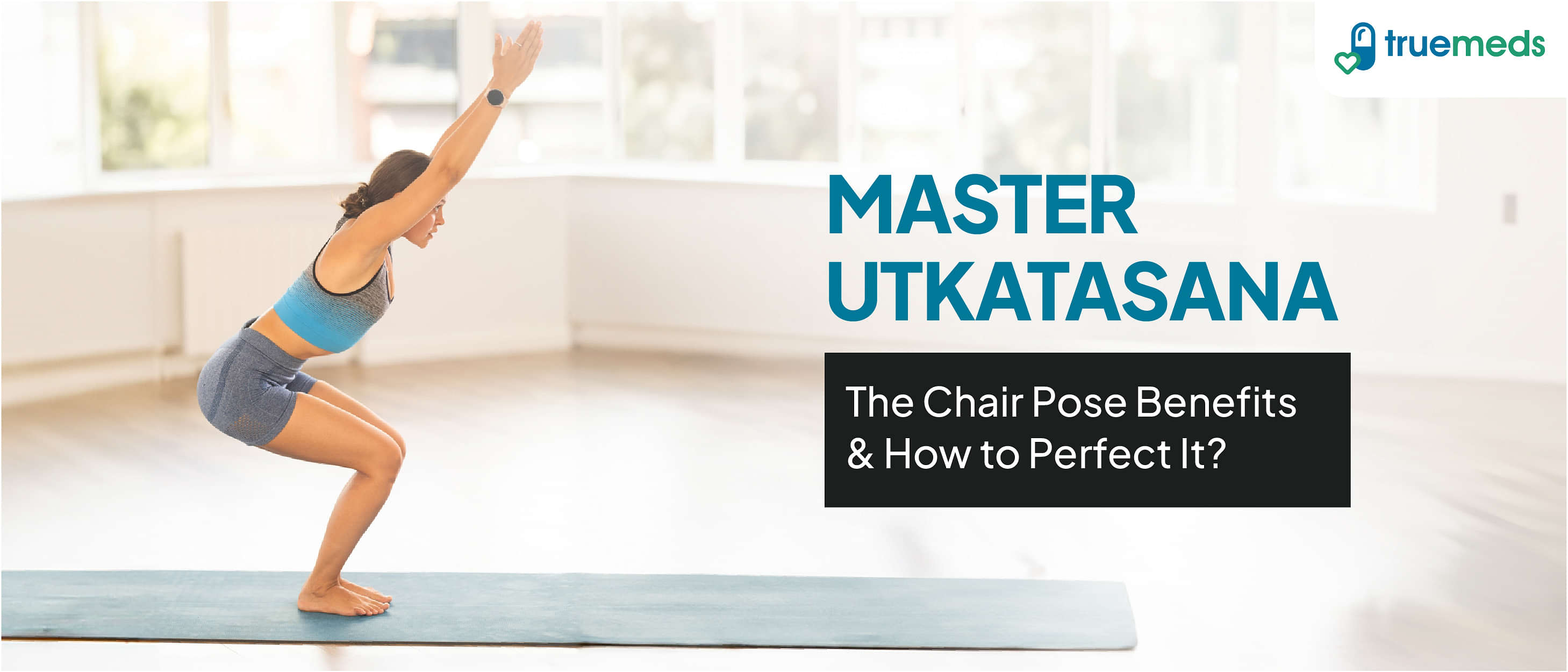
Utkatasana, derived from the Sanskrit words ‘utkata’ meaning ‘fierce’ or ‘powerful,’ is a standing yoga posture that involves holding a partial squat position, as if sitting in an imaginary chair. This comprehensive pose targets various muscle groups, including the quadriceps, hamstrings, glutes, calves, ankles, core, and pelvic floor [1], providing a holistic exercise that strengthens and stretches the body. As we delve deeper into its benefits, you will discover how this powerful pose can transform your physical stability and overall well-being.
How to Do Utkatasana (Chair Pose)
To perform Utkatasana safely and effectively, follow these steps:
- Begin by standing tall in Mountain Pose (Tadasana) at the front of your yoga mat, with your feet together or hip-width apart.
- As you exhale, bend your knees and lower your buttocks towards the floor, as if you were sitting back into an imaginary chair. Shift your weight slightly back toward your heels.
- Ensure that your thighs are moving toward being parallel to the floor (a deep squat) or at a comfortable angle for your body, and your knees remain aligned over your ankles. Avoid letting your knees extend far beyond your toes or collapse inward.
- Engage your core muscles by gently drawing your navel towards your spine, stabilising your lower back. Maintain a neutral pelvic alignment without excessive arching or tucking.
- Simultaneously, raise your arms overhead, keeping them parallel to each other with palms facing inward or touching if possible. Roll your shoulders back and down to open your chest.
- Focus on your breath and maintain stability throughout the pose, avoiding any discomfort in your knees. If needed, adjust your arm position to help maintain balance or reduce the depth of your squat.
Key Benefits of Utkatasana (Chair Pose)
Utkatasana is a powerful yoga asana that offers numerous benefits for both physical and mental well-being. Let us explore the top benefits in detail.
1. Enhanced Lower Body Strength and Stability
Utkatasana is a highly effective pose for building strength [1], particularly targeting the quadriceps, hamstrings, and glutes. By engaging these major muscles, this pose helps improve knee stability and overall lower body strength, making everyday movements easier. Additionally, Utkatasana strengthens the supporting muscles around major joints such as the hips and ankles, contributing to better joint stability and potentially reducing the risk of common injuries when practiced correctly.
2. Improved Proprioception and Balance
Utkatasana is a powerful pose for enhancing balance due to its requirement for sustained stability and engagement of the core muscles. By practicing this pose regularly, individuals can improve their ability to maintain equilibrium, which is essential for preventing falls and improving overall physical stability (especially relevant for older adults) [2]. The intense focus required to hold the pose also helps develop proprioception (the body’s awareness of its position in space) and concentration, further aiding in maintaining balance.
3. Core Engagement and Digestive Health Stimulation
This pose is highly effective in building functional core strength, stimulating the abdominal organs. The compression and subsequent release in the abdomen during the practice can assist with healthy digestive function and elimination, promoting overall internal well-being. Furthermore, the engagement of the pelvic floor muscles also supports core stability.
4. Posture Improvement and Reduced Back Strain
By encouraging an elongated spine and strong core engagement, Utkatasana helps open and stretch the chest and shoulders, improving respiratory function and promoting better posture. The act of lengthening the spine while maintaining a stable lower body enhances spinal flexibility and can help alleviate non-specific lower back stiffness [3].
5. Supporting Strength During Pregnancy (with Modification)
While Utkatasana should be approached with caution and appropriate modifications during pregnancy, it can be beneficial under the guidance of a qualified prenatal yoga instructor [4]. The pose helps maintain strength in the quadriceps, hamstrings, and glutes, which is crucial for supporting the changing body weight and knee stability during pregnancy. The goal is not improving pregnancy outcomes—a claim that is too strong—but rather to maintain maternal strength and stability, which can contribute to overall well-being and preparation for labor. Modifications include a wider stance or using a wall for support.
Risks and Contraindications of Utkatasana
While Utkatasana offers numerous benefits, it is essential to be aware of the potential risks and contraindications associated with this powerful posture.
- Knee Issues: Individuals with chronic, acute, or severe knee pain, recent ligament tears, or significant meniscal injuries should avoid practicing Utkatasana, as the deep flexion and weight-bearing nature of the pose can exacerbate existing conditions. Even mild discomfort is a sign to ease out of the pose or use a modification [1].
- Joint Injuries: Those with acute shoulder, ankle, and hip injuries, as well as severe arthritis or acute spondylitis should refrain from performing this pose or seek professional modification.
- Cardiovascular/Head Conditions: People with uncontrolled high blood pressure, vertigo, severe migraines, or recent stroke should exercise caution. The elevation of the arms and the slight head position may potentially affect blood flow and cause dizziness.
- Pregnancy/Postnatal: Pregnant women in their third trimester may find the pose uncomfortable and should use significant modifications (e.g., chair support, wide stance). Postnatal women should wait until they have physician clearance and have regained baseline core strength before practicing the full pose.
By understanding these risks and taking necessary precautions, practitioners can safely enjoy the benefits of Utkatasana.
Conclusion
Utkatasana, or Chair Pose, is a powerful yoga asana that offers a wide range of benefits, including enhanced lower body strength, improved balance, and stimulated digestive health. However, it is crucial for practitioners to be mindful of the potential risks and contraindications associated with this pose. To maximize safety and effectiveness, practice with proper alignment and listen to your body. Those with specific health concerns, injuries, or who may require modifications must consult with a certified yoga instructor or physical therapist to ensure a safe and effective practice tailored to their needs.
Disclaimer:
This article provides general information about a yoga pose and is for informational purposes only. It is not intended as a substitute for professional medical advice, diagnosis, or treatment. Always seek the advice of a qualified healthcare provider or a certified yoga instructor with any questions you may have regarding a medical condition or before starting any new health or wellness routine.
Frequently Asked Questions (FAQ)
What are the steps of Utkatasana?
Start in Mountain Pose (Tadasana) with feet together. Exhale, bend knees, lower hips as if sitting, shifting your weight slightly back. Inhale, lift arms overhead. Maintain a straight back, relaxed shoulders, and an engaged core. Hold for several breaths.
Who should not do Utkatasana?
Avoid Utkatasana if you have severe, acute, or unstable knee injuries or pain, or if you have uncontrolled high blood pressure or recent head injuries. Pregnant women and individuals with serious back conditions should only attempt the pose with a qualified instructor’s guidance and modifications.
Does chair pose reduce belly fat?
While Utkatasana primarily strengthens and tones the legs, core, and glutes, it is not a primary fat-burning exercise. It contributes to overall muscle building and energy expenditure, which, as part of a balanced diet and regular exercise routine, may indirectly help reduce body fat.
What age is chair yoga suitable for?
Chair yoga, including modified versions of Utkatasana, is suitable for all ages, especially seniors. The chair provides support, making the pose accessible and safe for those working with balance issues, mobility limitations, or recovering from injury.
How long should you stay in Utkatasana?
Beginners should start with holding Utkatasana for 3 to 5 deep breaths, gradually increasing to 8 to 10 breaths (around 30-60 seconds) as strength and comfort allow. Focus on maintaining correct alignment throughout the hold.
References
[1] Liu, A.-M., Chu, I.-H., Lin, H.-T., Liang, J.-M., Hsu, H.-T., & Wu, W.-L. (2021). Training benefits and injury risks of standing yoga applied in musculoskeletal problems: Lower limb biomechanical analysis. International Journal of Environmental Research and Public Health, 18(16), 8402.
https://www.ncbi.nlm.nih.gov/pmc/articles/PMC8391656/
[2] Wang, M.-Y., Yu, S. S.-Y., Hashish, R., Samarawickrame, S. D., Kazadi, L., Greendale, G. A., & Salem, G. (2013). The biomechanical demands of standing yoga poses in seniors: The Yoga empowers seniors study (YESS). BMC Complementary and Alternative Medicine, 13(1), 8.
https://doi.org/10.1186/1472-6882-13-8
[3] Gerçek, H., Sarak Küçükosmanoğlu, H., Soylu, Ç., Aytar, A., Ün Yıldırım, N., & Aytar, A. (2024). The effect of physical yoga poses on anterior and posterior myofascial chain activity in elderly individuals. KTO Karatay Üniversitesi Sağlık Bilimleri Dergisi, 5(3), 243–264.
https://doi.org/10.59244/ktokusbd.1583906
[4] Dhapola, M. S., & Prasad, R. K. (2018). Role of different asanas during prenatal and postnatal pregnancy. International Journal of Physical Education and Sports, 3(12), 9-16.
https://www.academia.edu/download/60301107/3120320190815-106603-1rysygn.pdf













Disclaimer
Our healthcare experts have carefully reviewed and compiled the information presented here to ensure accuracy and trustworthiness. It is important to note that this information serves as a general overview of the topic and is for informational purposes only. It is not intended to diagnose, prevent, or cure any health problem. This page does not establish a doctor-patient relationship, nor does it replace the advice or consultation of a registered medical practitioner. We recommend seeking guidance from your registered medical practitioner for any questions or concerns regarding your medical condition.
Popular Articles


Recommended Articles




Recent Articles








Company
About UsHealth ArticleHealth StoriesHealth LibraryDiseases & Health ConditionsAyurvedaAll MedicinesAll BrandsNeed HelpFAQSecuritySubscribe
Registered Office Address
Grievance Officer
Download Truemeds


Contact Us
Our customer representative team is available 7 days a week from 9 am - 9 pm.
v4.8.2

2025 - Truemeds | All rights reserved. Our content is for informational purposes only. See additional information.

Our Payment Partners




