

- Medicines
- Personal Care
- Skin Cream
- Sunscreen
- Face Wash
- Skin and Body Soap
- Acne Care
- Body Lotions
- Moisturising Lotion
- Moisturising Cream
- Mosquito Repellent
- Moisturising Gel
- Body Wash
- Hair Oils
- Hair Shampoo
- Hair Conditioners
- Hair Supplements
- Hair Colour
- Hair Serum
- Hair Mask
- Hair Solutions
- Baby Diapers and Wipes
- Baby Lotion and Moisturising Cream
- Baby Bath Essentials
- Baby Skin Care
- Baby and Infant Food
- Baby Healthcare
- Women Multivitamins
- Ovulation Test Kit and Women Intimate Care
- Sanitary Pads
- Nutritional Drinks
- Condoms
- Lubricants
- Massage Gels
- Personal Body Massagers
- Men Performance Booster
- Sexual Health Supplements
- Massage Oils
- Ayurveda
- Tooth Paste
- Mouth Ulcer Gel
- Mouthwash
- Toothache and Gum Pain
- Tooth Brush
- Gargle Solution
- Orthopaedic Supports
- Adult Diapers
- Footwear
- Mobility and Support Accessories
- Urinary Support and Care
- Health Conditions
- Bone and Joint Care
- Digestive Care
- Eye Care
- Pain Relief
- Smoking Cessation
- Liver Care
- Stomach Care
- Cold and Cough
- Heart Care
- Kidney Care
- Piles, Fissures & Fistula
- Respiratory Care
- Mental Wellness
- Derma Care
- Pre and Probiotics
- Acidity
- Gas
- Constipation
- Loose Motion/Diarrhoea
- Digestive Fibres
- Digestive Enzymes
- Eye Lubricant Drops
- Lens Solution
- Safety Eye Wear
- Eye Cream
- Eye Vitamins and Supplements
- Eye Drops
- Eye Ointment and Gel
- Nicotine Patch
- Nicotine Gum
- Nicotine Lozenges
- Cough Syrups
- Chest Rubs and Balms
- Nasal Spray
- Lozenges
- Inhalant Capsules
- Cold and Cough Tablets
- Vitamins & Supplements
- Diabetes Care
- Healthcare Devices
- Homeopathic Medicine
- Health Guide
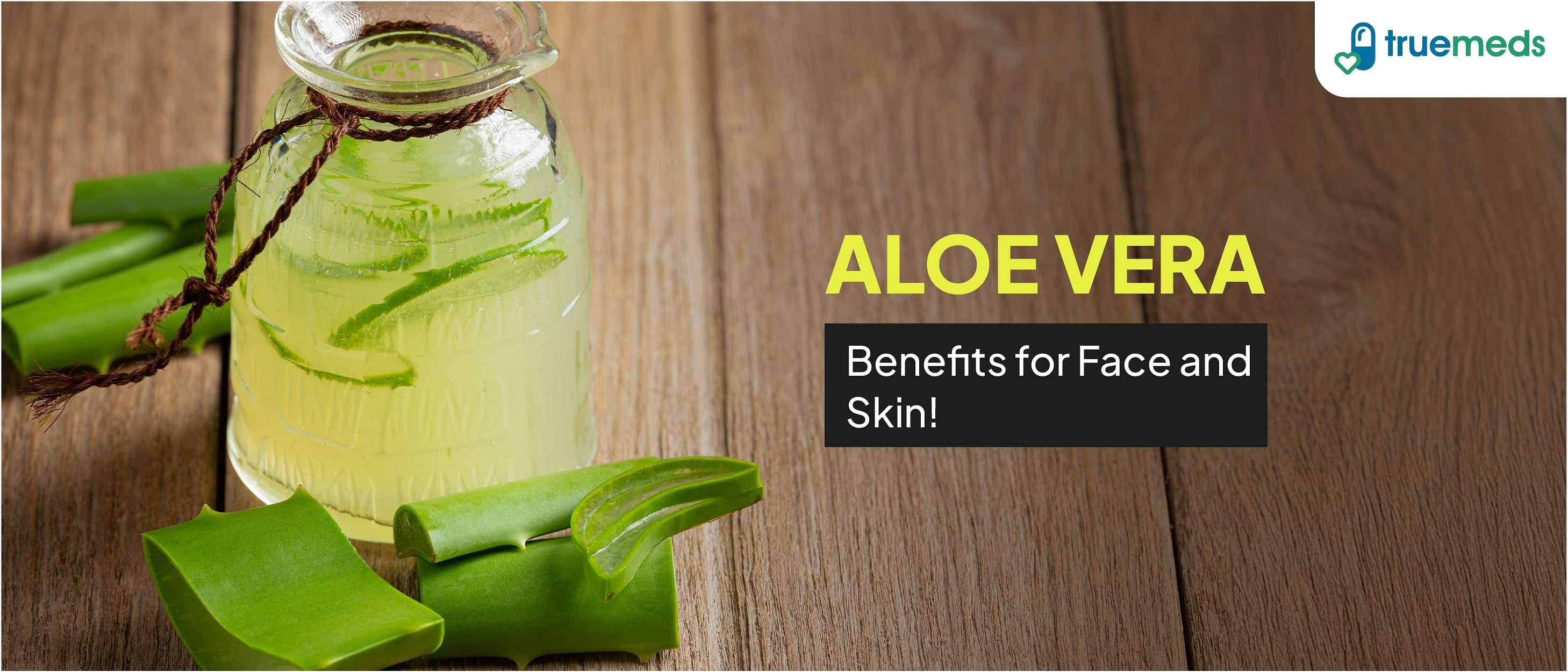
10 Evidence-Based Benefits of Aloe Vera for Face and Skin
Last updated on : 28 Nov, 2025
Read time : 8 min
Aloe vera, a popular succulent plant, is widely appreciated not only for its ornamental value but also for its traditional and scientifically studied use in skincare and wellness routines.
With over 75 potentially active constituents, including a rich mix of vitamins (A, C, E, B12), enzymes, minerals, sugars, lignin, saponins, salicylic acids, and amino acids, it is no wonder that aloe vera is considered a valuable natural remedy [1]. This plant is generously endowed with antioxidant and anti-inflammatory properties, which are instrumental in managing minor wounds, burns, and skin irritations. Let us explore the dermatological benefits of using topical aloe vera on your face and skin in more detail.
Dermatological Benefits of Aloe Vera Gel
Pure aloe vera gel offers an array of benefits when applied to the face and skin. Its vital elements, like vitamins A, C, and E, are known for their antioxidant properties, which help neutralise harmful free radicals that can accelerate photo-ageing. The strong presence of polysaccharides, specifically acemannan, in aloe vera stimulates growth factors and may help support skin repair [2], [3]. This plant also contains the compound glucomannan, a polysaccharide that helps maintain the skin’s moisture content and may promote fibroblast activity, potentially improving elasticity [1].
1) Provides Non-Greasy Hydration
One of the most appreciated benefits of aloe vera gel for skin is its ability to hydrate without leaving a greasy feel. Unlike many heavy moisturisers that may clog pores, aloe vera gel is non-comedogenic and quickly absorbed into your skin. The high water content (around 98%) combined with the binding action of glucomannan and other sugars, helps support skin hydration and maintain the skin barrier’s integrity, contributing to a more supple appearance [1].
2) Soothes Minor Burns and Sunburn
Aloe vera is most commonly used for soothing and healing the skin, especially for relieving mild-to-moderate sunburn. Its natural properties may help calm and hydrate the skin, promoting recovery. When skin is irritated or sunburnt, inflammatory cytokines are released. The anti-inflammatory compounds (like aloin, anthraquinones, and chromones) present in aloe vera gel can help inhibit this inflammatory response and control associated redness and swelling [2]. Aloe vera also retains moisture, which is crucial for sunburned areas. While it does not prevent or cure sunburn, studies suggest it may speed up the initial healing process and manage symptoms like discomfort and dryness [3], [4].
3) Complements Acne Management
Aloe vera gel is known for its antimicrobial properties, which may help manage acne by controlling the surface bacteria, such as P. acnes [1]. Add to this its anti-inflammatory properties, which ease inflammation and redness associated with pimples. Furthermore, aloe vera gel contains small amounts of natural salicylic acid, known for its ability to gently unclog pores and support mild breakouts [1]. Aloe vera is hydrating without being overly oily, making it a suitable adjunct for various skin types, including those with oily and acne-prone skin. However, it should not replace primary acne treatments prescribed by a dermatologist [2].
4) Supports Visible Signs of Skin Ageing Management
Aloe vera contains antioxidants, including vitamins C and E, that protect the skin from some types of oxidative damage caused by free radicals (a major contributor to photo-ageing). This protection can help mitigate the appearance of fine lines and wrinkles. Aloe vera also supports fibroblast activity, which is vital for maintaining skin elasticity and firmness by encouraging collagen production [1]. This not only helps delay the appearance of superficial signs of ageing but also supports the overall health of your skin.
5) May Improve Skin Tone Uniformity
Among the many benefits of using aloe vera on the face, one that is often cited is its potential to even out skin tone. The antioxidants (Vitamins A, C, and E) and the presence of Aloesin—a compound that may inhibit the production of melanin, can help brighten the skin and subtly control pigmentation [5]. The enzymes present in aloe vera also assist in the gentle exfoliation of dead skin cells, thus revealing a fresher and more radiant complexion. Visible improvements require consistent, long-term application [2].
6) Supports Minor Wound Healing and Skin Repair
Another benefit of applying aloe vera to the face and body is its potential to support minor wound healing. The gel is known for its healing properties, particularly in cases of minor cuts, abrasions, and skin irritations. Its anti-inflammatory effects help control redness and swelling, while its moisturising qualities aid the healing process. Aloe vera supports skin regeneration and may improve the appearance of scars by enhancing skin cell turnover, a process which replaces damaged cells with new, healthy ones [4].
7) Maintains Skin Elasticity
One of the key benefits of aloe vera for the skin is its potential to support skin elasticity. This is largely due to its high water content and the presence of various nutrients that nourish the skin. Acemannan and amino acids help maintain hydration, which is crucial for keeping the skin supple and elastic [1]. Aloe vera supports collagen formation by promoting fibroblast proliferation and may contribute to firmer and more elastic skin when used regularly [1].
8) Minimises Excess Oil (Sebum)
One of the key benefits of applying aloe vera on the face for individuals with oily skin is its ability to help control excess oil production. Aloe vera has natural astringent properties, helping to gently lift excess oil from clogged pores and the skin’s surface. It functions as an antioxidant, helping to modulate excessive sebum secretion without causing extreme dryness [2].
9) Assists in Pore Cleansing
In addition to managing excess oil, aloe vera is also known for its pore-cleansing properties. Aloe vera absorbs impurities and residual oil from the face while helping to regulate sebum production. Gently removing excess oil from the skin helps unclog pores, keeping them clean and reducing the occurrence of acne and pimples. Incorporating aloe vera into your skincare routine can be beneficial in achieving clear and healthy skin, especially when used as a light-weight mask or cleanser [1].
10) Calms Irritation
One of the most significant benefits of using aloe vera on the face is its soothing effect on minor irritation and inflammation. Its rich content of enzymes, anti-inflammatory molecules, and high hydration may help quickly calm redness and irritation, making it a beneficial option for sensitive or reactive skin. This effect is why it is widely used after procedures like waxing or shaving [2].
Conclusion
In summary, incorporating pure aloe vera gel into your skincare routine can be beneficial in numerous ways. It is a supportive solution for managing oily, acne-prone skin, providing non-greasy hydration, and offering anti-inflammatory support for various skin issues.
The benefits of using aloe vera on the face are tied to its complex biological matrix rich in vitamins, minerals, amino acids, and antioxidants that nourish the skin. While aloe vera is generally well-tolerated for topical use, particularly the inner gel, some individuals may experience contact dermatitis or allergic reactions such as redness, itching, or rash [4]. It is highly recommended to perform a patch test on a small, inconspicuous area of skin (like behind the ear or inner forearm) before applying the complete product, especially for sensitive or reactive skin. Ensure that you strictly remove the yellow latex/aloin (the bitter yellowish fluid found directly beneath the rind) from any fresh leaf preparation, as this compound can be highly irritating and has strong laxative properties if ingested [4]. Consult a dermatologist or healthcare provider if irritation persists or if you have a known allergy to plants in the Liliaceae family (which includes garlic and onions).
Frequently Asked Questions (FAQs)
Can I apply aloe vera to my face daily?
Yes, for most individuals. Regular application of pure aloe vera gel to the face can provide various skin benefits, including hydration and antioxidant support. Stop use if any irritation occurs.
Does aloe vera increase face glow?
Yes. Aloe vera gel may help maintain natural radiance by keeping the skin optimally hydrated and through the mild exfoliating effect of its enzymes, contributing to a healthy glow on the face.
Can aloe vera clear your face?
Yes. Applying aloe vera on your face regularly can help soothe inflammation associated with blemishes and support overall skin clarity, particularly due to its anti-inflammatory and non-comedogenic properties.
How long should I leave aloe vera on my face?
Apply a thin layer of aloe vera gel to clean skin and leave it on for 15 to 30 minutes before rinsing. For deeper hydration, it may be left overnight, provided your skin tolerates it well and the gel is confirmed to be aloin-free.
References
[1] Huang, D. S., Li, X. F., & Zhao, Y. (2024). Study on the application of Aloe vera in cosmetology and clinical treatment of skin diseases. Journal of Cosmetic Science & Medicine, 8(2), Article 026. https://doi.org/10.1016/j.jcsm.2024.026
[2] Davood Hekmatpou, PhD, Mehrabi, F., Kobra Rahzani, PhD, & Atefeh Aminiyan, PhD. (2019). The Effect of Aloe Vera Clinical Trials on Prevention and Healing of Skin Wound: A Systematic Review. Iranian Journal of Medical Sciences, 44(1), 1-9. https://pmc.ncbi.nlm.nih.gov/articles/PMC6330525/
[3] Vogler, B. K., & Ernst, E. (2006). Aloe vera: A short review. Clinical Journal of General Medicine, 3(2), 33–37. https://www.ncbi.nlm.nih.gov/pmc/articles/PMC2763764/
[4] National Center for Complementary and Integrative Health (NCCIH). (2025, February). Aloe vera: Usefulness and safety. U.S. Department of Health and Human Services, National Institutes of Health. https://www.nccih.nih.gov/health/aloe-vera
[5] Choi, S., & Chung, M. H. (2003). A review on the relationship between Aloe vera components and their skin beneficial effects. Phytotherapy Research: An International Journal Devoted to Pharmacological and Toxicological Evaluation of Natural Product Derivatives, 17(5), 450–456. https://doi.org/10.1002/ptr.1192














Disclaimer
Our healthcare experts have carefully reviewed and compiled the information presented here to ensure accuracy and trustworthiness. It is important to note that this information serves as a general overview of the topic and is for informational purposes only. It is not intended to diagnose, prevent, or cure any health problem. This page does not establish a doctor-patient relationship, nor does it replace the advice or consultation of a registered medical practitioner. We recommend seeking guidance from your registered medical practitioner for any questions or concerns regarding your medical condition.
Recent Articles










Company
About UsHealth ArticleHealth StoriesHealth LibraryDiseases & Health ConditionsAyurvedaUnderstanding Generic MedicinesAll MedicinesAll BrandsNeed HelpFAQSecuritySavings CalculatorSubscribe
Registered Office Address
Grievance Officer
Download Truemeds


Contact Us
Our customer representative team is available 7 days a week from 9 am - 9 pm.
v4.15.1

2026 - Truemeds | All rights reserved. Our content is for informational purposes only. See additional information.

Our Payment Partners