

- Medicines
- Personal Care
- Skin Cream
- Sunscreen
- Face Wash
- Skin and Body Soap
- Acne Care
- Body Lotions
- Moisturising Lotion
- Moisturising Cream
- Mosquito Repellent
- Moisturising Gel
- Body Wash
- Hair Oils
- Hair Shampoo
- Hair Conditioners
- Hair Supplements
- Hair Colour
- Hair Serum
- Hair Mask
- Hair Solutions
- Baby Diapers and Wipes
- Baby Lotion and Moisturising Cream
- Baby Bath Essentials
- Baby Skin Care
- Baby and Infant Food
- Baby Healthcare
- Women Multivitamins
- Ovulation Test Kit and Women Intimate Care
- Sanitary Pads
- Nutritional Drinks
- Condoms
- Lubricants
- Massage Gels
- Personal Body Massagers
- Men Performance Booster
- Sexual Health Supplements
- Massage Oils
- Ayurveda
- Tooth Paste
- Mouth Ulcer Gel
- Mouthwash
- Toothache and Gum Pain
- Tooth Brush
- Gargle Solution
- Orthopaedic Supports
- Adult Diapers
- Footwear
- Mobility and Support Accessories
- Urinary Support and Care
- Health Conditions
- Bone and Joint Care
- Digestive Care
- Eye Care
- Pain Relief
- Smoking Cessation
- Liver Care
- Stomach Care
- Cold and Cough
- Heart Care
- Kidney Care
- Piles, Fissures & Fistula
- Respiratory Care
- Mental Wellness
- Derma Care
- Pre and Probiotics
- Acidity
- Gas
- Constipation
- Loose Motion/Diarrhoea
- Digestive Fibres
- Digestive Enzymes
- Eye Lubricant Drops
- Lens Solution
- Safety Eye Wear
- Eye Cream
- Eye Vitamins and Supplements
- Eye Drops
- Eye Ointment and Gel
- Nicotine Patch
- Nicotine Gum
- Nicotine Lozenges
- Cough Syrups
- Chest Rubs and Balms
- Nasal Spray
- Lozenges
- Inhalant Capsules
- Cold and Cough Tablets
- Vitamins & Supplements
- Diabetes Care
- Healthcare Devices
- Homeopathic Medicine
- Health Guide
Health Benefits of Custard Apple and Side Effects
Last updated on : 01 Dec, 2025
Read time : 15 min
What is Custard Apple?
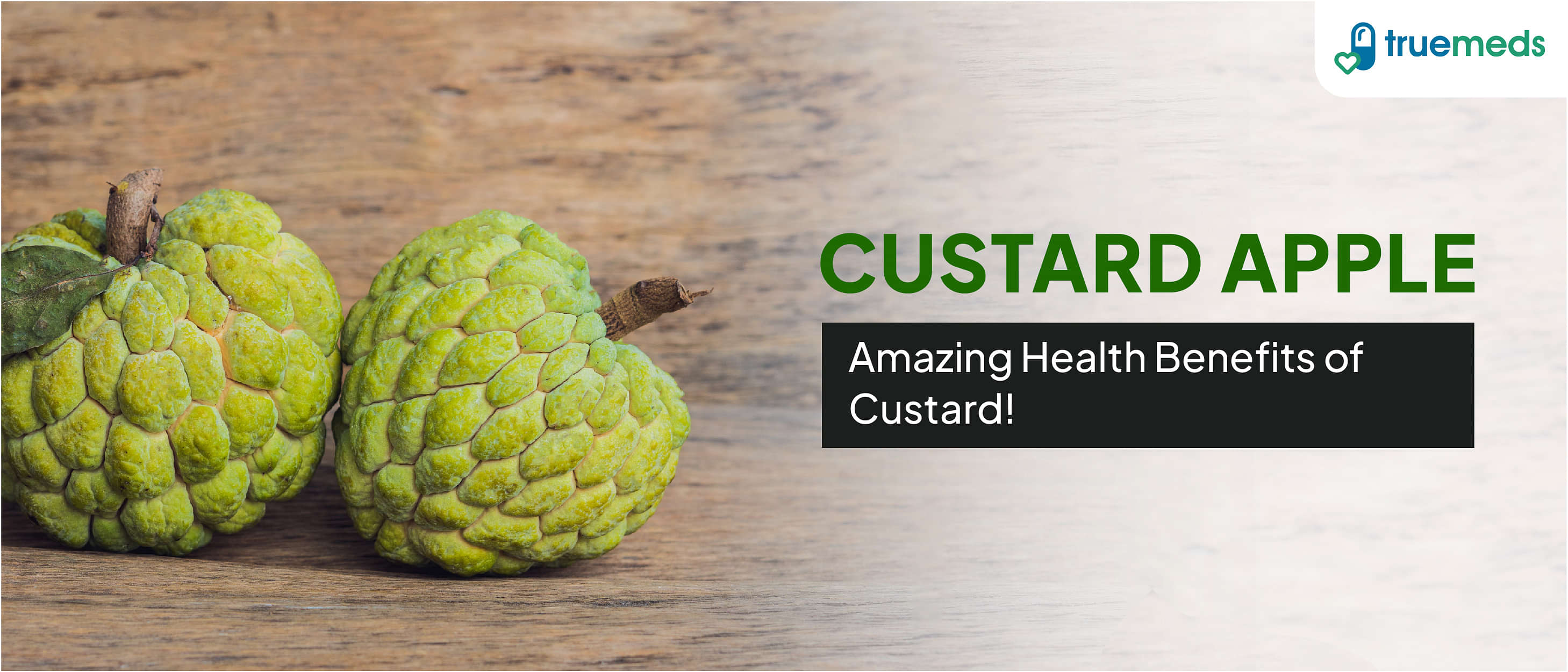
Custard apple, known scientifically as Annona squamosa and commonly as Sitafal or Sharifa in India, is a beloved tropical fruit celebrated for its creamy texture and sweet flavor. This fruit is naturally rich in essential micronutrients, including Vitamin C, B vitamins, dietary fiber, and minerals like potassium and magnesium. The consumption of Custard apple contributes to supporting generalealth through its content of antioxidants and fiber [1].
Traditionally, the fruit and its plant parts have been used in various remedies. The fruit’s high fiber content is commonly associated with promoting healthy bowel movements, while the bark has been historically used for issues like diarrhea. Preliminary research suggests its leaf extracts may possess bioactive compounds that could support blood sugar and blood pressure regulation, though more clinical studies are needed [2].
The leaves and fruit are also noted for their antioxidant content (e.g., Vitamins A and C), which supports skin health by helping to neutralize free radicals. Custard apple seeds and leaves have been used traditionally for external issues like lice and dandruff.
Note on Moderation: Due to its naturally high sugar content, as with any fruit, Custard apple should be consumed in moderation as part of a balanced diet to manage calorie and sugar intake. It is crucial to always discard the seeds of the Custard apple, as they contain toxic compounds.
Nutritional Value of Custard Apple
Custard apple is a nutrient-dense fruit, providing a good source of energy, protein, and dietary fiber. The table below outlines the nutritional composition of 100 grams of fresh Custard apple pulp, based on data from the USDA FoodData Central database [3].
| Nutrients | Concentration per 100 g |
| Energy | 101 Kcal |
| Protein | 1.7 g |
| Dietary Fibre | 2.4 g |
| Calcium | 30 mg |
| Iron | 0.71 mg |
| Magnesium | 18 mg |
| Phosphorus | 21 mg |
| Potassium | 382 mg |
| Sodium | 4 mg |
Key Properties and Components of Custard Apple
Custard apple’s versatility and health-supporting properties are rooted in its rich composition:
- Antioxidant Power: It contains high levels of Vitamin C (an important antioxidant for immune function) and Vitamin B6 (which supports neurological health). It also contains flavonoids, carotenoids, and kaurenoic acid, which help the body combat oxidative stress [4].
- Cardiovascular Support: The presence of potassium and magnesium is crucial for maintaining healthy blood pressure levels by promoting the relaxation and widening of blood vessels [5].
- Digestive Health: Its high fiber content, including soluble fibers, plays a dual role: promoting regular bowel movements and serving as a prebiotic source for beneficial gut bacteria, which produce short-chain fatty acids (SCFAs) linked to gut health [6].
8 Impressive Health Benefits of Sitafal (Custard Apple)
The Custard apple (often referring to Annona squamosa or Annona cherimola in global literature) offers several benefits due to its unique nutritional profile.
1. Rich in Antioxidants
Custard apple is an excellent source of antioxidants that shield the body’s cells from damage caused by free radicals. Oxidative stress, resulting from an imbalance of free radicals, is implicated in the development of chronic conditions like heart disease and cancer [4]. Key antioxidants present include kaurenoic acid, various flavonoids, carotenoids, and a significant amount of Vitamin C.
Note on Safety: While both the pulp and peel contain antioxidants, the peel should not be consumed due to the concentration of potentially toxic compounds, such as annonacin [7].
2. May Support Mood Regulation
- The fruit is a good source of Vitamin B6 (pyridoxine). A single cup (160 grams) of Custard apple provides approximately 24% of the Recommended Dietary Allowance (RDA) [3].
- Vitamin B6 is essential for the synthesis of key neurotransmitters like serotonin and dopamine, which are vital for regulating mood and stress response.
- Studies have observed an association between Vitamin B6 deficiency and increased incidence of depressive symptoms, particularly in older adults [8]. Consuming B6-rich foods like Sitafal may help ensure adequate intake of this essential nutrient.
3. Supports Eye Health
Custard apple contains the carotenoid antioxidant lutein, which is highly concentrated in the macula of the eye. Lutein acts as an antioxidant filter, protecting the eye from free radical damage.
- High dietary lutein intake is linked to a lower risk of age-related macular degeneration (AMD), a leading cause of vision loss [9].
- It may also offer protection against cataracts, the clouding of the eye’s lens. For example, one study reported that individuals with the highest blood lutein levels had a 27% lower incidence of cataracts compared to those with the lowest levels [10].
4. May Help Maintain Healthy Blood Pressure
Custard apple is a source of potassium and magnesium, two minerals critical for cardiovascular health and blood pressure management [5].
- A one-cup serving (160 grams) provides about 10% of the recommended daily allowance for potassium and over 6% for magnesium [3].
- Potassium helps counteract the effects of sodium and promotes vasodilation (widening of blood vessels), which in turn helps to lower blood pressure.
- Magnesium acts as a natural calcium channel blocker, further aiding in blood vessel relaxation. Research suggests that increasing magnesium intake by 100 mg per day may be associated with a 5% reduced risk of developing high blood pressure [11].
5. Promotes Healthy Digestion
Custard apple promotes optimal digestive health due to its substantial dietary fiber content, with over 5 grams per cup (160 grams), contributing more than 17% of the recommended daily intake [3].
- Insoluble fiber adds bulk to stool, supporting regular bowel movements and helping to prevent constipation.
- Soluble fiber serves as a food source for beneficial gut flora. The fermentation of this fiber produces short-chain fatty acids (SCFAs) like butyrate, which are the primary energy source for colon cells and may have protective effects against inflammatory bowel diseases [6].
6. Potential Anticancer Properties (Preliminary Research)
Early laboratory and animal studies indicate that certain compounds found in Custard apple, particularly acetogenins, catechins, and flavonoids, may exhibit anti-proliferative effects against some cancer cell lines [12].
- It is important to understand that these in vitro (test-tube) findings cannot be directly applied to human treatment outcomes. Extensive human clinical trials are necessary to determine any therapeutic anti-cancer role [12].
- Observational population studies generally suggest that diets high in flavonoids are associated with a reduced risk of certain cancers, such as gastric and colorectal cancers, compared to low-flavonoid diets.
7. Reduces Inflammation
Chronic, low-grade inflammation is a major risk factor for many diseases. Custard apple contains several compounds with documented anti-inflammatory effects [4].
- Kaurenoic acid, a compound found in Sitafal, has demonstrated strong anti-inflammatory properties in animal models by reducing the levels of specific inflammatory markers [13].
- Flavonoid antioxidants like catechin and epicatechin have also shown significant anti-inflammatory actions in laboratory and animal studies. For instance, a study in mice showed that an epicatechin-rich diet lowered blood levels of C-reactive protein (CRP), a key inflammatory marker linked to atherosclerosis [14].
8. Boosts Immunity
Like many other tropical fruits, Sitafal is naturally rich in Vitamin C, which is a powerful water-soluble antioxidant essential for the immune system [1].
- Vitamin C is critical for strengthening the immune response, supporting the function of various immune cells, and fighting off infections.
- Regular dietary intake of Vitamin C is important for maintaining general immune health, and Custard apple offers a delicious way to boost this key vitamin.
How to Use Custard Apple?
Custard apple is a versatile and enjoyable fruit. To maximize its benefits and ensure safety, always remove the seeds and peel before consumption.
- Fresh Consumption: Cut the ripe fruit in half and scoop out the soft, creamy pulp with a spoon. Discard the seeds.
- Smoothies, Ice Creams, & Desserts: Blend the de-seeded pulp into a creamy base for smoothies, milkshakes, or homemade ice cream and custard for a naturally sweet, tropical flavor.
- Baking & Pulp-Based Recipes: The pulp can be incorporated into batters for muffins, cakes, or tarts, where it adds moisture and a unique flavor.
- Fruity Sauces & Purees: Puree the pulp and use it as a simple, nutritious sauce for topping pancakes, oatmeal, or yogurt.
- In Fruit Salads: Add chunks of Sitafal pulp to fresh fruit salads to incorporate extra creaminess and nutritional density.
Side Effects of Custard Apple
While Custard apple is nutritious, it is imperative to be aware of the potential side effects associated with improper consumption.
The Risk of Annonacin Toxicity
Custard apple, like other fruits of the Annona species, contains annonacin, a neurotoxin [7].
- Distribution: Annonacin is present in all parts of the Custard apple plant, but it is highly concentrated in the seeds and, to a lesser extent, the skin [7].
- Health Risk: Annonacin is a potent mitochondrial inhibitor and neurotoxin that can damage the brain and nervous system. Observational studies in tropical regions have linked excessive and chronic consumption of Annona fruits to an elevated risk of an atypical form of Parkinson’s disease (known as atypical parkinsonism) that often does not respond to standard Parkinson’s medications [15].
- Precaution: To minimize exposure to annonacin, always and thoroughly remove and discard the seeds and skin before eating the pulp. If you have Parkinson’s disease, atypical parkinsonism, or a similar nervous system disorder, it is strongly recommended that you avoid consuming Custard apple and other Annona fruits.
Other Potential Side Effects
High Sugar Content: Custard apple is naturally high in sugars (approx. 20% total sugars), which contributes to its high caloric density [3]. Excessive, unmoderated intake can contribute to high overall calorie and sugar consumption, potentially leading to weight gain or impacting blood sugar control, especially for individuals with diabetes.
- Digestive Discomfort: While fiber is beneficial, overconsumption of the fruit can lead to digestive discomfort, gas, or temporary constipation in sensitive individuals.
Precautions to Take With Custard Apple
To safely enjoy the nutritional benefits of Custard apple, adhere to the following precautions:
- Always Discard Seeds and Peel: This is the most crucial safety step to avoid consuming high concentrations of the neurotoxin annonacin.
- Consume in Moderation: Given its calorie and sugar content, incorporate it as a serving of fruit within a balanced daily diet, not as a primary food source.
- Ensure Full Ripeness: Unripe Custard apple can be astringent and may cause digestive upset or discomfort.
- Consult a Physician: Individuals with pre-existing neurological conditions, particularly Parkinson’s disease, or those managing blood sugar/diabetes should consult their healthcare provider before including it in their regular diet.
Conclusion
Custard apple is a flavorful and highly nutritious tropical fruit that offers significant health benefits, primarily through its high content of Vitamin C, B vitamins, dietary fiber, and powerful antioxidants [1]. These components collectively support improved digestion, enhanced immune function, better blood pressure management, and overall health [1, 5, 6]. However, it is absolutely essential to consume the fruit responsibly and with necessary caution. Adherence to the safety precautions, namely, avoiding the toxic seeds and skin—is paramount to prevent adverse neurological risks associated with annonacin [7]. Incorporating moderate portions of Custard apple into a varied diet is a delicious way to boost your nutritional intake.
Expert Opinion
“Custard apple is nature’s creamy treasure—rich in vitamins, antioxidants, and fiber. When consumed responsibly by removing the toxic seeds and skin, it supports immunity, sharpens vision, aids digestion, and nurtures heart and skin health in every sweet, spoonful bite.”
Dr. Kavya Rejikumar
Frequently Asked Questions (FAQs)
Can I eat custard apple daily?
Eating custard apple every day can be beneficial due to its rich nutrient content, including vitamins C and B6, fiber, and antioxidants. However, moderation is key to avoid potential high sugar intake or digestive issues from excess fiber. Ensure the seeds and skin are always discarded.
Can I eat custard apple at night?
Yes, you can eat custard apple at night. Its high fiber content may aid digestion and promote satiety, which can help prevent late-night snacking.
Is custard apple hot or cold for the body?
Custard apple (Sitafal) is generally considered a “cooling” fruit in Ayurvedic and traditional medicine systems. Its moist, creamy pulp is thought to have a cooling effect on the body, making it a popular choice in warmer climates.
Is custard apple good for digestion?
Yes, Custard apple is excellent for digestion. It has a high fiber content which promotes regular bowel movements, preventing constipation. The soluble fiber also acts as a prebiotic, nourishing healthy gut bacteria.
Can custard apple boost the immune system?
Yes, Custard apple is a good source of Vitamin C, a potent antioxidant that plays a vital role in strengthening the immune response and protecting the body against infections.
Is custard apple good for the kidneys?
Custard apple is rich in antioxidants, which can support overall health. While it contains potassium, which is generally beneficial for blood pressure, individuals with pre-existing kidney conditions must consult a nephrologist before significantly increasing their intake of high-potassium fruits.
How does custard apple improve vision?
Custard apple improves vision by supplying Vitamin A and the carotenoid antioxidant lutein. Lutein is critical for protecting the macula of the eye from oxidative damage and is associated with reducing the risk of age-related eye disorders like macular degeneration and cataracts.
How does custard apple contribute to bone health?
Custard apple contributes to bone health by providing essential minerals such as calcium and magnesium, which are crucial for maintaining strong bone structure and density.
Is custard apple safe for people with diabetes?
Custard apple has a low glycemic index (GI), and its high dietary fiber content helps slow the absorption of glucose into the bloodstream, which is beneficial. However, due to its high natural sugar content, individuals with diabetes should consume it in small, controlled portions and monitor their blood sugar response as advised by their doctor or dietitian.
Can custard apple promote healthy hair?
Yes, Custard apple can promote healthy hair. It is rich in Vitamin C, which is required for collagen synthesis, and Vitamin B6, which supports improved blood flow to the scalp and helps with nutrient delivery to hair follicles.
References
[1] Healthline. (2023, June 29). Cherimoya (custard apple): 7 surprising benefits. https://www.healthline.com/nutrition/cherimoya
[2] Panda, S., & Kar, A. (2007). Annona squamosa L. in traditional medicine and its antidiabetic and thyroprotective properties. Journal of Ethnopharmacology, 114(2), 246–249. https://doi.org/10.1016/j.jep.2007.08.017
[3] U.S. Department of Agriculture (USDA). (2024). Custard-apple, raw. FoodData Central. https://fdc.nal.usda.gov/fdc-app.html#/food-details/170172/nutrients
[4] Metropolis India Lab. (2024, August 22). Benefits of custard apple: Nutrition, side effects, and uses. https://www.metropolisindia.com/blog/preventive-healthcare/benefits-of-custard-apple-nutrition-side-effects-and-uses
[5] Houston, M. C. (2011). The role of magnesium in the management of hypertension, type 2 diabetes mellitus, and cardiovascular disease. The Journal of Clinical Hypertension, 13(11), 843–847. https://doi.org/10.1111/j.1751-7176.2011.00538.x
[6] Makki, K., Deehan, E. C., Walter, J., & Bäckhed, F. (2018). The impact of dietary fiber on gut microbiota in host health and disease. Cell Host & Microbe, 23(6), 705–715. https://doi.org/10.1016/j.chom.2018.05.012
[7] Hannaert, P., Pissard, S., & Brière, F. (2017). Annonacin: A neurotoxin from annonaceous fruits, implicated in atypical Parkinsonism. The International Journal of Neuroscience, 127(8), 754–759. https://doi.org/10.1080/00207454.2016.1245844
[8] Hvas, A.-M., Juul, S., & Bech, P. (2004). Vitamin B6 level is associated with symptoms of depression. Psychotherapy and Psychosomatics, 73(6), 340–343. https://doi.org/10.1159/000080386
[9] Busis, L. N., & Rosen, J. (2020). Lutein and zeaxanthin and their role in eye health. Ophthalmic Pathology: The Open Access Journal, 3(2), 10–18. https://www.medwinpublishers.com/Ophthalmic-Pathology/OPAT.MS.ID.000181.php
[10] Gopinath, B., Flood, V. M., Kifley, A., & Mitchell, P. (2010). Association between carotenoid consumption and use of vision-supplements and the 15-year incidence of cataract. British Journal of Ophthalmology, 94(12), 1629–1633. https://doi.org/10.1136/bjo.2009.172461
[11] Zhang, X., Li, Y., Del Gobbo, L. C., Rosanoff, A. C., Wang, J., Zhang, W., & Song, Y. (2016). Effects of magnesium supplementation on blood pressure: A meta-analysis of randomized double-blind placebo-controlled trials. Hypertension, 68(3), 758–767. https://doi.org/10.1161/HYPERTENSIONAHA.116.07663
[12] Soro, T., & Kpomahou, J. A. (2019). Pharmacological potential of annonaceous acetogenins. BioMed Research International, 2019. https://doi.org/10.1155/2019/3745265
[13] S. H. W. Lee, W. W. K. & S. A. F. W. (2024, May 29). 14 health benefits of custard apple. MyHealth. https://redcliffelabs.com/myhealth/fruit/sitafal-fruit-benefits-side-effects-and-more/
[14] Schewe, T., Syring, C., Sies, H., & Schewe, T. (2014). Epicatechin-rich cocoa products decrease C-reactive protein concentrations and modulate monocyte subsets. Molecular Nutrition & Food Research, 58(8), 1735–1744. https://doi.org/10.1002/mnfr.201300762
[15] Lannuzel, A., Michel, P. P., Höglinger, G. U., Champy, P., Javelot, H., König, N., … & Hirsch, E. C. (2007). The mitochondrial complex I inhibitor annonacin is a potent neurotoxin in the brain. Movement Disorders, 22(8), 1083–1089. https://doi.org/10.1002/mds.21528














Disclaimer
Our healthcare experts have carefully reviewed and compiled the information presented here to ensure accuracy and trustworthiness. It is important to note that this information serves as a general overview of the topic and is for informational purposes only. It is not intended to diagnose, prevent, or cure any health problem. This page does not establish a doctor-patient relationship, nor does it replace the advice or consultation of a registered medical practitioner. We recommend seeking guidance from your registered medical practitioner for any questions or concerns regarding your medical condition.
Popular Articles



Recommended Articles




Recent Articles










Company
About UsHealth ArticleHealth StoriesHealth LibraryDiseases & Health ConditionsAyurvedaUnderstanding Generic MedicinesAll MedicinesAll BrandsNeed HelpFAQSecuritySubscribe
Registered Office Address
Grievance Officer
Download Truemeds


Contact Us
Our customer representative team is available 7 days a week from 9 am - 9 pm.
v4.11.0

2026 - Truemeds | All rights reserved. Our content is for informational purposes only. See additional information.

Our Payment Partners




