

- Medicines
- Personal Care
- Skin Cream
- Sunscreen
- Face Wash
- Skin and Body Soap
- Acne Care
- Body Lotions
- Moisturising Lotion
- Moisturising Cream
- Mosquito Repellent
- Moisturising Gel
- Body Wash
- Hair Oils
- Hair Shampoo
- Hair Conditioners
- Hair Supplements
- Hair Colour
- Hair Serum
- Hair Mask
- Hair Solutions
- Baby Diapers and Wipes
- Baby Lotion and Moisturising Cream
- Baby Bath Essentials
- Baby Skin Care
- Baby and Infant Food
- Baby Healthcare
- Women Multivitamins
- Ovulation Test Kit and Women Intimate Care
- Sanitary Pads
- Nutritional Drinks
- Condoms
- Lubricants
- Massage Gels
- Personal Body Massagers
- Men Performance Booster
- Sexual Health Supplements
- Massage Oils
- Ayurveda
- Tooth Paste
- Mouth Ulcer Gel
- Mouthwash
- Toothache and Gum Pain
- Tooth Brush
- Gargle Solution
- Orthopaedic Supports
- Adult Diapers
- Footwear
- Mobility and Support Accessories
- Urinary Support and Care
- Health Conditions
- Bone and Joint Care
- Digestive Care
- Eye Care
- Pain Relief
- Smoking Cessation
- Liver Care
- Stomach Care
- Cold and Cough
- Heart Care
- Kidney Care
- Piles, Fissures & Fistula
- Respiratory Care
- Mental Wellness
- Derma Care
- Pre and Probiotics
- Acidity
- Gas
- Constipation
- Loose Motion/Diarrhoea
- Digestive Fibres
- Digestive Enzymes
- Eye Lubricant Drops
- Lens Solution
- Safety Eye Wear
- Eye Cream
- Eye Vitamins and Supplements
- Eye Drops
- Eye Ointment and Gel
- Nicotine Patch
- Nicotine Gum
- Nicotine Lozenges
- Cough Syrups
- Chest Rubs and Balms
- Nasal Spray
- Lozenges
- Inhalant Capsules
- Cold and Cough Tablets
- Vitamins & Supplements
- Diabetes Care
- Healthcare Devices
- Homeopathic Medicine
- Health Guide
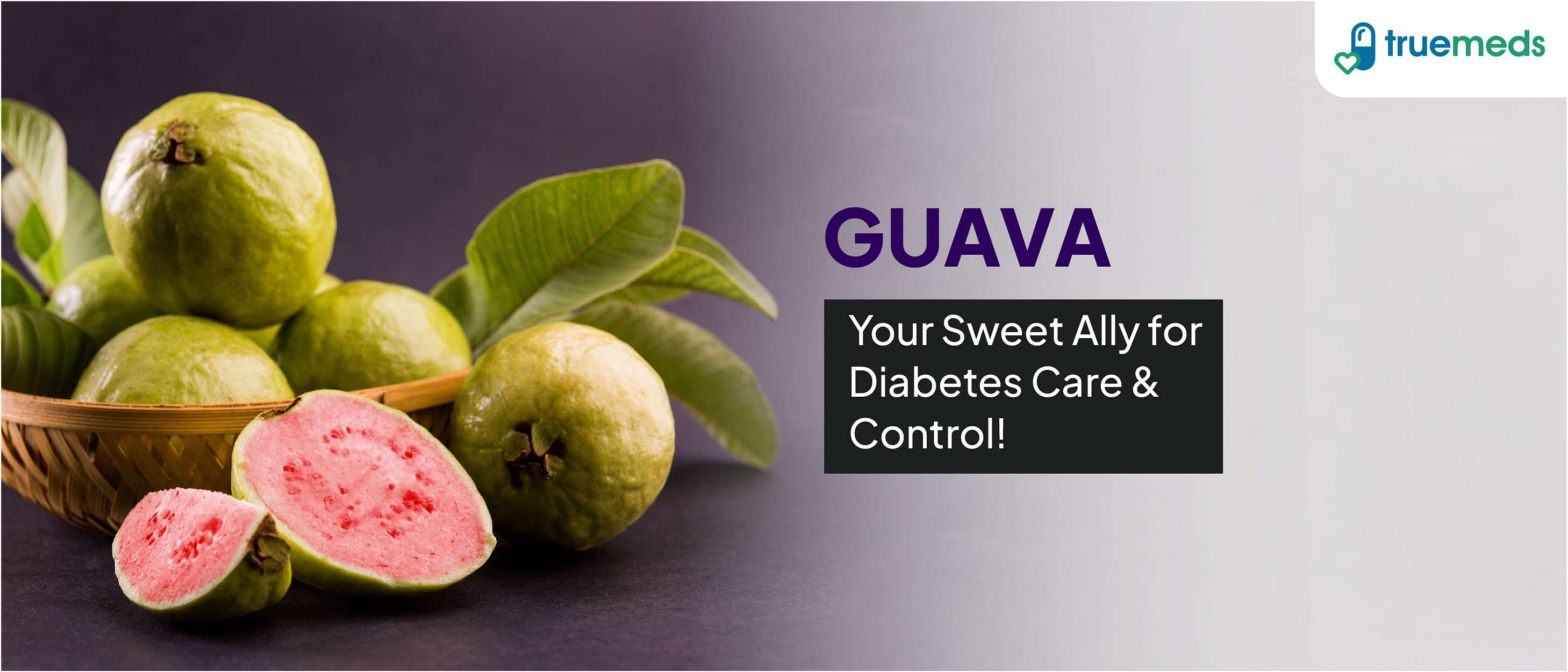
Is Guava Good for Diabetes? Benefits, Glycaemic Index, and How to Eat It Right
Last updated on : 14 Jul, 2025
Read time : 8 min
Guava is a low-glycaemic tropical fruit rich in fibre, vitamin C, and antioxidants, making it a smart addition to a diabetes-friendly diet. Research shows that guava and guava leaf extract may help regulate blood sugar levels, improve insulin sensitivity, and support weight management. In this article, discover how guava benefits people with diabetes, its nutritional value, safe ways to include it in your diet, and precautions to keep in mind.
Nutritional Value of Guava (Per 100g)
Guava is a highly nutritious fruit packed with essential vitamins, minerals, and antioxidants. Here’s a breakdown of its key nutrients per 100 grams:
| Nutrient | Amount (per 100g) of Guava |
|---|---|
| Energy | 68 kcal |
| Carbohydrates | 14.3 g |
| Fibre | 5.4 g |
| Protein | 2.55 g |
| Fat | 0.3 g |
| Vitamin C | 228.3 mg (254% DV) |
| Vitamin A | 31 mcg (3% DV) |
| Potassium | 417 mg (12% DV) |
| Magnesium | 18 mg (5% DV) |
| Manganese | 0.3 mg (15% DV) |
Note: DV stands for Daily Value, which is based on a 2,000-calorie diet.
How Guava Helps Control Blood Sugar?
Here are several ways in which guava helps regulate blood sugar levels and support diabetes management:
1. Regulating Blood Sugar
Guava helps regulate blood sugar by inhibiting sugar-degrading enzymes, such as maltase, sucrase, and α-amylase, which slow sugar digestion and reduce blood glucose spikes after meals.
Guava leaf extract and tea may lower fasting blood glucose levels and improve glucose response after carbohydrate intake. Rich in antioxidants, guava also supports overall diabetes management by reducing oxidative stress, enhancing its potential to help control blood sugar levels and improve metabolic health.
2. Rich in Antioxidants
Guava leaves are rich in antioxidants, including quercetin, kaempferol, and catechins, which help mitigate oxidative stress associated with diabetes. These compounds protect the pancreas and support metabolic health, aiding in diabetes management. Additionally, guava’s low glycaemic index makes it a suitable fruit choice for people with diabetes, promoting better blood sugar control and overall health.
3. Low Glycaemic Index
Guava fruit has a low glycaemic index, which prevents rapid blood sugar spikes, making it an ideal choice for people with diabetes. Its fibre content further slows sugar absorption, stabilising blood glucose levels. Additionally, guava has been shown to improve insulin sensitivity, supporting better diabetes management by enhancing the body’s ability to regulate blood sugar more effectively.
4. Improving Insulin Sensitivity
Guava leaf extract enhances insulin sensitivity, a crucial factor in effective diabetes management. Studies show it increases plasma insulin levels and activates glucose metabolic enzymes, enhancing glucose uptake by cells.
This helps lower blood glucose levels, alleviating hyperglycaemia and insulin resistance. By enhancing insulin sensitivity, guava leaf extract plays a crucial role in managing diabetes and promoting overall metabolic health.
Top 3 Health Benefits of Guava for Diabetics
Here are some of the key health benefits of guava for people with diabetes:
1. Promotes Healthy Digestion
Guava’s high fibre content supports healthy digestion by slowing carbohydrate absorption, preventing blood sugar spikes, and aiding bowel regularity. This helps people with diabetes manage blood sugar levels more effectively.
Additionally, guava promotes digestive health and supports the immune system, thanks to its rich nutritional profile, making it a beneficial fruit for overall health and diabetes management.
2. Boosts Immunity
Guava, rich in vitamin C, helps boost the immune system by stimulating the production of white blood cells and protecting against infections. Its antioxidants, including polyphenols and carotenoids, support immune function and reduce oxidative damage.
For people with diabetes, guava’s immune-boosting properties are especially beneficial. Additionally, guava aids in weight management, an essential factor in diabetes care and overall health.
3. Weight Management
Guava is a low-calorie fruit (68 kcal per 100g), high in fibre, which promotes fullness and reduces calorie intake, supporting weight management in diabetics. Its fibre slows carbohydrate digestion, ensuring stable energy levels and minimising obesity risk.
Incorporating guava into a balanced diet helps control weight and improves overall health outcomes, making it a valuable ally for diabetes management.
How to Eat Guava for Diabetes: Smart Tips
Here are some simple ways to incorporate guava into your diet:
- Enjoy fresh guava slices as a healthy snack to satisfy your sweet cravings without adding excess sugar to your diet.
- Consume guava juice in moderation, ensuring it is not overly sweetened.
- Boil guava leaves to make a tea that can help lower blood sugar levels after a meal.
- Eat guava raw after peeling off the skin, or use it in cooked recipes like jams, salads, or desserts, keeping portion control in mind.
- Incorporate guava as part of an overall balanced diet that includes a variety of fruits, vegetables, whole grains, and lean proteins.
Precautions Before Adding Guava to Your Diabetic Diet
Here are some important precautions to take when consuming guava for diabetes:
- Although guava is low in calories and sugar, it still contains natural sugars that can affect blood glucose levels if consumed in excess. Monitor portion sizes carefully.
- Regularly check your blood sugar levels when introducing guava into your diet to ensure it does not cause any significant spikes.
- Before making any changes to your diet, consult with a doctor or nutritionist to ensure guava fits within your individual dietary needs and health goals.
Takeaway
Guava is a low-GI fruit rich in fibre, antioxidants, and essential nutrients, making it a valuable food choice for individuals managing diabetes. From improving insulin sensitivity to aiding weight control, guava offers a natural way to support blood sugar regulation.
However, moderation is key. Always monitor your blood sugar response and consult your doctor before adding guava (or guava leaf tea) to your diabetes meal plan.
Expert Quote:
– Dr Anubha Karol
“Guava and its leaf extract can support healthy blood sugar levels due to their fibre and antioxidant content. But people with diabetes need to monitor their response and consume it in moderation.”
Frequently Asked Questions (FAQs)
Guava has a low glycaemic index of 12-24, which ensures a slow release of energy and does not significantly raise blood sugar levels.
Guava is an excellent fruit choice for persons with diabetes due to its low glycaemic index, high fibre content, and antioxidant properties that help regulate blood sugar.
Guava is relatively low in sugar, containing only 8.92 grams per 100 grams, which is less than many other fruits.
Consuming guava may cause indigestion or bloating due to its high fibre content, and eating it at night might disrupt sleep due to natural sugars.
Yes, people with diabetes can eat guava in moderation as its low glycaemic index and high fibre content help regulate blood sugar levels.
People with diabetes can consume guava raw after peeling, as juice, or by drinking boiled guava leaf tea, which helps manage blood sugar and provides other health benefits.
It is not recommended for people with diabetes to eat guava at night as it may cause indigestion, bloating, and disrupt sleep due to its high fibre and natural sugars.
References
- Deguchi, Y., & Miyazaki, K. (2010). Anti-hyperglycemic and anti-hyperlipidemic effects of guava leaf extract. Nutrition & Metabolism, 7(1), 9. https://doi.org/10.1186/1743-7075-7-9
- Kumari, S. (2016). Effect of Guava in Blood Glucose and Lipid Profile in Healthy Human Subjects: A Randomized Controlled Study. JOURNAL of CLINICAL and DIAGNOSTIC RESEARCH. https://doi.org/10.7860/jcdr/2016/21291.8425
- Luo, Y., Peng, B., Wei, W., Tian, X., & Wu, Z. (2019). Antioxidant and Anti-Diabetic Activities of Polysaccharides from Guava Leaves. Molecules, 24(7), 1343. https://doi.org/10.3390/molecules24071343
- Kumar, M., Tomar, M., Amarowicz, R., Saurabh, V., Nair, M. S., Maheshwari, C., Sasi, M., Prajapati, U., Hasan, M., Singh, S., Changan, S., Prajapat, R. K., Berwal, M. K., & Satankar, V. (2021). Guava (Psidium guajava L.) Leaves: Nutritional Composition, Phytochemical Profile, and Health-Promoting Bioactivities. Foods, 10(4). https://doi.org/10.3390/foods10040752
- Jiao, Y., Zhang, M., Wang, S., & Yan, C. (2017). Consumption of guava may have beneficial effects in type 2 diabetes: A bioactive perspective. International Journal of Biological Macromolecules, 101, 543–552. https://doi.org/10.1016/j.ijbiomac.2017.03.130
- Tousif, M. I., Nazir, M., Saleem, M., Tauseef, S., Shafiq, N., Hassan, L., Hussian, H., Montesano, D., Naviglio, D., Zengin, G., & Ahmad, I. (2022). Psidium guajava L. An Incalculable but Underexplored Food Crop: Its Phytochemistry, Ethnopharmacology, and Industrial Applications. Molecules, 27(20), 7016. https://doi.org/10.3390/molecules27207016
- https://fdc.nal.usda.gov/food-details/173044/nutrients















Disclaimer
Our healthcare experts have carefully reviewed and compiled the information presented here to ensure accuracy and trustworthiness. It is important to note that this information serves as a general overview of the topic and is for informational purposes only. It is not intended to diagnose, prevent, or cure any health problem. This page does not establish a doctor-patient relationship, nor does it replace the advice or consultation of a registered medical practitioner. We recommend seeking guidance from your registered medical practitioner for any questions or concerns regarding your medical condition.
Popular Articles




Recommended Articles








Recent Articles







Company
About UsHealth ArticleHealth StoriesDiseases & Health ConditionsAyurvedaAll MedicinesAll BrandsNeed HelpFAQSubscribe
Registered Office Address
Grievance Officer
Download Truemeds


Contact Us
Our customer representative team is available 7 days a week from 9 am - 9 pm.
v4.4.2

2025 - Truemeds | All rights reserved. Our content is for informational purposes only. See additional information.

Our Payment Partners