

- Medicines
- Personal Care
- Skin Cream
- Sunscreen
- Face Wash
- Skin and Body Soap
- Acne Care
- Body Lotions
- Moisturising Lotion
- Moisturising Cream
- Mosquito Repellent
- Moisturising Gel
- Body Wash
- Hair Oils
- Hair Shampoo
- Hair Conditioners
- Hair Supplements
- Hair Colour
- Hair Serum
- Hair Mask
- Hair Solutions
- Baby Diapers and Wipes
- Baby Lotion and Moisturising Cream
- Baby Bath Essentials
- Baby Skin Care
- Baby and Infant Food
- Baby Healthcare
- Women Multivitamins
- Ovulation Test Kit and Women Intimate Care
- Sanitary Pads
- Nutritional Drinks
- Condoms
- Lubricants
- Massage Gels
- Personal Body Massagers
- Men Performance Booster
- Sexual Health Supplements
- Massage Oils
- Ayurveda
- Tooth Paste
- Mouth Ulcer Gel
- Mouthwash
- Toothache and Gum Pain
- Tooth Brush
- Gargle Solution
- Orthopaedic Supports
- Adult Diapers
- Footwear
- Mobility and Support Accessories
- Urinary Support and Care
- Health Conditions
- Bone and Joint Care
- Digestive Care
- Eye Care
- Pain Relief
- Smoking Cessation
- Liver Care
- Stomach Care
- Cold and Cough
- Heart Care
- Kidney Care
- Piles, Fissures & Fistula
- Respiratory Care
- Mental Wellness
- Derma Care
- Pre and Probiotics
- Acidity
- Gas
- Constipation
- Loose Motion/Diarrhoea
- Digestive Fibres
- Digestive Enzymes
- Eye Lubricant Drops
- Lens Solution
- Safety Eye Wear
- Eye Cream
- Eye Vitamins and Supplements
- Eye Drops
- Eye Ointment and Gel
- Nicotine Patch
- Nicotine Gum
- Nicotine Lozenges
- Cough Syrups
- Chest Rubs and Balms
- Nasal Spray
- Lozenges
- Inhalant Capsules
- Cold and Cough Tablets
- Vitamins & Supplements
- Diabetes Care
- Healthcare Devices
- Homeopathic Medicine
- Health Guide
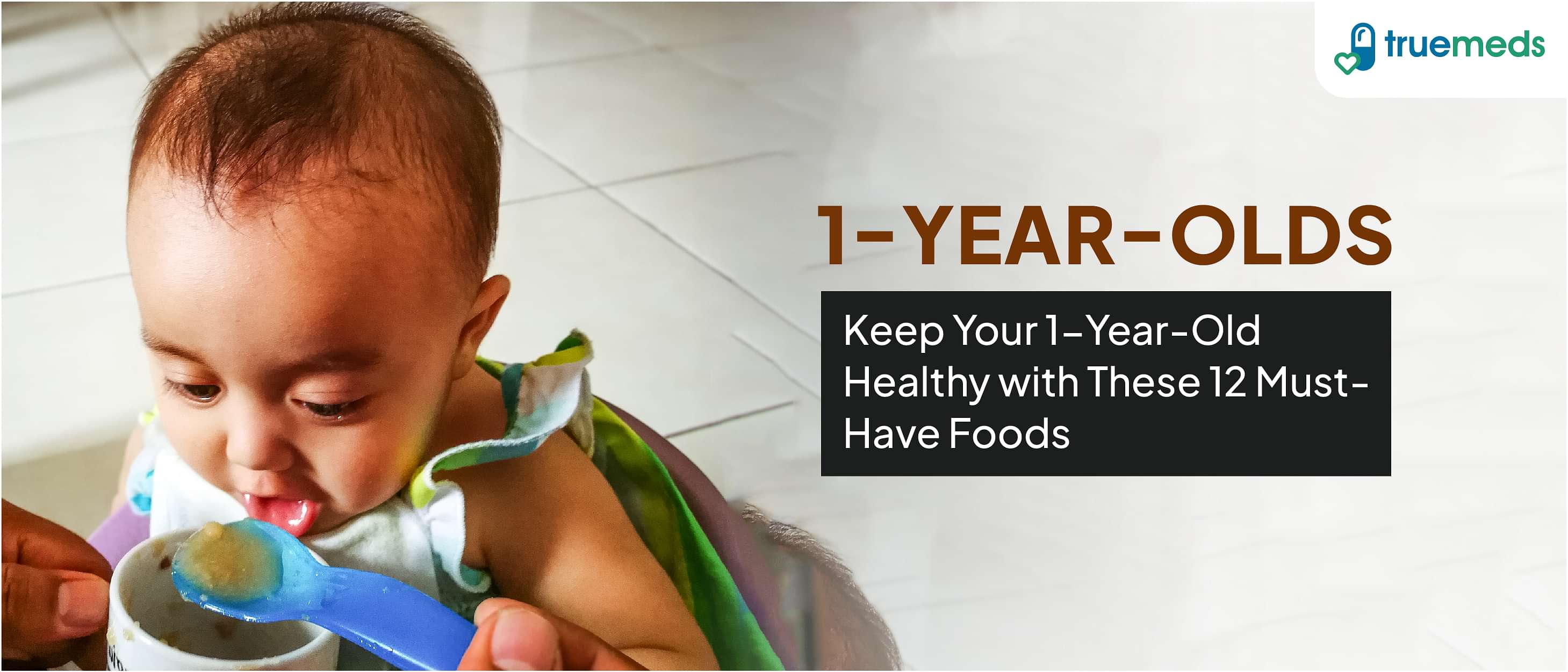
What to Feed a 1-Year-Old: Best Nutritious Meal Ideas & Recipes
Last updated on : 02 Dec, 2025
Read time : 8 min
Wondering What to Feed Your 1-Year-Old? We’ve got you some healthy, practical, and baby-approved options!
At 1 year old, your baby is growing quickly, developing new tastes, and starting to explore solid foods. This exciting stage is accompanied by numerous questions, particularly about nutrition—What foods are safe? What meals are filling, healthy, and baby-friendly?
The good news? Your toddler can now enjoy most family foods with slight modifications.
In this guide, we’ll explore nutritious and practical foods for 1-year-olds, along with sample recipes and a daily baby food chart, to make mealtimes easy and enjoyable.
1-Year-Old Baby Food Guide: What Can a 1-Year-Old Eat?
At this stage, focus on nutrient density and texture safety. All foods should be cut into pieces no larger than a pea or the size of your child’s pinky nail to prevent choking.
1. Fruits for 1-Year-Olds
Avocados, bananas, oranges, berries, mangoes, and apples (cooked or finely grated) are excellent choices. Fruits are highly nutritious and ideal for their growth and development, providing essential vitamins, fibre, and natural sweetness [1].
2. Vegetables for Toddlers
Toddlers can eat the same vegetables as adults, so continue to introduce new ones. Crucially, all hard vegetables (like carrots, potatoes, and beans) must be steamed, roasted, or boiled until very soft [2]. Some toddlers prefer mashed vegetables blended with a naturally sweet fruit to balance the flavour.
3. Protein-Rich Foods for Baby Growth
Protein is essential for muscle and tissue growth. Offer baby-sized mouthfuls of meat, lentils, beans, or tofu. These foods provide necessary amino acids and help maintain satiety (feeling full) [3].
4. Whole Grains and Oats for Digestive Health
Grains, such as oatmeal and whole-grain bread, are high in fibre, which can help prevent constipation, and are excellent energy sources [4], [5].
5. Baby-Friendly Cereals: Easy and Nutritious
For your 1-year-old, whole-grain cereals are a practical and healthy option. Whole-grain cereals like oats or broken wheat can be prepared at home. You can mix in mashed fruits for flavour and added nutrition [5].
6. Legumes (Lentils and Beans)
Lentils and beans, such as moong dal or kidney beans, are great sources of plant-based protein, fibre, and iron. They should be cooked until very soft and either mashed or served whole (like chickpeas), ensuring they are soft enough to squish between your fingers.
7. Homemade Vegetable Broth for a Nutrition Boost
It’s simple to feed your 1-year-old baby homemade broth that’s rich in nutrients. Vegetable broth made with carrots, celery, and spinach offers hydration and vitamins. Carrot soup, for example, is gentle on the stomach and provides beta-carotene [2].
8. Eggs for Brain Development
Eggs are a powerhouse of nutrition, providing high-quality protein, healthy fats, choline (essential for brain development), and vitamins A & D, phosphorus, and selenium [6]. They can be used as part of a balanced meal or as a snack.
- Allergy Warning: Eggs are one of the top nine food allergens [7]. Most children outgrow the allergy, but symptoms such as hives, difficulty breathing, digestive problems, coughing, wheezing, and shortness of breath should be monitored. Always introduce allergens only after consulting your child’s paediatrician.
9. Soft Chicken for Protein and Iron
Chicken is an excellent source of high-quality protein and iron, both of which are essential for your little one’s cognitive growth and development [3].
- Preparation: Cook the chicken until it’s very soft and tender. Avoid spicy seasonings and always remove bones.
- Texture: For beginners, start with mashed chicken or soft, finely shredded pieces. You can blend poached chicken with a little breast milk, vegetable broth, or plain yoghurt to create a smoother consistency.
High-Risk Choking Hazards to Avoid
To ensure safety, never serve the following foods to a 1-year-old:
- Whole Grapes, Cherry Tomatoes, or Berries: Cut these into quarters (four pieces) lengthwise.
- Hot Dogs, Sausages, or Deli Meats: Cut these lengthwise into thin strips, then chop into very small, bite-sized pieces.
- Large Chunks of Cheese or Meat: Must be diced small.
- Hard, Raw Vegetables/Fruit: Whole raw carrots, apples, or celery. Always cook hard foods soft.
- Nuts and Seeds: Whole nuts (peanuts, almonds, etc.) are a high-risk choking hazard. Serve nut butters thinned with water or breast milk.
- Popcorn, Hard Candy, or Gum.
1-Year-Old Baby Food Chart: Daily Meal Plan Ideas
A 1-year-old baby should eat every 2 to 3 hours, or five to six times per day (three meals and two or three snacks).
| Meal Time | Options |
| Breakfast | A half-cup of oatmeal with mashed banana or berries, cottage cheese, or scrambled eggs. |
| Mid-Morning Snack | Yoghurt (full-fat, plain) mixed into a fruit smoothie, or soft fruit slices (like mango or pear). |
| Lunch | Small chunks of sliced chicken or cheese, served with a small piece of whole-wheat pita bread and soft vegetable pieces. |
| Post-Nap Snack | Cottage cheese with sliced avocado, or a thinned spread of nut butter on a soft whole-grain cracker. |
| Dinner | Khichdi (rice and lentil porridge), tofu stir-fry with soft vegetables, or chopped tender meat mixed into vegetable soup. |
Easy and Nutritious Recipes for 1-Year-Old Babies
These recipes are designed for easy consumption and high nutritional value.
1. Besan Paratha (Chickpea Flatbread)
Besan (chickpea flour) is high in protein and is combined with carbohydrates in this balanced dish.
- Ingredients: Whole wheat dough, 2 tbsp besan, 1/2 finely chopped onion, salt (to taste), 1 tsp coriander powder, 1 tbsp chopped coriander, 1 tsp carom seeds, ghee (for cooking).
- How to Make (Modification for Baby): Mix besan, onion, and spices (minimal salt and carom seeds, skip the garam masala for beginners) with the whole wheat flour. Knead with ghee. Roll flat and cook on a Tawa with ghee. Serve small, soft pieces.
2. Ragi (Pearl Millet) Laddu for Iron and Energy
Pearl Millets (ragi) are rich in iron and can improve haemoglobin levels, which may help improve iron status [8].
- Ingredients: Pearl Millet Powder, powdered jaggery, ghee, a few finely chopped nuts (almonds/cashews), and cardamom powder.
- How to Make (Modification for Baby): Roast ragi powder in ghee. After cooling, add powdered jaggery and a pinch of cardamom. For babies under 2, omit all chopped nuts to prevent choking. Serve the ragi mixture as a smooth, soft paste or rolled into small, easily mashable balls.
3. Simple Khichdi for a Comforting and Wholesome Meal
Khichdi is simple to prepare and is one of the best first solid foods. It provides protein, carbs, and fibre.
- Ingredients: 1/3 cup rice, 1/3 cup toor dal or moong dal, 2 garlic cloves (optional), 3 cups water, ghee.
- How to Make: Rinse the rice and dal, soak for 30 minutes, then drain. Combine all ingredients in a pressure cooker with water. Cook until very soft. Serve mashed with ghee. Add pureed carrot, tomato, or spinach for a nutritional boost.
Takeaway
Feeding your 1-year-old doesn’t have to be stressful or complicated. With the right mix of soft textures, familiar flavours, and balanced nutrition, you can help your child build healthy eating habits that last a lifetime. Don’t worry if they refuse something the first time; the key is to keep trying, stay patient, and offer choices.
Always consult your child’s paediatrician before introducing new foods, especially those containing common allergens, and to discuss choking prevention.
References
[1] U.S. Department of Agriculture, Agricultural Research Service. (2024). FoodData Central: Avocado, raw. https://fdc.nal.usda.gov/fdc-details.html?fdcid=171705
[2] World Health Organization (WHO). (2009). Guiding principles for feeding non-breastfed children 6–24 months of age. https://www.who.int/publications/i/item/9789241598284
[3] National Institutes of Health (NIH). (2024). Iron. NIH Office of Dietary Supplements. https://ods.od.nih.gov/factsheets/Iron-HealthProfessional/
[4] Rasane, P., Jha, A., Sabikhi, L., Kumar, A., & Unnikrishnan, V. S. (2013). Nutritional Advantages of Oats and Opportunities for Its Processing as Value Added Foods – a Review. Journal of Food Science and Technology, 52(2), 662–675. https://doi.org/10.1007/s13197-013-1072-1
[5] Klerks, M., Bernal, M., Roman, S., Bodenstab, S., Gil, A., & Sanchez-Siles, L. (2019). Infant Cereals: Current Status, Challenges, and Future Opportunities for Whole Grains. Nutrients, 11(2), 473. https://doi.org/10.3390/nu11020473
[6] Zeisel, S. H., & Corbin, K. D. (2018). Choline. Advances in Nutrition, 9(1), 58–61. https://doi.org/10.1093/advances/nmx004
[7] U.S. Food & Drug Administration (FDA). (2023). Food Allergies. https://www.fda.gov/food/food-allergens-gluten-other-food-sensitivities/food-allergies
[8] Fard, M., Faraj, S. J. M., Rasekh, M. A., & Rezaei, M. R. (2020). The effect of whole grains on iron status: A systematic review and meta-analysis. International Journal of Food Sciences and Nutrition, 71(6), 675–687. https://doi.org/10.1080/09637486.2020.1760431












Disclaimer
Our healthcare experts have carefully reviewed and compiled the information presented here to ensure accuracy and trustworthiness. It is important to note that this information serves as a general overview of the topic and is for informational purposes only. It is not intended to diagnose, prevent, or cure any health problem. This page does not establish a doctor-patient relationship, nor does it replace the advice or consultation of a registered medical practitioner. We recommend seeking guidance from your registered medical practitioner for any questions or concerns regarding your medical condition.
Popular Articles

Recommended Articles

Recent Articles






Company
About UsHealth ArticleHealth StoriesHealth LibraryDiseases & Health ConditionsAyurvedaAll MedicinesAll BrandsNeed HelpFAQSecuritySubscribe
Registered Office Address
Grievance Officer
Download Truemeds


Contact Us
Our customer representative team is available 7 days a week from 9 am - 9 pm.
v4.9.0

2025 - Truemeds | All rights reserved. Our content is for informational purposes only. See additional information.

Our Payment Partners




