

- Medicines
- Personal Care
- Skin Cream
- Sunscreen
- Face Wash
- Skin and Body Soap
- Acne Care
- Body Lotions
- Moisturising Lotion
- Moisturising Cream
- Mosquito Repellent
- Moisturising Gel
- Body Wash
- Hair Oils
- Hair Shampoo
- Hair Conditioners
- Hair Supplements
- Hair Colour
- Hair Serum
- Hair Mask
- Hair Solutions
- Baby Diapers and Wipes
- Baby Lotion and Moisturising Cream
- Baby Bath Essentials
- Baby Skin Care
- Baby and Infant Food
- Baby Healthcare
- Women Multivitamins
- Ovulation Test Kit and Women Intimate Care
- Sanitary Pads
- Nutritional Drinks
- Condoms
- Lubricants
- Massage Gels
- Personal Body Massagers
- Men Performance Booster
- Sexual Health Supplements
- Massage Oils
- Ayurveda
- Tooth Paste
- Mouth Ulcer Gel
- Mouthwash
- Toothache and Gum Pain
- Tooth Brush
- Gargle Solution
- Orthopaedic Supports
- Adult Diapers
- Footwear
- Mobility and Support Accessories
- Urinary Support and Care
- Health Conditions
- Bone and Joint Care
- Digestive Care
- Eye Care
- Pain Relief
- Smoking Cessation
- Liver Care
- Stomach Care
- Cold and Cough
- Heart Care
- Kidney Care
- Piles, Fissures & Fistula
- Respiratory Care
- Mental Wellness
- Derma Care
- Pre and Probiotics
- Acidity
- Gas
- Constipation
- Loose Motion/Diarrhoea
- Digestive Fibres
- Digestive Enzymes
- Eye Lubricant Drops
- Lens Solution
- Safety Eye Wear
- Eye Cream
- Eye Vitamins and Supplements
- Eye Drops
- Eye Ointment and Gel
- Nicotine Patch
- Nicotine Gum
- Nicotine Lozenges
- Cough Syrups
- Chest Rubs and Balms
- Nasal Spray
- Lozenges
- Inhalant Capsules
- Cold and Cough Tablets
- Vitamins & Supplements
- Diabetes Care
- Healthcare Devices
- Homeopathic Medicine
- Health Guide
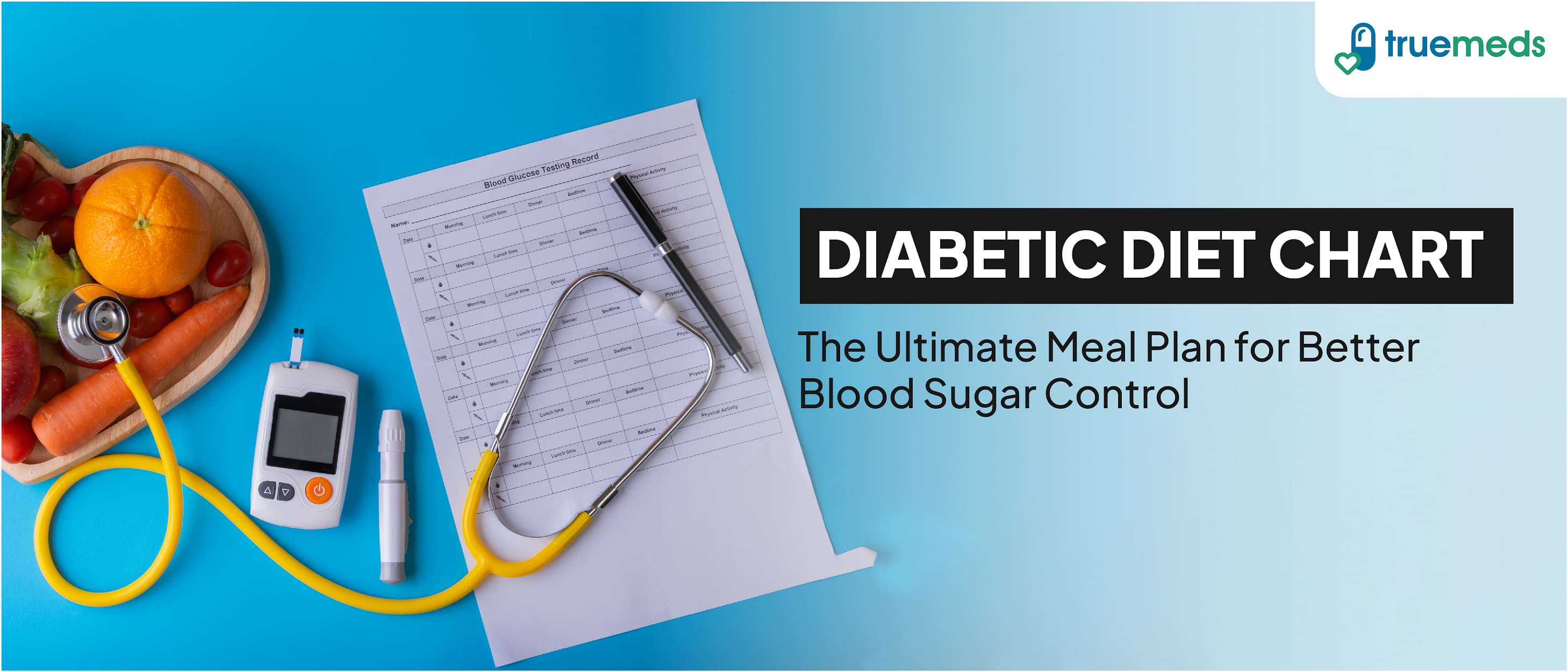
Diet Chart For Diabetic Patients: A Sample Indian Meal Plan
Last updated on : 01 Dec, 2025
Read time : 7 min
Diabetes, often characterized by symptoms like polyuria (frequent urination), polydipsia (increased thirst), and unexplained weight changes, is a chronic metabolic condition where the body has high blood glucose levels, either because of insufficient insulin production (Type 1) or because the body’s cells do not respond properly to insulin (Type 2) [1]. In India, the prevalence of diabetes has been reported to be significant, with projections indicating a continued rise in the coming years [2]. While Type 1 diabetes requires insulin therapy, Type 2 diabetes is largely influenced by dietary habits and a sedentary lifestyle. Adopting therapeutic lifestyle changes, including a structured diet, can play a pivotal role in managing blood glucose and preventing long-term complications.
A healthy diet for diabetes focuses on appropriate portions of complex carbohydrates, lean proteins, healthy fats, and a high intake of fiber and micronutrients [3]. It is highly recommended to include foods with a low glycemic index (GI)—those that are digested slowly, leading to a more gradual rise in blood sugar (glucose) levels.
Essential Principles for a Diabetic Diet Plan
To effectively create and adhere to a diabetic diet plan, consider these four core steps:
- Balancing Macronutrients: Work with a dietitian to establish an appropriate ratio of carbohydrates, proteins, and fats tailored to your individual needs and calorie goals.
- Structured Meal Timings: Divide your total daily dietary allowance into consistent meals and small, timely snacks throughout the day to avoid long fasting periods and prevent sharp sugar dips or spikes.
- Forward Planning: Plan your meals for the next day or week to ensure healthy ingredients are readily available, helping you stick to the regimen.
- Regular Monitoring: Consistent tracking of your blood glucose levels with a glucometer is essential. This data helps you and your healthcare team understand how specific foods and the diet plan are affecting your body.
A Sample 7-Day Indian Diet Chart for Diabetic Patients
This chart provides a sample framework using common Indian food options. Note: Portion sizes are estimates and must be adjusted based on your individual calorie requirements, blood sugar control, weight, and activity level. Consult with a Registered Dietitian for a personalized plan.
| Day | Breakfast (8:00 – 8:30 am) | Mid-morning Snack (11:00 – 11:30 am) | Lunch (1:00 -1:30 pm) | Evening Snack (4:00 – 4:30 pm) | Dinner (7:30 – 8:00 pm) | Optional Night Snack |
| Monday | 1 bowl of vegetable oats or oats upma | 1 apple and four almonds | 1 cup controlled-portion Brown Rice with 1 cup daal /chicken curry | Mixed nuts with unsweetened tea or coffee | 2 multigrain rotis with any seasonal vegetable and ½ cup mixed salad | ½ glass of Low-fat milk |
| Tuesday | 1 bowl of sprouts and 1 glass of buttermilk | 1 cup mixed fruit salad (avoid high-GI fruits like mango, banana) and buttermilk | 2 Rava idlis (made with semolina and minimum oil) with 1 cup of sambar | A small bowl of homemade low-oil Palak Patta Chaat with unsweetened tea/coffee | 2 multigrain roti with 1 cup daal /chicken curry | ½ glass of Low-fat milk |
| Wednesday | 2 dal chilla with green chutney and green tea | Mixed berries (e.g., strawberries, blueberries) – 1 small cup | 2 millet roti (e.g., Bajra/Jowar) with palak/methi sabzi, 1 bowl raita (made with low-fat curd) and ½ cup cucumber and carrot salad | A small bowl of Moong Dal Chaat with unsweetened tea | 1 cup brown rice with soya gravy and 1 cup salad | ½ glass of Low-fat milk |
| Thursday | Veg amaranth porridge with unsweetened tea | 1 orange with coconut water | 1 cup brown rice pulao with raita, ½ cup curd and ½ cup cucumber and beetroot salad | A handful of roasted chana with unsweetened tea/coffee | 2 millet roti with any seasonal vegetable and mixed salad | ½ glass of Low-fat milk |
| Friday | 2 multigrain bread slices with a vegetable omelette or 2 boiled eggs and green tea | 1 apple and buttermilk | 2 paneer paratha (made with minimal oil and whole wheat flour) with 1 cup raita and cucumber, onion salad | 1 cup sprouted salad and green tea | 1 cup brown rice with paneer/chicken curry and mixed salad | ½ glass of Low-fat milk |
| Saturday | 2 ragi idlis with tomato chutney and 1 glass of buttermilk | 1 cup any seasonal, low-GI fruit | 2 multigrain roti with ½ cup daal, ½ cup karela sabzi, 1/2 cup curd and ½ cucumber salad | 2 pieces of homemade, steamed dhokla with green tea | 1 cup brown rice with 1 cup rajma (kidney beans are rich in fiber) and mixed salad | ½ glass of Low-fat milk |
| Sunday | Vegetable quinoa upma with unsweetened tea/coffee | 1 pomegranate and lime juice (avoid adding sugar) | 1 cup brown rice vegetable khichdi with ½ cup curd, ½ cucumber, and onion salad | 1 small cup of upma with green tea | 2 multigrain roti with palak/methi/saag and salad | ½ glass of Low-fat milk |
Why a Structured Diabetic Diet is Effective
The principles behind this diet structure are aimed at stabilizing blood glucose levels and improving overall metabolic health:
- Glycemic Control: The inclusion of low-GI ingredients, such as millets, oats, and whole pulses, helps prevent a sudden post-meal surge in blood glucose, a common issue for diabetic patients [4].
- Enhanced Satiety and Absorption: The high fibre content in vegetables, millets, and whole grains improves satiety (the feeling of fullness) and slows the rate of glucose absorption in the gut.
- Weight Management: Strict portion control ensures that the total calorie and carbohydrate intake remains within healthy limits, which is crucial for managing Type 2 diabetes and promoting healthy weight loss [5].
- Gut Health Support: Inclusion of fermented foods and probiotics (like curd and buttermilk) can support a healthy gut microbiome, which is an emerging area of research suggesting a link between gut health and improved insulin sensitivity [6].
Important Considerations and Next Steps
It is crucial to understand that diet alone cannot replace necessary medications or insulin therapy. A successful diabetes management plan is comprehensive, involving physical activity, prescribed medication, and regular monitoring of blood glucose, HbA1c, and lipid profiles.
While this sample diet chart can serve as a beneficial guide, you must consult a Registered Dietitian (RD) or a Certified Diabetes Educator (CDE). They can provide a personalized type 2 diabetes food chart by considering your:
- Specific blood sugar records and goals.
- Co-existing health conditions (e.g., hypertension, kidney issues).
- Current medication schedule.
- Cultural and personal food preferences.
References
[1] World Health Organization. (2024). Diabetes. Retrieved from https://www.who.int/news-room/fact-sheets/detail/diabetes
[2] Anjana, R. M., Unnikrishnan, R., Deepa, M., Mohan, V. (2020). Diabetes in India: The IDF perspective. Diabetes Research and Clinical Practice, 167, 108343. https://doi.org/10.1016/j.diabres.2020.108343
[3] Evert, A. B., Dennison, M., Gardner, C. D., Garvey, W. T., Lau, K. H. K., MacLeod, J., Mitri, J., Pereira, R. F., Rawlings, K., Robinson, S., Saslow, L., Ulbricht, N. L., & Wheeler, M. (2019). Nutrition therapy for adults with diabetes or prediabetes: A consensus report. Diabetes Care, 42(5), 731–754. https://doi.org/10.2337/dci19-0014
[4] Brand-Miller, J. C., Hayne, S., Petocz, P., & Colagiuri, S. (2003). Low-glycemic index diets in the management of diabetes: A meta-analysis of randomized controlled trials. Diabetes Care, 26(8), 2261–2267. https://doi.org/10.2337/diacare.26.8.2261
[5] Maiorino, M. I., Bellastella, G., Giugliano, D., & Esposito, K. (2017). Can diet prevent diabetes? Journal of Diabetes and Its Complications, 31(1), 288–290. https://doi.org/10.1016/j.jdiacomp.2016.10.009
[6] Gao, H., Geng, J., Li, X., Shi, Y., Wen, X., Xu, X., … & Wang, X. (2018). Dysbiosis of the gut microbiota is associated with type 2 diabetes and its complications. The Journal of Clinical Endocrinology & Metabolism, 103(9), 3505–3515. https://doi.org/10.1210/jc.2017-01991















Disclaimer
Our healthcare experts have carefully reviewed and compiled the information presented here to ensure accuracy and trustworthiness. It is important to note that this information serves as a general overview of the topic and is for informational purposes only. It is not intended to diagnose, prevent, or cure any health problem. This page does not establish a doctor-patient relationship, nor does it replace the advice or consultation of a registered medical practitioner. We recommend seeking guidance from your registered medical practitioner for any questions or concerns regarding your medical condition.
Popular Articles



Recommended Articles



Recent Articles










Company
About UsHealth ArticleHealth StoriesHealth LibraryDiseases & Health ConditionsAyurvedaUnderstanding Generic MedicinesAll MedicinesAll BrandsNeed HelpFAQSecuritySubscribe
Registered Office Address
Grievance Officer
Download Truemeds


Contact Us
Our customer representative team is available 7 days a week from 9 am - 9 pm.
v4.11.0

2025 - Truemeds | All rights reserved. Our content is for informational purposes only. See additional information.

Our Payment Partners