

- Medicines
- Personal Care
- Skin Cream
- Sunscreen
- Face Wash
- Skin and Body Soap
- Acne Care
- Body Lotions
- Moisturising Lotion
- Moisturising Cream
- Mosquito Repellent
- Moisturising Gel
- Body Wash
- Hair Oils
- Hair Shampoo
- Hair Conditioners
- Hair Supplements
- Hair Colour
- Hair Serum
- Hair Mask
- Hair Solutions
- Baby Diapers and Wipes
- Baby Lotion and Moisturising Cream
- Baby Bath Essentials
- Baby Skin Care
- Baby and Infant Food
- Baby Healthcare
- Women Multivitamins
- Ovulation Test Kit and Women Intimate Care
- Sanitary Pads
- Nutritional Drinks
- Condoms
- Lubricants
- Massage Gels
- Personal Body Massagers
- Men Performance Booster
- Sexual Health Supplements
- Massage Oils
- Ayurveda
- Tooth Paste
- Mouth Ulcer Gel
- Mouthwash
- Toothache and Gum Pain
- Tooth Brush
- Gargle Solution
- Orthopaedic Supports
- Adult Diapers
- Footwear
- Mobility and Support Accessories
- Urinary Support and Care
- Health Conditions
- Bone and Joint Care
- Digestive Care
- Eye Care
- Pain Relief
- Smoking Cessation
- Liver Care
- Stomach Care
- Cold and Cough
- Heart Care
- Kidney Care
- Piles, Fissures & Fistula
- Respiratory Care
- Mental Wellness
- Derma Care
- Pre and Probiotics
- Acidity
- Gas
- Constipation
- Loose Motion/Diarrhoea
- Digestive Fibres
- Digestive Enzymes
- Eye Lubricant Drops
- Lens Solution
- Safety Eye Wear
- Eye Cream
- Eye Vitamins and Supplements
- Eye Drops
- Eye Ointment and Gel
- Nicotine Patch
- Nicotine Gum
- Nicotine Lozenges
- Cough Syrups
- Chest Rubs and Balms
- Nasal Spray
- Lozenges
- Inhalant Capsules
- Cold and Cough Tablets
- Vitamins & Supplements
- Diabetes Care
- Healthcare Devices
- Homeopathic Medicine
- Health Guide

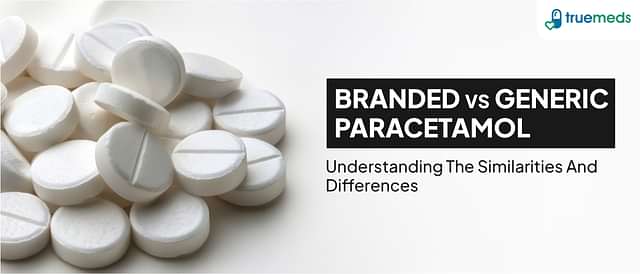
Difference Between Generic and Branded Medicine: Which One Should You Trust?
Last updated on : 13 Nov, 2025
Read time : 6 min
When buying medicines, we often find ourselves torn between choosing generic and branded options. While both forms are developed to treat the same health conditions and offer the same clinical benefits, they come with distinct differences that can influence a patient’s choice. These distinctions may range from price to packaging, but the real question remains: does it matter which one you take? Understanding the difference between generic and branded medicine can help you make well-informed and cost-effective healthcare decisions.
The Core Difference: Patents and Pricing
Branded medicines are the original pharmaceutical products developed by a company that holds exclusive rights through patents. Developed through years of extensive research and clinical trials, these medicines come with exclusive patent rights, which allow companies to recoup development costs through higher prices. Branding includes not only the name and logo but also premium packaging and strong marketing efforts.
Generic medicines, on the other hand, are introduced after these patents expire, offering the same therapeutic benefits at a more affordable cost. Unlike branded medicine manufacturers, generic companies don’t bear the high costs of medicine discovery, extensive clinical trials, and large-scale advertising, as the formula has already been developed and tested. Since generic manufacturers focus on reproducing the medicine, and competition brings prices down, generics are a crucial part of cost-saving strategies for both patients and public health systems.
Key Differences: Generic vs Branded Medicines
Although both generic and branded medicines contain the same active ingredient and are intended for the same use, they often vary in appearance, packaging, cost, and branding.
1. Generic Medicines: Bioequivalence and Cost-Effectiveness
Generic medicines are developed using the same active substances, dosage form, strength, route of administration, and intended use as their branded equivalents. After a medicine’s patent protection period ends, other manufacturers are allowed to produce and sell these generics. Before they hit the market, they must undergo rigorous testing to ensure they are bioequivalent—meaning they release the same amount of active ingredient into the bloodstream within the same timeframe as the branded equivalent [1], [3].
Benefits:
- Significant Savings: Generic medicines can cost 30–80% less than their branded counterparts on average, according to the U.S. Food and Drug Administration (FDA) [3]. This price reduction makes them ideal for long-term treatments and chronic conditions, where regular medication is essential but can become financially burdensome.
- Safe and Effective: Regulatory agencies, such as the Central Drugs Standard Control Organisation (CDSCO) in India and the FDA in the U.S., require detailed testing and documentation to prove generics are equally effective and safe [3].
2. Branded Medicines: Original Formulation and Trust
Branded medicines are the pioneering products of pharmaceutical innovation. Healthcare providers and patients often develop a certain level of trust in these medicines due to their long-standing presence and consistent reputation.
Safety, Effectiveness, and Regulation
Are Generics as Effective as Branded Medicines?
Yes. Generics meet precise regulatory standards for bioequivalence to ensure they perform in the same way as branded medicines [3]. They release the same amount of active ingredients into the bloodstream within the same timeframe to achieve the same clinical effect [1], [3]. The vast majority of scientific literature and regulatory bodies affirm that for most conditions, switching to a generic medicine should not compromise treatment quality.
Appearance
Generic medicines may differ in shape, size, or colour due to trademark laws. Due to these trademark protections, generic manufacturers cannot replicate the exact colour, shape, or packaging of branded medicines. However, these differences do not impact the medicine’s performance, safety, or effectiveness in treating health conditions.
How Are Generic Medicines Regulated?
The CDSCO regulates all medicinal products in India. For a generic medicine to be approved, it must undergo rigorous scrutiny, demonstrating bioequivalence, consistency in production, and adherence to Good Manufacturing Practice (GMP) standards [1]. These checks are essential to ensure the medicine’s quality, safety, and therapeutic equivalence to its branded counterpart.
Choosing Between Generic & Branded Medicines
When deciding between a generic and a branded medicine, patients should weigh factors such as cost, availability, and personal preference. A doctor’s or pharmacist’s advice is always key.
Are Generics Right For You?
For most people, generics offer a reliable and affordable option. However, in some cases, such as with certain medicines that have a narrow therapeutic index (where small changes in blood concentration can significantly affect efficacy or toxicity), small variations can affect how the medicine works [2]. Examples include certain medications for epilepsy, heart rhythm control, or thyroid disorders.
Always consult your doctor or pharmacist before switching between formulations, especially if you are managing a chronic or sensitive condition.
Source of Medication
Obtaining your medicines from a trusted and regulated pharmacy, whether online or a pharmacy store, ensures that you receive genuine, approved medications that meet all legal and medical quality requirements. Always verify the legitimacy of the source before purchasing.
Conclusion
Understanding the difference between generic medicine vs branded medicine empowers you to make informed healthcare decisions. Generics are not only equally effective and safe due to stringent regulatory requirements but also offer a budget-friendly alternative, making them a practical choice for many. Always seek guidance from qualified healthcare professionals (physicians or pharmacists) to determine the best option for your condition, and make sure any medicine you use is approved and sourced from reliable providers.
Disclaimer
This article is for informational purposes only and should not be considered medical advice. Please consult a qualified healthcare professional (a doctor or pharmacist) before starting or changing any medication.
Frequently Asked Questions (FAQs)
What are “branded generics”?
These are generic medicines marketed under a brand name to build product recognition while maintaining cost-effectiveness. They are functionally generic but are advertised and sold with a specific manufacturer’s brand name.
Are there any specific conditions where generic medicines might not be suitable?
Yes, in certain conditions, such as epilepsy, heart rhythm disorders, or thyroid disorders, even minor differences in absorption rates can impact treatment. This is particularly true for drugs with a narrow therapeutic index. Speak with your doctor or pharmacist for personalised advice.
How can I be sure I’m getting a genuine generic medicine?
Always purchase medicines from a registered pharmacy, examine the packaging for regulatory seals, and confirm the drug’s approval and origin with your pharmacist or healthcare provider.
References
[1] Nikam, N. R., Vakhariya, R. R., & Magdum, C. S. (2019). Generic vs. Brand medicines: An overview. Asian Journal of Pharmaceutical Research, 9(2), 109–114. https://doi.org/10.5958/2231-5691.2019.00018.2
[2] Das, M., Choudhury, S., Maity, S., Hazra, A., Pradhan, T., Pal, A., & Roy, R. K. (2017). Generic versus branded medicines: An observational study among patients with chronic diseases attending a public hospital outpatient department. Journal of Natural Science, Biology, and Medicine, 8(1), 26–31. https://doi.org/10.4103/0976-9668.198351
[3] U.S. Food and Drug Administration. (2021, November 1). Generic drug facts. https://www.fda.gov/drugs/generic-drugs/generic-drug-facts















Disclaimer
Our healthcare experts have carefully reviewed and compiled the information presented here to ensure accuracy and trustworthiness. It is important to note that this information serves as a general overview of the topic and is for informational purposes only. It is not intended to diagnose, prevent, or cure any health problem. This page does not establish a doctor-patient relationship, nor does it replace the advice or consultation of a registered medical practitioner. We recommend seeking guidance from your registered medical practitioner for any questions or concerns regarding your medical condition.
Popular Articles

Recommended Articles




Recent Articles










Company
About UsHealth ArticleHealth StoriesDiseases & Health ConditionsAyurvedaAll MedicinesAll BrandsNeed HelpFAQSecuritySubscribe
Registered Office Address
Grievance Officer
Download Truemeds


Contact Us
Our customer representative team is available 7 days a week from 9 am - 9 pm.
v4.8.1

2025 - Truemeds | All rights reserved. Our content is for informational purposes only. See additional information.

Our Payment Partners




