

- Medicines
- Personal Care
- Skin Cream
- Sunscreen
- Face Wash
- Skin and Body Soap
- Acne Care
- Body Lotions
- Moisturising Lotion
- Moisturising Cream
- Mosquito Repellent
- Moisturising Gel
- Body Wash
- Hair Oils
- Hair Shampoo
- Hair Conditioners
- Hair Supplements
- Hair Colour
- Hair Serum
- Hair Mask
- Hair Solutions
- Baby Diapers and Wipes
- Baby Lotion and Moisturising Cream
- Baby Bath Essentials
- Baby Skin Care
- Baby and Infant Food
- Baby Healthcare
- Women Multivitamins
- Ovulation Test Kit and Women Intimate Care
- Sanitary Pads
- Nutritional Drinks
- Condoms
- Lubricants
- Massage Gels
- Personal Body Massagers
- Men Performance Booster
- Sexual Health Supplements
- Massage Oils
- Ayurveda
- Tooth Paste
- Mouth Ulcer Gel
- Mouthwash
- Toothache and Gum Pain
- Tooth Brush
- Gargle Solution
- Orthopaedic Supports
- Adult Diapers
- Footwear
- Mobility and Support Accessories
- Urinary Support and Care
- Health Conditions
- Bone and Joint Care
- Digestive Care
- Eye Care
- Pain Relief
- Smoking Cessation
- Liver Care
- Stomach Care
- Cold and Cough
- Heart Care
- Kidney Care
- Piles, Fissures & Fistula
- Respiratory Care
- Mental Wellness
- Derma Care
- Pre and Probiotics
- Acidity
- Gas
- Constipation
- Loose Motion/Diarrhoea
- Digestive Fibres
- Digestive Enzymes
- Eye Lubricant Drops
- Lens Solution
- Safety Eye Wear
- Eye Cream
- Eye Vitamins and Supplements
- Eye Drops
- Eye Ointment and Gel
- Nicotine Patch
- Nicotine Gum
- Nicotine Lozenges
- Cough Syrups
- Chest Rubs and Balms
- Nasal Spray
- Lozenges
- Inhalant Capsules
- Cold and Cough Tablets
- Vitamins & Supplements
- Diabetes Care
- Healthcare Devices
- Homeopathic Medicine
- Health Guide
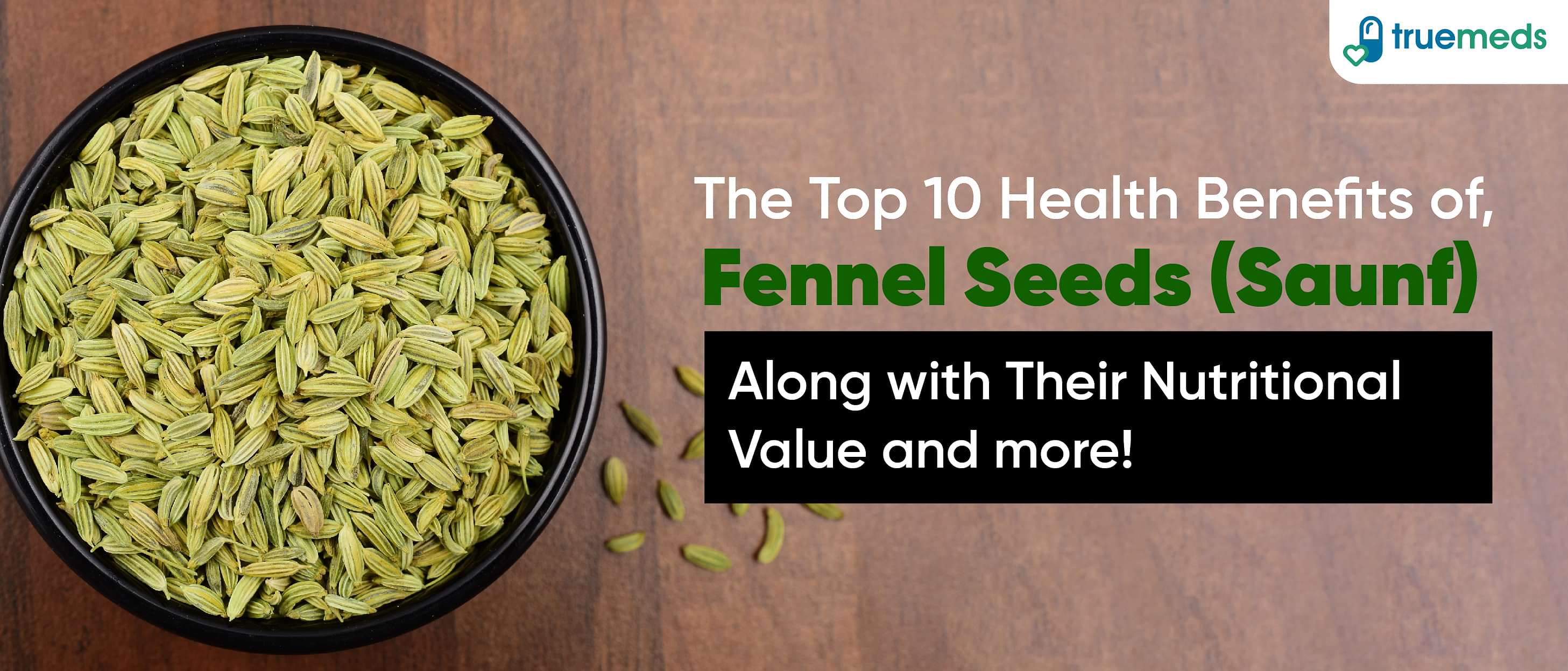
Top 16 Benefits of Fennel Seeds (Saunf) for Health with Its Nutritional Value and More!
Last updated on : 11 Jul, 2025
Read time : 10 min
What are Fennel Seeds?
Fennel seeds or Saunf seeds are popularly used as ingredients in Indian Kitchens. It is also known as Foeniculum vulgare. It is a herb and belongs to the carrot family. Fennel seeds have a recognisable long and thin shape and are pale green or brown in colour. Its leaves can be consumed as a vegetable. Besides its numerous uses in the kitchen, Fennel seeds offer a wide array of health benefits. Eating Saunf seeds after meals is considered a healthy practice, primarily because of its ability to keep the digestive system healthy. Fennel seed tea can help with digestion woes. It is also good for the reproductive and respiratory systems. Saunf water is used to relieve a cranky baby. It is also an excellent remedy for breast milk production in lactating mothers. Know more about this herb, its composition uses of Fennel seeds, Saunf water benefits, side effects of Saunf and much more.
Nutritional Value of Fennel Seeds per 100gm
Fennel seeds are rich in carbohydrates, dietary fibre, protein, vitamin B complex, vitamin C, and other essential minerals. Here is its nutritional composition:
| Nutritional component | Value |
| Water | 8.81g |
| Energy | 345kcal |
| Protein | 15.8g |
| Carbohydrates | 52.3g |
| lipid | 14.9g |
| Fibre | 39.8g |
| Calcium | 1200mg |
| Iron, Fe | 18.5mg |
| Magnesium, Mg | 385mg |
| Phosphorus, P | 487mg |
| Potassium, K | 1690mg |
| Sodium, Na | 88mg |
| Zinc, Zn | 3.7mg |
| Copper, Cu | 1.07mg |
| Fatty acids, total saturated | 0.48g |
| Fatty acids, total monounsaturated | 9.91g |
| Fatty acids, total polyunsaturated | 1.69g |
Properties of Fennel Seeds
Here are the properties of Fennel seeds:
- Antimicrobial: Fennel seeds possess compounds that inhibit the growth of microorganisms.
- Antiviral: They exhibit properties that combat viral infections.
- Anti-inflammatory: Fennel seeds can reduce inflammation in the body.
- Antimutagenic: They might help prevent genetic mutation risk that can lead to cancer.
- Antinociceptive: Fennel seeds alleviate pain by blocking the sensation of pain.
- Antipyretic: They can help regulate body temperature.
- Antispasmodic: Fennel seeds relieve muscle spasms and cramps.
- Antithrombotic: They prevent the formation of blood clots.
- Apoptotic: Fennel seeds induce programmed cell death in abnormal cells.
- Cardiovascular: They support heart health by improving cardiovascular function.
- Chemomodulatory: Fennel seeds help modulate cellular responses to chemotherapy.
- Antitumor: They possess properties that inhibit tumour growth.
- Hepatoprotective: Fennel seeds protect the liver from damage.
- Hypoglycemic: These seeds lower blood sugar levels.
- Hypolipidemic: Fennel seeds reduce cholesterol and lipid levels in the blood.
- Memory enhancing: Its regular consumption can improve memory function.
Fennel Seeds Benefits for Health
Fennel tea is known to aid healthy digestion. It has been used as a natural remedy for constipation, stomach pain, diarrhoea, and colic in children. It is also used to treat other digestive problems. The main Fennel seeds benefits include:
1) Fennel seeds benefits for mouth diseases
Fennel seeds are used for various mouth-related ailments. For mouth ulcers or dental wounds, its leaves can be chewed and applied directly to the ulcer. Gum disorders are treated using a mouthwash made from Fennel fruit and seeds.
2) Fennel seeds benefits for digestive system
Fennel seeds play a crucial role in supporting digestive health. They are known for managing constipation and symptoms associated with digestive disorders such as gastritis, stomach pain, flatulence, nausea, irritable colon, diarrhoea, and colic in children. The extracts from Fennel seeds are commonly consumed to ease these discomforts and promote healthy digestion.
3) Fennel seeds benefits for Eye health
Fennel extracts have been shown to help control glaucoma and cataract risk with their anti-inflammatory, oculohypotensive properties.
4) Fennel seeds benefit for urinary system
Fennel extract has been traditionally used for its mild diuretic effect. Some studies suggest an increase in urine output, potentially supporting urinary tract health.
5) Fennel seeds benefits for sleep regulation
Fennel seeds aid in sleep regulation by calming the nerves and promoting relaxation. They contain compounds that help regulate neurotransmitters in the brain, which can improve sleep quality.
6) Benefits of Saunf for stress
Fennel seeds have stress-relieving properties due to their natural phytochemicals. These compounds help reduce cortisol levels in the body, thereby mitigating stress and promoting a sense of calm.
7) Fennel seeds benefits for kidneys
Fennel supports kidney function by acting as a diuretic, which means it increases urine production. This helps in flushing out toxins and excess fluids from the body, supporting overall kidney health.
8) Benefits of Saunf for leucorrhoea
Fennel seeds are beneficial in the treatment of leucorrhoea due to their anti-inflammatory and antimicrobial properties. They help in reducing inflammation and fighting infections that may cause abnormal vaginal discharge.
9) Fennel seeds benefits for skin and hair
Fennel seed oil promotes hair growth by nourishing the scalp and stimulating hair follicles. Boiled Fennel root tea is effective for mosquito control due to its natural repellent properties.
10) Fennel seeds benefits for arthritis
Saunf water benefits arthritis patients. Some in vitro and animal studies suggest fennel extracts possess anti-inflammatory activity, potentially supporting joint health. Consuming Fennel seed infusion can help ease arthritis and joint pain..
11) Benefits of Saunf for the immune system
Fennel leaf infusions are used to treat fever by promoting sweating, which aids in reducing body temperature and supporting the body’s immune response.
12) Fennel seeds benefits for cancer
Fennel seeds in infusion form can be consumed as part of cancer treatment due to their antioxidant properties, which help combat free radicals and support overall health.
13) Benefits of Saunf for Heart
Saunf water benefits heart patients. Chewing Fennel leaves provide antihypertensive and anti-cholesterolemic effects, helping to regulate blood pressure and cholesterol levels, thereby promoting heart health.
14) Laxative Effects of Fennel seeds
Fennel seeds have natural laxative effects, aiding in digestion and relieving constipation by promoting bowel movements.
15) Fennel seeds benefit from colds and cough
Fennel is used to treat colds and coughs due to its expectorant properties, which help loosen mucus and ease respiratory congestion.
16) Fennel seeds benefits for lactation
Saunf water benefits lactating mothers, Fennel seeds are known to increase breast milk production in lactating mothers. Drinking Fennel seed tea or incorporating Fennel seeds into meals supports lactation by stimulating milk flow.
How to Use Fennel Seeds
Dried Fennel seeds are often used in cooking as an anise-flavoured spice. Here are a few ways to incorporate Fennel seeds into food:
- Fennel seeds can be boiled and strained to get a detox boost in the morning.
- It can be added to salads and snacks, stewed, boiled, grilled, or baked in several dishes and even used in the preparation of herbal teas or other drinks.
- It can be used in spice blends such as garam masala powder, panch phoron, or panch masala.
- Fennel seed water can be beneficial for both the mother and the baby. It can help relieve colic in infants when the breastfeeding mother consumes it.
- The bulb, foliage, and seeds are used raw or cooked in side dishes, salads, pasta, vegetable dishes, and sausages.
- Fennel is aromatic and used as a pot herb, spice, and vegetable for flavouring and culinary purposes.
- Whole Fennel seeds, powder, and oil are used to flavour foods, act as antioxidants, and serve as preservatives in bakery items and beverages.
- It is also added to soups, sauces, pickles, breads, and cakes for enhanced flavour.
- It can be used to make desserts like kheer.
- It is also used for flavouring and aromatising in non-alcoholic beverages, baked goods, condiments, and ice creams.
- It is also added in liqueurs like Anisette and as a seasoning for prepared meats such as hot pepperoni and sweet Italian sausages.
How to Prepare Fennel Seeds?
To use Fennel seeds, first, toast them lightly in a dry pan over medium heat until they release their aroma. Let them cool, then grind them into a powder. You may store it for later use in an airtight jar to maintain freshness. It can be added to many dishes. For tea, steep whole seeds in boiling water for 5-10 minutes. You can also use the seeds whole or ground in recipes, or sprinkle them over.
How to Add Fennel Seeds to Your Diet?
Fennel seeds can be added to your diet in various ways to enhance flavour and nutrition. Here are some ways to add it:
- As a Spice
- Powder form
- In tea
- Bakery items
- Chutneys and pickles
- Smoothies
- Mouth Freshener in pan
Side Effects of Fennel Seeds
Side effects of Saunf are rare. Saunf seeds are generally safe when added to food in moderation. Fennel tea and other herbal preparations are beneficial and well-tolerated in recommended amounts. However, excessive intake of Fennel oil can lead to nausea, vomiting, and seizures. Fennel essential oil is toxic even in small doses and can cause skin irritation, vomiting, seizures, and respiratory issues, so it should not be ingested.
Precautions When Using Fennel Seeds
Follow these precautions for the safe use of Fennel seeds:
- Allergic reactions to Fennel seeds are rare but possible on the skin or respiratory tract. Avoid Fennel seeds if you are allergic to carrots, celery, or mugwort.
- Do take Fennel seeds when using antibiotics.
- Pregnant women should avoid the medicinal use of Fennel due to its estrogen-like effects, though its intake in small amounts is generally safe.
- Patients with seizures should cautiously use Fennel seeds. Discuss your condition with the doctor for the safe use of Fennel seeds.
FAQs
Sauf benefits in aiding digestion, relieving bloating and gas, and promoting satiety which helps in weight management. They also have antioxidant properties that support overall health and may help in reducing inflammation in the body. Additionally, Fennel seeds are used traditionally to alleviate menstrual cramps and improve lactation in nursing mothers.
Fennel seeds are also called Saunf.
You can eat Fennel seeds daily in moderate amounts as they are generally safe and beneficial for digestion.
Fennel seeds are safe when used in food moderately. Fennel tea and herbal preparations are beneficial in recommended doses but excessive Fennel oil intake may cause nausea, vomiting, and seizures; the essential oil is toxic and should not be ingested.
Fennel seeds may cause gas due to their carminative properties, stimulating digestion and gas production in sensitive individuals.
Pregnant women and individuals with carrot allergies should avoid consuming Fennel seeds in excess.
References:
- Barros, L., Carvalho, A. M., & Ferreira, I. C. (2010). The nutritional composition of fennel (Foeniculum vulgare): Shoots, leaves, stems and inflorescences. LWT – Food Science and Technology, 43(5), 814-818. https://doi.org/10.1016/j.lwt.2010.01.010
- Badgujar, S. B., Patel, V. V., & Bandivdekar, A. H. (2014). Foeniculum VulgareMill: A review of its botany, phytochemistry, pharmacology, contemporary Application, and Toxicology. BioMed Research International, 2014, 1–32. https://doi.org/10.1155/2014/842674
.jpg?width=640)













Disclaimer
Our healthcare experts have carefully reviewed and compiled the information presented here to ensure accuracy and trustworthiness. It is important to note that this information serves as a general overview of the topic and is for informational purposes only. It is not intended to diagnose, prevent, or cure any health problem. This page does not establish a doctor-patient relationship, nor does it replace the advice or consultation of a registered medical practitioner. We recommend seeking guidance from your registered medical practitioner for any questions or concerns regarding your medical condition.
Popular Articles


Recommended Articles






Recent Articles








Company
About UsHealth ArticleHealth StoriesDiseases & Health ConditionsAyurvedaAll MedicinesAll BrandsNeed HelpFAQSubscribe
Registered Office Address
Grievance Officer
Download Truemeds


Contact Us
Our customer representative team is available 7 days a week from 9 am - 9 pm.
v4.3.9

2025 - Truemeds | All rights reserved. Our content is for informational purposes only. See additional information.

Our Payment Partners




