

- Medicines
- Personal Care
- Skin Cream
- Sunscreen
- Face Wash
- Skin and Body Soap
- Acne Care
- Body Lotions
- Moisturising Lotion
- Moisturising Cream
- Mosquito Repellent
- Moisturising Gel
- Body Wash
- Hair Oils
- Hair Shampoo
- Hair Conditioners
- Hair Supplements
- Hair Colour
- Hair Serum
- Hair Mask
- Hair Solutions
- Baby Diapers and Wipes
- Baby Lotion and Moisturising Cream
- Baby Bath Essentials
- Baby Skin Care
- Baby and Infant Food
- Baby Healthcare
- Women Multivitamins
- Ovulation Test Kit and Women Intimate Care
- Sanitary Pads
- Nutritional Drinks
- Condoms
- Lubricants
- Massage Gels
- Personal Body Massagers
- Men Performance Booster
- Sexual Health Supplements
- Massage Oils
- Ayurveda
- Tooth Paste
- Mouth Ulcer Gel
- Mouthwash
- Toothache and Gum Pain
- Tooth Brush
- Gargle Solution
- Orthopaedic Supports
- Adult Diapers
- Footwear
- Mobility and Support Accessories
- Urinary Support and Care
- Health Conditions
- Bone and Joint Care
- Digestive Care
- Eye Care
- Pain Relief
- Smoking Cessation
- Liver Care
- Stomach Care
- Cold and Cough
- Heart Care
- Kidney Care
- Piles, Fissures & Fistula
- Respiratory Care
- Mental Wellness
- Derma Care
- Pre and Probiotics
- Acidity
- Gas
- Constipation
- Loose Motion/Diarrhoea
- Digestive Fibres
- Digestive Enzymes
- Eye Lubricant Drops
- Lens Solution
- Safety Eye Wear
- Eye Cream
- Eye Vitamins and Supplements
- Eye Drops
- Eye Ointment and Gel
- Nicotine Patch
- Nicotine Gum
- Nicotine Lozenges
- Cough Syrups
- Chest Rubs and Balms
- Nasal Spray
- Lozenges
- Inhalant Capsules
- Cold and Cough Tablets
- Vitamins & Supplements
- Diabetes Care
- Healthcare Devices
- Homeopathic Medicine
- Health Guide
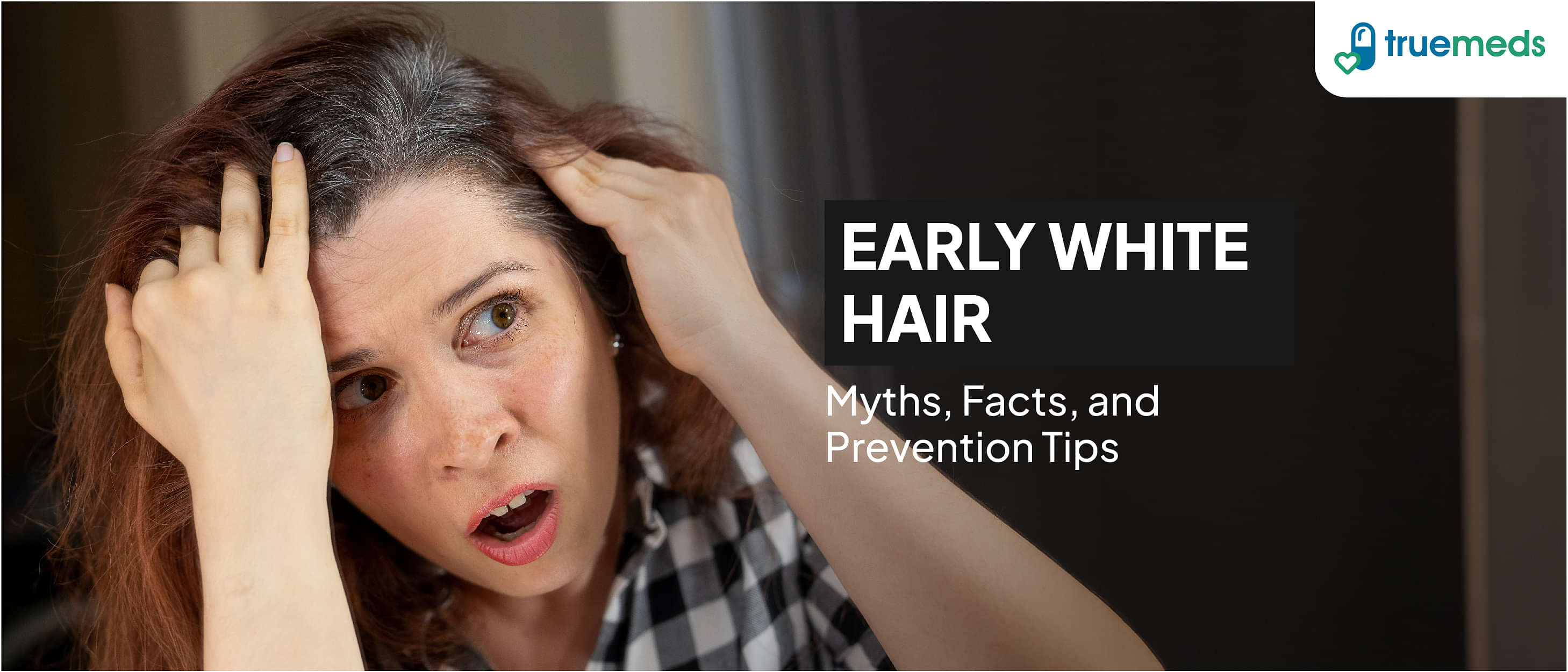
Early White Hair: Myths, Facts, Causes, and Management
Last updated on : 01 Dec, 2025
Read time : 9 min
Are you noticing strands of white hair while you’re still young? While it might be startling, it is medically termed Premature Hair Greying (PHG). This condition, defined as hair greying before the age of 20 in Caucasians, before 25 in Asians, and before 30 in Africans, is not necessarily a cause for alarm [1]. Early white hair can be influenced by multiple factors, including a strong genetic predisposition, nutritional status, lifestyle, and sometimes underlying medical conditions. To address the common anxieties and misinformation, this article will provide an evidence-based perspective on the causes, debunk common myths, and offer practical management tips.
The Science of Hair Greying: Causes of Premature White Hair
The primary cause of white hair is a decrease in melanin production by specialized cells called melanocytes, which reside in the hair follicle. Melanin is the pigment responsible for giving your hair its colour. When these cells become less active or die, the hair strand loses its colour, resulting in a colourless or ‘white’ appearance [2].
The key factors contributing to the onset of Premature Hair Greying (PHG) include:
Genetics:
This is widely considered the most significant contributing factor [3]. If your parents or grandparents experienced greying early, you are statistically likely to share this trait. Scientific research has identified specific genes, such as the $IRF4$ gene, which are involved in regulating melanin production [3].
Nutritional Deficiencies:
A lack of essential vitamins and minerals can impact pigment cells. Specifically, deficiencies in Vitamin B12, Vitamin D, Vitamin B9 (Folate), and minerals like Copper and Iron have been associated with PHG in various studies [4]. Vitamin B12 is particularly crucial for healthy hair growth and colour maintenance.
Autoimmune and Thyroid Diseases:
Certain systemic health issues can trigger premature greying. Conditions like vitiligo and alopecia areata may cause the immune system to mistakenly attack the pigment cells in hair follicles. Similarly, malfunctioning thyroid glands (hyperthyroidism or hypothyroidism) can disrupt hormonal balance, which may interfere with melanin production [5].
Oxidative Stress:
Increased levels of oxidative stress are a leading theory for accelerated greying [2]. This occurs when there is an imbalance between free radicals and the body’s ability to detoxify them. Chronic stress, smoking, and environmental toxins can increase oxidative stress, damaging melanocytes [6].
Smoking:
Clinical studies suggest a strong link between cigarette smoking and an increased risk of premature greying [7]. Toxins from smoking can generate damaging free radicals and accelerate cellular aging in the hair follicles.
Common Myths About Early White Hair
Here are four common myths about PHG that need to be debunked with scientific facts:
Myth 1: White Hair is Always a Sign of Old Age
While greying is a natural part of the aging process, not all white hair is due to chronological age. As noted above, young individuals can develop PHG due to genetic programming, severe nutritional deficiencies, or underlying autoimmune conditions [1]. Age is merely one factor in a broader picture of biological and lifestyle influences.
Myth 2: Plucking One White Hair Causes More to Grow
This is physiologically inaccurate. Plucking a hair from your scalp only affects that specific hair follicle. It does not communicate with or influence the colour of the surrounding hair follicles or the hair that will eventually replace it [2]. Plucking might, however, damage the follicle over time, potentially leading to infection or permanent hair loss in that spot.
Myth 3: Stress is the Main Cause of White Hair
Stress can accelerate greying, but it is not the primary cause. Genetic and biological factors remain dominant [3]. Chronic severe stress can induce a temporary hair shedding condition called Telogen Effluvium, which causes a large number of pigmented hairs to fall out simultaneously. The new hairs that grow back may be white if the melanocytes are already programmed to fail, making the pre-existing white hairs suddenly more noticeable, but stress does not change existing pigmented hair colour overnight [2].
Myth 4: White Hair Cannot Be Reversed
The notion that white hair is irreversible is largely true in cases of natural or genetic greying. However, in rare, specific instances where PHG is solely caused by a correctable nutritional deficiency (e.g., Vitamin B12), addressing the root issue through supplementation and diet may, in some cases, allow for the repigmentation of new hair growth [4]. It is critical to understand that this is only possible if the pigment-producing cells are temporarily suppressed, not permanently destroyed. For genetically-driven PHG, reversal is generally considered unlikely.
Evidence-Based Prevention and Management Strategies
While there is no guaranteed method to prevent genetically programmed greying, the following tips can help manage overall hair health and potentially slow down the onset of PHG that is linked to nutritional or lifestyle factors.
1. Prioritize a Nutrient-Rich Diet
A well-balanced diet is fundamental to supporting overall hair health and optimizing melanocyte function. Focus on consuming foods rich in key micronutrients:
- Vitamin B12: Found in animal products like meat, fish, eggs, and dairy products. For vegetarians and vegans, supplementation is often necessary [4].
- Folate (Vitamin B9): Abundant in leafy greens (spinach, kale), legumes (lentils, beans), and fortified cereals.
- Vitamin D: Obtainable from sun exposure, fatty fish (salmon, tuna), and fortified foods. Deficiency should be confirmed via blood test before starting high-dose supplementation [4].
- Antioxidants: Foods such as berries, nuts, dark chocolate, and green tea are rich in antioxidants. These combat the oxidative stress that damages hair pigment cells [6].
- Copper: This mineral is a cofactor for the enzyme involved in melanin production. Sources include whole grains, dark leafy greens, and nuts [5].
2. Implement Stress Management Techniques
Reducing chronic stress can minimize its indirect negative impact on hair health and overall cellular aging [6]. Consider incorporating these techniques into your daily routine:
- Mindfulness and Meditation: Practicing mindfulness or meditation daily can help regulate the body’s stress response.
- Regular Exercise: Consistent physical activity is a proven method for reducing psychological stress and improving circulation.
- Prioritize Sleep: Aim for 7-9 hours of quality sleep nightly, as poor sleep increases oxidative stress [2].
3. Seek Regular Health Check-Ups
Routine physical and blood work with your healthcare provider are crucial for identifying correctable causes of PHG. Conditions like thyroid disorders or confirmed vitamin deficiencies (especially B12) can be appropriately managed with timely diagnosis and treatment, which may stabilize or improve hair pigmentation issues [5].
4. Optimize Hair Care Practices
Good hair care minimizes external damage, contributing to healthier hair shafts:
- Limit Chemical Exposure: Minimize the use of harsh chemical treatments, such as repeated bleaching or strong permanent dyes, which can structurally damage the hair.
- Limit Heat Styling: Excessive use of high-heat styling tools can damage the hair shaft and potentially impact the health of the scalp and follicle.
- Gentle Cleansing: Use a mild, sulphate-free shampoo and avoid over-washing, which can strip the hair and scalp of essential protective oils.
5. Eliminate Smoking
Quitting smoking is one of the most significant lifestyle changes for overall health, including reducing cellular damage that may accelerate the greying process [7]. Consult healthcare professionals or support groups for assistance with cessation.
Conclusion
While the onset of early white hair is heavily influenced by an individual’s genetic blueprint, it is not entirely beyond the scope of management. Nutritional deficiencies, underlying medical conditions, chronic stress, and poor lifestyle habits can all accelerate the process. By adopting a well-supported, healthy lifestyle, actively managing stress, eating a nutrient-rich diet, and proactively addressing health concerns through regular check-ups, individuals can maintain healthy hair and potentially slow down the onset of premature greying. Remember that consultation with a dermatologist or trichologist is recommended for a personalized diagnosis and management plan.
Frequently Asked Questions (FAQs)
Is early white hair hereditary?
Yes, early white hair is strongly influenced by genetics. It is considered the most common reason for Premature Hair Greying (PHG), often running in families [3].
Can stress really contribute to my hair turning white prematurely?
Chronic, severe stress is understood to contribute to premature greying by increasing oxidative stress and potentially triggering hair shedding, which makes existing white hairs more visible. However, it is rarely the sole cause; genetics is the primary determinant [6].
Are there any medical conditions associated with early white hair?
Yes. Certain underlying medical conditions can cause PHG, including Vitamin B12 deficiency (pernicious anemia), specific autoimmune diseases (e.g., vitiligo), and thyroid disorders [5].
How can I manage or potentially slow down my hair from turning white prematurely?
You can manage the process by maintaining a balanced diet rich in B vitamins and antioxidants, proactively managing stress, and seeking regular health check-ups to rule out nutritional or hormonal deficiencies [4].
Does early white hair indicate a more serious health problem?
Not typically. In the vast majority of cases, it is a normal genetic variation. However, in rare instances, PHG can be an early clinical sign of an underlying nutritional deficiency (like severe B12 deficiency) or a treatable autoimmune or thyroid condition. Consulting a doctor is recommended to investigate potential reversible causes [5].
Disclaimer
This article is intended for informational purposes only and is not a substitute for professional medical advice, diagnosis, or treatment.
References
[1] Kumar, A., Shamim, H., & Nagaraju, U. (2018). Premature graying of hair: Review with updates. International Journal of Trichology, 10(5), 198. https://doi.org/10.4103/ijt.ijt_47_18
[2] Jo, S. K., Lee, J. Y., Lee, Y., Kim, C. D., Lee, J.-H., & Lee, Y. H. (2018). Three Streams for the Mechanism of Hair Graying. Annals of Dermatology, 30(4), 397–401. https://doi.org/10.5021/ad.2018.30.4.397
[3] Wang, S., Kang, Y., Qi, F., & Jin, H. (2023). Genetics of hair graying with age. Ageing Research Reviews, 89(101977), 101977. https://doi.org/10.1016/j.arr.2023.101977
[4] Poonia, K., & Bhalla, M. (2024). Premature graying of Hair: A comprehensive review and recent insights. Indian Dermatology Online Journal, 15(5), 721–731. https://doi.org/10.4103/idoj.idoj_807_23
[5] Chakrabarty, S., Krishnappa, P., Gowda, D., & Hiremath, J. (2016). Factors associated with premature hair graying in a young Indian population. International Journal of Trichology, 8(1), 11. https://doi.org/10.4103/0974-7753.179384
[6] ClinicSearch. (n.d.). The influence of diet, lifestyle, and environmental factors on premature hair greying: An Evidence-Based Approach. Retrieved October 31, 2025, from https://www.clinicsearchonline.org/article/the-influence-of-diet-lifestyle-and-environmental-factors-on-premature-hair-greying-an-evidence-based-approach
[7] Zayed, A., Shahait, A., Ayoub, M., & Yousef, A. M. (2013). Smokers′ hair: Does smoking cause premature hair graying? Indian Dermatology Online Journal, 4(2), 90. https://doi.org/10.4103/2229-5178.110586















Disclaimer
Our healthcare experts have carefully reviewed and compiled the information presented here to ensure accuracy and trustworthiness. It is important to note that this information serves as a general overview of the topic and is for informational purposes only. It is not intended to diagnose, prevent, or cure any health problem. This page does not establish a doctor-patient relationship, nor does it replace the advice or consultation of a registered medical practitioner. We recommend seeking guidance from your registered medical practitioner for any questions or concerns regarding your medical condition.
Popular Articles



Recommended Articles



Recent Articles










Company
About UsHealth ArticleHealth StoriesHealth LibraryDiseases & Health ConditionsAyurvedaUnderstanding Generic MedicinesAll MedicinesAll BrandsNeed HelpFAQSecuritySubscribe
Registered Office Address
Grievance Officer
Download Truemeds


Contact Us
Our customer representative team is available 7 days a week from 9 am - 9 pm.
v4.10.0

2025 - Truemeds | All rights reserved. Our content is for informational purposes only. See additional information.

Our Payment Partners




