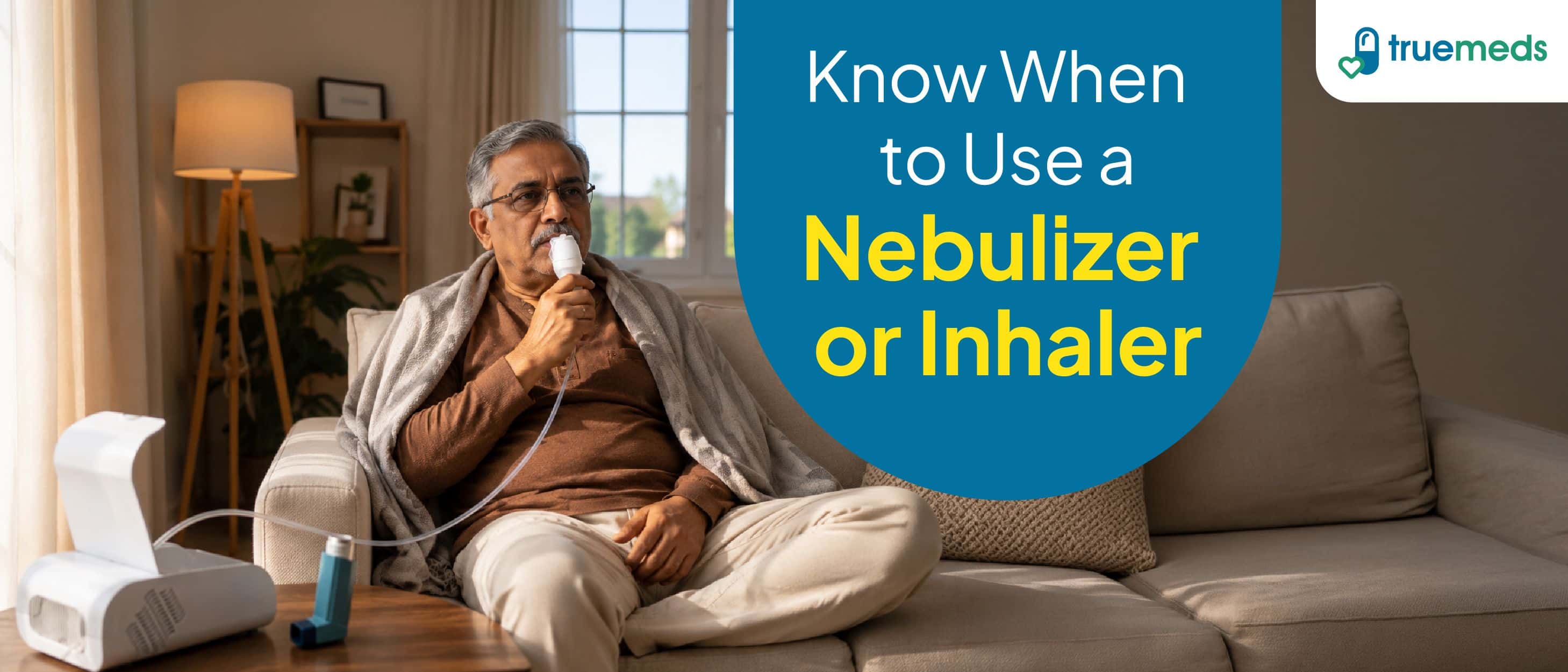
When managing asthma or COPD, many people wonder about choosing between a nebuliser and an inhaler since both devices deliver inhaled medicine directly to the lungs. However, the most appropriate option depends on your condition, symptom severity, age, and whether you can use the device correctly[1]. This article explains how each device works, when doctors commonly recommend one over the other, what to watch for when treatment is not helping, and the right questions to ask your healthcare provider before making a decision.
Quick Comparison: When Is an Inhaler or a Nebuliser Usually Used?
The table below summarises common situations and which device is typically used. It is a general guide, not a substitute for personalised medical advice. Your doctor should advise on the right choice for your situation.
Situation | Inhaler | Nebuliser |
|---|---|---|
Daily asthma treatment | Usually | Sometimes |
Sudden asthma symptoms | Usually | Sometimes |
COPD flare-up | Sometimes | May be used in severe case |
Young children | Sometimes | May be used if a spacer cannot be used or during severe attacks |
Older adults | Sometimes | Older adults with difficulty using inhalers |
Severe breathing difficulty | Sometimes | Often |
Travelling | Usually | Rarely practical |
Inhalers are generally the routine option for daily asthma treatment, quick relief, and situations such as work, school, or travel. Nebulisers are more commonly used when symptoms are severe, inhalers are not providing enough benefit, or treatment is being given at home or in hospital under guidance[2].
For COPD, inhalers are usually first-line for regular breathing treatment. Nebulised medicine may be considered in severe cases if inhalers have not worked sufficiently and can be prescribed for home use after proper training[3].
Are Nebulisers and Inhalers Designed to Do the Same Job?
People often compare these two devices because both can deliver bronchodilator or controller medicine to the lungs. However, the way they work is different. Inhalers give a measured dose in a few breaths, whereas nebulisers convert liquid medicine into a fine mist that is inhaled gradually over several minutes[1].
A spacer can make a pressurised metered-dose inhaler (pMDI) easier to use. It holds the medicine in a small chamber before you breathe it in, which helps the dose reach the lungs more effectively. This is particularly helpful for many children and adults who find it difficult to time their breath with the inhaler puff[4].
Because the devices work differently, they may be preferred in different clinical situations. Neither is universally superior. The right choice depends on the person's diagnosis, symptoms, and ability to use the device correctly.
Which Device Is Usually Used During an Asthma Attack?
For many mild asthma flare-ups, a reliever inhaler is the first at-home rescue treatment, and some attacks can be managed with the reliever inhaler alone[5]. However, severe attacks that do not improve may require hospital care, including oxygen, steroids, and high-dose medicine delivered by nebuliser[2].
A reliever inhaler is the first step during an attack. If symptoms worsen, do not improve after the maximum recommended inhaler dose, or severe breathlessness develops, urgent medical help is needed, and nebulised treatment may be used in hospital[2].
The Indian Council of Medical Research (ICMR) guidelines note that inhaled medicines are the mainstay of asthma treatment. Non-severe flare-ups can often be managed with additional inhaler doses and appropriate follow-up. Severe acute asthma, however, is treated with oxygen and nebulised bronchodilator therapy, with referral if symptoms are not improving[6].
Factors a doctor considers include how quickly symptoms are worsening, whether the person can breathe deeply enough to use an inhaler effectively, and whether there has been a response to initial treatment[6].
If your breathing does not improve after using your rescue device, seek urgent medical care immediately.
Why Do Many Patients with COPD Use a Nebuliser at Home?
Some patients with COPD may find a nebuliser useful at home when breathlessness is severe, flare-ups occur, or they are not getting enough benefit from handheld inhalers. However, this is usually arranged after clinical assessment and proper instruction, rather than as a routine replacement for inhalers[3].
Inhaler use errors are common in COPD, and nebulisers may be considered for patients with cognitive impairment, poor hand–breath coordination, physical limitations, or insufficient inspiratory flow that compromises effective inhaler use[7].
ICMR guidelines for COPD recommend that inhaled medicines remain the mainstay of treatment and that inhaler technique should be checked at every clinical visit. During flare-ups with increased breathlessness or low oxygen levels, inhaled or nebulised bronchodilator therapy may be used, with hospital admission considered if symptoms are severe or do not respond to initial treatment[8].
If you or a family member with COPD is considering home nebuliser use, this decision should involve your treating doctor. Medical assessment and device training are essential before starting home nebuliser therapy.
Why Might a Nebuliser Feel More Comfortable for Some People?
During severe breathlessness, a nebuliser may feel easier to use because it delivers medicine through tidal breathing (normal breathing effort) over several minutes, requiring less physical coordination than using an inhaler[7]. This can be reassuring for people who feel too short of breath to manage an inhaler correctly.
However, comfort alone does not mean greater effectiveness. For many patients with asthma, an inhaler used with correct technique is just as effective as a nebuliser[1]. The right choice should be guided by your healthcare provider based on your specific condition and needs.
When Might an Inhaler Be More Practical Than a Nebuliser?
For daily routines, school, work, and travel, an inhaler is often more practical because it is portable, requires no power source, and is designed for convenient use outside the home. Nebulisers are generally larger, take longer to use, and require more maintenance, making them less suitable for routine everyday use[9].
Common situations where an inhaler may be preferred include maintaining asthma control, using a reliever medication when symptoms occur, and carrying medication during activities away from home[1].
For people who have difficulty using an inhaler correctly, a spacer device may improve medication delivery by helping more of the medication reach the lungs[4].
What Should You Do If Your Symptoms Don't Improve After Using Your Device?
If symptoms such as wheezing, breathlessness, or chest tightness continue after using your inhaler or nebuliser, prompt medical review is important. Frequent use of rescue medication is also a sign that your condition may need reassessment[6].
Situations that need urgent or emergency medical attention include[9]:
Breathing that remains very difficult after rescue treatment
Symptoms that are getting worse rather than better
Needing rescue medication repeatedly in a short period
Symptoms that are stopping you from carrying out normal activities
Do not attempt to adjust your own medicines or increase doses without clinical guidance. Consult your doctor or go to the nearest emergency facility if symptoms are severe.
Questions to Ask Before Choosing an Inhaler or Nebuliser
Before deciding on a device, a practical discussion with your healthcare provider is essential. The following checklist can help guide that conversation[10]:
How severe are my current symptoms?
Can I use an inhaler correctly, including with a spacer if needed?
Do I need treatment at home, or will I mainly use it while out?
Do I have asthma or COPD, and which device suits my condition?
Has my healthcare professional specifically recommended one device for me?
These questions can help you and your clinician arrive at the most suitable and practical choice for your situation.
Key Takeaways
- Both inhalers and nebulisers deliver medicine to the lungs, but they work in different ways and suit different situations.
- Inhalers are generally more practical for daily treatment and travel, whereas nebulisers are more often recommended when symptoms are severe, inhaler use is difficult, or treatment is supervised at home or in hospital.
- Correct technique is important for either device to work well.
- Symptoms that do not improve after using your device need prompt medical attention, and severe breathing difficulty is a medical emergency.
- Always follow your doctor's guidance on which device and treatment plan is right for you.
FAQs
Can the same medication be given through both an inhaler and a nebuliser?
Sometimes, both devices can deliver inhaled medicine. However, formulations and dosing are not always interchangeable. Do not assume the medicines are identical without checking with your prescribing doctor, as the dose and preparation can differ.
Which works better for asthma: a nebuliser or an inhaler?
A properly used inhaler, often with a spacer, is usually as effective for mild-to-moderate asthma symptoms. Nebulisers are more often reserved for severe symptoms or hospital-based treatment. Your doctor can advise which is most appropriate for your level of severity.
Can I switch between an inhaler and a nebuliser without medical advice?
Switching devices on your own is not advisable. The right device depends on your diagnosis, symptom severity, medicine type, and your ability to use the device correctly. Always discuss changes with your doctor before making a switch.
Can a nebuliser help with shortness of breath?
A nebuliser may help when the prescribed medicine is delivered effectively, especially during flare-ups or periods of severe breathlessness. However, it is not a substitute for emergency medical assessment if your symptoms are worsening or not improving as expected.
Can I use my inhaler and nebuliser on the same day?
Some patients may be prescribed both for use at different times. However, timing and the risk of duplicating medication doses need to be carefully managed. Speak with your treating clinician to clarify your specific treatment plan.
Is it normal for an inhaler to feel less effective during severe breathing symptoms?
Yes. Severe breathlessness can make coordinating inhaler use harder, which is one reason nebulised treatment may be considered during severe attacks or when a person has significant difficulty with inhaler technique.
What should I do if my symptoms do not improve after using my inhaler or nebuliser?
Seek urgent medical review if symptoms persist or worsen. If breathing remains very difficult or initial treatment is not working, call for emergency help immediately. Do not delay or try to manage a severe episode at home without support.
Which option may be easier for children or older adults to use?
A spacer can help many children use inhalers more effectively. Some older adults or people with poor coordination, low inspiratory flow, or difficulty handling devices may find a nebuliser easier to manage. Your doctor can recommend the most suitable approach.
Can I use an inhaler immediately after using a nebuliser?
This depends on the medicines involved and your clinician's treatment plan. Some regimens combine both devices, while others may carry a risk of duplicate bronchodilator dosing. Always follow your doctor's instructions regarding timing and device use.
How do I know if my inhaler or nebuliser treatment is working?
Improvement in wheezing, breathlessness, and the ability to carry out daily activities are positive signs. Frequent rescue medication use, ongoing symptoms, or worsening function suggest that your treatment plan or device technique may need a review with your doctor.
Medical Disclaimer
This article is for informational purposes only and does not constitute medical advice. The information provided should not be used for diagnosing or treating health conditions. Always consult a qualified healthcare provider for diagnosis, treatment, and personalised medical advice. Do not disregard professional medical advice or delay seeking it because of information found in this article. If you have a medical emergency, contact your doctor or emergency services immediately.
References
NLM MedlinePlus. (2026). How to use a nebulizer. MedlinePlus. https://medlineplus.gov/ency/patientinstructions/000006.htm
NHS. (2025). Asthma. NHS. https://www.nhs.uk/conditions/asthma/
NHS. (2023). Chronic obstructive pulmonary disease (COPD) - Treatment. NHS. https://www.nhs.uk/conditions/chronic-obstructive-pulmonary-disease-copd/treatment/
NLM MedlinePlus. (2026). How to use an inhaler - with spacer. MedlinePlus. https://medlineplus.gov/ency/patientinstructions/000042.htm