Key Takeaways
- Sleep physicians and the American Academy of Sleep Medicine recommend against mouth taping for most people
- Scientific evidence is limited, with just 10 studies involving 213 patients
- Mouth taping may worsen sleep apnoea and could be unsafe for people with a stuffy nose or breathing problems
- Side effects include skin irritation, disrupted sleep, anxiety, and potential breathing issues
- Safer alternatives include nasal dilators, CPAP therapy, and lifestyle changes under medical guidance
Using a mouth tape while sleeping has gained significant attention online, but sleep physicians largely advise against it. The American Academy of Sleep Medicine has been reported to advise against mouth taping due to limited high-quality evidence and mixed research findings[1]. Social media has helped popularise this potentially unsafe practice, with many people using it as a home remedy to address mouth breathing or snoring[2]. This article provides general safety education about mouth taping and is not a substitute for professional evaluation of sleep or breathing disorders.
Consult a sleep specialist before trying any sleep intervention.
What Is Mouth Taping and Why Do People Try It?
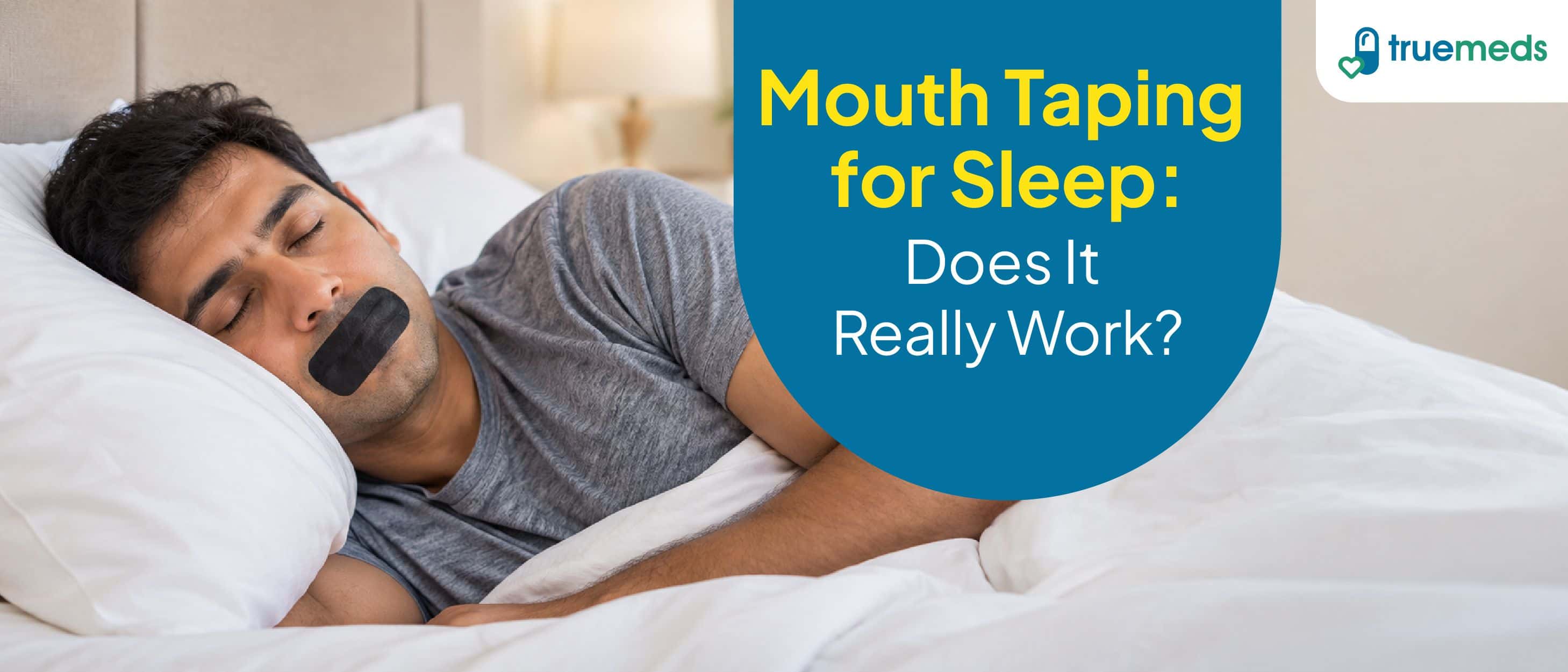
Mouth taping involves placing adhesive tape over the lips before sleeping to encourage breathing through the nose. On social media, it has been promoted as a way to improve sleep quality, reduce snoring and potentially offer cosmetic benefits. However, scientific evidence supporting many of these claims is still limited[3].
People try mouth taping for several reasons:
- To reduce snoring
- To promote nasal breathing instead of breathing through the mouth
- To improve sleep quality
- To address mild symptoms of sleep-disordered breathing
Despite its popularity, the scientific backing for these claims remains limited, and most sleep specialists urge caution before trying this practice.
Does Mouth Taping Actually Work? What the Evidence Shows
The scientific evidence on mouth taping is surprisingly thin. A 2025 systematic review identified just 10 studies that met its inclusion criteria, covering 213 patients.
Of these studies, only two reported statistically significant improvements in sleep apnoea markers, such as the apnoea-hypopnoea index (AHI) or oxygen desaturation levels[2].
A pilot study demonstrated that mouth taping may decrease AHI and snoring index in individuals with mild obstructive sleep apnoea (OSA), defined as an AHI between 5 and 15 [4]. However, it used a specially designed tape that is not widely available, limiting the applicability of these findings to the general public[2].
What this means for you: While some individuals may experience modest benefits, there is not enough evidence to support mouth taping as a reliable treatment for snoring or sleep apnoea. More rigorous, larger-scale studies are needed before any firm conclusions can be drawn.
Who Should Not Try Mouth Taping: Safety Risks
Certain groups may face greater risks from mouth taping, particularly people with nasal obstruction or moderate-to-severe obstructive sleep apnoea. Current evidence does not establish mouth taping as a general treatment for sleep-disordered breathing, and researchers are concerned about potentially serious complications, including asphyxiation when nasal obstruction is present[2].
People who should avoid mouth taping include those with[5],[6]:
- Untreated or undiagnosed sleep apnoea
- Chronic nasal congestion or sinusitis
- Allergies affecting nasal breathing
- Heart or lung disease
- Any condition causing difficulty breathing through the nose
The risks of mouth taping can be serious. Taping may worsen underlying conditions like sleep apnoea or, in extreme cases, could contribute to suffocation[5]. When the mouth is sealed, it can become difficult to open the mouth and thus dangerous if nasal airflow decreases during sleep[6].
Mouth taping may not be appropriate for everyone, particularly people with underlying nasal obstruction or sleep-disordered breathing. A 2026 systematic review found that nasal obstruction was associated with worsening sleep-apnoea indicators, including increases in the apnoea-hypopnoea index and oxygen desaturation index. The authors also noted that evidence on mouth taping remains limited and that the available studies were too heterogeneous to support broad clinical application.
Therefore, relying on mouth taping without assessing the underlying cause of mouth breathing or possible sleep apnoea may be inappropriate and could potentially delay appropriate medical evaluation[5].
If you suspect you have a sleep disorder, consult a healthcare provider for proper diagnosis rather than attempting home remedies.
Possible Side Effects of Mouth Taping
Even for healthy individuals, mouth taping can cause various side effects. The Sleep Foundation notes that mouth taping may lead to skin irritation, discomfort, disrupted sleep, or breathing issues[7].
Common side effects include:
- Skin irritation: The adhesive may cause redness, dryness or a rash around the lips.
- Poor sleep: The sensation of having the mouth taped or difficulty breathing may lead to restless sleep or frequent waking.
- Anxiety or panic: Feeling restricted may cause anxiety or panic, particularly in people who are prone to claustrophobia.
- Breathing difficulties: If the nose becomes blocked during sleep, taping the mouth shut may make it harder to breathe[7].
People with untreated sleep apnoea, ongoing nasal congestion, or difficulty breathing through the nose should avoid mouth taping[7]. Using mouth tape instead of seeking medical advice may delay the diagnosis and treatment of an underlying sleep disorder.
Safer Alternatives to Improve Nasal Breathing
If you are concerned about mouth breathing or snoring, sleep specialists recommend several safer approaches that address underlying causes rather than simply forcing the mouth closed.
Medical treatments under professional guidance[8],[9]:
- CPAP machines: In patients with sleep apnoea, CPAP therapy is the gold standard treatment
- Prescription mouthpieces: Custom dental appliances can help keep airways open during sleep
- Nasal dilators: These non-invasive devices can improve nasal airflow and may help relieve nasal valve obstruction
Lifestyle modifications[5],[7],[9]:
- Losing weight if overweight or obese
- Quitting smoking, which can irritate airways
- Sleeping on your side rather than your back
- Treating underlying allergies or nasal congestion
One study found that participants using mouth tape alongside CPAP therapy showed improved adherence, with average use increasing by approximately 51.8 minutes per day compared to those without mouth tape
[10]. However, this was conducted under clinical supervision and should not be attempted without consulting your sleep specialist first.
Any treatment for sleep-related breathing problems should be discussed with a qualified healthcare provider who can recommend appropriate options based on your specific situation.
Conclusion
Mouth taping remains a largely unproven practice that sleep physicians recommend against for most people. While social media has popularised this trend, the scientific evidence supporting its benefits is limited, with only a handful of small studies available. The potential risks, particularly for those with underlying conditions, outweigh the uncertain benefits.
If you experience snoring, mouth breathing, or suspect you may have a sleep disorder, seeking professional evaluation is the safest path forward. Evidence-based treatments like CPAP therapy, dental appliances, or lifestyle changes offer more reliable solutions with proper medical oversight. Your sleep health is too important to leave to unproven internet trends.
FAQs
Can mouth taping be dangerous for people with sleep apnoea?
Yes, mouth taping can be dangerous for people with sleep apnoea. It may make breathing more difficult if nasal airflow decreases during sleep. Sleep specialists advise against it for anyone with diagnosed or suspected sleep apnoea. Professional treatment options are safer and more effective.
Should I use mouth tape while sleeping?
Most sleep specialists recommend against mouth taping for the general population. If you are considering it, speak with a healthcare provider first to rule out underlying sleep disorders. Never try mouth taping if you have nasal congestion, allergies, or breathing difficulties.
Does mouth taping actually stop snoring?
Evidence suggests mouth taping may modestly reduce snoring sounds in some people, but it does not address the underlying airway obstruction that causes snoring. Proper evaluation by a sleep specialist can identify more effective, targeted treatments for your specific situation.
What kind of tape is safe to use for mouth taping?
If attempting mouth taping under medical guidance, use hypoallergenic, silicone-based medical tape designed for skin contact. Never use household tape, duct tape, or other adhesives not intended for skin use, as these can cause serious irritation or injury.
Can mouth taping help with CPAP therapy?
Some research suggests mouth taping alongside CPAP may improve adherence for mouth-breathing patients, but this should only be done under clinical supervision. Discuss with your sleep specialist whether this approach is appropriate for your situation.
Is mouth taping safe for children?
Mouth taping is not recommended as a DIY intervention for children. Children with mouth breathing often have underlying causes such as enlarged adenoids, nasal obstruction, or airway issues that require professional evaluation. Always consult a paediatric specialist before attempting any sleep intervention for a child.
What is "mouth puffing" and does mouth tape prevent it?
Mouth puffing occurs when a person continues to attempt mouth breathing despite the mouth being taped closed. Studies have observed this phenomenon in people with obstructive sleep apnoea who are mouth-taped during sleep. Some specially designed tapes allow for this puffing, but the phenomenon highlights why mouth taping is not appropriate for sleep apnoea patients.
Medical Disclaimer
This article is for informational purposes only and does not constitute medical advice. The information provided should not be used for diagnosing or treating health conditions. Always consult a qualified healthcare provider for diagnosis, treatment, and personalised medical advice. Do not disregard professional medical advice or delay seeking it because of information found in this article. If you have a medical emergency, contact your doctor or emergency services immediately.
References
CU Anschutz Medical Campus. (2025). Mouth tape for better sleep: Myth or miracle? CU Anschutz Medical Campus. https://news.cuanschutz.edu/news-stories/mouth-tape-for-better-sleep-myth-or-miracle
Rhee, J., Iansavitchene, A., Mannala, S., Graham, M. E., & Rotenberg, B. (2025). Breaking social media fads and uncovering the safety and efficacy of mouth taping in patients with mouth breathing, sleep disordered breathing, or obstructive sleep apnea: A systematic review. PloS one, 20(5), e0323643. https://www.ncbi.nlm.nih.gov/pmc/articles/PMC12094774/
Fangmeyer, S. K., Badger, C. D., & Thakkar, P. G. (2025). Nocturnal mouth-taping and social media: A scoping review of the evidence. American journal of otolaryngology, 46(1), 104545. https://doi.org/10.1016/j.amjoto.2024.104545
Pubmed.ncbi.nlm.nih.gov. (n.d.-b). https://pubmed.ncbi.nlm.nih.gov/39662104/
Huang, T. W., & Young, T. H. (2022). The impact of mouth-taping in mouth-breathers with mild obstructive sleep apnea: A preliminary study. Healthcare (Basel). https://www.ncbi.nlm.nih.gov/pmc/articles/PMC9498537/