Key Takeaways
- Carbohydrates raise blood sugar more than proteins or fats, making carb quality crucial for blood sugar management.
- High-GI foods (above 70) cause rapid blood sugar spikes, while low-GI foods (55 or below) produce slower, steadier rises.
- Individual responses to the same food vary based on gut bacteria, body composition, and metabolic health.
- Pairing carbohydrates with fibre, protein, or fat can reduce their impact on blood sugar.
- Cooking and cooling starchy foods like rice and potatoes may lower their glycaemic effect.
Understanding which foods spike blood sugar and which raise it gradually can help you make informed dietary choices. The glycaemic index (GI) ranks carbohydrates on a scale from 0 to 100 based on how quickly and how much they raise blood sugar levels after eating[1]. However, responses to the same foods vary significantly between individuals due to factors like gut microbiome composition and metabolic health[2]. This article explains what determines a food's blood sugar impact and provides general guidance, though it does not replace personalised advice for those managing diabetes.
What determines whether a food spikes blood sugar?
Several factors influence how quickly a food raises blood sugar levels. The type and amount of carbohydrate matter most, as carbohydrates in food raise blood sugar levels more than proteins or fats[3].
The glycaemic index scale categorises foods as[1]:
- Low GI (55 or less): Slow, gradual blood sugar rise
- Medium GI (56-69): Moderate blood sugar rise
- High GI (70 or above): Rapid blood sugar rise
Fibre content plays a significant role. High-fibre foods contain less digestible carbohydrate, which slows digestion and causes a more gradual blood sugar rise[1]. The physical structure of food also matters; whole grains with intact kernels digest more slowly than refined flours.
Ripeness and preparation affect GI values as well. Ripe fruits and vegetables tend to have a higher glycaemic index than unripe produce[1]. Interestingly, whether food is eaten hot or cold makes a difference: some foods like potato, rice, and pasta have a lower GI once cooked and cooled[4].
Meals containing fat or acid are converted more slowly into sugar[1], which explains why adding vinegar or healthy fats to meals may help moderate blood sugar responses.
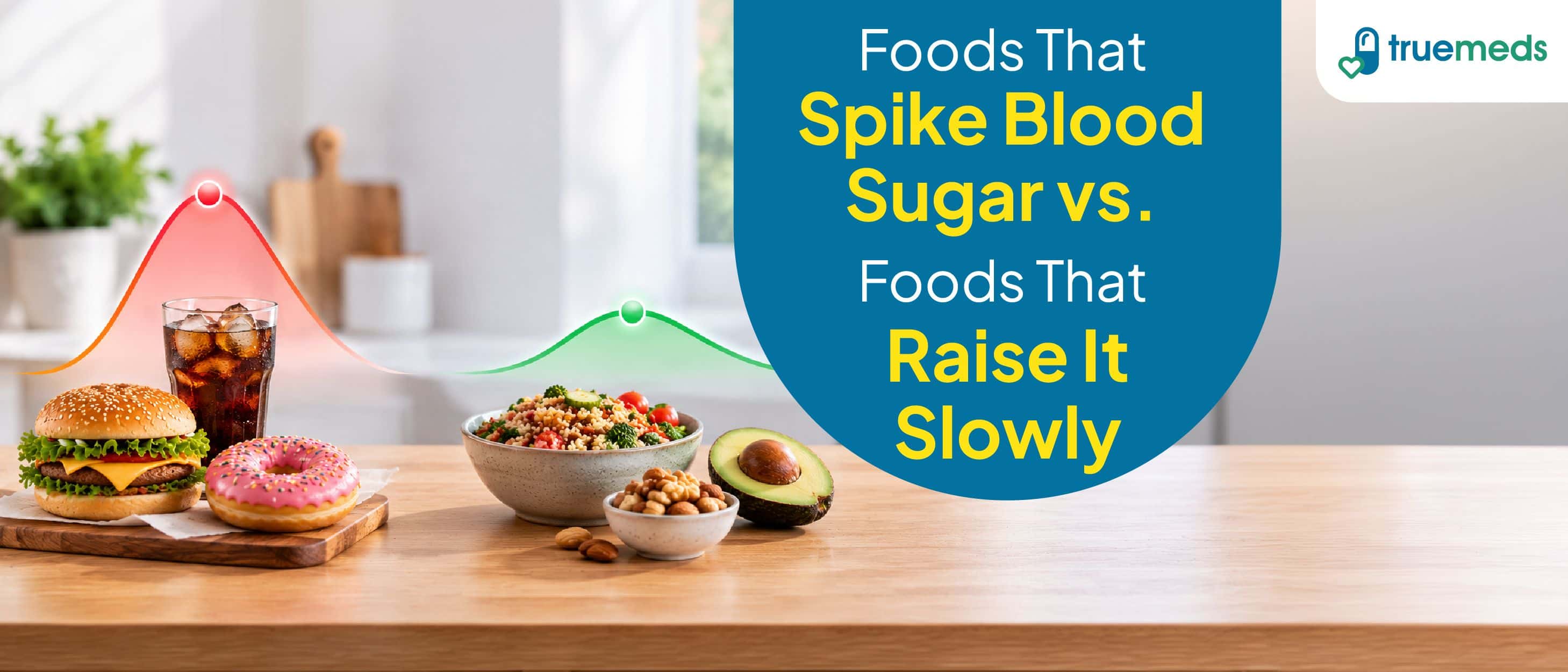
Foods that tend to spike blood sugar quickly
Foods with a high glycaemic index (greater than 70) are broken down quickly during digestion and raise blood glucose more rapidly. These carbohydrate foods break down quickly during digestion, releasing glucose rapidly into the bloodstream[5].
Common high-GI foods include[1],[4],[5]:
- White bread and white-flour pasta
- White rice
- Sugary breakfast cereals such as cornflakes
- Potatoes (especially mashed or boiled)
- Sugar-sweetened beverages
- Watermelon
Foods with a high glycaemic index, like white bread, are rapidly digested and can raise blood glucose more quickly[1]. For people with diabetes or those monitoring blood glucose, these foods may require careful portioning or pairing with other nutrients.
Foods that raise blood sugar more slowly
Foods with a low glycaemic index (55 or less) are digested more slowly, prompting a more gradual rise in blood sugar[1]. These foods that raise blood sugar slowly can help maintain steadier energy levels throughout the day.
- Whole oats
- Multigrain bread
- Legumes (lentils, chickpeas, kidney beans, soybeans)
- Vegetables (carrots, peas, sweet potatoes)
- Fruits (apples, oranges, pears)
- Whole milk, low-fat milk and yoghurt
Fibre plays a crucial role in slowing blood sugar responses. It helps with blood sugar control and weight management for people with diabetes or prediabetes[6]. Mixing foods with different GI values creates a new overall GI for the meal, so swapping high-GI foods for medium or low-GI options may help you manage blood sugar more effectively.
Why the same food can affect people differently
Blood sugar responses to identical foods can vary considerably between individuals. Research shows that a person's glycaemic response depends on individual traits, including both their body composition and their gut microbiome activity[7].
Studies examining individual variations found that while rice was generally the most glucose-elevating carbohydrate meal, there was considerable interindividual variability[2]. Some people experienced much higher spikes than others eating the exact same portion.
The study also found that Asian participants were more likely to be classified as “rice-spikers,” underscoring the importance of individual differences in glucose responses to rice [2]. For those who regularly consume rice, practical strategies include keeping portions moderate, pairing rice with protein- and fibre-rich foods such as dal, vegetables, or legumes, and, where suitable, choosing less-refined or lower-GI carbohydrate alternatives.
Metabolic factors also play a role. Individuals with the highest blood sugar response to potatoes tended to be more insulin resistant and had lower beta cell function[2]. This means someone with early metabolic changes may spike more from a food that barely affects a metabolically healthy person.
Other contributing factors include[2],[7]:
- Gut microbiome composition
- Body weight and fat distribution
- Physical activity levels
- Time of day the food is consumed
This variability explains why a list of foods that spike blood sugar serves as a general guide rather than a universal rule.
How to reduce a food's impact on your blood sugar
Several evidence-based strategies can help moderate blood sugar responses to meals.
- Pair carbohydrates with protein, fat, or fibre: Fibre, protein, and fats help slow down the digestion of carbohydrates and delay their absorption into the blood, helping to prevent spikes in glucose levels after eating[8]. Adding nuts to oatmeal or eating vegetables with rice can moderate the meal's overall glycaemic impact.
- Eat vegetables first: Research found significant improvements in postprandial blood glucose levels when participants ate vegetables first, regardless of eating speed, compared to eating carbohydrates first[9]. Starting meals with salad or cooked vegetables may help reduce subsequent blood sugar rises.
- Cook and cool starchy foods: Resistant starch type 3 forms in starchy foods that are cooked and cooled. This resistant starch has an attenuating effect on postprandial glucose response[10]. Eating cooled rice or overnight oats may produce lower blood sugar responses than the same foods eaten hot.
- Consider portion sizes: The amount of carbohydrate you eat has the biggest effect on your blood sugar[4]. Even low-GI foods can raise blood sugar substantially if eaten in large quantities. Mixing foods with different GI values creates a new GI for the meal, and swapping high-GI foods for medium-GI or low-GI options may help with diabetes management[5].
Consult your healthcare provider before making significant dietary changes, especially if you manage diabetes with medication.
Conclusion
Understanding which foods spike blood sugar quickly versus those that raise it slowly can help you make more informed dietary choices. Focus on low-GI foods like legumes, most vegetables, and whole grains for steadier energy. When you do eat high-GI foods, pairing them with protein, fat, or fibre may help reduce the impact. Remember that individual responses vary, so paying attention to how your body reacts to different foods is valuable for managing your health.
FAQs
Is the glycaemic index or the glycaemic load more useful?
Glycaemic load is generally more practical because it factors in portion size alongside GI value. The amount of carbohydrate you eat has the biggest effect on blood sugar, so GL gives a more complete picture of a food's actual impact.
Which foods raise blood sugar slowly over time?
Low-GI foods like whole oats, legumes, most vegetables, and whole fruits raise blood sugar gradually. These foods are digested more slowly due to their fibre content and structure, producing steadier energy levels.
Can pairing high-GI foods with protein or fat really reduce a blood sugar spike?
Yes. Fibre, protein, and fats slow carbohydrate digestion and delay glucose absorption into the bloodstream. Adding cheese to bread or nuts to fruit can moderate the overall blood sugar response.
Do continuous glucose monitors work for people without diabetes who want to track this?
Continuous glucose monitors were originally designed for diabetes management, but interest in using them for general wellness is growing. Data supporting their use in non-diabetic populations is accumulating, though they're not yet standard practice for healthy individuals.
Does eating slowly reduce blood sugar spikes?
Research suggests eating vegetables first matters more than eating speed. Starting meals with vegetables reduces postprandial glucose regardless of how quickly you eat the rest of your meal.
Why did I spike after eating a "healthy" low-GI food?
Individual responses vary significantly based on gut bacteria, metabolic health, and body composition. A food that barely affects one person can spike another considerably. Portion size also matters; large servings of any carbohydrate can raise blood sugar.
Does cooking or ripeness really change a food's glycaemic index?
Yes. Ripe fruits have higher GI values than unripe ones. Cooking and then cooling starchy foods like rice and potatoes creates resistant starch, which may lower their glycaemic impact.
Is the glycaemic index useful for people without diabetes?
GI can help anyone interested in maintaining steady energy levels and reducing blood sugar fluctuations. While most critical for diabetes management, understanding GI principles supports general metabolic health.
Medical Disclaimer
This article is for informational purposes only and does not constitute medical advice. The information provided should not be used for diagnosing or treating health conditions. Always consult a qualified healthcare provider for diagnosis, treatment, and personalised medical advice. Do not disregard professional medical advice or delay seeking it because of information found in this article. If you have a medical emergency, contact your doctor or emergency services immediately.
References
Harvard T.H. Chan School of Public Health. (2013). Carbohydrates and blood sugar. The Nutrition Source. https://nutritionsource.hsph.harvard.edu/carbohydrates/carbohydrates-and-blood-sugar/
Nature Medicine. (2025). Individual variations in glycemic responses to carbohydrates and underlying metabolic physiology. Nature Medicine. https://www.nature.com/articles/s41591-025-03719-2
Centers for Disease Control and Prevention. (2024). Manage blood sugar. CDC. https://www.cdc.gov/diabetes/treatment/
NHS Frimley Health Foundation Trust. (2026). Low glycaemic index foods (slow releasing carbohydrates). NHS Frimley Health. https://www.fhft.nhs.uk/patients-and-visitors/patient-information-library/low-glycaemic-index-foods-slow-releasing-carbohydrates