

- Medicines
- Personal Care
- Skin Cream
- Sunscreen
- Face Wash
- Skin and Body Soap
- Acne Care
- Body Lotions
- Moisturising Lotion
- Moisturising Cream
- Mosquito Repellent
- Moisturising Gel
- Body Wash
- Hair Oils
- Hair Shampoo
- Hair Conditioners
- Hair Supplements
- Hair Colour
- Hair Serum
- Hair Mask
- Hair Solutions
- Baby Diapers and Wipes
- Baby Lotion and Moisturising Cream
- Baby Bath Essentials
- Baby Skin Care
- Baby and Infant Food
- Baby Healthcare
- Women Multivitamins
- Ovulation Test Kit and Women Intimate Care
- Sanitary Pads
- Nutritional Drinks
- Condoms
- Lubricants
- Massage Gels
- Personal Body Massagers
- Men Performance Booster
- Sexual Health Supplements
- Massage Oils
- Ayurveda
- Tooth Paste
- Mouth Ulcer Gel
- Mouthwash
- Toothache and Gum Pain
- Tooth Brush
- Gargle Solution
- Orthopaedic Supports
- Adult Diapers
- Footwear
- Mobility and Support Accessories
- Urinary Support and Care
- Health Conditions
- Bone and Joint Care
- Digestive Care
- Eye Care
- Pain Relief
- Smoking Cessation
- Liver Care
- Stomach Care
- Cold and Cough
- Heart Care
- Kidney Care
- Piles, Fissures & Fistula
- Respiratory Care
- Mental Wellness
- Derma Care
- Pre and Probiotics
- Acidity
- Gas
- Constipation
- Loose Motion/Diarrhoea
- Digestive Fibres
- Digestive Enzymes
- Eye Lubricant Drops
- Lens Solution
- Safety Eye Wear
- Eye Cream
- Eye Vitamins and Supplements
- Eye Drops
- Eye Ointment and Gel
- Nicotine Patch
- Nicotine Gum
- Nicotine Lozenges
- Cough Syrups
- Chest Rubs and Balms
- Nasal Spray
- Lozenges
- Inhalant Capsules
- Cold and Cough Tablets
- Vitamins & Supplements
- Diabetes Care
- Healthcare Devices
- Homeopathic Medicine
- Health Guide
Mittelschmerz
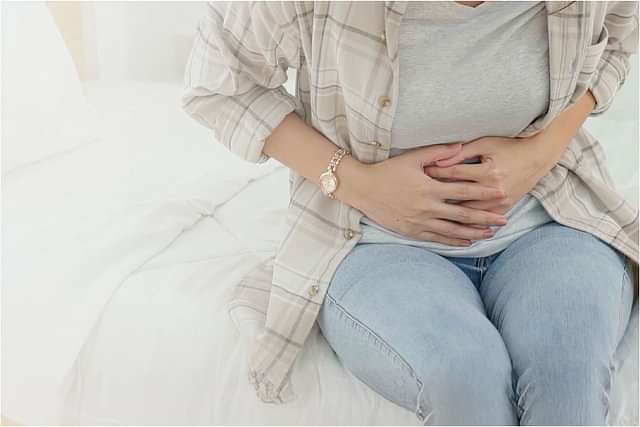
Mittelschmerz, also known as ovulation pain, is a type of pelvic and lower abdominal pain that some women experience during ovulation. It typically occurs midway between menstrual cycles and is usually felt on one side of the abdomen or pelvis. The pain can range from mild to severe and may last from minutes to hours, although it can persist for up to 48 hours in some cases.
 50
50Last updated on : 08 Apr, 2026
Read time : 10 mins
Overview of Disease
Mittelschmerz, a German term meaning “middle pain,” refers to the discomfort some women experience during ovulation. This pain, also known as ovulation pain or ovulation cramps, is a common occurrence for many women of reproductive age. Although not all women experience mittelschmerz, it is relatively common and can cause concern for those who are unfamiliar with its symptoms and causes.
What is Mittelschmerz?
Mittelschmerz, or ovulation pain, is mild to moderate discomfort in the lower abdomen associated with the release of an egg from the ovary during the menstrual cycle. This typically occurs midway between periods, around the 14th day of a standard 28-day cycle. It affects around 40% of women of reproductive age. (Brott & Le, 2023)
Those who regularly experience this sensation often notice a pattern in both the timing and the nature of the pain. It is usually harmless and does not pose a serious health concern. Simple remedies, such as over-the-counter painkillers, are often enough to relieve symptoms. However, in cases where the discomfort is more intense or persistent, a doctor may suggest hormonal contraceptives to prevent ovulation and ease the pain.
Key Factors about Mittelschmerz
| Category | Details |
| Also Referred as | Ovulation pain, mid-cycle pain |
| Commonly Occurs In | Women of reproductive age, typically between 15 and 25 years old |
| Affected Organ | Ovaries |
| Type | Lower abdominal pain, typically one-sided |
| Common Signs | Lower abdominal pain (sharp or dull), sometimes with slight vaginal bleeding or discharge, and nausea in severe cases |
| Consulting Specialist | Gynaecologist |
| Treatment Procedures | Over-the-counter pain relievers (NSAIDs, paracetamol), oral contraceptives to prevent ovulation |
| Managed By | Over-the-counter pain relievers such as ibuprofen and naproxen |
| Mimicking Condition | Appendicitis, endometriosis, ovarian cyst, ectopic pregnancy, sexually transmitted infections |
Symptoms of Mittelschmerz
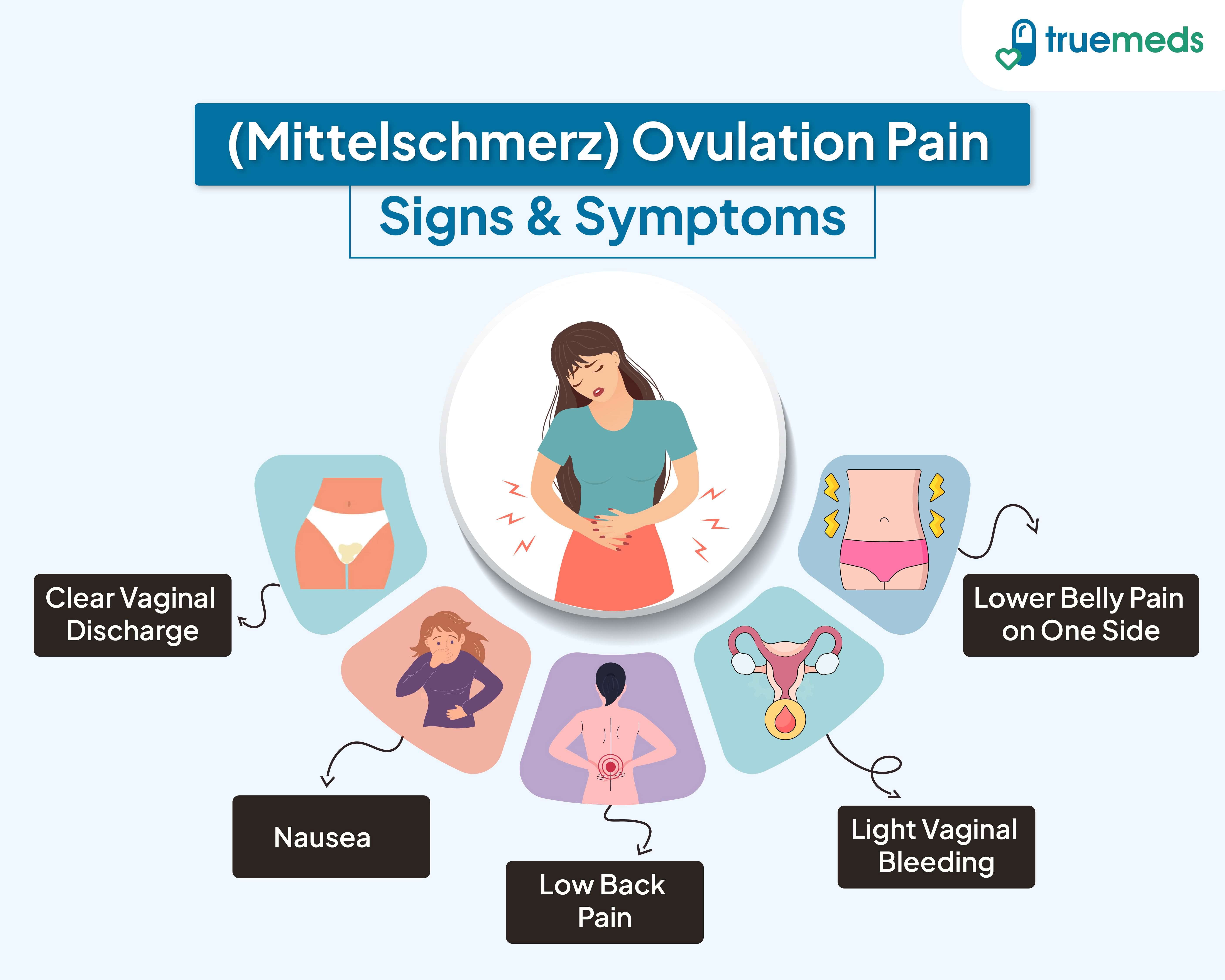
The pain can feel like a slight pinch or a sudden, sharp ache. It usually occurs on one side of the lower abdomen, depending on which ovary releases the egg. For some individuals, the pain lasts only a few minutes, while others may feel it for the whole day. You might also notice:
- Mid-cycle abdominal pain: Mittelschmerz is typically marked by a sharp or dull ache on one side of the lower abdomen. The pain typically begins about 14 days before the next menstrual period. It can last anywhere from a few minutes to a couple of days, depending on the individual.
- Light vaginal bleeding: Some women may experience light vaginal bleeding during ovulation. This spotting is often due to hormonal changes and is usually not a cause for concern.
- Stretchy vaginal discharge: During ovulation, vaginal discharge may become stretchy and clear, resembling egg whites. This change indicates increased fertility and the body’s preparation for potential conception.
- Nausea: Some women may feel a slight sense of nausea if the pain is particularly severe. This nausea can contribute to the overall discomfort experienced during this time.
- Pain in the lower back: In addition to abdominal pain, some individuals may experience discomfort in the lower back. This pain can accompany the ovulation process and may vary in intensity.
Causes of Mittelschmerz
Mittelschmerz is a common phenomenon experienced by many women during their menstrual cycle. Some of the causes include:
- Ovulation process: Mittelschmerz occurs as a result of the ovulation process, which involves the release of an egg from the ovary. This can irritate the surrounding tissues, leading to discomfort in the lower abdomen.
- Follicular rupture: When a mature follicle ruptures to release an egg, it can result in localised pain. The pressure and stretching of the ovarian wall during this rupture can trigger pain sensations.
- Hormonal fluctuations: Hormonal changes during the menstrual cycle, particularly increases in oestrogen, can contribute to ovulation pain. These hormonal shifts can affect the tissues in the ovaries and surrounding areas, leading to discomfort.
- Peritoneal irritation: The released egg and any accompanying fluid can irritate the peritoneum, the lining of the abdominal cavity. This irritation may cause pain and discomfort on one side of the abdomen, corresponding to the ovary that is ovulating.
- Size of the follicle: The size of the follicle at the time of ovulation can also influence the intensity of pain. Larger follicles may cause more significant discomfort when they rupture compared to smaller ones.
Prevention of Mittelschmerz
For individuals who experience significant discomfort during ovulation, there are several approaches to preventing or managing mittelschmerz symptoms. These include:
- Staying hydrated: Maintaining proper hydration can help reduce bloating and discomfort associated with ovulation. Drinking plenty of water may alleviate some of the pressure in the abdominal area.
- Heat therapy: Applying a heating pad or warm compress to the lower abdomen can soothe cramping and reduce pain. Heat therapy promotes muscle relaxation and improves blood flow, which can help alleviate discomfort.
- Regular exercise: Engaging in regular physical activity can improve overall circulation and reduce tension in the body. Exercise also helps mitigate the severity of ovulation pain by promoting hormonal balance.
- Dietary adjustments: Incorporating anti-inflammatory foods, such as fruits, vegetables, whole grains, and omega-3 fatty acids, may help reduce inflammation and associated pain. Limiting caffeine and salt intake can also decrease bloating and discomfort.
- Pain relief medications: Over-the-counter pain relief medications, such as ibuprofen or naproxen, can be effective in managing ovulation pain when taken as needed. Consulting with a doctor for appropriate usage is advisable.
- Stress management: Practising stress-reduction techniques, such as yoga, meditation, or deep breathing exercises, can help lower overall tension in the body.
Diagnosis & Tests
How to Diagnose Ovulation Pain?
Ovulation pain is usually diagnosed based on the timing and nature of the pain. Since ovulation happens around the middle of your menstrual cycle, your doctor may suspect ovulation pain if you feel discomfort at this time. They may ask you to track your menstrual cycles and note when and where you experience pain.
How to Track Menstrual Cycle?
To track your menstrual cycle, start counting from the first day of one period to the first day of the next. For example, if your period begins on March 1 and then again on March 30, your cycle length is 29 days. Ovulation likely occurs around day 15. If your pain happens around this time, it may be related to ovulation.
What Tests Will I Need?
Your doctor may perform an abdominal and pelvic exam to check for any tenderness or abnormalities. These tests help rule out other possible causes of pain, such as endometriosis or ovarian cysts.
In some cases, an ultrasound (abdominal or vaginal) may be done to get a clearer picture of your ovaries and check for any irregularities. Your doctor may also take a cervical swab to test for infections that could be causing discomfort.
If your pain is severe or if your doctor notices anything unusual during the exam, further tests may be needed to determine the exact cause. Your healthcare provider will discuss the next steps based on the findings.
Treatment & Management
The primary objective of treating Mittelschmerz is to relieve mid-cycle ovulatory pain, reduce inflammation, prevent recurrence in severe or chronic cases, and enhance overall quality of life. Treatment varies depending on pain intensity, frequency, and whether contraception is desired.
1. Pain Relief (Analgesics)
Analgesics are the first-line treatment focused on alleviating the sharp or cramping mid-cycle pain (MedlinePlus Medical Encyclopedia).
- Ibuprofen: Reduces inflammation and pain by blocking prostaglandin production.
- Aspirin: Eases ovulatory cramps and pelvic discomfort by reducing inflammation.
- Naproxen: Provides longer-lasting relief from ovulation-related pain by lowering inflammation.
Analgesics help to:
- Reduce pain severity during ovulation
- Minimise pelvic inflammation and swelling
- Improve daily function and mobility
- Avoid the need for hormonal therapy in mild cases
- Provide fast-acting symptom control during acute episodes
2. Ovulation Suppression (Hormonal Contraceptives)
Hormonal Contraceptives are used for individuals with recurrent or severe Mittelschmerz unresponsive to painkillers.
- Desogestrel: Suppresses ovulation consistently as a progestin-only contraceptive.
- Etonogestrel: Prevents ovulation and regulates menstrual cycles through hormonal implantation.
Hormonal contraceptives help to:
- Prevent the release of eggs, thereby eliminating ovulatory pain
- Reduce hormonal fluctuations responsible for cyclical discomfort
- Offer long-term relief and cycle regulation
- Improve menstrual symptoms like dysmenorrhea or heavy bleeding
- Provide a dual benefit of contraception and pain management
3. Nutritional Support & Lifestyle Modifications
Proper nutrition and lifestyle changes help reduce inflammatory triggers and support hormonal balance.
- Dietary changes: Include anti-inflammatory foods (omega-3-rich fish, flaxseeds, leafy greens) to help reduce pelvic inflammation.
- Magnesium and B6 supplements: Supplements like magnesium and B6 may help support hormonal balance and alleviate menstrual-related discomfort.
- Hydration: Adequate fluid intake may help reduce abdominal cramping.
4. Self-Care Tips
- Heat application: Using warm compresses or heating pads can help reduce pelvic muscle tension.
- Physical activity: Regular low-impact exercise helps regulate hormone levels.
When to See a Doctor?
If you experience severe or debilitating ovulation pain that interferes with your daily activities, it is best to seek medical advice. Additionally, if the pain is accompanied by other symptoms such as fever, nausea, vomiting, or heavy bleeding, it could indicate an underlying condition like endometriosis or ovarian cysts. In such cases, timely medical intervention can help diagnose and effectively treat the issue.
Key Takeaways
- Mittelschmerz is a condition characterised by one-sided lower abdominal pain that occurs during ovulation.
- Common Mittelschmerz symptoms include cramping, sharp or dull pain, and discomfort that may shift from one side to the other from month to month.
- Mittelschmerz pain typically lasts for a few hours to a couple of days and is a regular part of the menstrual cycle for some women.
- Over-the-counter pain relievers, heat therapy, and rest can help alleviate mittelschmerz discomfort.
- Consult a doctor if the ovulation pain is severe, prolonged, or accompanied by other concerning symptoms.
- Mittelschmerz is generally harmless, but it is essential to rule out underlying gynaecological conditions.
- Tracking your menstrual cycle can help you anticipate and better manage ovulation pain.
- While there is no specific treatment, lifestyle changes and pain management techniques can help cope with the symptoms.
FAQs
What are the main causes of mittelschmerz?
Does mittelschmerz mean I am fertile?
How long does mittelschmerz last?
What causes painful ovulation?
What are the 7 signs of ovulation?
How do I know if I'm ovulating?
Does ovulation from the right ovary indicate a boy or girl?
Does ovulation pain mean egg is released?
References
- Brott, N. R., & Le, J. K. (2024). Mittelschmerz. In StatPearls. StatPearls Publishing. http://www.ncbi.nlm.nih.gov/books/NBK549822/
- Mittelschmerz: MedlinePlus Medical Encyclopedia. (n.d.). https://medlineplus.gov/ency/article/001503.htm
- National Health Service. (2023). Ovulation pain. https://www.nhs.uk/conditions/ovulation-pain/
- Better Health Channel (n.d.). Ovulation pain. http://www.betterhealth.vic.gov.au/health/conditionsandtreatments/ovulation-pain
- Harvard Health. (2024). Mid-menstrual cycle pain (Mittelschmerz). https://www.health.harvard.edu/a_to_z/mid-menstrual-cycle-pain-mittelschmerz-a-to-z
Check Related Salts
Browse Other Conditions
Latest health articles






Top Health Essentials














Disclaimer
Top-Selling Medicines:
...View more
Top-OTC medicines:
...View more
Company
About UsHealth ArticleHealth StoriesHealth LibraryDiseases & Health ConditionsAyurvedaUnderstanding Generic MedicinesAll MedicinesAll BrandsNeed HelpFAQSecuritySavings CalculatorSubscribe
Registered Office Address
Grievance Officer
Download Truemeds


Contact Us
Our customer representative team is available 7 days a week from 9 am - 9 pm.
v4.25.0

2026 - Truemeds | All rights reserved. Our content is for informational purposes only. See additional information.

Our Payment Partners




