

- Medicines
- Personal Care
- Skin Cream
- Sunscreen
- Face Wash
- Skin and Body Soap
- Acne Care
- Body Lotions
- Moisturising Lotion
- Moisturising Cream
- Mosquito Repellent
- Moisturising Gel
- Body Wash
- Hair Oils
- Hair Shampoo
- Hair Conditioners
- Hair Supplements
- Hair Colour
- Hair Serum
- Hair Mask
- Hair Solutions
- Baby Diapers and Wipes
- Baby Lotion and Moisturising Cream
- Baby Bath Essentials
- Baby Skin Care
- Baby and Infant Food
- Baby Healthcare
- Women Multivitamins
- Ovulation Test Kit and Women Intimate Care
- Sanitary Pads
- Nutritional Drinks
- Condoms
- Lubricants
- Massage Gels
- Personal Body Massagers
- Men Performance Booster
- Sexual Health Supplements
- Massage Oils
- Ayurveda
- Tooth Paste
- Mouth Ulcer Gel
- Mouthwash
- Toothache and Gum Pain
- Tooth Brush
- Gargle Solution
- Orthopaedic Supports
- Adult Diapers
- Footwear
- Mobility and Support Accessories
- Urinary Support and Care
- Health Conditions
- Bone and Joint Care
- Digestive Care
- Eye Care
- Pain Relief
- Smoking Cessation
- Liver Care
- Stomach Care
- Cold and Cough
- Heart Care
- Kidney Care
- Piles, Fissures & Fistula
- Respiratory Care
- Mental Wellness
- Derma Care
- Pre and Probiotics
- Acidity
- Gas
- Constipation
- Loose Motion/Diarrhoea
- Digestive Fibres
- Digestive Enzymes
- Eye Lubricant Drops
- Lens Solution
- Safety Eye Wear
- Eye Cream
- Eye Vitamins and Supplements
- Eye Drops
- Eye Ointment and Gel
- Nicotine Patch
- Nicotine Gum
- Nicotine Lozenges
- Cough Syrups
- Chest Rubs and Balms
- Nasal Spray
- Lozenges
- Inhalant Capsules
- Cold and Cough Tablets
- Vitamins & Supplements
- Diabetes Care
- Healthcare Devices
- Homeopathic Medicine
- Health Guide
Polycystic Kidney Disease
Polycystic kidney disease (PKD) is an inherited disorder characterised by the growth of numerous fluid-filled cysts in the kidneys, leading to kidney enlargement and potential kidney failure (Mahboob, 2024). PKD can also affect other organs particularly the liver (hepatic cysts), and may cause complications such as hypertension, pain, and an increased risk of intracranial aneurysms. Management involves addressing symptoms, preventing complications, and, in advanced cases, dialysis or kidney transplantation.
 50
50Last updated on : 30 Apr, 2026
Read time : 12 mins
Overview of Disease
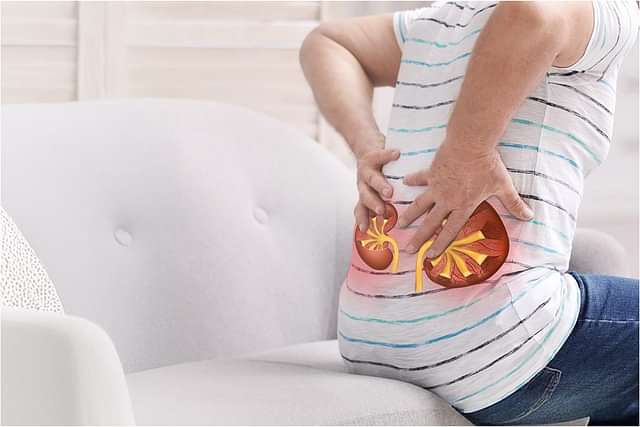
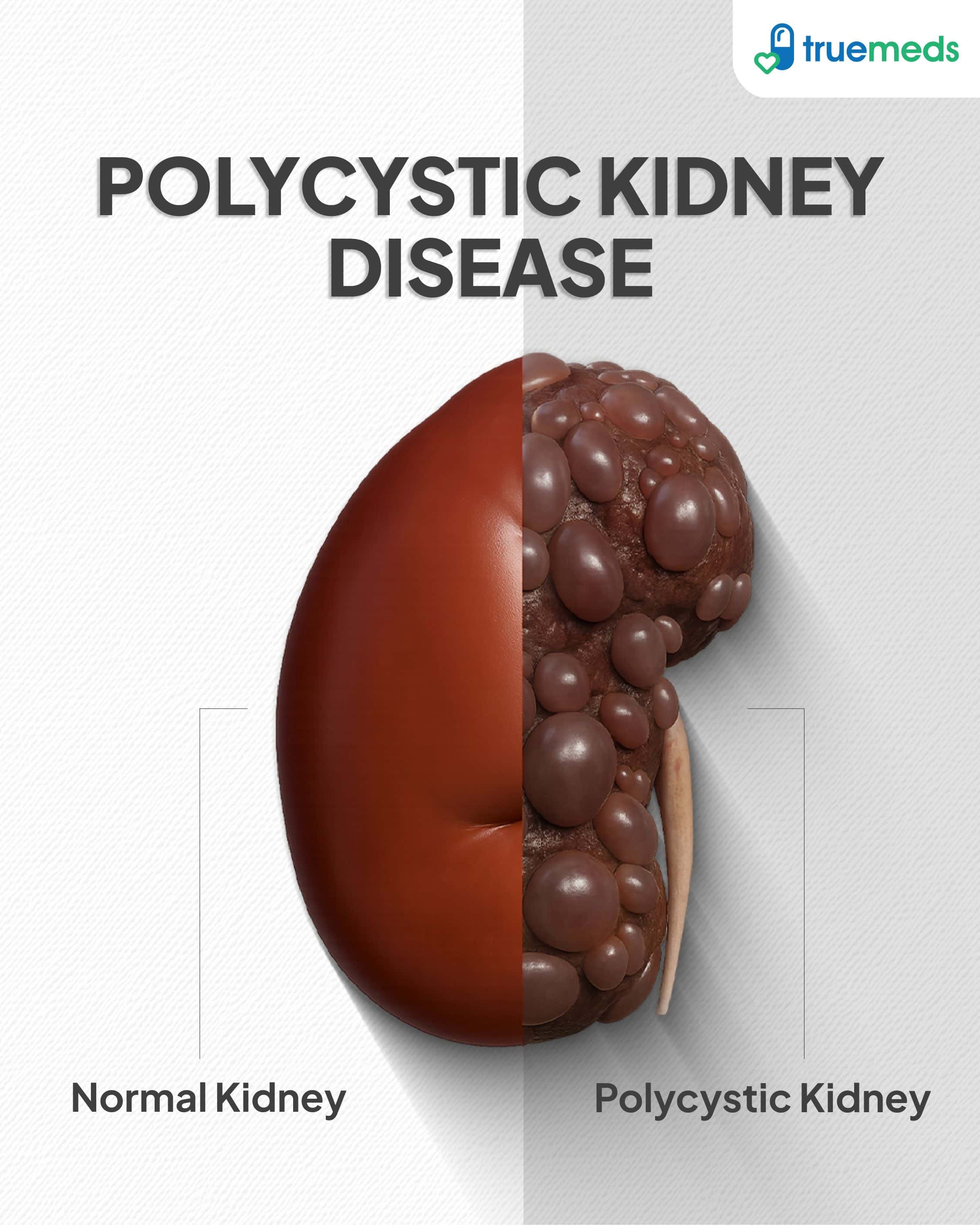
Polycystic kidney disease (PKD) is a genetic disorder that affects the kidneys, causing the growth of numerous fluid-filled sacs or cysts. As these cysts grow and multiply, they can cause scarring and progressive loss of kidney function, potentially leading to kidney failure. PKD is a serious condition that can result in various complications, including high blood pressure, kidney stones, and urinary tract infections. Proper management and prevention strategies are crucial in slowing the progression of PKD and reducing the risk of complications.
What is Polycystic Kidney Disease?
Polycystic kidney disease (PKD) is an inherited disorder that affects the kidneys, causing the growth of numerous cysts filled with fluid. These cysts can vary in size and number, and as they grow, they can cause the kidneys to become enlarged and lose their normal function. PKD complications can include high blood pressure, kidney stones, urinary tract infections, and an increased risk of aneurysms in the brain. While there is no cure for PKD, effective management strategies can help slow the progression of the disease and reduce the risk of complications. While there is no way to prevent polycystic kidney disease, early detection, particularly through family history assessment and, in selected cases, genetic testing, can help identify individuals at risk and allow timely monitoring and management.
Key Factors about Polycystic Kidney Disease
| Category | Details |
| Also Referred to as | Autosomal Dominant Polycystic Kidney Disease (ADPKD), Autosomal Recessive Polycystic Kidney Disease (ARPKD) |
| Commonly Occurs In | Adults, though ARPKD can occur in infants |
| Affected Organ | Kidneys (primary), liver (common extrarenal involvement); less commonly pancreas, spleen, heart (valvular abnormalities), and brain (intracranial aneurysms) |
| Type | Autosomal Dominant (ADPKD), Autosomal Recessive (ARPKD) |
| Common Signs | High blood pressure, back or side pain, blood in the urine, frequent urinary tract infections, and kidney stones |
| Consulting Specialist | Nephrologist |
| Treatment Procedures | Management of high blood pressure, pain control, antibiotics for infections, dialysis, or kidney transplant in advanced cases |
| Managed By | Blood pressure medications such as ACE inhibitors and ARBs; Pain medications such as paracetamol, opioid analgesics (tramadol), and Vasopressin V2 receptor antagonists (tolvaptan) |
| Mimicking Condition | Simple kidney cysts, other chronic kidney diseases |
Types of Polycystic Kidney Disease
Polycystic kidney disease (PKD) is primarily categorised into two types based on the genetic cause and the pattern of inheritance. These include:
- Autosomal Dominant Polycystic Kidney Disease (ADPKD): ADPKD is the most common form of PKD. Symptoms typically begin in adulthood, although cysts in the kidney are often present from birth or childhood. It follows an autosomal dominant pattern, meaning a mutation in one of the two copies of the responsible gene is enough to cause the condition. Each child of an affected parent has a 50% chance of inheriting the condition.
- Autosomal Recessive Polycystic Kidney Disease (ARPKD): ARPKD is much rarer. Symptoms are usually apparent at birth or in early infancy, and it can be diagnosed in the womb or shortly after birth. It follows an autosomal recessive pattern, meaning that a person must inherit two defective copies of the gene (one from each parent) to develop the condition.
Understanding the type of PKD is crucial for determining the appropriate course of treatment, management, and prevention strategies (Mahboob, 2024).
Early Signs of Disease
Early detection of polycystic kidney disease is crucial for timely management and slowing the progression of the condition. Some early signs of PKD include:
- Family history of PKD, as it is an inherited disorder
- High blood pressure, especially at a young age
- Abdominal fullness or enlargement due to growing cysts
- Flank pain or discomfort
- Recurrent urinary tract infections
- Blood in the urine
- Kidney stones
- Abnormal liver function tests, as liver cysts can also develop in some cases
Symptoms of Polycystic Kidney Disease
The symptoms of polycystic kidney disease can vary significantly among individuals. Some common symptoms include:
- High blood pressure: This is a common and early sign of PKD that can contribute to kidney damage over time if not properly managed.
- Abdominal pain: Enlarged kidneys due to cyst growth can press on other organs, causing pain in the belly, side, or back.
- Blood in the urine (haematuria): This may occur due to cyst rupture or the presence of kidney stones, which are more common in individuals with PKD.
- Recurrent urinary tract infections (UTIs): Cysts can become infected, leading to frequent UTIs.
- Kidney stones: People with PKD have an increased risk of developing kidney stones.
- Fatigue: As kidney function declines, fatigue and weakness may become more prominent.
- Headaches: Some individuals with PKD may experience severe headaches, potentially related to high blood pressure or aneurysms.
Stages of Polycystic Kidney Disease
Polycystic kidney disease does not have disease-specific stages. Instead, progression is assessed using the stages of chronic kidney disease (CKD), based on estimated glomerular filtration rate (eGFR). As PKD advances, increasing cyst burden leads to declining kidney function, which may ultimately progress to end-stage kidney disease requiring dialysis or kidney transplantation (KDIGO, 2025).
Causes of Polycystic Kidney Disease
Polycystic kidney disease is a genetic disorder that primarily affects the kidneys. The most common causes of PKD include:
- Genetic mutations: Autosomal dominant PKD is caused by mutations in the PKD1 or PKD2 genes, while autosomal recessive PKD is caused by mutations in the PKHD1 gene.
- Autosomal dominant inheritance: Autosomal dominant polycystic kidney disease (ADPKD) is the most common form of PKD. It follows an autosomal dominant inheritance pattern, meaning that if one parent carries the mutated gene, each child has a 50% chance of inheriting the condition.
- Spontaneous mutations: In some cases, PKD can occur due to spontaneous (de novo) mutations, where the individual is the first in their family to have the mutation.
Complications
Polycystic kidney disease can lead to several serious complications, including:
- High blood pressure (hypertension): This common complication can cause additional damage to the kidneys, increasing the risk of heart disease and stroke.
- Kidney failure: Over time, the growth of cysts can cause significant damage to the kidneys, leading to a decline in kidney function and, eventually, kidney failure.
- Pain: Pain in the back or sides is common due to cysts, bleeding, urinary tract infections, kidney stones, or other causes.
- Cysts in other organs: Cysts can also develop in other organs such as the liver, pancreas, spleen, ovaries, and large bowel.
- Heart valve abnormalities: Some individuals may develop heart valve issues, such as mitral valve prolapse, which can lead to a heart murmur.
- Brain aneurysms: Individuals with PKD have an increased risk of intracranial aneurysms. Screening is generally recommended for those with a family history of aneurysm or subarachnoid haemorrhage, previous aneurysm rupture, or high-risk occupations.
Prevention of Polycystic Kidney Disease
As polycystic kidney disease is a genetic condition, there is no guaranteed way to prevent its occurrence. However, if you have a family history of PKD, you may consider genetic counselling to understand your risk of developing the condition or passing it on to your children. Prenatal testing is also available for families with a known genetic mutation. While these measures cannot prevent PKD, they can help you make informed decisions about family planning and prepare for potential health challenges. Maintaining a healthy lifestyle, managing blood pressure, and regular check-ups with your doctor can help slow the progression of the disease and prevent complications.
Diagnosis & Tests
Diagnosing polycystic kidney disease involves a combination of physical examinations, imaging tests, and genetic testing. The following tests may be used to diagnose PKD:
- Medical history and physical examination: Doctors will assess symptoms and look for signs of PKD, such as enlarged kidneys or liver, high blood pressure, or a family history of the condition.
- Ultrasound: An abdominal ultrasound is the most common method for diagnosing PKD. It uses sound waves to create images of the kidneys, allowing the doctor to detect the presence of cysts.
- Computed tomography (CT) or magnetic resonance imaging (MRI) scans: These imaging tests provide more detailed pictures of the kidneys and can help assess the size and number of cysts, as well as detect complications such as kidney stones or tumours (KDIGO, 2025).
- Genetic testing: Genetic testing can confirm the diagnosis of PKD and determine the specific genetic mutation causing the condition. This information can be valuable for family planning and predicting the course of the disease.
- Blood tests: Blood tests can evaluate kidney function by measuring levels of creatinine and blood urea nitrogen (BUN). They can also help monitor complications such as high blood pressure and anaemia.
- Urine tests: Urinalysis can detect blood or protein in the urine, which may indicate kidney damage or infection.
Treatment & Management
Polycystic kidney disease (PKD) is a genetic disorder that currently has no cure. However, various treatments can help manage symptoms and slow disease progression. These include:
1. Controlling Blood Pressure
High blood pressure is a common complication of PKD. Managing it with angiotensin-converting enzyme (ACE) inhibitors such as enalapril and lisinopril, or angiotensin-2 receptor blockers (ARBs) like valsartan, losartan, olmesartan, and candesartan, along with lifestyle changes like reducing salt intake, is crucial to slowing kidney disease progression (KDIGO, 2025).
2. Managing Pain
Pain from kidney stones or infections can be treated with paracetamol first, followed by stronger painkillers like tramadol if needed. NSAIDs are generally avoided due to their potential to impair kidney function (Borghol, 2025).
3. Treating Infections Promptly
Urinary tract and kidney infections should be treated promptly with antibiotics selected based on suspected organisms, culture results, and disease severity. Fluoroquinolones may be used in selected cases due to cyst penetration, but broad-spectrum agents should be reserved for severe or resistant infections.
4. Maintaining Fluid Intake
Adequate hydration is generally recommended for overall kidney health. Increased water intake may reduce vasopressin activity, but evidence for consistently slowing cyst growth remains limited, and recommendations should be individualised.
5. Cyst Growth Reduction
Tolvaptan, a vasopressin antagonist, can help slow the progression of kidney cyst growth and preserve function in adults at risk of rapidly progressing autosomal dominant polycystic kidney disease (ADPKD). However, liver function should be monitored while using this medication.
6. Managing Phosphorus Levels
In patients with advanced PKD, phosphate binders like calcium acetate, lanthanum carbonate, and sevelamer may be used to control phosphorus levels and prevent complications related to kidney function decline.
7. Adopting a Healthy Lifestyle
Quitting smoking, exercising regularly, controlling weight, and reducing salt intake are essential for managing PKD effectively.
8. Avoiding Contact Sports
To prevent kidney injury that can lead to severe pain and cyst bleeding, it is recommended to avoid contact sports and high-impact activities.
Living with Disease
- Attend regular check-ups with your doctor to monitor kidney function and manage symptoms.
- Maintain a healthy diet, exercise regularly, and avoid smoking.
- Steer clear of contact sports to prevent kidney injury.
- Control high blood pressure through medication and lifestyle changes.
- Drink plenty of plain water throughout the day.
- Limit caffeine intake to help slow cyst growth.
When to See a Doctor?
If you experience symptoms such as pain in the back, sides, or lower abdomen, blood in the urine, frequent urination, urinary tract infections, or high blood pressure, it is essential to consult a doctor. These symptoms may indicate the presence of polycystic kidney disease or its complications. Early diagnosis and timely management of PKD are crucial for preserving kidney function and preventing further complications. If you have a family history of PKD, it is advisable to undergo screening tests to detect the condition early, even if you do not have any symptoms. Regular check-ups with a nephrologist are essential for monitoring the progression of the disease and adjusting treatment plans accordingly.
Key Takeaways
- Polycystic kidney disease is a genetic disorder that causes fluid-filled cysts to grow in the kidneys, leading to enlarged kidneys and impaired kidney function.
- There are two main types of PKD: autosomal dominant polycystic kidney disease (ADPKD) and autosomal recessive polycystic kidney disease (ARPKD).
- Symptoms of PKD may include pain in the back, sides, or abdomen, blood in the urine, frequent urinary tract infections, high blood pressure, and an enlarged abdomen.
- While there is no cure for PKD, various treatments can help manage symptoms and slow down the progression of the disease, including blood pressure management, infection control, pain relief, and lifestyle modifications.
- Living well with PKD involves maintaining a healthy lifestyle, following a balanced diet, avoiding kidney injuries, attending regular check-ups, managing stress, and seeking support from others with the condition.
- Early diagnosis and proper management are crucial for preventing or delaying serious PKD complications.
FAQs
What is the life expectancy of a person with polycystic kidney disease?
What causes polycystic kidney disease?
Can polycystic kidneys be removed?
What is the end stage of PKD?
What is the best treatment for polycystic kidney disease?
Can you live a normal life with polycystic kidney disease?
What foods are good for polycystic kidney disease?
What foods shrink kidney cysts?
References
- KDIGO. (2025). KDIGO 2025 Clinical Practice Guideline for the Evaluation, Management, and Treatment of Autosomal Dominant Polycystic Kidney Disease (ADPKD).In Kidney International (Vol. 107, Issue 2S, pp. S1–S239)
https://kdigo.org/wp-content/uploads/2025/01/KDIGO-2025-ADPKD-Guideline.pdf - Borghol, A. H. (2025). ADPKD pain management and strategies. Kidney360. https://journals.lww.com/kidney360/fulltext/2025/09000/pain_management_in_autosomal_dominant_polycystic.25.aspx
- Mahboob, M., Rout, P., & Bokhari, S. R. A. (2024, March 20). Autosomal dominant polycystic kidney disease. StatPearls - NCBI Bookshelf. https://www.ncbi.nlm.nih.gov/books/NBK532934/
- Suarez, M. L. G., Titan, S., & Dahl, N. K. (2024). Autosomal dominant polycystic kidney disease. Advances in Kidney Disease and Health, 31(6), 496–503. https://www.sciencedirect.com/science/article/abs/pii/S2949813924001253
- Scarlat, A., Tomasoni, S., & Trionfini, P. (2025). Autosomal dominant polycystic kidney disease: From pathogenesis to organoid disease models. Biomedicines, 13(7), 1766. https://www.mdpi.com/2227-9059/13/7/1766
Check Related Salts
Browse Other Conditions
Latest health articles

Top Health Essentials





















Disclaimer
Top-Selling Medicines:
...View more
Top-OTC medicines:
...View more
Company
About UsHealth ArticleHealth StoriesHealth LibraryDiseases & Health ConditionsAyurvedaUnderstanding Generic MedicinesAll MedicinesAll BrandsNeed HelpFAQSecuritySavings CalculatorAdvertise with UsSubscribe
Registered Office Address
Grievance Officer
Download Truemeds


Contact Us
Our customer representative team is available 7 days a week from 9 am - 9 pm.
v4.28.9

2026 - Truemeds | All rights reserved. Our content is for informational purposes only. See additional information.

Our Payment Partners