

- Medicines
- Personal Care
- Skin Cream
- Sunscreen
- Face Wash
- Skin and Body Soap
- Acne Care
- Body Lotions
- Moisturising Lotion
- Moisturising Cream
- Mosquito Repellent
- Moisturising Gel
- Body Wash
- Hair Oils
- Hair Shampoo
- Hair Conditioners
- Hair Supplements
- Hair Colour
- Hair Serum
- Hair Mask
- Hair Solutions
- Baby Diapers and Wipes
- Baby Lotion and Moisturising Cream
- Baby Bath Essentials
- Baby Skin Care
- Baby and Infant Food
- Baby Healthcare
- Women Multivitamins
- Ovulation Test Kit and Women Intimate Care
- Sanitary Pads
- Nutritional Drinks
- Condoms
- Lubricants
- Massage Gels
- Personal Body Massagers
- Men Performance Booster
- Sexual Health Supplements
- Massage Oils
- Ayurveda
- Tooth Paste
- Mouth Ulcer Gel
- Mouthwash
- Toothache and Gum Pain
- Tooth Brush
- Gargle Solution
- Orthopaedic Supports
- Adult Diapers
- Footwear
- Mobility and Support Accessories
- Urinary Support and Care
- Health Conditions
- Bone and Joint Care
- Digestive Care
- Eye Care
- Pain Relief
- Smoking Cessation
- Liver Care
- Stomach Care
- Cold and Cough
- Heart Care
- Kidney Care
- Piles, Fissures & Fistula
- Respiratory Care
- Mental Wellness
- Derma Care
- Pre and Probiotics
- Acidity
- Gas
- Constipation
- Loose Motion/Diarrhoea
- Digestive Fibres
- Digestive Enzymes
- Eye Lubricant Drops
- Lens Solution
- Safety Eye Wear
- Eye Cream
- Eye Vitamins and Supplements
- Eye Drops
- Eye Ointment and Gel
- Nicotine Patch
- Nicotine Gum
- Nicotine Lozenges
- Cough Syrups
- Chest Rubs and Balms
- Nasal Spray
- Lozenges
- Inhalant Capsules
- Cold and Cough Tablets
- Vitamins & Supplements
- Diabetes Care
- Healthcare Devices
- Homeopathic Medicine
- Health Guide
Syphilis
Syphilis is a sexually transmitted bacterial infection that can cause serious health problems if left untreated. It progresses through four stages, each with distinct symptoms, and can be transmitted through sexual contact or from an infected mother to her unborn child. Early diagnosis and treatment are crucial to prevent long-term complications and transmission to others.
 50
50Last updated on : 21 Apr, 2026
Read time : 13 mins
Overview of Disease
Syphilis is a sexually transmitted infection caused by the bacterium Treponema pallidum. It presents in several stages, each with distinct symptoms, ranging from painless sores and rashes to severe complications affecting the heart and nervous system. Timely medical intervention is essential to manage syphilis effectively and prevent long-term health problems.
What is Syphilis?
Syphilis is an infection transmitted through sexual contact and caused by the bacterium Treponema pallidum. It mainly spreads through direct contact with syphilis sores (chancres) during sexual activities, such as vaginal, anal, or oral sex. Additionally, it can be transmitted from an infected mother to her baby during pregnancy or childbirth, leading to congenital syphilis. The infection advances through various stages, each with unique symptoms. Without treatment, syphilis can result in severe health issues affecting the heart, brain, and other essential organs.
Key Factors about Syphilis
| Category | Details |
| Also Referred to as | The French disease, The Neapolitan disease, The Polish disease |
| Commonly Occurs In | Sexually active individuals; infection typically presents at genital, rectal, or oral sites |
| Affected Organ | Skin, mucous membranes, heart, brain, eyes, blood vessels, liver, bones, joints (especially in later stages) |
| Type | Sexually transmitted infection (STI) |
| Common Signs | Painless sore (chancre) on genitals, rectum, or mouth; rash; fever; swollen lymph nodes; neurological or ocular complications in later stages (e.g., vision changes, paralysis) |
| Consulting Specialist | Infectious diseases specialist, primary care physician |
| Treatment Procedures | Antibiotic medication (first-line: benzathine penicillin G) |
| Managed By | Antibiotics (benzathine penicillin G; alternatives include doxycycline in non-pregnant penicillin-allergic patients) |
| Mimicking Condition | Known as the “great imitator” due to its varied systemic manifestations that can mimic many other diseases |
Symptoms of Syphilis
Syphilis presents with a range of symptoms that vary depending on the stage and severity of the infection. These include:
- Chancre: A painless, firm sore or ulcer at the site of infection, usually appearing on the genitals, rectum, or mouth. It typically heals on its own within 3 to 6 weeks.
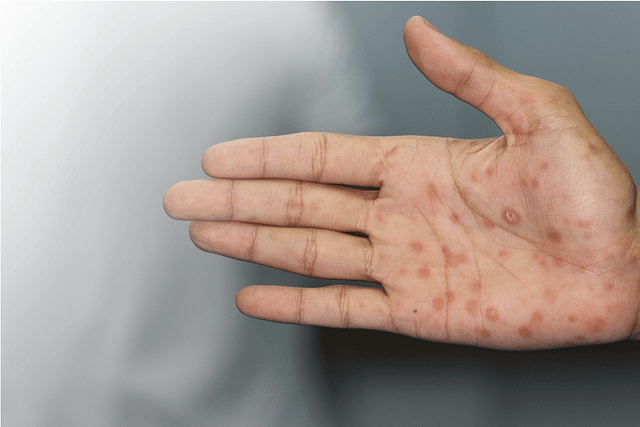
- Skin rash: Reddish-brown spots or bumps on the trunk, arms, and legs, often involving the palms and soles, and may be accompanied by mucous membrane lesions in the mouth, vagina, or anus. This rash usually occurs during the secondary stage.
- Mucous membrane lesions: Grey or white sores in the mouth, vagina, or anus, which are typically painless and are characteristic of secondary syphilis.
- Swollen lymph nodes: Non-tender or mildly tender, swollen lymph nodes in areas such as the neck, armpits, or groin are commonly seen during the secondary stage.
- Fever: A general increase in body temperature, often accompanied by sore throat and malaise, is typical during the secondary stage.
- Hair loss: Patchy hair loss ("moth-eaten" alopecia) on the scalp, eyebrows, or other areas of the body, which can occur during the secondary stage.
- Gumma: Soft, tumour-like growths that can appear on the skin, bones, or internal organs, typically associated with the tertiary stage.
- Cardiovascular involvement: Aortitis, aneurysm, or aortic valve insufficiency, which may lead to serious complications in the tertiary stage.
- Neurological symptoms: Headaches, confusion, difficulty walking, sensory disturbances, and, in severe cases, paralysis or dementia, which occur when syphilis affects the nervous system (neurosyphilis can occur at any stage).
- Congenital symptoms: In newborns, symptoms of congenital syphilis include skin rashes, fever, irritability, swollen lymph nodes, and skeletal abnormalities, which can cause serious developmental issues if untreated.
Stages of Syphilis
Syphilis progresses through distinct clinical stages if left untreated. These include:
- Primary syphilis: This initial stage occurs approximately 10 to 90 days (commonly 3 weeks) after exposure. It is characterised by the appearance of a small, smooth, painless sore called a chancre at the site of infection, which can be on the genitals, mouth, or anus. The chancre heals on its own within 3 to 6 weeks, but the infection remains and can be transmitted to others during this stage.
- Secondary syphilis: Beginning weeks to a few months after the primary chancre has healed, this stage is marked by a rough, red, or reddish-brown rash that can cover the entire body, including the palms and soles. Other symptoms may include fever, swollen lymph glands, sore throat, patchy hair loss, muscle aches, fatigue, and flu-like symptoms. This stage is also contagious.
- Latent syphilis: During this stage, there are no visible signs or symptoms of syphilis, although the bacteria are still present in the body. It is divided into early latent (acquired within the past 12 months) and late latent (acquired more than 12 months ago or of unknown duration). Early latent syphilis may still be transmitted to sexual partners, but late latent syphilis is generally not sexually transmissible, though vertical transmission (mother to fetus) can occur at any stage (Peeling et al., 2023).
- Tertiary (late) syphilis: This final stage occurs years to decades (typically 10–30 years) after the initial infection. It can cause serious health problems, including damage to the heart, brain, nervous system, and other organs. Symptoms can include severe headaches, muscle weakness, changes in mental state, dementia, and ocular or otic syphilis, which can lead to blindness or hearing loss. This stage is generally not infectious.
Causes of Syphilis
Some of the causes of syphilis include:
- Sexual contact: The primary mode of transmission is through direct sexual contact with an infected person. This includes vaginal, anal, and oral sex. The bacteria spread through sores or lesions present on the genitals, rectum, or mouth.
- Direct contact with sores: Syphilis can be contracted by coming into direct contact with syphilitic sores or ulcers, which are typically found during the primary and secondary stages of the disease. These sores can be present on the external genitalia, the anus, or in the mouth.
- Congenital transmission: Pregnant women with syphilis can pass the infection to their baby during pregnancy. This transmission occurs through the placenta, leading to congenital syphilis, which can cause serious health issues for the newborn.
- Lack of protection: Engaging in unprotected sex with an infected individual significantly increases the risk of contracting syphilis. The absence of barriers like condoms during sexual activity increases the chance of exposure to the bacteria.
- Infected partner: Having a sexual partner who has syphilis, especially if they are in the infectious stages of the disease, poses a high risk. The likelihood of transmission is higher if the partner has open sores or lesions.
Risk Factors
Certain factors can increase the risk of contracting syphilis, including:
- Having unprotected sex (vaginal, anal, or oral) with an infected person
- Having multiple sexual partners
- Being a man who has sex with men (MSM)
- Having HIV or another STI
- Being in close contact with an infected person's sore or rash
- Being born to a mother with syphilis
- Living in areas with high rates of syphilis
To reduce the risk of syphilis, it is crucial to practice safe sex by using condoms consistently and correctly, limiting the number of sexual partners, and getting regular STI testing, especially if you are at higher risk.
Complications
If left untreated, syphilis can lead to severe complications that affect various parts of the body. These include:
- Neurological problems: Syphilis can invade the brain, spinal cord, and nervous system, causing a range of issues such as headaches, stroke, meningitis, confusion, personality changes, and symptoms resembling dementia. It may also lead to memory loss, impaired judgement, decision-making difficulties, paralysis, and erectile dysfunction.
- Cardiovascular complications: The infection can damage heart valves and cause aneurysms (bulging blood vessels) or inflammation of the aorta. These cardiovascular problems may result in angina, an aortic aneurysm, and heart failure.
- Eye and ear issues: Ocular syphilis occurs when the infection spreads to the eyes, causing eye pain, redness, vision changes, and even blindness. Otosyphilis affects the ears, potentially leading to hearing loss, tinnitus, and vertigo.
- Skin and organ damage: In the late stage of syphilis, soft, tumour-like growths called gummas can develop on the skin, bones, liver, or other organs, destroying the surrounding tissue.
- Pregnancy complications: Pregnant women with syphilis can transmit the disease to their unborn babies, resulting in congenital syphilis. This may lead to miscarriage, premature birth, stillbirth, or death of the newborn. Infected babies may exhibit symptoms such as sores, rashes, jaundice, anaemia, and bone changes (Peeling et al., 2023).
Prevention of Syphilis
Preventing syphilis involves a combination of safe sexual practices and regular screening. These include:
- Use condoms: Using condoms during vaginal, anal, or oral sex significantly reduces the risk of contracting syphilis.
- Limit sexual partners: Having fewer sexual partners decreases the likelihood of exposure to syphilis.
- Regular testing: Individuals at higher risk, such as those with HIV or other STDs, should undergo regular screening for syphilis.
- Pregnancy screening: All pregnant women should be tested for syphilis during their first prenatal visit, and those at high risk should be tested again in the third trimester and at delivery.
Diagnosis & Tests
Diagnosing syphilis involves a combination of physical examination, blood tests, and, in some cases, examination of the fluid from syphilis sores. Here are the common diagnostic methods:
- Physical examination: Your doctor will check for syphilis sores, rashes, or other visible signs of the infection on your body.
- Blood tests: These tests look for antibodies that your body produces in response to the syphilis bacteria. The two main types include:
- Nontreponemal tests (e.g., VDRL or RPR): These tests measure antibodies that are not specific to syphilis but are produced in response to cell damage caused by the infection.
- Treponemal tests (e.g., TP-PA, FTA-ABS, EIA, or CIA): These tests detect antibodies that are specific to Treponema pallidum. They are used to confirm a positive nontreponemal test result. Treponemal antibodies typically remain positive for life, even after successful treatment (Park et al., 2024).
- Darkfield microscopy: In the primary stage of syphilis, your doctor may take a sample of fluid from a syphilis sore and examine it under a microscope to look for the presence of Treponema pallidum (Park et al., 2024).
- Cerebrospinal fluid (CSF) analysis: If your doctor suspects that syphilis has affected your nervous system, they may perform a lumbar puncture (spinal tap) to collect a sample of CSF for analysis.
Treatment & Management
The treatment of syphilis depends on the stage of infection and the patient's medical history. Antibiotic therapy is the primary approach, with benzathine penicillin G being the most effective treatment. Early diagnosis and appropriate medication can help prevent complications and long-term health issues.
1. Primary and Secondary Syphilis
For early-stage syphilis, a single intramuscular dose of penicillin G is the preferred treatment. In cases of penicillin allergy, alternative antibiotics such as doxycycline or azithromycin may be prescribed. These medications effectively eliminate the infection and prevent its progression to more severe stages (CDC, 2021).
2. Latent and Tertiary Syphilis
For latent or tertiary syphilis, an extended course of penicillin G administered over multiple doses is required. If penicillin is contraindicated, doxycycline or ceftriaxone may be used as alternatives. However, penicillin remains the treatment of choice, especially for neurosyphilis, where penicillin-based therapy is strongly preferred, and alternatives are used only when necessary.
3. Neurosyphilis and Congenital Syphilis
Neurosyphilis requires intravenous penicillin G administered in a hospital setting to ensure adequate penetration into the central nervous system. Ceftriaxone is another alternative that may be used in specific cases. For congenital syphilis, newborns are treated with penicillin to prevent severe complications.
Living with Disease
If you have been diagnosed with syphilis, there are several important points to keep in mind. These include:
- Avoid sexual activity for at least 7 days after treatment and until all symptoms have resolved.
- Attend all follow-up appointments as scheduled by your doctor to ensure the infection has been successfully treated.
- Inform your sexual partner(s) about your diagnosis so they can be tested and treated if necessary.
- Use latex condoms and/or dental dams during sexual activity to prevent re-infection and other sexually transmitted diseases.
- If you are pregnant, it is crucial to receive proper treatment to prevent passing the infection to your baby.
When to See a Doctor?
If you suspect you may have syphilis or have been exposed to someone with the infection, it is crucial to consult a doctor promptly. Key signs and symptoms that warrant medical attention include a painless sore or ulcer on the genitals, anus, or mouth; a rash on the body, particularly on the palms of the hands or soles of the feet; flu-like symptoms such as fever, fatigue, and swollen lymph nodes; and neurological symptoms like headaches, vision changes, or hearing loss. Pregnant women who suspect they have syphilis should seek testing and treatment immediately to prevent transmitting the infection to their baby, as this can lead to severe complications.
Key Takeaways
- Syphilis is a bacterial infection caused by Treponema pallidum, primarily spread through sexual contact.
- The infection progresses through distinct stages: primary, secondary, latent, and tertiary syphilis.
- Symptoms vary depending on the stage of the infection and can include painless sores, rashes, flu-like symptoms, and neurological complications.
- Diagnosis of syphilis is made through a combination of physical examination, blood tests (such as RPR and TP-PA), and, in some cases, cerebrospinal fluid analysis.
- Treatment for syphilis depends on the stage of the infection and typically involves penicillin-based therapy. Alternative treatments are available for those allergic to penicillin.
- Prompt diagnosis and treatment are essential to prevent the progression of the infection and its potential complications.
- Regular follow-up and serological monitoring are crucial for individuals living with syphilis to ensure successful treatment and detect any signs of treatment failure or complications.
FAQs
What is the cause of the syphilis?
What is one of the first signs of syphilis?
Is syphilis curable?
What kind of bacterium causes syphilis?
What is the best treatment for syphilis?
How is syphilis diagnosed?
What is the VDRL test?
How is syphilis transmitted?
How long does syphilis last?
References
- Centers for Disease Control and Prevention. (2024). Sexually transmitted infections treatment guidelines: Syphilis. https://www.cdc.gov/std/treatment-guidelines/syphilis.htm
- Park, I. U., Fakile, Y. F., Chow, J. M., Gustafson, K. J., Jost, H., Schapiro, J. M., Novak-Weekley, S., Tran, A., Nomura, J. H., Wang, G., Chen, Y., Desai, V. P., Tsai, Y., Chan, P. A., & Kersh, E. N. (2024). CDC laboratory recommendations for syphilis testing, United States, 2024. MMWR Recommendations and Reports, 73(1), 1-32. https://doi.org/10.15585/mmwr.rr7301a1
- Peeling, R. W., Mabey, D., Chen, X. S., & Garcia, P. J. (2023). Syphilis. The Lancet, 402(10398), 336-346. https://doi.org/10.1016/S0140-6736(22)02348-0
- Callado, G. Y., Gutfreund, M. C., Pardo, I., Hsieh, M. K., Lin, V., Sampson, M. M., Rodriguez Nava, G., Marins, T. A., Deliberato, R. O., Martino, M. D. V., Holubar, M., Salinas, J. L., & Marra, A. R. (2024). Syphilis treatment: Systematic review and meta-analysis investigating nonpenicillin therapeutic strategies. Open Forum Infectious Diseases, 11(4), ofae142. https://doi.org/10.1093/ofid/ofae142
- Kingston, M., Apea, V., Evans, C., Fifer, H., Foster, K., Patrick, H., Grant, A., Manns, V., Ramsden, S., Sinka, K., Sukthankar, A., Sullivan, A., & Tyler, S. (2024). British Association for Sexual Health and HIV UK guidelines for the management of syphilis 2024. International Journal of STD & AIDS, 35(13), 993-1017. https://doi.org/10.1177/09564624241280406
Check Related Salts
Browse Other Conditions
Latest health articles

Top Health Essentials























Disclaimer
Top-Selling Medicines:
...View more
Top-OTC medicines:
...View more
Company
About UsHealth ArticleHealth StoriesHealth LibraryDiseases & Health ConditionsAyurvedaUnderstanding Generic MedicinesAll MedicinesAll BrandsNeed HelpFAQSecuritySavings CalculatorAdvertise with UsSubscribe
Registered Office Address
Grievance Officer
Download Truemeds


Contact Us
Our customer representative team is available 7 days a week from 9 am - 9 pm.
v4.28.13

2026 - Truemeds | All rights reserved. Our content is for informational purposes only. See additional information.

Our Payment Partners




