

- Medicines
- Personal Care
- Skin Cream
- Sunscreen
- Face Wash
- Skin and Body Soap
- Acne Care
- Body Lotions
- Moisturising Lotion
- Moisturising Cream
- Mosquito Repellent
- Moisturising Gel
- Body Wash
- Hair Oils
- Hair Shampoo
- Hair Conditioners
- Hair Supplements
- Hair Colour
- Hair Serum
- Hair Mask
- Hair Solutions
- Baby Diapers and Wipes
- Baby Lotion and Moisturising Cream
- Baby Bath Essentials
- Baby Skin Care
- Baby and Infant Food
- Baby Healthcare
- Women Multivitamins
- Ovulation Test Kit and Women Intimate Care
- Sanitary Pads
- Nutritional Drinks
- Condoms
- Lubricants
- Massage Gels
- Personal Body Massagers
- Men Performance Booster
- Sexual Health Supplements
- Massage Oils
- Ayurveda
- Tooth Paste
- Mouth Ulcer Gel
- Mouthwash
- Toothache and Gum Pain
- Tooth Brush
- Gargle Solution
- Orthopaedic Supports
- Adult Diapers
- Footwear
- Mobility and Support Accessories
- Urinary Support and Care
- Health Conditions
- Bone and Joint Care
- Digestive Care
- Eye Care
- Pain Relief
- Smoking Cessation
- Liver Care
- Stomach Care
- Cold and Cough
- Heart Care
- Kidney Care
- Piles, Fissures & Fistula
- Respiratory Care
- Mental Wellness
- Derma Care
- Pre and Probiotics
- Acidity
- Gas
- Constipation
- Loose Motion/Diarrhoea
- Digestive Fibres
- Digestive Enzymes
- Eye Lubricant Drops
- Lens Solution
- Safety Eye Wear
- Eye Cream
- Eye Vitamins and Supplements
- Eye Drops
- Eye Ointment and Gel
- Nicotine Patch
- Nicotine Gum
- Nicotine Lozenges
- Cough Syrups
- Chest Rubs and Balms
- Nasal Spray
- Lozenges
- Inhalant Capsules
- Cold and Cough Tablets
- Vitamins & Supplements
- Diabetes Care
- Healthcare Devices
- Homeopathic Medicine
- Health Guide
Chickenpox
Chickenpox, also known as varicella, is a highly contagious viral illness caused by the varicella-zoster virus. It is characterised by an itchy rash with fluid-filled blisters, fever, loss of appetite, and headaches. While usually mild in children, chickenpox can cause more serious complications in older children, adolescents, and adults. Vaccination is the most effective way to prevent the spread of this disease.
 50
50Last updated on : 05 May, 2026
Read time : 14 mins
Overview of Disease
Chickenpox is a common childhood illness that most people experience at some point in their lives. It is caused by the varicella-zoster virus, which is highly contagious and spreads easily through direct contact with the blisters or through the air when an infected person coughs or sneezes (IQWiG, 2023).
Although chickenpox is usually mild and self-limiting, it can cause more severe symptoms and complications in some cases, especially in adults and those with weakened immune systems. In this article, we will discuss the symptoms, causes, and treatment options for chickenpox.
What is Chickenpox?
Chickenpox is a viral infection that primarily affects children but can occur in adults who have not been vaccinated or have not had the disease before. The varicella-zoster virus belongs to the herpesvirus family and causes the characteristic itchy, blister-like rash associated with chickenpox.
The virus can also cause fever, fatigue, loss of appetite, and headaches. Chickenpox healing time usually ranges from 4 to 7 days (Chickenpox Symptoms and Complications, 2024). However, in some cases, it may take up to 10 days for full recovery. Sometimes it leads to complications such as skin infections, pneumonia, and encephalitis (inflammation of the brain) in some individuals. Additionally, the virus remains dormant in the body after the initial infection and can reactivate later in life, causing a painful condition called shingles.
Key Factors about Chickenpox
| Category | Details |
| Also Referred as | Varicella |
| Commonly Occurs In | Children younger than 10 years old |
| Affected Organ | Skin, occasionally involving other organs like the brain and lungs in severe cases |
| Type | Viral infection caused by the varicella-zoster virus (VZV), a type of herpes virus |
| Common Signs | Sudden onset of fever, feeling tired and weak, followed by an itchy blister-like rash on the face, scalp, trunk, and other areas |
| Consulting Specialist | Infectious disease specialist or paediatrician |
| Treatement Procedures | Acyclovir for severe cases, calamine lotion and oatmeal baths for itching relief, and paracetamol for fever |
| Managed By | Supportive care (hydration, fever control, anti-itch measures) as the mainstay; antivirals (acyclovir) only for high-risk or severe cases |
| Mimiciking Condition | Hand-foot-and-mouth disease, Shingles |
Early Signs of Chickenpox
The early signs of chickenpox can appear 1 to 2 days before the characteristic rash develops. These early symptoms include:
- Fever
- Tiredness and general feeling of malaise
- Loss of appetite
- Headache
- Body aches
Symptoms of Chickenpox
The chickenpox rash typically appears between 10 and 21 days after exposure to the varicella-zoster virus (Saleh et al., 2025). The rash itself generally lasts between 5 and 10 days, but symptoms may begin earlier. One to two days before the rash, individuals may experience:
- Fever
- Loss of appetite
- Headache
- Fatigue and a general sense of malaise
Once the rash begins, it progresses through three characteristic stages (Kaye, 2025):
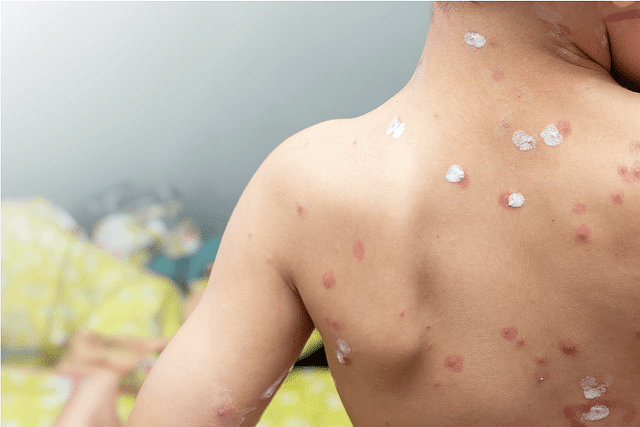
- Papules: These are small, raised red bumps that appear over several days. They can be itchy and may feel tender to the touch.
- Vesicles: Within about 24 hours, the papules develop into fluid-filled blisters that can break and leak.
- Crusting: The blisters then dry out, forming scabs or crusts that gradually fall off as the skin heals.
New bumps may continue to appear for several days, meaning that a person may have all three types of lesions—papules, blisters, and scabs—on different parts of the body simultaneously.
The virus is contagious from approximately 48 hours before the rash appears until every blister has crusted over. In healthy children, chickenpox usually causes only mild discomfort. However, in some cases, the rash may spread extensively, covering the entire body, and blisters may even develop inside the mouth, throat, eyes, and on mucous membranes of the urethra, anus, or vagina.
Stages of Chickenpox
The progression of the illness can be broadly outlined as follows:
- Incubation period: The incubation period for chickenpox is typically 14 to 16 days, but can range from 10 to 21 days after exposure to the varicella-zoster virus. During this period, the individual may not exhibit any symptoms, but is usually contagious 1 to 2 days before the rash appears.
- Rash development: The rash begins as flat, red spots that turn into small, fluid-filled blisters, which eventually crust over. This process usually takes about 7 to 10 days. The rash typically starts on the trunk and spreads to other parts of the body, including the scalp, face, and extremities. Fever, headache, and fatigue often accompany the rash.
- Recovery: Once the blisters have crusted over, usually within 7 to 10 days, the individual is no longer contagious. Full recovery from chickenpox typically occurs within 1 to 2 weeks. However, it's essential to note that the varicella-zoster virus remains dormant in the body and can reactivate later in life, causing shingles.
Causes of Chickenpox
Chickenpox is caused by the varicella-zoster virus, a highly contagious virus that spreads easily from person to person through:
- Direct contact: Touching someone with the chickenpox rash or fluid from their blisters can lead to transmission of the virus.
- Airborne transmission: When an infected individual coughs or sneezes, droplets are released that can be inhaled by others, spreading the virus.
The virus is contagious from 1 to 2 days before the rash appears until all blisters have crusted over. It is crucial to isolate infected individuals during this time to prevent further spread.
Chickenpox most commonly affects children under the age of 10, with the majority of cases being mild and self-limiting. However, the severity of chickenpox tends to increase with age. Older children and adults typically experience more intense symptoms and are at higher risk of complications compared to younger children.
Infants whose mothers have previously had chickenpox or received the chickenpox vaccine are usually protected in their first year of life due to the passive transfer of maternal antibodies. If such infants do contract chickenpox, it’s often a milder form of the disease. In contrast, babies under one year old whose mothers have never had chickenpox or the vaccine lack these protective antibodies and are more vulnerable to developing severe symptoms.
Children with weak immune systems—whether due to an underlying medical condition or immunosuppressive treatment—are especially prone to severe forms of chickenpox. In these cases, the infection can progress more aggressively, increasing the risk of serious complications such as pneumonia, encephalitis, or widespread skin infections.
Risk Factors
Several factors can increase the risk of developing chickenpox or experiencing complications from the infection, including:
- Children under 10 years of age, especially infants under 1 year old whose mothers have neither had chickenpox nor been vaccinated, are at higher risk.
- Individuals with weakened immune systems, such as those with cancer, HIV, or those undergoing chemotherapy or transplants
- Pregnant women who have not had chickenpox
- Smokers
- Healthcare workers and childcare providers
Complications
While most people recover from chickenpox without incident, some may experience complications ranging from mild to severe. The complications of chickenpox include:
- Intense itching: The most common complication, particularly distressing for young children, can lead to scratching and potential scarring.
- Bacterial skin infections: Secondary infections can develop at scratched sites, causing redness, swelling, and warmth.
- Pneumonia: This serious lung complication usually develops 1-6 days after the rash appears, causing fever and cough. It is more common in pregnant women, immunocompromised individuals, and smokers.
- Encephalitis and meningitis: These rare but serious neurological complications involve inflammation of the brain or its lining and the spinal cord. Symptoms include sudden fever, headache, stiff neck, nausea, and vomiting.
- Toxic shock syndrome: This is a severe condition caused by bacterial toxins.
- Reye's syndrome: A rare but serious condition causing swelling in the brain and liver, often associated with aspirin use in children and teens with chickenpox.
- Severe illness in specific groups: Newborns, infants, adults, and those with weakened immune systems are at higher risk of severe disease.
- Maternal and foetal risks: Chickenpox during pregnancy can lead to low birth weight and limb problems in the baby. If contracted just before or after delivery, the baby is at risk of severe infection.
Prevention of Chickenpox
The most effective way to prevent chickenpox is through vaccination with the varicella vaccine, which offers long-lasting protection. Additionally, practising good hygiene, avoiding close contact with infected people, washing hands frequently, and disinfecting surfaces help reduce the spread of the virus. These measures are essential for prevention.
- Routine vaccination: The varicella vaccine is part of the standard childhood immunisation schedule, significantly reducing the risk of infection. It is typically given in two doses—the first at 12–15 months and the second at 4-6 years.
- Catch-up vaccination: Older children and adults who have not had chickenpox or the vaccine can receive catch-up doses to protect against the virus.
- Vaccination for high-risk groups: The vaccine is especially important for healthcare workers, teachers, child care employees, international travellers, and those in close contact with immunocompromised individuals.
- Herd immunity: Widespread vaccination helps protect those who cannot receive the vaccine, such as infants, pregnant women, and immunocompromised individuals, by reducing the overall circulation of the virus in the community.
In addition to vaccination, practising good hygiene, such as washing hands frequently and avoiding close contact with infected individuals, can help prevent the spread of chickenpox.
Diagnosis & Tests
Diagnosing chickenpox is usually based on the characteristic rash and a patient's history of exposure. However, in some cases, additional tests may be required:
- Physical examination: A doctor will examine the characteristic rash, which typically appears as itchy, fluid-filled blisters on a red base that eventually crust over.
- Medical history: The doctor will ask about recent exposure to chickenpox, vaccination status, and the timing and progression of symptoms.
- Blood tests: Blood samples may be tested for antibodies to the varicella-zoster virus, which causes chickenpox. These tests can help determine if a person has been exposed to the virus or has developed immunity.
- Viral culture: In some cases, a sample of fluid from a blister may be collected and sent to a laboratory for viral culture to confirm the presence of the varicella-zoster virus.
- Polymerase chain reaction (PCR) test: This highly sensitive test can detect the presence of the virus in a sample of fluid from a blister or in a blood sample.
Treatment & Management
Treatment for chickenpox primarily focuses on relieving symptoms and preventing complications. Here are some ways to manage the condition:
1. OTC Treatments for chickenpox
- Calamine lotion, containing zinc oxide or zinc carbonate, is a common over-the-counter (OTC) remedy for chickenpox. It helps soothe skin irritation due to its mild antiseptic and protective properties. It can be found in some topical formulations to aid in healing and reduce itching.
- Apply calamine lotion, petroleum jelly, or fragrance-free anti-itch lotion to the skin to reduce itching and discomfort.
- Use acetaminophen to reduce fever. Avoid aspirin, as it may cause Reye’s syndrome in children. Avoid NSAIDs like ibuprofen if a skin infection is present, as they may worsen complications.
- Oral antihistamines can help alleviate itching in children. Avoid applying antihistamines directly to the skin to prevent allergic reactions.
- In high-risk individuals, such as those older than 12 years, pregnant women, those with chronic skin or lung diseases, or those with weakened immune systems, antiviral medications like acyclovir, valacyclovir or famciclovir may be prescribed. These medications work best when given within 24 hours of the rash onset.
2. Other remedies for chickenpox
- Take lukewarm baths with colloidal oatmeal or baking soda to relieve itching.
- Keep fingernails trimmed short and use socks or mittens on young children to prevent scratching, which can lead to skin infections.
- Keep the affected person cool and hydrated. Use cool, moist rags on the rash to reduce itching and encourage fluid intake to aid recovery.
- Ensure the person gets plenty of rest to support the body's healing process.
By following these treatment and management strategies, you can help alleviate the symptoms of chickenpox and promote a smoother recovery.
Living with Disease
When living with chickenpox, there are several important points to keep in mind:
- Keep the affected person at home until all blisters have formed scabs and no new blisters develop, which usually takes about a week. This helps prevent the spread of the virus to others.
- Wash hands frequently, especially after touching the rash, to minimise the risk of spreading the virus or developing secondary infections.
- Discourage scratching the blisters to prevent bacterial infections and scarring. Use socks or mittens on young children if necessary.
- Encourage hydration with water and sugar-free fluids.
- Avoid hard, spicy, or salty foods that may irritate the mouth sores, especially in children.
- Dress the person in loose, comfortable clothing to minimise irritation to the skin.
- Keep the room temperature cool and use lightweight bedding.
When to See a Doctor?
If you or your child experiences symptoms such as a high fever over 39°C that persists for more than a few days, severe headache, stiff neck, or confusion, it is crucial to seek medical attention promptly.
Other concerning signs include difficulty breathing or chest pain, severe abdominal pain or vomiting, and a rash that becomes very red, warm, or tender, which may indicate a bacterial infection. Dizziness, disorientation, a rapid heartbeat, or blisters that become infected or do not heal also warrant immediate medical consultation.
Additionally, if you are pregnant, have a weakened immune system, or manage a chronic health condition, it is important to consult your doctor as soon as you suspect chickenpox.
Key Takeaways
- Chickenpox is a highly contagious viral infection caused by the varicella-zoster virus, characterised by an itchy, blister-like rash.
- Symptoms typically appear 10–21 days after exposure and include fever, fatigue, loss of appetite, and a distinctive rash that progresses from red bumps to fluid-filled blisters and eventually scabs.
- The varicella vaccine is the most effective way to prevent chickenpox. Two doses are recommended for children, adolescents, and adults who have never had chickenpox or been vaccinated.
- Treatment primarily focuses on relieving symptoms, including taking lukewarm baths, applying anti-itch lotions, using acetaminophen for fever, and keeping the affected person cool, hydrated, and well-rested.
- Most people recover from chickenpox without complications, but in some cases, medical attention may be necessary, especially for infants, adults, and those with weakened immune systems.
FAQs
How to heal chicken pox fast?
Can I get chickenpox twice?
How does chickenpox spread?
What things should be avoided in chicken pox?
Can chicken pox heal in 7 days?
What is the best way to remove chicken pox blisters?
Can we take a bath during chicken pox infection?
How to stop chickenpox from spreading?
Is chicken pox painful?
Why does chickenpox occur?
References
- Centers for Disease Control and Prevention. (2021, April 28). Chickenpox (varicella). https://www.cdc.gov/chickenpox/index.html
- National Health Service. (2021, July 21). Chickenpox. https://www.nhs.uk/conditions/chickenpox/
- Johns Hopkins Medicine. (n.d.). Chickenpox. https://www.hopkinsmedicine.org/health/conditions-and-diseases/chickenpox
- U.S. National Library of Medicine. (2021, May 26). Chickenpox. MedlinePlus. https://medlineplus.gov/chickenpox.html
- Institute for Quality and Efficiency in Health Care (IQWiG). (2023, February 8). Overview: Chickenpox. InformedHealth.org - NCBI Bookshelf. https://www.ncbi.nlm.nih.gov/books/NBK279621/
- Chickenpox symptoms and complications. (2024, May 10). Chickenpox (Varicella). https://www.cdc.gov/chickenpox/signs-symptoms/index.html
- Kaye, K. M. (2025, April 9). Chickenpox. MSD Manual Professional Edition. https://www.msdmanuals.com/professional/infectious-diseases/herpesviruses/chickenpox#Symptoms-and-Signs_v1019483
- Saleh, H. M., Ayoade, F., & Kumar, S. (2025, April 27). Varicella-Zoster virus (Chickenpox). StatPearls - NCBI Bookshelf. https://www.ncbi.nlm.nih.gov/books/NBK448191/
Disclaimer: This content is for informational purposes only and does not constitute medical advice. Always consult your physician or a qualified healthcare provider for an accurate diagnosis and treatment.

Check Related Salts
Browse Other Conditions
Latest health articles
Top Health Essentials














Disclaimer
Top-Selling Medicines:
...View more
Top-OTC medicines:
...View more
Company
About UsHealth ArticleHealth StoriesHealth LibraryDiseases & Health ConditionsAyurvedaUnderstanding Generic MedicinesAll MedicinesAll BrandsNeed HelpFAQSecuritySavings CalculatorAdvertise with UsSubscribe
Registered Office Address
Grievance Officer
Download Truemeds


Contact Us
Our customer representative team is available 7 days a week from 9 am - 9 pm.
v4.28.13

2026 - Truemeds | All rights reserved. Our content is for informational purposes only. See additional information.

Our Payment Partners