

- Medicines
- Personal Care
- Skin Cream
- Sunscreen
- Face Wash
- Skin and Body Soap
- Acne Care
- Body Lotions
- Moisturising Lotion
- Moisturising Cream
- Mosquito Repellent
- Moisturising Gel
- Body Wash
- Hair Oils
- Hair Shampoo
- Hair Conditioners
- Hair Supplements
- Hair Colour
- Hair Serum
- Hair Mask
- Hair Solutions
- Baby Diapers and Wipes
- Baby Lotion and Moisturising Cream
- Baby Bath Essentials
- Baby Skin Care
- Baby and Infant Food
- Baby Healthcare
- Women Multivitamins
- Ovulation Test Kit and Women Intimate Care
- Sanitary Pads
- Nutritional Drinks
- Condoms
- Lubricants
- Massage Gels
- Personal Body Massagers
- Men Performance Booster
- Sexual Health Supplements
- Massage Oils
- Ayurveda
- Tooth Paste
- Mouth Ulcer Gel
- Mouthwash
- Toothache and Gum Pain
- Tooth Brush
- Gargle Solution
- Orthopaedic Supports
- Adult Diapers
- Footwear
- Mobility and Support Accessories
- Urinary Support and Care
- Health Conditions
- Bone and Joint Care
- Digestive Care
- Eye Care
- Pain Relief
- Smoking Cessation
- Liver Care
- Stomach Care
- Cold and Cough
- Heart Care
- Kidney Care
- Piles, Fissures & Fistula
- Respiratory Care
- Mental Wellness
- Derma Care
- Pre and Probiotics
- Acidity
- Gas
- Constipation
- Loose Motion/Diarrhoea
- Digestive Fibres
- Digestive Enzymes
- Eye Lubricant Drops
- Lens Solution
- Safety Eye Wear
- Eye Cream
- Eye Vitamins and Supplements
- Eye Drops
- Eye Ointment and Gel
- Nicotine Patch
- Nicotine Gum
- Nicotine Lozenges
- Cough Syrups
- Chest Rubs and Balms
- Nasal Spray
- Lozenges
- Inhalant Capsules
- Cold and Cough Tablets
- Vitamins & Supplements
- Diabetes Care
- Healthcare Devices
- Homeopathic Medicine
- Health Guide
Gonorrhea
Gonorrhoea is a common sexually transmitted infection (STI) caused by the bacterium Neisseria gonorrhoeae. It can infect both men and women and can lead to serious health problems if left untreated. Gonorrhoea is spread through vaginal, anal, or oral sex with an infected person and can be treated with antibiotics.
 50
50Last updated on : 12 Apr, 2026
Read time : 11 mins

Overview of Disease
Gonorrhoea is a prevalent sexually transmitted infection (STI) that affects millions of people worldwide. It is caused by the bacterium Neisseria gonorrhoeae and can infect both men and women. If left untreated, gonorrhoea can lead to serious health complications. In this article, we will discuss what gonorrhoea is, its symptoms, and the importance of early diagnosis and treatment.
What is Gonorrhoea?
Gonorrhoea is an STI caused by the bacterium Neisseria gonorrhoeae. It can infect various warm, moist areas of the body, including the genitals, rectum, throat, and eyes. Gonorrhoea is sometimes referred to as "the clap" or "drip" due to the discharge that may occur with the infection.
It is most common among young people aged 15–24 years Kurz & Ressler, (2023). Gonorrhoea is transmitted through sexual contact with an infected person, including vaginal, anal, and oral sex.
Pregnant women with gonorrhoea can also pass the infection to their babies during childbirth. According to WHO (2025), although gonorrhoea is treatable with antibiotics, if left untreated, it can lead to severe health problems. This includes issues such as infertility, pelvic inflammatory disease (PID), and an increased risk of HIV transmission.
Key Factors about Gonorrhea
| Category | Details |
| Also Referred as | Gonorrhoea, gonococcal infection, gonococcal urethritis, the clap, the drip |
| Commonly Occurs In | Teens and people in their 20s, sexually active individuals |
| Affected Organ | Urethra, rectum, female reproductive tract, mouth, throat, eyes |
| Type | Sexually transmitted infection (STI) |
| Common Signs | Painful urination, discharge from the penis, vaginal discharge, pelvic pain |
| Consulting Specialist | Urologist, Gynaecologist, Infectious Disease Specialist |
| Treatment Procedures | Ceftriaxone by injection; additional antibiotics such as doxycycline may be used if co-infection is suspected |
| Managed By | Ceftriaxone injection and azithromycin |
| Mimicking Condition | Other STIs like chlamydia, urinary tract infections |
Symptoms of Gonorrhea
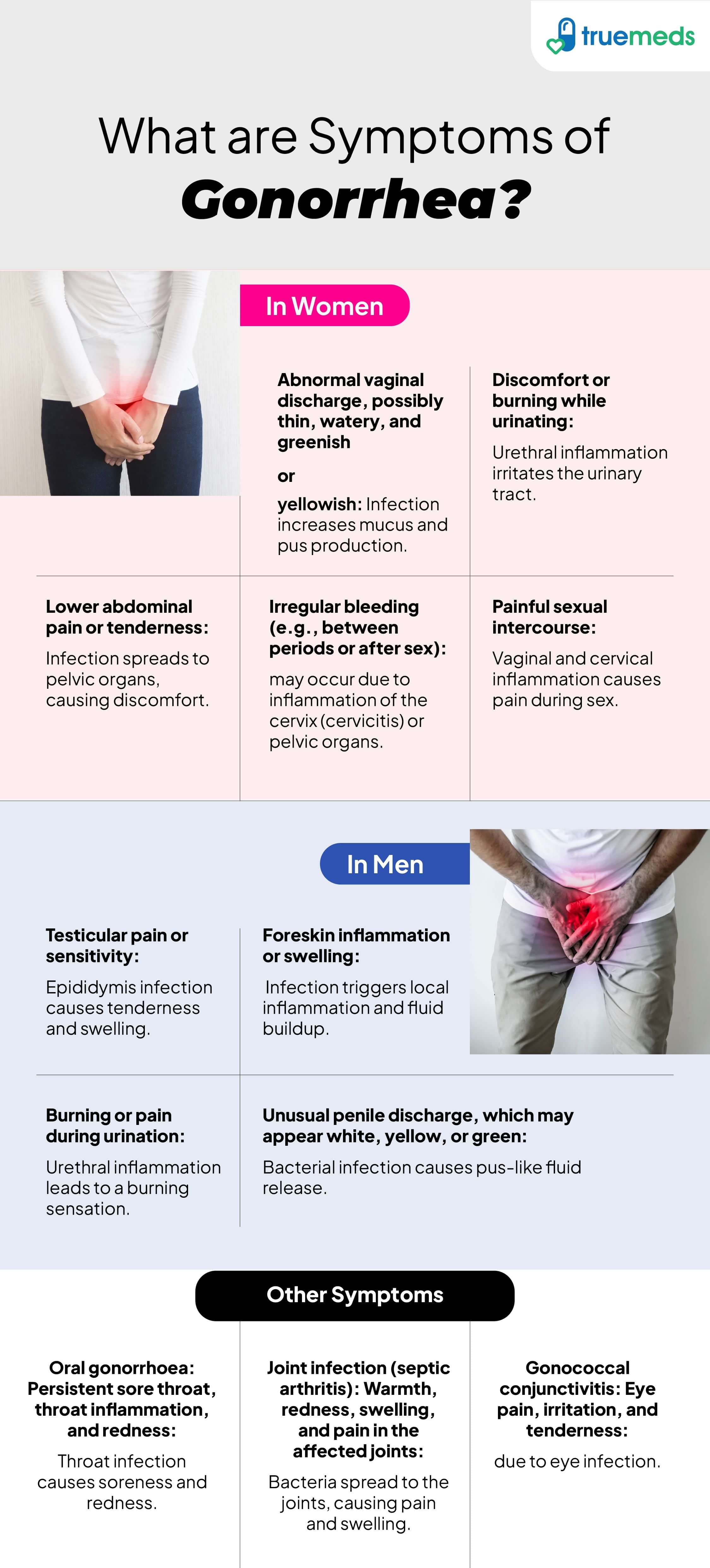
The symptoms of gonorrhoea can vary depending on the individual and the site of infection. Some people may not experience any symptoms at all, which can lead to unintentional transmission of the infection to sexual partners. Here are the common symptoms of gonorrhoea:
1. In Women
- Abnormal vaginal discharge, possibly thin, watery, and greenish or yellowish
- Discomfort or burning while urinating
- Lower abdominal pain or tenderness
- Irregular bleeding, including between periods, heavier menstrual flow, and post-sex bleeding.
- Painful sexual intercourse
2. In Men
- Unusual penile discharge, which may appear white, yellow, or green
- Burning or pain during urination
- Foreskin inflammation or swelling
- Testicular pain or sensitivity
3. Other Symptoms
- Oral gonorrhoea: Persistent sore throat, throat inflammation, and redness
- Gonococcal conjunctivitis: Eye pain, irritation, and tenderness
- Joint infection (septic arthritis): Warmth, redness, swelling, and pain in the affected joints
It is important to note that even in the absence of symptoms, gonorrhoea can still be transmitted to sexual partners and cause complications. Regular STI testing is recommended for sexually active individuals to detect and treat infections promptly.
Stages of Gonorrhea
- Infection: The bacteria enter the body through sexual contact, typically via unprotected vaginal, anal, or oral sex.
- Incubation: The incubation period for gonorrhoea ranges from 2 to 30 days, during which the bacteria multiply without causing noticeable symptoms.
- Symptomatic Stage: Symptoms of gonorrhoea may develop, although some people may remain asymptomatic.
- Complications: If left untreated, gonorrhoea can lead to serious complications, such as PID in women and epididymitis in men, both of which can cause infertility.
Causes of Gonorrhea
- Gonorrhoea is caused by Neisseria gonorrhoeae, which thrives in warm, moist areas of the reproductive tract and urethra.
- The infection is primarily transmitted through sexual contact involving the penis, vagina, mouth, or anus.
- It is important to note that gonorrhoea can also be passed from an infected mother to her baby during childbirth.
Risk Factors
Several factors can increase the risk of contracting gonorrhoea:
Sexual Activity: Being sexually active, especially with multiple partners or a partner with a history of STIs, elevates the risk of gonorrhoea.
Age: Young people between the ages of 15 and 24 are at a higher risk of contracting gonorrhoea compared to other age groups.
Unprotected Sex: Engaging in sexual activity without using a condom significantly increases the chances of contracting gonorrhoea and other STIs.
Substance Abuse: Alcohol and drug abuse can impair judgment and lead to risky sexual behaviour, increasing the likelihood of exposure to gonorrhoea.
Previous STIs: Having a history of other sexually transmitted infections or being in a relationship with someone who does can increase the risk of contracting gonorrhoea.
Complications
If left untreated, gonorrhoea can lead to a range of serious complications that can have long-term effects on an individual's health.
- Pelvic Inflammatory Disease (PID): Women with untreated gonorrhoea can develop PID, which can cause chronic pelvic pain, infertility, and an increased risk of ectopic pregnancy.
- Infertility: Both men and women can experience fertility issues as a result of untreated gonorrhoea.
- Disseminated Gonococcal Infection: In some cases, the bacteria can spread to the blood or joints. This may lead to a life-threatening condition known as disseminated gonococcal infection.
- Neonatal complications: Babies born to mothers with gonorrhoea can contract the infection during delivery. This can potentially lead to blindness, joint disease, or life-threatening blood infections.
- Increased risk of HIV: Individuals with gonorrhoea are more susceptible to contracting HIV and may be more likely to transmit HIV to others.
Prevention of Gonorrhea
Preventing the spread of gonorrhoea is crucial to avoid the serious complications associated with this STI. Here are some effective ways to reduce your risk of contracting or transmitting gonorrhoea:
- Use condoms consistently and correctly during every sexual encounter, including vaginal, anal, and oral sex.
- Practice safe sexual behaviours, such as limiting the number of sexual partners. Also, avoid sexual contact with individuals who have multiple partners or whose STI status is unknown.
- Get tested regularly for gonorrhoea and other STIs, especially if you have multiple sexual partners or have recently changed partners.
- If diagnosed with gonorrhoea, inform all recent sexual partners so they can get tested and treated as well. Avoid sexual activity until you and your partner(s) have completed the prescribed treatment.
- Abstain from sexual activity or maintain a mutually monogamous relationship with a partner who has been tested and is known to be uninfected.
Remember, while condoms can significantly reduce the risk of gonorrhoea transmission, they are not 100% effective. Regular testing and open communication with sexual partners are also important aspects of gonorrhoea prevention. If you suspect you may have been exposed to gonorrhoea, consult your doctor for appropriate testing and treatment.
Diagnosis & Tests
If you suspect you may have gonorrhoea, it is essential to consult a healthcare provider for proper diagnosis and treatment. Gonorrhoea can be diagnosed through the following tests:
- Urine Test: You may be asked to provide a urine sample, which will be analysed for the presence of the bacterium that causes gonorrhoea.
- Swab Test: Your doctor may take a swab sample from the affected area, such as the cervix, urethra, throat, or rectum, depending on your symptoms and sexual practices. The sample will be sent to a laboratory for analysis.
- Nucleic Acid Amplification Tests (NAATs): These tests are highly sensitive and can detect the genetic material of the gonorrhoea bacterium. NAATs can be performed on urine samples or swab specimens.
It is important to note that if you are diagnosed with gonorrhoea, you should also be tested for other STIs. This includes chlamydia, syphilis, and HIV, as these infections often occur together. Your healthcare provider will discuss the appropriate testing and treatment plan tailored to your specific circumstances.
Treatment & Management
Gonorrhoea is effectively treated with antibiotics. According to the Centers for Disease Control (CDC) (2024), the first-line treatment for uncomplicated gonorrhoea is a single intramuscular dose of ceftriaxone. In some cases, doxycycline may be added if co-infection with chlamydia is suspected.
Here is how these medicines work:
- Ceftriaxone: A third-generation cephalosporin antibiotic that kills Neisseria gonorrhoeae by inhibiting bacterial cell wall synthesis.
- Doxycycline: A tetracycline antibiotic that treats chlamydial co-infection by interfering with bacterial protein production.
Due to the rising prevalence of antibiotic resistance, treatment regimens may vary, and alternative antibiotics, such as those listed below, may be used if necessary. It is essential to complete the entire prescribed course, even if symptoms resolve early.
- Gentamicin: An aminoglycoside antibiotic that disrupts bacterial protein synthesis, used in single-dose therapy, often combined with azithromycin in specific resistant cases.
- Cefixime: A third-generation oral cephalosporin that inhibits bacterial cell wall synthesis, used as an alternative to injectable cephalosporins for uncomplicated gonorrhoea.
All recent sexual partners should be treated at the same time to prevent reinfection. Follow-up testing may be needed to confirm that the infection has cleared.
Living with Gonorrhea
If you have been diagnosed with gonorrhoea, follow your doctor's instructions for treatment. Additionally, take steps to prevent the spread of the infection to others. Here are some key pointers for living with gonorrhoea:
- Complete the full course of antibiotics as prescribed by your doctor, even if your symptoms improve before you finish the medication.
- Abstain from sexual activity until you have completed treatment and your doctor has confirmed that the infection has cleared.
- Inform your sexual partner(s) about your diagnosis so that they can get tested and treated if necessary.
- Use condoms consistently and correctly during sexual activity to reduce the risk of transmitting the infection to others or becoming re-infected.
- Attend follow-up appointments with your doctor to ensure that the infection has been successfully treated and to monitor for any potential complications.
Living with gonorrhoea can be challenging, but by taking the necessary precautions and following your doctor's advice, you can manage the infection effectively. With proper treatment and self-care, most people with gonorrhoea can make a full recovery and resume their normal activities.
When to See a Doctor?
If you suspect you have gonorrhoea or have been exposed, it is crucial to see a doctor promptly. Some key indicators that you should seek medical attention include:
- Experiencing symptoms such as painful urination, unusual discharge from the genitals, or pain in the lower abdomen or testicles.
- Having sexual contact with someone who has been diagnosed with gonorrhoea or another sexually transmitted infection (STI).
- Engaging in high-risk sexual behaviours, such as having multiple partners or not using condoms consistently.
- If you are pregnant and suspect you may have gonorrhoea, seek immediate medical care to prevent transmission to the baby during childbirth.
Your doctor will likely perform a physical examination and collect a sample for testing. Gonorrhoea can be diagnosed through a urine test or a swab of the affected area. Once diagnosed, your doctor will prescribe antibiotics to treat the infection effectively.
Key Takeaways
Gonorrhoea is a common sexually transmitted infection that can cause serious health problems if left untreated. Here are some key takeaways to remember about gonorrhoea:
- Gonorrhoea is a common STI that can affect the genitals, rectum, and throat.
- Many people with gonorrhoea do not experience symptoms, making regular testing crucial for sexually active individuals.
- Untreated gonorrhoea can lead to serious complications, such as infertility.
- If you suspect you have gonorrhoea or have been exposed, see a doctor promptly for diagnosis and treatment.
- Gonorrhoea is treated with antibiotics prescribed by a healthcare professional.
- Practising safe sex, using condoms, and limiting the number of sexual partners can help reduce the risk of contracting gonorrhoea and other STIs.
FAQs
Can Gonorrhoea resolve on its own?
No, gonorrhoea does not go away without proper antibiotic treatment. A single dose of ceftriaxone is usually administered intramuscularly to effectively treat the infection.
What are the signs of Gonorrhoea in women?
Women with gonorrhoea may experience abnormal vaginal discharge, painful urination, pelvic pain, or bleeding between periods. However, many women show no symptoms, making regular testing crucial.
What measures can be taken to prevent Gonorrhoea?
To avoid contracting gonorrhoea, use condoms consistently during sexual activity, limit sexual partners, get regular STI testing, avoid sharing personal items, and ensure partners are treated if infected.
What is the origin of Gonorrhoea?
Gonorrhoea is caused by the bacterium Neisseria gonorrhoeae, which is primarily spread through intimate sexual contact, including vaginal, anal, and oral sex.
Can Gonorrhoea be completely cured?
While gonorrhoea is generally treatable with antibiotics, the rise of antibiotic-resistant strains complicates treatment. Current guidelines recommend ceftriaxone, sometimes combined with doxycycline for potential co-infections.
Is Gonorrhoea a chronic condition?
No, gonorrhoea is not a chronic condition. With appropriate antibiotic treatment, the infection can be cured. However, re-infection is possible upon re-exposure to the bacteria.
What is the main cause of Gonorrhoea?
The primary cause of gonorrhoea is Neisseria gonorrhoeae. Key transmission factors include intimate sexual contact, multiple sexual partners, lack of barrier protection, and asymptomatic carriers.
What is the recommended antibiotic course for treating Gonorrhoea?
Current guidelines recommend a single dose of ceftriaxone for gonorrhoea treatment. In some cases, additional antibiotics like doxycycline may be prescribed to cover potential co-infections.
Can the use of condoms help prevent Gonorrhoea transmission?
Yes, consistent and proper use of condoms during sexual activity can significantly reduce the risk of contracting or transmitting gonorrhoea.
References
- Centers for Disease Control and Prevention (CDC). (2024). Clinical treatment of gonorrhea. https://www.cdc.gov/gonorrhea/hcp/clinical-care/index.html
- Centers for Disease Control and Prevention (CDC). (2022). Gonorrhea—CDC basic fact sheet. https://www.cdc.gov/gonorrhea/about/
- World Health Organization. (2025). Gonorrhoea (Neisseria gonorrhoeae infection). https://www.who.int/news-room/fact-sheets/detail/gonorrhoea-(neisseria-gonorrhoeae-infection)
- Kurz, S., & Ressler, A. (2023). What to know about gonorrhoea. JAMA, 330(14), 1397.
https://doi.org/10.1001/jama.2023.15431 - Whelan, J., Abbing-Karahagopian, V., Serino, L., & Unemo, M. (2021). Gonorrhoea: A systematic review of prevalence reporting globally. BMC Infectious Diseases, 21(1). https://doi.org/10.1186/s12879-021-06381-4
Check Related Salts
Browse Other Conditions
Latest health articles

Top Health Essentials



























Disclaimer
Top-Selling Medicines:
...View more
Top-OTC medicines:
...View more
Company
About UsHealth ArticleHealth StoriesHealth LibraryDiseases & Health ConditionsAyurvedaUnderstanding Generic MedicinesAll MedicinesAll BrandsNeed HelpFAQSecuritySavings CalculatorAdvertise with UsSubscribe
Registered Office Address
Grievance Officer
Download Truemeds


Contact Us
Our customer representative team is available 7 days a week from 9 am - 9 pm.
v4.28.13

2026 - Truemeds | All rights reserved. Our content is for informational purposes only. See additional information.

Our Payment Partners




