

- Medicines
- Personal Care
- Skin Cream
- Sunscreen
- Face Wash
- Skin and Body Soap
- Acne Care
- Body Lotions
- Moisturising Lotion
- Moisturising Cream
- Mosquito Repellent
- Moisturising Gel
- Body Wash
- Hair Oils
- Hair Shampoo
- Hair Conditioners
- Hair Supplements
- Hair Colour
- Hair Serum
- Hair Mask
- Hair Solutions
- Baby Diapers and Wipes
- Baby Lotion and Moisturising Cream
- Baby Bath Essentials
- Baby Skin Care
- Baby and Infant Food
- Baby Healthcare
- Women Multivitamins
- Ovulation Test Kit and Women Intimate Care
- Sanitary Pads
- Nutritional Drinks
- Condoms
- Lubricants
- Massage Gels
- Personal Body Massagers
- Men Performance Booster
- Sexual Health Supplements
- Massage Oils
- Ayurveda
- Tooth Paste
- Mouth Ulcer Gel
- Mouthwash
- Toothache and Gum Pain
- Tooth Brush
- Gargle Solution
- Orthopaedic Supports
- Adult Diapers
- Footwear
- Mobility and Support Accessories
- Urinary Support and Care
- Health Conditions
- Bone and Joint Care
- Digestive Care
- Eye Care
- Pain Relief
- Smoking Cessation
- Liver Care
- Stomach Care
- Cold and Cough
- Heart Care
- Kidney Care
- Piles, Fissures & Fistula
- Respiratory Care
- Mental Wellness
- Derma Care
- Pre and Probiotics
- Acidity
- Gas
- Constipation
- Loose Motion/Diarrhoea
- Digestive Fibres
- Digestive Enzymes
- Eye Lubricant Drops
- Lens Solution
- Safety Eye Wear
- Eye Cream
- Eye Vitamins and Supplements
- Eye Drops
- Eye Ointment and Gel
- Nicotine Patch
- Nicotine Gum
- Nicotine Lozenges
- Cough Syrups
- Chest Rubs and Balms
- Nasal Spray
- Lozenges
- Inhalant Capsules
- Cold and Cough Tablets
- Vitamins & Supplements
- Diabetes Care
- Healthcare Devices
- Homeopathic Medicine
- Health Guide
Mydriasis
Mydriasis is the presence of abnormally large pupil(s) (dilation). It may be physiological (e.g., low light or arousal) or pathological. Pathological mydriasis can result from local ocular causes (traumatic iris sphincter injury, angle-closure glaucoma), pharmacologic agents (anticholinergics, sympathomimetics applied topically or systemically), or neurologic causes (third cranial nerve [oculomotor] palsy with pupil involvement, Adie tonic pupil, midbrain lesions). New-onset, unilateral, fixed, and nonreactive mydriasis, especially when associated with ptosis, ophthalmoplegia, severe headache, or decreased consciousness, requires urgent neurologic/ophthalmic assessment and often brain imaging to exclude compressive lesions (for example, a posterior communicating artery aneurysm) (Payne, 2023).
 50
50Last updated on : 21 Apr, 2026
Read time : 12 mins
Overview of Disease
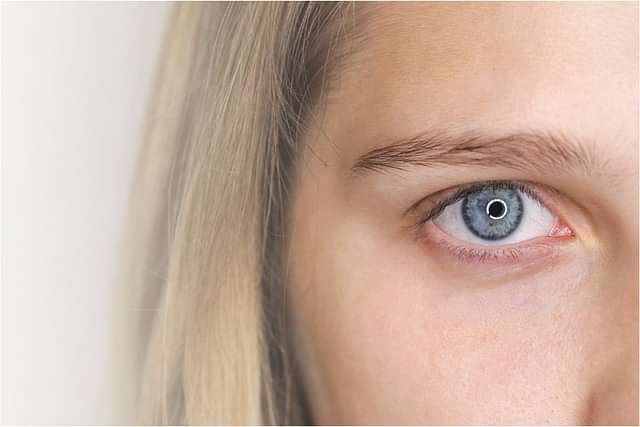
Mydriasis is a condition where the pupils become abnormally dilated and do not respond to changes in light. While pupil dilation naturally occurs in low-light conditions, mydriasis can also result from underlying medical conditions, medications, or injuries. The pupils regulate light entry into the eye, and when they remain dilated, vision may become blurry, and sensitivity to light increases. This sensitivity can cause discomfort, headaches, and a feeling of pressure around the forehead and eyes. Bright environments may feel overwhelming, making it difficult to focus. In contrast, pupil constriction, known as miosis, occurs in response to excessive light exposure to protect the eye. If mydriasis persists without an obvious cause, a medical evaluation may be necessary to rule out serious underlying issues.
What is Mydriasis?
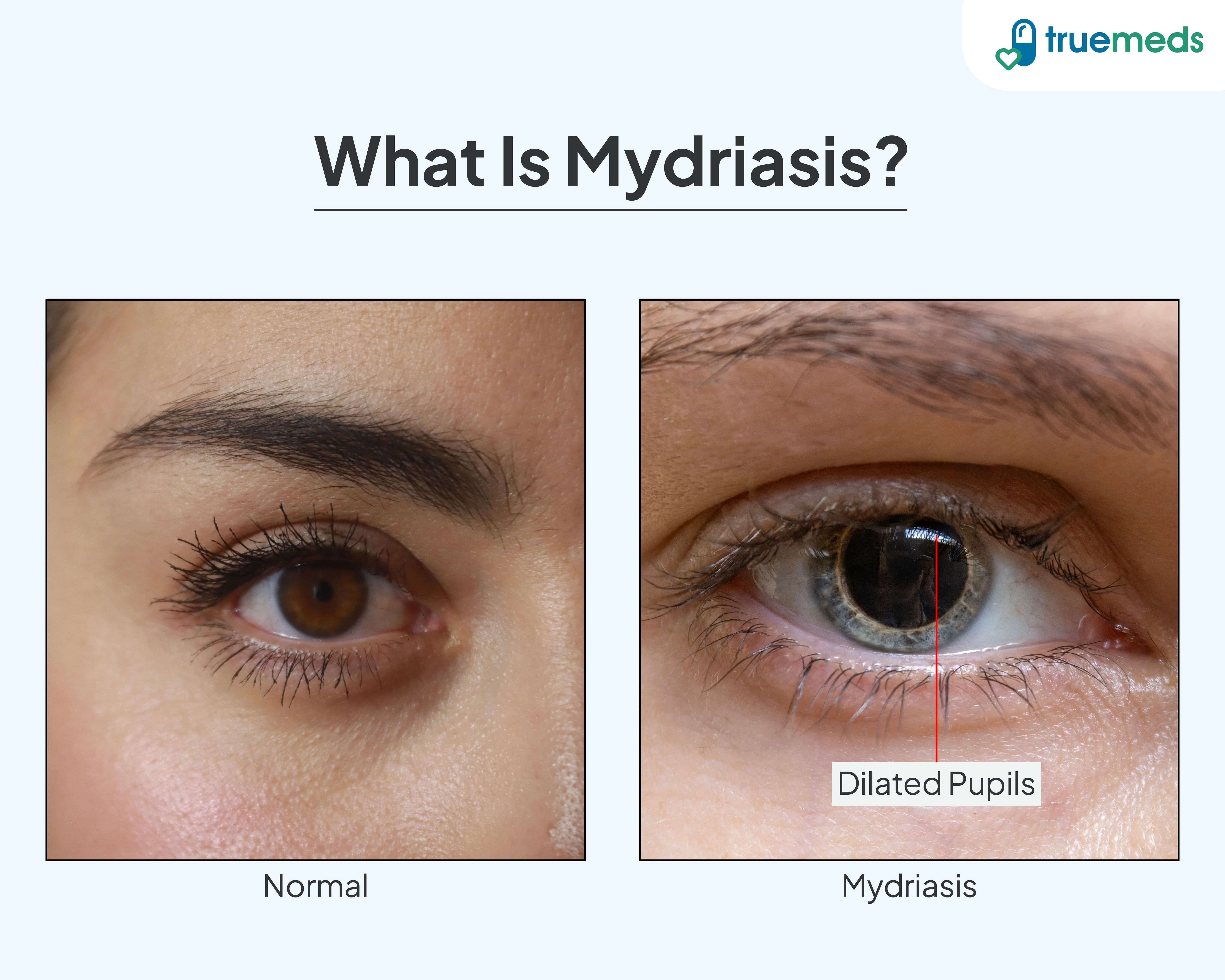
Mydriasis means the pupils (the black part of the eyes) become bigger than normal. Pupillary size is controlled by a balance of parasympathetic (constrictor) and sympathetic (dilator) innervation. Physiological dilation occurs transiently in dim light or with emotional arousal, but persistent or unexplained mydriasis usually indicates pharmacologic exposure, local iris sphincter damage, or neurologic dysfunction (for example, oculomotor nerve compression or denervation). Emotional arousal or transient adrenaline surges may cause short-lived physiological dilation, but they do not cause persistent, fixed mydriasis.
Key Factors about Mydriasis
| Category | Details |
| Also Referred to as | Blown Pupil |
| Commonly Occurs In | Low light conditions, brain or eye injury, certain medications, and recreational drug use |
| Affected Organ | Eyes, pupils |
| Type | Fixed mydriasis, Physiological mydriasis |
| Common Signs | Dilated pupils, light sensitivity, blurry vision, headaches, dizziness, eye irritation, and difficulty sleeping |
| Consulting Specialist | Ophthalmologist, Neurologist |
| Treatment Procedures | Identifying and addressing the underlying cause |
| Managed By | Management of mydriasis depends entirely on the cause. Many of the medicines listed above (tropicamide, phenylephrine, cyclopentolate, atropine) are mydriatic agents used to intentionally dilate pupils for eye examination or surgery and cause mydriasis — they are not treatments for spontaneous mydriasis. Treatment is directed at the underlying cause (e.g., stopping an offending medication, treating a third-nerve compressive lesion, or managing an allergic or chemical reaction). In a limited number of cases (pharmacologic anticholinergic mydriasis), pilocarpine or dilute pilocarpine testing may be used diagnostically or therapeutically under ophthalmic supervision. Urgent evaluation and neuroimaging are required if mydriasis is new, painful, or associated with ophthalmoplegia, ptosis, headache, or altered consciousness. |
| Mimicking Condition | Miosis (constriction of the pupils) |
Symptoms of Mydriasis
A key sign of mydriasis is abnormally dilated pupils that do not adjust in size when exposed to different lighting conditions.
When the pupils remain enlarged, the eyes become highly sensitive to light, which can cause discomfort and blurry vision. In some cases, individuals may also experience a sensation of tightness or pressure around the forehead and eyes.
Symptoms of mydriasis include:
- Enlarged Pupil Size: The most prominent symptom of mydriasis is an abnormally large pupil size. This dilation can affect one or both eyes, depending on the cause.
- Blurred Vision: Dilated pupils can cause sensitivity to light, resulting in blurred vision and discomfort in bright environments.
- Headaches and Dizziness: Some people may experience headaches, dizziness, eye irritation, and trouble sleeping along with mydriasis.
- Eye Irritation: People with mydriasis may feel a sensation of tightness or pressure around the forehead and eyes, particularly in bright light conditions.
- Difficulty Moving the Eye: When mydriasis is due to oculomotor (III) nerve compression (for example, from an aneurysm), it is commonly accompanied by ptosis and extraocular movement deficits (the eye may be “down and out”). The presence of pain or headache with these signs increases concern for a compressive lesion. By contrast, isolated pharmacologic mydriasis typically has a normal range of eye movements and no ptosis. Clinical distinction is crucial for triage (Clausen et al., 2023).
Recognising these symptoms is crucial for seeking prompt medical attention and determining the underlying cause of mydriasis.
Causes of Mydriasis
- Topical ocular mydriatics used in eye care, such as tropicamide, cyclopentolate, phenylephrine, and atropine, are intentionally administered to dilate pupils.
- Systemic anticholinergic agents (e.g., high-dose antihistamines [diphenhydramine], tricyclic antidepressants, some antipsychotics, scopolamine) can cause mydriasis.
- Sympathomimetics (such as amphetamine, cocaine, pseudoephedrine, some decongestants, and certain recreational stimulants) cause pupillary dilation.
- Topical ocular exposure to anticholinergic plant alkaloids (for example, Datura (Jimson weed), Atropa belladonna) may cause prolonged mydriasis.
- Neurologic causes: Oculomotor nerve (III) palsy with pupil involvement (compressive lesions), Adie tonic pupil (postganglionic parasympathetic denervation), and midbrain or parasympathetic pathway lesions.
- Local ocular causes: Traumatic iris sphincter tear (traumatic mydriasis) or surgical injury.
- Important distinction: Many glaucoma drops (e.g., some anticholinergics) may dilate pupils; however, angle-closure glaucoma classically presents with a mid-dilated pupil, severe pain, and vision loss and requires immediate treatment.
In practice, a careful medication and exposure history distinguishes pharmacologic from neurologic causes in most cases.
Risk Factors
Several factors can increase the risk of developing mydriasis, including:
- Trauma to the head can increase the risk of developing mydriasis.
- Individuals who use certain recreational drugs (such as stimulants or hallucinogens) are at higher risk of experiencing dilated pupils.
- People taking medications known to cause mydriasis as a side effect are at higher risk.
- Patients who have recently undergone eye surgery or have suffered eye injuries are at higher risk of developing an enlarged pupil.
- Individuals with conditions such as glaucoma, migraines, or Adie syndrome are at higher risk of experiencing mydriasis.
Who's at Risk?
- Individuals using or abusing specific medications
- People with recent head or eye injuries
- Those with pre-existing neurological or psychiatric disorders
- Patients with untreated acute glaucoma
- Workers exposed to harmful chemicals or toxins
- Individuals with systemic health issues affecting the nervous system
Being aware of these at-risk groups can help in early detection and appropriate management of mydriasis.
Complications
In many cases, mydriasis, especially when triggered by certain medications or plant exposure, resolves on its own within a few hours or days.
During this time, individuals may experience increased sensitivity to light. To reduce discomfort, wearing sunglasses outdoors and avoiding bright lights is recommended. It is also advisable to limit driving until vision returns to normal.
If mydriasis occurs as a reaction to medication, the individual should avoid taking that medicine in the future and consult their doctor about alternative options. Similarly, those affected by plant-related exposure, such as angel’s trumpet (Datura), should take precautions to prevent future contact.
Because dilated pupils are often associated with recreational drug use, individuals with mydriasis may face uncomfortable or misleading assumptions about their condition.
Mydriasis can lead to several complications, depending on the underlying cause and severity of the condition. These include:
- Complications and important associated risks: Mydriasis itself rarely causes permanent blindness. However, mydriasis may be a sign of a serious underlying disease that can threaten vision or life; for example, acute angle-closure glaucoma can cause rapid vision loss if untreated; compressive third-nerve palsies (from an aneurysm or tumour) may herald intracranial haemorrhage or ischemia. Persistent pharmacologic mydriasis may cause prolonged photophobia and functional visual disability until it resolves. Therefore, the clinical context determines risk, and urgent evaluation is required for new, unilateral, fixed mydriasis with associated neurologic or ocular symptoms.
- Eye Irritation: Dilated pupils can cause increased sensitivity to light, leading to eye irritation and discomfort.
- Headaches: Mydriasis can be accompanied by headaches, dizziness, and other symptoms due to increased light sensitivity.
- Adie Syndrome: This rare neurological disorder is characterised by a dilated pupil that does not respond to light, along with the absence of deep tendon reflexes. Adie syndrome can cause vision problems, eye pain, and sensitivity to light.
Prompt diagnosis and appropriate treatment of mydriasis can help prevent or manage these complications, ensuring better eye health and overall well-being.
Prevention of Mydriasis
Preventing pathological mydriasis focuses on avoiding exposure to known causative agents and prompt medication reconciliation. Practical steps include:
- Inform healthcare providers of pupillary sensitivity and review systemic/topical medications that have anticholinergic or sympathomimetic effects.
- Avoid accidental ocular exposure to topical medications and to plants known to contain anticholinergic alkaloids (e.g., Datura species).
- Take precautions when using nebulised ipratropium or eye sprays that can cause unilateral anisocoria from local exposure.
- Seek urgent care for a sudden, unilateral, fixed dilated pupil or if associated symptoms (ptosis, diplopia, severe headache) develop (Clausen et al., 2023).
Diagnosis & Tests
Initial bedside assessment (useful algorithm for anisocoria/mydriasis):
- Document onset and associated features (headache, trauma, diplopia, ptosis, altered consciousness, eye pain). This is urgent if symptoms are abrupt and associated with neurologic features.
- Test pupillary size and reactivity in bright and dim light, and perform the swinging-flashlight test to assess for an afferent pupillary defect. Note whether anisocoria is greater in bright light (suggests parasympathetic/III nerve problem or pharmacologic blockade) or greater in dim light (suggests sympathetic pathway problem/Horner syndrome) (Xu et al., 2022).
- Examine extraocular movements and lids (look for ptosis and ocular motility deficits that suggest third-nerve palsy).
Ancillary Tests
- Topical dilute pilocarpine testing: Low-concentration pilocarpine (e.g., 0.0625%–0.1%) can demonstrate denervation supersensitivity in Adie tonic pupil (constriction with dilute pilocarpine). Full-strength pilocarpine (1%–2%) constricts a normal pupil but is often ineffective if pharmacologic anticholinergic blockade is present. Pilocarpine testing should be performed by an ophthalmologist because interpretation and safety depend on correct concentration and context.
- Pharmacologic history and careful topical exposure assessment (e.g., ipratropium nebuliser causing unilateral mydriasis) are frequently decisive.
- Imaging (CT/CTA or MRI/MRA) is indicated when third-nerve palsy with pupil involvement, new ophthalmoplegia, severe headache, or signs of raised intracranial pressure are present (to exclude aneurysm, haemorrhage, mass) (Clausen et al., 2023).
- Specialist tests: neuro-ophthalmology evaluation, slit lamp examination, and pharmacologic testing under supervision.
Routine blood tests are not diagnostic for pupillary abnormalities but may be useful to evaluate systemic causes when clinically indicated (for example, glucose in diabetic patients or toxicology for suspected systemic medicine ingestion).
Treatment & Management
Principles: Treat the underlying cause. For many cases of pharmacologic mydriasis, observation and protection from bright light (sunglasses) are sufficient while the medicine effect wears off. Specific interventions include:
- Pharmacologic mydriasis from topical/systemic anticholinergics: Usually managed expectantly; pilocarpine 1% may constrict the pupil if there is no ongoing anticholinergic blockade, but this must be used with caution and under ophthalmic guidance. Pilocarpine is ineffective for sympathomimetic-induced dilation.
- Traumatic mydriasis (iris sphincter tear): This may require ophthalmic follow-up; persistent symptomatic cases can be managed with miotic drops, contact-lens tinting, or surgical repair, depending on severity.
- Third-nerve palsy with pupil involvement / suspected compressive lesion: This requires urgent neuroimaging (CT/CTA or MRI/MRA) and neurosurgical/neurology referral; do not assume pharmacologic cause without careful evaluation.
- Angle-closure glaucoma presenting with mid-dilated pupil and pain/vision loss: This is an emergency and requires ocular pressure lowering and ophthalmic management.
- Adie tonic pupil: symptomatic management for photophobia (tinted lenses); dilute pilocarpine can be helpful diagnostically and sometimes therapeutically under specialist care (Payne, 2023).
What is NOT indicated as routine therapy: Topical corticosteroids, systemic antihistamines, or “prophylactic” antiallergic therapy do not reverse neurologic or pharmacologic mydriasis unless there is an inflammatory or allergic ocular condition requiring those medicines. Management should be tailored after identifying the cause and with specialist input when needed.
When to See a Doctor?
If you experience persistent or severe symptoms related to mydriasis, such as blurred vision, photophobia (sensitivity to light), or eye pain, you should consult a doctor. These symptoms may indicate an underlying condition that requires medical attention.
Additionally, if you develop sudden-onset, unilateral pupil dilation or associated symptoms such as ptosis, double vision, severe headache, or altered consciousness, seek urgent medical care.
If you have a condition that requires pupil dilation, such as cataract surgery or an eye examination, your doctor may prescribe mydriatic medications to ensure proper dilation. It is crucial to follow your doctor's instructions and attend regular check-ups to monitor your eye health and manage any potential complications associated with mydriasis. Your doctor can provide personalised advice and treatment options based on your specific condition and needs.
Key Takeaways
- Mydriasis is the dilation of the pupil(s) and can be physiological or pathological.
- Many commonly used ophthalmic agents (tropicamide, cyclopentolate, phenylephrine, atropine) produce mydriasis; these are causes, not generic treatments, for spontaneous mydriasis.
- Urgent evaluation is required for new, unilateral, fixed, nonreactive dilation, especially when accompanied by ptosis, ophthalmoplegia, severe headache, or altered consciousness. Neuroimaging is often indicated.
- Diagnostic testing (including dilute pilocarpine) can help distinguish pharmacologic dilation, Adie pupil, and third-nerve palsy, but should be performed or confirmed by ophthalmology or neuro-ophthalmology.
- Symptomatic care (sunglasses, tinted lenses) is useful; specific pharmacologic reversal is limited and depends on the mechanism.
FAQs
Is miosis good or bad?
What diseases cause miosis?
Is mydriasis bad for glaucoma?
Can mydriasis be permanent?
Can stress cause mydriasis?
Is mydriasis blurred vision?
References
- Payne, W. N. (2023). Anisocoria. StatPearls [Internet]. StatPearls Publishing. https://www.ncbi.nlm.nih.gov/books/NBK470384/
- Prescott, B. R., et al. (2022). Anisocoria and poor pupil reactivity by quantitative pupillometry. https://www.ncbi.nlm.nih.gov/pmc/articles/PMC8810747
- Clausen, K., Davis, S., & Pourmand, A. (2023). Approach to anisocoria in the emergency department. American Journal of Emergency Medicine / PubMed summary (2023). https://pubmed.ncbi.nlm.nih.gov/37179218/
- Xu, S., et al. (2022). Adie’s pupil: A diagnostic challenge for the physician. Frontiers / Case review / open access. https://pmc.ncbi.nlm.nih.gov/articles/PMC8917782/
- American Academy of Ophthalmology. (2020). What is Adie’s pupil? AAO Patient/Educational resource (includes diagnostic guidance). https://www.aao.org/eye-health/diseases/what-is-adies-pupil
Check Related Salts
Latest health articles

Top Health Essentials





















Disclaimer
Top-Selling Medicines:
...View more
Top-OTC medicines:
...View more
Company
About UsHealth ArticleHealth StoriesHealth LibraryDiseases & Health ConditionsAyurvedaUnderstanding Generic MedicinesAll MedicinesAll BrandsNeed HelpFAQSecuritySavings CalculatorAdvertise with UsSubscribe
Registered Office Address
Grievance Officer
Download Truemeds


Contact Us
Our customer representative team is available 7 days a week from 9 am - 9 pm.
v4.28.9

2026 - Truemeds | All rights reserved. Our content is for informational purposes only. See additional information.

Our Payment Partners