

- Medicines
- Personal Care
- Skin Cream
- Sunscreen
- Face Wash
- Skin and Body Soap
- Acne Care
- Body Lotions
- Moisturising Lotion
- Moisturising Cream
- Mosquito Repellent
- Moisturising Gel
- Body Wash
- Hair Oils
- Hair Shampoo
- Hair Conditioners
- Hair Supplements
- Hair Colour
- Hair Serum
- Hair Mask
- Hair Solutions
- Baby Diapers and Wipes
- Baby Lotion and Moisturising Cream
- Baby Bath Essentials
- Baby Skin Care
- Baby and Infant Food
- Baby Healthcare
- Women Multivitamins
- Ovulation Test Kit and Women Intimate Care
- Sanitary Pads
- Nutritional Drinks
- Condoms
- Lubricants
- Massage Gels
- Personal Body Massagers
- Men Performance Booster
- Sexual Health Supplements
- Massage Oils
- Ayurveda
- Tooth Paste
- Mouth Ulcer Gel
- Mouthwash
- Toothache and Gum Pain
- Tooth Brush
- Gargle Solution
- Orthopaedic Supports
- Adult Diapers
- Footwear
- Mobility and Support Accessories
- Urinary Support and Care
- Health Conditions
- Bone and Joint Care
- Digestive Care
- Eye Care
- Pain Relief
- Smoking Cessation
- Liver Care
- Stomach Care
- Cold and Cough
- Heart Care
- Kidney Care
- Piles, Fissures & Fistula
- Respiratory Care
- Mental Wellness
- Derma Care
- Pre and Probiotics
- Acidity
- Gas
- Constipation
- Loose Motion/Diarrhoea
- Digestive Fibres
- Digestive Enzymes
- Eye Lubricant Drops
- Lens Solution
- Safety Eye Wear
- Eye Cream
- Eye Vitamins and Supplements
- Eye Drops
- Eye Ointment and Gel
- Nicotine Patch
- Nicotine Gum
- Nicotine Lozenges
- Cough Syrups
- Chest Rubs and Balms
- Nasal Spray
- Lozenges
- Inhalant Capsules
- Cold and Cough Tablets
- Vitamins & Supplements
- Diabetes Care
- Healthcare Devices
- Homeopathic Medicine
- Health Guide
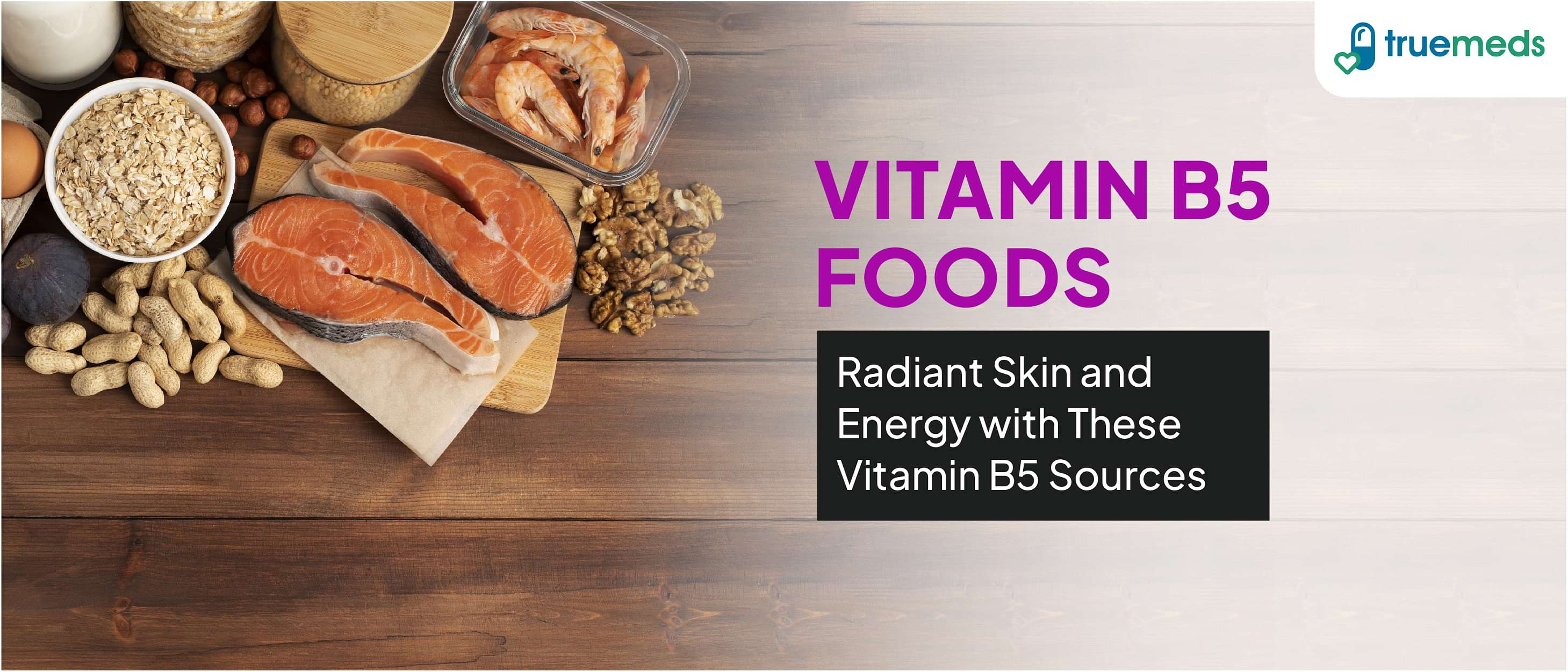
High Vitamin B5 Food Sources
Last updated on : 30 Nov, 2025
Read time : 6 min
Vitamin B5, also known as pantothenic acid, is a water-soluble B-complex vitamin essential for numerous physiological processes. It plays a central role in energy metabolism by aiding the breakdown of carbohydrates, fats, and proteins [6]. As a component of coenzyme A (CoA), vitamin B5 is necessary for fatty acid metabolism, red blood cell formation, and the synthesis of adrenal hormones [7]. This versatile nutrient is found in a wide array of foods, making it relatively easy to meet daily requirements through a balanced diet.
This article explores the top dietary sources of vitamin B5 and how to include them in your meals for optimal health.
Top Dietary Sources of Vitamin B5
Vitamin B5 is an essential nutrient that plays a crucial role in various bodily functions. It is widely available in a broad range of foods, including both animal-based and plant-based sources.
1. Animal-Based Sources of Vitamin B5
Animal-based foods are excellent sources of pantothenic acid, contributing significantly to your daily intake:
- Organ Meats: Organ meats, especially liver, are among the richest sources of vitamin B5. A 3-ounce serving of cooked beef liver provides as much as 4.9 mg, or 98% of the Daily Value (DV) [5], [7].
- Fish: Fatty fish like salmon and shellfish are also high in the vitamin. A 6-ounce salmon fillet provides approximately 3.3 mg, which is 66% of the DV [2], [7].
- Chicken: A 6-ounce serving of cooked, lean chicken breast contains 2.7 mg of vitamin B5, which covers 54% of the DV [1], [2]. Chicken is a lean, versatile source of this essential nutrient.
- Eggs: The yolk of eggs is a good source of pantothenic acid, with one large hard-boiled egg providing about 0.7 mg, or 14% of the DV [2].
- Turkey: Similar to chicken, turkey offers a good amount of the vitamin. A 6-ounce serving of roasted turkey can provide around 2 to 3 mg, helping to meet daily requirements [3], [2].
- Beef: Lean beef is a reliable source. A 3-ounce beef hamburger provides about 14% of the DV [2].
2. Plant-Based Sources of Vitamin B5
Plant-based foods provide numerous sources of vitamin B5, ensuring that vegetarians and vegans can easily meet their daily requirements:
- Mushrooms: Shiitake mushrooms are an exceptional source, offering up to 5.2 mg of vitamin B5 per cup when cooked, which exceeds the 100% DV [2].
- Avocados: Avocados are another great option. One whole avocado provides approximately 2.8 mg, about 56% of the DV [2].
- Nuts and Seeds: Sunflower seeds, wheat germ, and other seeds are high in the vitamin. For example, sunflower seeds offer around 7.0 mg per 100 grams, or 140% of the DV [2]. Snacking on these or adding them to meals is a great way to get a significant dose.
- Legumes: Lentils, split peas, and soybeans are excellent sources. A cup of boiled lentils delivers about 1.3 mg, which is 26% of the DV [2].
- Whole Grains: Whole-grain cereals, brown rice, and oatmeal are rich in vitamin B5. Since milling can significantly reduce its content, opting for whole grains is essential to maximize intake [7].
- Vegetables: Vegetables like broccoli, cauliflower, and sweet potatoes are good sources, typically offering 0.5 to 1.0 mg per cooked cup [2].
Health Benefits of Vitamin B5
Vitamin B5, as an essential component of Coenzyme A (CoA), plays a crucial role in maintaining overall health and well-being. This vitamin offers a wide range of benefits for the body:
- Supports Energy Production: It is fundamental for converting carbohydrates, fats, and proteins into usable energy through the metabolic processes of the cell [6].
- Hormone and Neurotransmitter Synthesis: It aids in the production of sex and stress-related hormones in the adrenal glands and contributes to the synthesis of neurotransmitters, such as acetylcholine, which is essential for memory and cognitive function [7], [8].
- Promotes Skin Health: Pantothenic acid enhances wound healing and acts as a natural moisturiser for the skin, helping to maintain its soft, smooth, and healthy appearance [6].
- Aids Red Blood Cell Production: It assists in the formation of red blood cells, which are responsible for transporting oxygen throughout the body [7].
Adequate intake of this vitamin can help support adrenal health, reduce general fatigue, and improve mental clarity [8]. Since it is widely available in foods like shiitake mushrooms, avocados, sunflower seeds, lean poultry, and legumes, most people can easily meet their daily needs through a balanced diet.
Frequently Asked Questions (FAQs)
What foods are highest in Vitamin B5?
Cooked beef or chicken liver are among the richest sources of Vitamin B5. For instance, a 3-ounce serving of cooked beef liver offers about 4.9 mg, which meets approximately 98% of the daily recommended value for adults [7].
How can I increase my Vitamin B5 levels naturally?
Boost your vitamin B5 intake naturally by regularly consuming foods like shiitake mushrooms, avocado, sunflower seeds, organ meats (liver), salmon, egg yolks, and legumes [2].
How much Vitamin B5 do I need daily?
The Recommended Dietary Allowance (RDA) for adults is 5 mg of Vitamin B5 daily. Pregnant women should aim for 6 mg, while breastfeeding women should consume 7 mg per day [7].
Can Vitamin B5 help with skin health?
Yes, Vitamin B5 (as pantothenic acid) promotes soft, smooth, and healthy skin by attracting moisture, enhancing hydration, and supporting skin healing and regeneration. This is often attributed to the use of its derivative, panthenol, in skincare products [6].
Can Vitamin B5 improve energy levels?
Yes, Vitamin B5 is essential for converting carbohydrates, fats, and proteins into energy through cellular respiration. It supports adrenal health and can play a role in reducing physical fatigue [7].
Is it better to get Vitamin B5 from food or supplements?
It is generally better to obtain Vitamin B5 from food sources such as meats, avocados, broccoli, and whole grains, as food provides a complex matrix of nutrients. However, supplementation can be beneficial if dietary intake is insufficient or for individuals with specific health conditions, but should only be done under the guidance of a medical professional [7].
References
[1] My Food Data. (n.d.). Nutrition facts for cooked lean chicken breast. Retrieved October 6, 2025, from https://tools.myfooddata.com/nutrition-facts/171140/wt9
[2] Whitbread, D. (2010, October 20). Top 10 foods highest in vitamin B5 (Pantothenic Acid). My Food Data. https://www.myfooddata.com/articles/foods-high-in-pantothenic-acid-vitamin-B5.php
[3] My Food Data. (n.d.). Nutrition facts for roasted turkey. Retrieved October 6, 2025, from https://tools.myfooddata.com/nutrition-facts/171479/wt1
[4] Office of Dietary Supplements. (n.d.). Pantothenic acid – consumer. National Institutes of Health. https://ods.od.nih.gov/factsheets/PantothenicAcid-Consumer/
[5] My Food Data. (n.d.). Nutrition facts for beef, liver, raw. https://tools.myfooddata.com/nutrition-facts/169451/wt1
[6] Sanvictores, T., & Chauhan, S. (2024, February 29). Vitamin B5 (Pantothenic acid). StatPearls – NCBI Bookshelf. https://www.ncbi.nlm.nih.gov/books/NBK563233/
[7] Office of Dietary Supplements. (n.d.). Pantothenic acid – health professional. National Institutes of Health. https://ods.od.nih.gov/factsheets/PantothenicAcid-HealthProfessional/
[8] Ismail, N., Kureishy, N., Church, S. J., Scholefield, M., Unwin, R. D., Xu, J., Patassini, S., & Cooper, G. J. S. (2020). Vitamin B5 (d-pantothenic acid) localizes in myelinated structures of the rat brain: Potential role for cerebral vitamin B5 stores in local myelin homeostasis. Biochemical and Biophysical Research Communications, 522(1), 220–225. https://doi.org/10.1016/j.bbrc.2019.11.052
[9] My Food Data. (n.d.). Nutrition facts for chicken, liver, all classes, raw. https://tools.myfooddata.com/nutrition-facts/171060/wt1














Disclaimer
Our healthcare experts have carefully reviewed and compiled the information presented here to ensure accuracy and trustworthiness. It is important to note that this information serves as a general overview of the topic and is for informational purposes only. It is not intended to diagnose, prevent, or cure any health problem. This page does not establish a doctor-patient relationship, nor does it replace the advice or consultation of a registered medical practitioner. We recommend seeking guidance from your registered medical practitioner for any questions or concerns regarding your medical condition.
Popular Articles



Recommended Articles




Recent Articles







Company
About UsHealth ArticleHealth StoriesHealth LibraryDiseases & Health ConditionsAyurvedaUnderstanding Generic MedicinesAll MedicinesAll BrandsNeed HelpFAQSecuritySubscribe
Registered Office Address
Grievance Officer
Download Truemeds


Contact Us
Our customer representative team is available 7 days a week from 9 am - 9 pm.
v4.10.1

2025 - Truemeds | All rights reserved. Our content is for informational purposes only. See additional information.

Our Payment Partners




