

- Medicines
- Personal Care
- Skin Cream
- Sunscreen
- Face Wash
- Skin and Body Soap
- Acne Care
- Body Lotions
- Moisturising Lotion
- Moisturising Cream
- Mosquito Repellent
- Moisturising Gel
- Body Wash
- Hair Oils
- Hair Shampoo
- Hair Conditioners
- Hair Supplements
- Hair Colour
- Hair Serum
- Hair Mask
- Hair Solutions
- Baby Diapers and Wipes
- Baby Lotion and Moisturising Cream
- Baby Bath Essentials
- Baby Skin Care
- Baby and Infant Food
- Baby Healthcare
- Women Multivitamins
- Ovulation Test Kit and Women Intimate Care
- Sanitary Pads
- Nutritional Drinks
- Condoms
- Lubricants
- Massage Gels
- Personal Body Massagers
- Men Performance Booster
- Sexual Health Supplements
- Massage Oils
- Ayurveda
- Tooth Paste
- Mouth Ulcer Gel
- Mouthwash
- Toothache and Gum Pain
- Tooth Brush
- Gargle Solution
- Orthopaedic Supports
- Adult Diapers
- Footwear
- Mobility and Support Accessories
- Urinary Support and Care
- Health Conditions
- Bone and Joint Care
- Digestive Care
- Eye Care
- Pain Relief
- Smoking Cessation
- Liver Care
- Stomach Care
- Cold and Cough
- Heart Care
- Kidney Care
- Piles, Fissures & Fistula
- Respiratory Care
- Mental Wellness
- Derma Care
- Pre and Probiotics
- Acidity
- Gas
- Constipation
- Loose Motion/Diarrhoea
- Digestive Fibres
- Digestive Enzymes
- Eye Lubricant Drops
- Lens Solution
- Safety Eye Wear
- Eye Cream
- Eye Vitamins and Supplements
- Eye Drops
- Eye Ointment and Gel
- Nicotine Patch
- Nicotine Gum
- Nicotine Lozenges
- Cough Syrups
- Chest Rubs and Balms
- Nasal Spray
- Lozenges
- Inhalant Capsules
- Cold and Cough Tablets
- Vitamins & Supplements
- Diabetes Care
- Healthcare Devices
- Homeopathic Medicine
- Health Guide
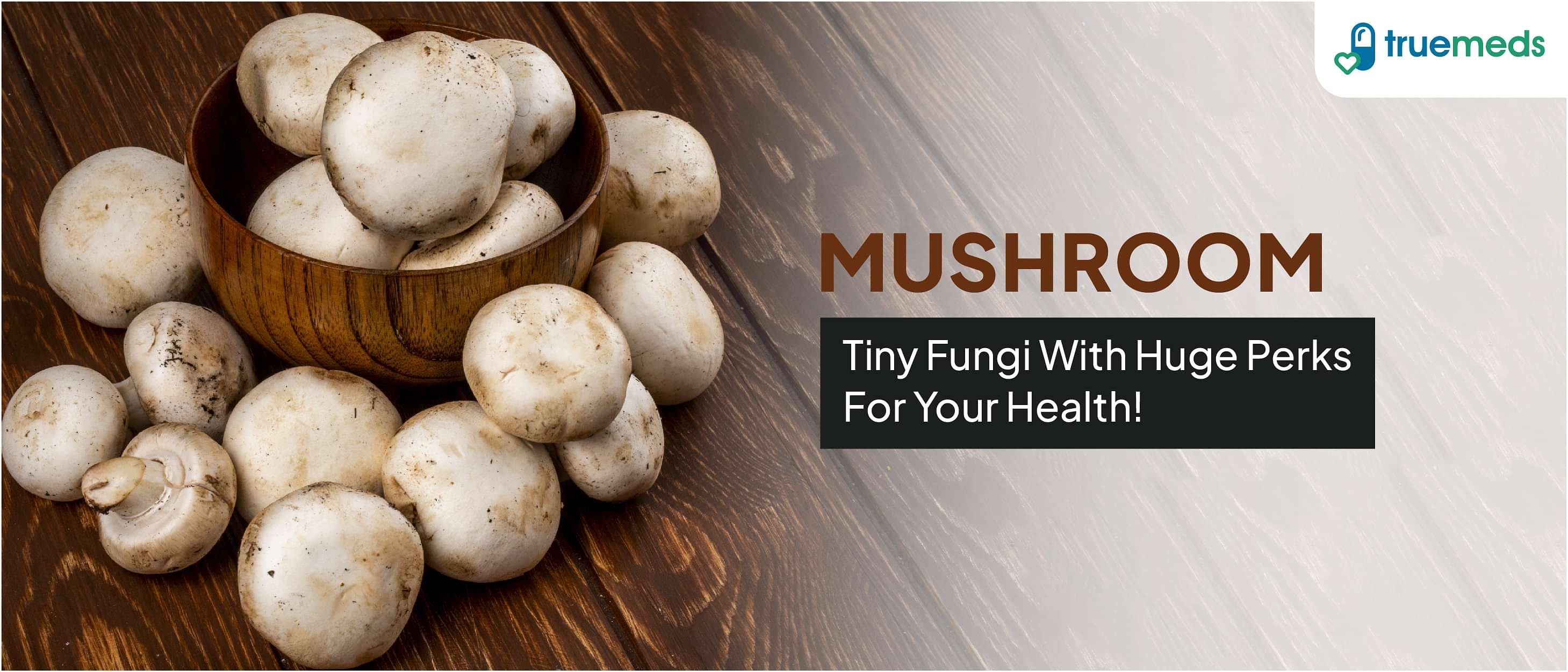
Mushroom Health Benefits, Nutrition & Safety Tips
Last updated on : 01 Dec, 2025
Read time : 7 min
Mushrooms are more than just a tasty topping on your pizza. They are nutritionally valuable fungi with numerous health benefits. These umbrella-shaped fungi are low in calories and packed with essential nutrients like antioxidants, vitamins, fibre, and minerals [1].
From potentially boosting immunity to supporting heart health and weight management, mushrooms can be a valuable addition to your diet.
Let’s explore the many benefits of mushrooms and tips to choose the right ones safely.
6 Potential Health Benefits of Including Mushrooms in Your Diet
Mushrooms offer a wide array of health benefits, thanks to their rich nutritional profile. Not only are they delicious, but their nutrient content rivals that of grains, legumes, and even cottage cheese, making them a valuable addition to a balanced diet [2].
Here are six key areas where mushrooms may benefit health.
1. May Support Immune Function
Mushrooms contain bioactive compounds, such as Beta-glucans, that have been shown to stimulate the activity of immune cells, such as macrophages, which help the body defend against pathogens [3]. Various vitamins and minerals naturally present in mushrooms also support a well-developed immune system to fight pathogens.
2. Potential Role in Antioxidant Protection and Cellular Health
One of the standout benefits of mushrooms is their high antioxidant content, which helps combat signs of ageing [4]. Antioxidants neutralise free radicals, which are the harmful byproducts of metabolism that can damage cells and accelerate ageing.
Mushrooms are a powerful source of L-ergothioneine, an amino acid and antioxidant that helps prevent and slow down oxidative cell damage [5]. Research suggests that higher consumption of mushrooms may be associated with a lower risk of cancer [4]. By reducing oxidative stress, mushrooms support healthier skin, improved cellular repair, and overall longevity.
3. May Aid in Weight Management
Mushrooms may be a helpful component in a weight loss journey!
Low in calories and fat, yet rich in nutrients, they support satiety and healthy eating when paired with regular exercise and a balanced diet [6].
Their high fibre and protein content help regulate appetite and energy intake. Additionally, their vitamin B content aids in the efficient metabolism of proteins, fats, and carbohydrates, giving your body the energy it needs while supporting healthy weight management.
4. May Support Cardiovascular Health
Mushrooms like shiitake and maitake contain potassium, which is a key mineral that helps regulate fluid balance and may contribute to maintaining healthy blood pressure levels [7]. Beta-glucans in mushrooms may help reduce LDL (bad) cholesterol levels without significantly affecting HDL (good) levels [7]. Therefore, while they are not a direct treatment, incorporating mushrooms can benefit the cardiovascular system by supporting healthy blood pressure and cholesterol levels.
5. Possible Role in Pregnancy Nutrition
During pregnancy, women generally consume supplements like folic acid, which is required by the fetus for proper growth and development.
Mushrooms are a natural source of folate, also known as folic acid [8]. It is always advised by doctors to include a variety of nutrient-rich foods, including mushrooms, in their diet during pregnancy.
6. A Rare Source of Vitamin D
Mushrooms are one of the few natural, non-animal sources of Vitamin D, especially when exposed to UV light [1]. Vitamin D is crucial for calcium absorption and maintaining bone health.
Nutritional Powerhouse: Components of Common Edible Mushrooms
The most widely consumed mushrooms in households are Agaricus bisporus (including white button, crimini, and portobello mushrooms), which belong to the Class Basidiomycetes.
Edible mushrooms benefit mainly due to the presence of the following components:
- Antioxidants (like L-ergothioneine and glutathione)
- Fibre (like Beta-glucans)
- Potassium
- Selenium
- B Vitamins (like Riboflavin, Niacin, and Folate)
- Phosphorus
- Zinc
- Protein and essential Amino Acids
These chemical constituents and micronutrients are responsible for providing the documented health benefits of edible mushrooms.
Are All Mushrooms Safe to Eat? Safety Tips
Mushrooms, also called ‘toadstools’ in some contexts, are a type of fungus which grows above the ground. There are many species of mushrooms available, but it is critical to remember that not all mushrooms are beneficial to us; some are highly poisonous.
A commonly found species is Psilocybe cubensis, also known as the magic mushroom. Consuming non-culinary, wild mushrooms, including magic mushrooms, is highly dangerous and can lead to severe adverse effects. A person consuming magic mushrooms can experience delusions, mental confusion, tiredness, or other abnormal symptoms. These mushrooms have potent psychotropic substances, which, even in small quantities, can affect the central nervous system. Magic mushrooms, in the worst-case scenario, can even cause seizures and convulsions, posing serious health risks. Never consume a mushroom unless you are certain it is an edible variety purchased from a reputable source.
How to Choose Safe and Healthy Mushrooms
There have been cases where people are allergic to mushrooms, and they experience severe sensitivity reactions like itching, bloating and even loss of consciousness in chronic cases. If you suspect a mushroom allergy, cease consumption immediately and seek medical attention.
Selecting the right mushroom remains a challenge in the market for foragers. However, when buying from a grocery store or market, follow these safety guidelines:
3 Key Ways to Examine Mushrooms for Safety and Freshness
- Ensure they are Fresh: Before consuming mushrooms, ensure they are fresh. Old and tarnished mushrooms, which are not fresh, pose a significant health risk to humans due to potential spoilage. They should feel firm and look plump, not slimy or withered.
- Smell and Texture: Fresh, edible mushrooms are typically sweet-smelling and possess smooth, unblemished surfaces.
- Visual Safety Precaution: Avoid using mushrooms with a red stem or a red cap if you are wild foraging or unsure of the species; this is a precautionary measure to protect yourself from picking up poisonous ones. Only consume varieties you know are safe and from a reliable source.
Mushrooms have been an undervalued food source for decades, but they offer many benefits. The presence of various nutrients in mushrooms and the benefits of consuming mushrooms are diverse, but people must be aware of which mushrooms are safe to avoid any uncertain effects.
Takeaway
Mushrooms are a nutritional powerhouse offering a range of health benefits—from potentially enhancing immunity and improving heart health to supporting pregnancy and weight management.
However, it’s essential to select edible varieties carefully and consume them fresh. When selected and prepared correctly, mushrooms can be a delicious and valuable part of a healthy diet.
So next time you’re grocery shopping, pick up some mushrooms and enjoy both their flavour and health perks.
Expert Quote: “Mushrooms are one of the few plant-based sources of vitamin D and offer powerful antioxidant and immune-supporting benefits. Including them regularly in your meals can make a real difference to your long-term health.”
Dr. Anubha Karol
References
[1] Cardwell, G., Bornman, J. F., James, S. L., & Black, L. J. (2018). A review of mushrooms as a potential source of dietary vitamin D. Nutrients, 10(10), 1498. https://doi.org/10.3390/nu10101498
[2] Kalač, P. (2013). Edible mushrooms: chemical composition and nutritional value. Food Reviews International, 29(2), 196–211. https://doi.org/10.1080/87559129.2012.748344
[3] Motta, F., Gershwin, M. E., & Selmi, C. (2021). Mushrooms and immunity. Journal of Autoimmunity, 117, 102576. https://doi.org/10.1016/j.jaut.2020.102576
[4] Ba, D. M., Ssentongo, P., Beelman, R. B., Muscat, J., Gao, X., & Richie, J. P. (2021). Higher mushroom consumption is associated with lower risk of cancer: A systematic review and meta-analysis of observational studies. Advances in Nutrition, 12(5), 1691–1704. https://doi.org/10.1093/advances/nmab015
[5] Dubost, N. J., Ou, B., & Beelman, R. B. (2007). Quantification of L-ergothioneine in cultivated mushrooms by liquid chromatography with tandem mass spectrometric detection. Journal of Agricultural and Food Chemistry, 55(6), 2097–2101. https://doi.org/10.1021/jf062883c
[6] Ganesan, K., & Xu, B. (2018). Anti-obesity effects of medicinal and edible mushrooms. Molecules, 23(11), 2880. https://doi.org/10.3390/molecules23112880
[7] Krittanawong, C., Isath, A., Hahn, J., Wang, Z., Fogg, S. E., Bandyopadhyay, D., Jneid, H., Virani, S. S., & Tang, W. H. W. (2021). Mushroom consumption and cardiovascular health: A systematic review. The American Journal of Medicine, 134(5), 637-642.e2. https://doi.org/10.1016/j.amjmed.2020.10.035
[8] Phillips, K. M., Ruggio, D. M., & Haytowitz, D. B. (2011). Folate composition of 10 types of mushrooms determined by liquid chromatography–mass spectrometry. Food Chemistry, 129(2), 630–636. https://doi.org/10.1016/j.foodchem.2011.04.087













Disclaimer
Our healthcare experts have carefully reviewed and compiled the information presented here to ensure accuracy and trustworthiness. It is important to note that this information serves as a general overview of the topic and is for informational purposes only. It is not intended to diagnose, prevent, or cure any health problem. This page does not establish a doctor-patient relationship, nor does it replace the advice or consultation of a registered medical practitioner. We recommend seeking guidance from your registered medical practitioner for any questions or concerns regarding your medical condition.
Popular Articles

Recommended Articles
Recent Articles






Company
About UsHealth ArticleHealth StoriesDiseases & Health ConditionsAyurvedaAll MedicinesAll BrandsNeed HelpFAQSecuritySubscribe
Registered Office Address
Grievance Officer
Download Truemeds


Contact Us
Our customer representative team is available 7 days a week from 9 am - 9 pm.
v4.8.0

2025 - Truemeds | All rights reserved. Our content is for informational purposes only. See additional information.

Our Payment Partners




