

- Medicines
- Personal Care
- Skin Cream
- Sunscreen
- Face Wash
- Skin and Body Soap
- Acne Care
- Body Lotions
- Moisturising Lotion
- Moisturising Cream
- Mosquito Repellent
- Moisturising Gel
- Body Wash
- Hair Oils
- Hair Shampoo
- Hair Conditioners
- Hair Supplements
- Hair Colour
- Hair Serum
- Hair Mask
- Hair Solutions
- Baby Diapers and Wipes
- Baby Lotion and Moisturising Cream
- Baby Bath Essentials
- Baby Skin Care
- Baby and Infant Food
- Baby Healthcare
- Women Multivitamins
- Ovulation Test Kit and Women Intimate Care
- Sanitary Pads
- Nutritional Drinks
- Condoms
- Lubricants
- Massage Gels
- Personal Body Massagers
- Men Performance Booster
- Sexual Health Supplements
- Massage Oils
- Ayurveda
- Tooth Paste
- Mouth Ulcer Gel
- Mouthwash
- Toothache and Gum Pain
- Tooth Brush
- Gargle Solution
- Orthopaedic Supports
- Adult Diapers
- Footwear
- Mobility and Support Accessories
- Urinary Support and Care
- Health Conditions
- Bone and Joint Care
- Digestive Care
- Eye Care
- Pain Relief
- Smoking Cessation
- Liver Care
- Stomach Care
- Cold and Cough
- Heart Care
- Kidney Care
- Piles, Fissures & Fistula
- Respiratory Care
- Mental Wellness
- Derma Care
- Pre and Probiotics
- Acidity
- Gas
- Constipation
- Loose Motion/Diarrhoea
- Digestive Fibres
- Digestive Enzymes
- Eye Lubricant Drops
- Lens Solution
- Safety Eye Wear
- Eye Cream
- Eye Vitamins and Supplements
- Eye Drops
- Eye Ointment and Gel
- Nicotine Patch
- Nicotine Gum
- Nicotine Lozenges
- Cough Syrups
- Chest Rubs and Balms
- Nasal Spray
- Lozenges
- Inhalant Capsules
- Cold and Cough Tablets
- Vitamins & Supplements
- Diabetes Care
- Healthcare Devices
- Homeopathic Medicine
- Health Guide
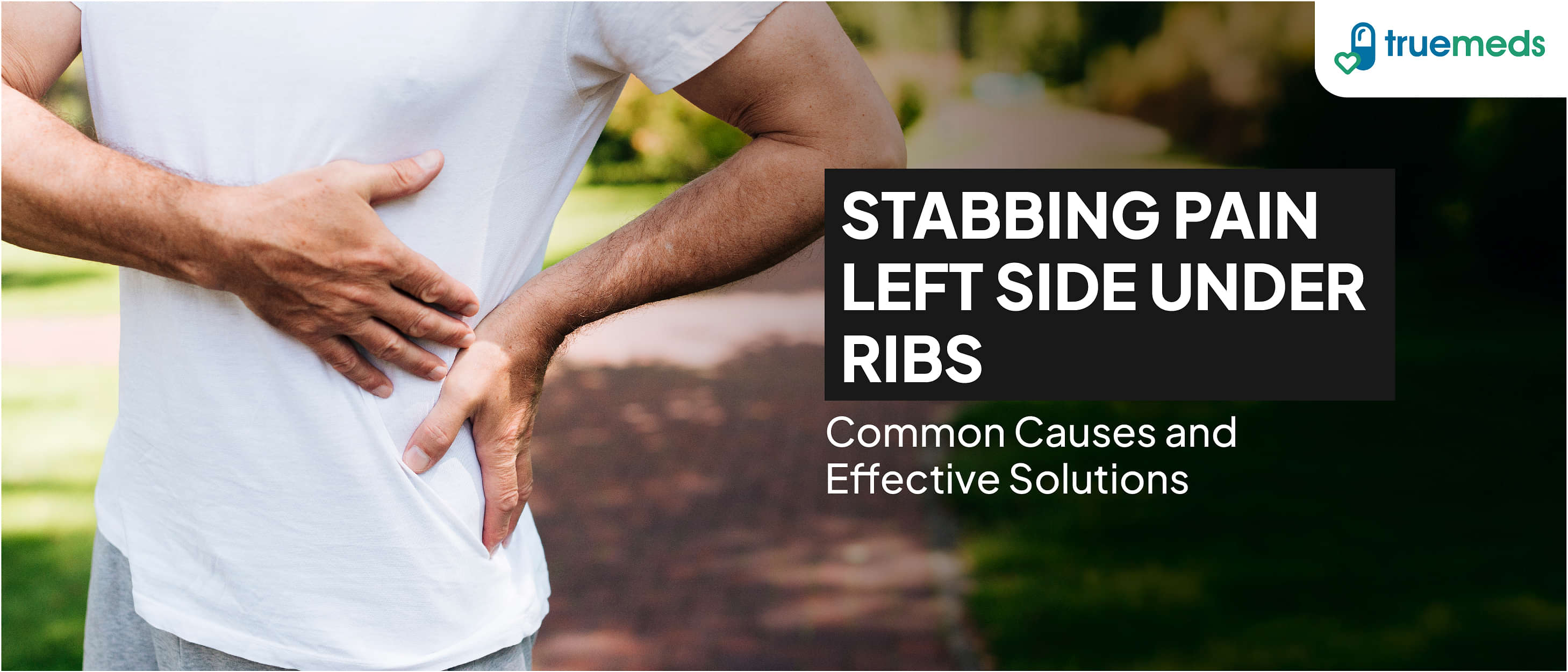
Stabbing Pain in the Left Side Under Ribs: Common Causes and Effective Solutions
Last updated on : 11 Nov, 2025
Read time : 10 min
It might catch you off guard—a sudden, sharp pain on the left side under your ribs that stops you in your tracks. While this sensation can be alarming, it often has common and treatable causes.
The rib cage protects some of the body’s most crucial organs, including the heart, lungs, stomach, spleen, and pancreas. Therefore, any sharp, sudden, or persistent discomfort in this area warrants attention. Understanding the potential common triggers for this discomfort and knowing when to seek professional medical advice is key to effective symptom management and timely treatment of any underlying health issues.
Common Causes of Sharp Pain on the Left Side Under Ribs
Several conditions can lead to pain under the left ribs. Identifying the nature and location of the pain can help a healthcare professional determine the underlying cause. We will look into some of the most common causes below:
1) Costochondritis
One of the primary causes of rib pain could be costochondritis. This condition is essentially an inflammation of the cartilage that connects your ribs to your breastbone (sternum) [1], [2]. It typically results in a sharp or stabbing pain in your chest wall that often worsens with movement, deep breathing, or direct pressure on the ribs [2]. The exact cause often remains unclear, but it is believed that physical strain, injury, or severe respiratory infection may trigger it [1].
2) Broken or Bruised Ribs
Injuries, such as broken or bruised ribs from falls, accidents, or direct blows to the chest, can cause sharp pain under the ribs. Pain caused by a fractured or bruised rib tends to be severe and worsen with movement, deep breaths, or coughing. In rare instances, a broken rib can lead to serious complications, such as a collapsed lung or injury to surrounding organs, which requires immediate medical attention [3].
3) Irritable Bowel Syndrome (IBS) and Inflammatory Bowel Disease (IBD)
IBS is a common disorder that typically causes recurrent abdominal discomfort and changes in bowel habits [4]. While discomfort is most commonly in the lower abdomen, gas and bloating associated with IBS may sometimes be perceived as pain near the left ribs.
4) Pancreatitis
Pancreatitis, an inflammation of the pancreas, can cause severe abdominal pain that may radiate to your back or under your ribs. This condition can be either acute or chronic and is often associated with symptoms such as nausea, vomiting, and fever [5]. The causes of pancreatitis include gallstones, chronic alcohol use, and certain medications.
5) Enlarged or Ruptured Spleen (A Medical Emergency)
The spleen, located high in the left upper abdomen, can cause pain if it is enlarged (due to infections or disorders) or, most critically, if it ruptures. A ruptured spleen is a life-threatening medical emergency. It typically presents as sudden, excruciating pain under the left ribs, which may radiate to the left shoulder (Kehr’s sign) [6]. If this severe pain is accompanied by signs of shock (rapid heart rate, low blood pressure, severe dizziness, or fainting), seek emergency medical care immediately.
6) Gastritis
Gastritis is a medical condition in which the lining of your stomach becomes inflamed. While it commonly causes pain in the upper middle abdomen (epigastric), it may occasionally be perceived on the left side [7].
7) Kidney Stones or Infection
The left kidney is located partially under the lower ribs. Kidney stones can cause severe pain that radiates from your back to your front, which may be perceived under the ribs. A kidney infection (pyelonephritis) can also cause sharp pain in your lower back and sides that could be mistaken for pain under the ribs. Be aware of accompanying symptoms, such as fever, chills, and changes in urination (e.g., burning sensation or increased frequency).
8) Pleurisy
Pleurisy is an inflammation of the pleura, the lining that covers your lungs and lines the chest wall. Pleuritic pain is typically felt in the chest wall and is a sharp, localized pain, often perceived under the ribs, especially while taking a deep breath or coughing. Potential causes for this condition include infections, autoimmune diseases, or other lung-related issues. The pain is often aggravated by movement and can be accompanied by symptoms like shortness of breath [8].
If you experience persistent or severe symptoms, it is vital to consult your doctor promptly for evaluation and appropriate treatment.
Did You Know?
While folklore often seeks to explain mysterious ailments, the concept of a mischievous imp causing pain is a historical anecdote, not a medical fact. In ancient times, people often created myths to explain confusing or sudden bodily sensations like sharp rib pain, which served to encourage moderation and mindful living. Always rely on modern medical science for diagnosis and treatment.
Effective Solutions for Stabbing Pain Under Left Ribs
Treating pain under your left ribs requires addressing the underlying cause. Do not attempt to self-diagnose or self-treat severe or persistent pain. The solutions below are general strategies for symptom management, but their suitability depends entirely on the specific diagnosis provided by a healthcare professional.
1) Immediate Relief Solution (Symptom Management)
If you are experiencing rib pain and seeking temporary relief while awaiting or following a medical diagnosis, here are some immediate solutions:
- Rest and Avoidance of Strain: Resting and avoiding strain is one of the most effective ways to alleviate symptoms, particularly for musculoskeletal causes like costochondritis or a strain. Ensure you limit heavy lifting or strenuous exercise to prevent exacerbation of the condition.
- Targeted Relief (Musculoskeletal Pain Only): For pain confirmed to be from muscles, cartilage, or bone (like costochondritis), localized therapy can provide temporary comfort. Cold compresses may help reduce initial inflammation. After the acute pain subsides (typically 48 hours), gentle heat can help relax tight muscles. Important: These home remedies are not effective for pain originating from internal organs and should never delay a professional medical assessment.
- Over-the-Counter Pain Medications: Over-the-counter pain medications can be used for temporary discomfort relief. Nonsteroidal anti-inflammatory drugs (NSAIDs), such as ibuprofen, or acetaminophen (paracetamol), can help alleviate pain by reducing inflammation. However, it is crucial to follow the recommended dosage and consult your doctor, especially since NSAIDs can irritate the stomach lining, potentially worsening conditions like gastritis.
2) Long-Term Solutions and Treatments
Dealing with persistent or recurring pain requires addressing the root cause through long-term strategies, often guided by your physician.
- Targeted Rehabilitation (Musculoskeletal): For pain confirmed to be musculoskeletal (e.g., costochondritis, rib strain), physical therapy and gentle, core-strengthening exercises are effective long-term strategies. A therapist focuses on improving posture, flexibility, and muscle strength. Caution: Exercise should be strictly avoided or limited if the underlying cause is inflammation of an internal organ, such as gastritis or pancreatitis, as this can worsen the condition.
- Dietary Changes: For individuals with diagnosed conditions like IBS or gastritis, dietary modifications are essential for managing symptoms. This can include avoiding trigger foods (e.g., spicy or high-fat foods), increasing fiber intake gradually, and maintaining a balanced diet [9].
- Hydration: Keeping well-hydrated is essential for overall health. Adequate hydration plays a pivotal role in preventing the formation of certain types of kidney stones and maintaining optimal digestive health, both of which can cause painful symptoms if neglected.
- Stress Management: Managing stress levels effectively is an integral part of dealing with many health conditions. Stress can exacerbate symptoms of conditions like IBS and gastritis. Techniques such as mindfulness, meditation, and yoga can significantly help manage stress levels, potentially leading to less frequent or less intense pain.
3) Medical Treatments
There are various medical treatments available to help alleviate this discomfort and address its root cause.
- Prescription Medications: If over-the-counter medications are insufficient, your doctor may prescribe more potent pain relievers or specific medications corresponding to the underlying condition. For instance, proton pump inhibitors or H2 blockers may be prescribed for gastritis, and antibiotics may be necessary if an infection is causing the pain.
- Interventional Procedures: In severe cases, interventional procedures or surgery may be required. These involve treatments for conditions like kidney stones using a procedure called lithotripsy (shock wave treatment to break up stones). Surgical interventions may also become necessary for more severe conditions, such as a ruptured spleen. Remember, these options are considered when less invasive methods have been exhausted.
If you experience persistent, severe, or unexplained rib pain on the left side, it is crucial to consult a healthcare professional promptly. They can perform a thorough examination, provide an accurate diagnosis, and guide you toward the appropriate treatment plan to help you regain your health and well-being.
Frequently Asked Questions (FAQs)
How do I get rid of sharp pain under my left rib cage?
First, consult a doctor for a proper diagnosis, especially if the pain is severe or persistent. Treatment depends entirely on the cause; it may involve rest, specific prescribed medication (e.g., anti-inflammatories, antibiotics, or antacids), or targeted physical therapy.
What is the home remedy for sharp pain in the ribs?
For minor muscular discomfort, a doctor may suggest rest, warm/cold compresses, and over-the-counter pain relievers (like acetaminophen). However, any persistent, unexplained, or severe pain in your left side under the ribs requires professional medical attention and a proper diagnosis before attempting home remedies.
What is the most common cause of pain under the left rib cage?
The most common causes of pain under or in the rib cage area are often musculoskeletal, such as costochondritis or a muscle strain. However, it can also signal conditions involving internal organs like the stomach, spleen, or kidney, making medical evaluation essential.
What causes sharp pain under the ribs?
Sharp left rib pain can be caused by inflammation or injury to the muscles, cartilage (e.g., costochondritis), or ribs themselves. It can also be a symptom of underlying organ conditions, such as stomach inflammation (gastritis), a respiratory issue (pleurisy), or a condition affecting the pancreas or spleen.
References
[1] Proulx, A. M., & Zryd, T. W. (2009). Costochondritis: Diagnosis and treatment. American Family Physician, 80(6), 617-620. https://www.aafp.org/pubs/afp/issues/2009/0915/p617.html
[2] Schumann, J. A., Sood, T., & Parente, J. J. (2024). Costochondritis. StatPearls Publishing. https://www.ncbi.nlm.nih.gov/books/NBK532931/
[3] Connors, J. F. (1921). Annals of Surgery. Annals of Surgery, 74(1), 1–12. https://doi.org/10.1097/00000658-192107000-00001
[4] Weaver, K. R., Melkus, G. D., & Henderson, W. A. (2017). Irritable bowel syndrome: A review. AJN, American Journal of Nursing, 117(6), 48–55. https://doi.org/10.1097/01.NAJ.0000520253.57459.01
[5] Vengadakrishnan, K., & Koushik, A. K. (2015). A study of the clinical profile of acute pancreatitis and its correlation with severity indices. International Surgery Journal, 2(4), 589–595. https://doi.org/10.18203/2349-2902.isj20150993
[6] Chapman, J., Helm, T. A., & Kahwaji, C. I. (2023). Splenic infarcts. StatPearls Publishing. https://www.ncbi.nlm.nih.gov/books/NBK430902/
[7] Ben, H., Li, L., Rong, P., Jin, Z., Zhang, J., Li, Y., & Li, X. (2012). Observation of pain-sensitive points along the meridians in patients with gastric ulcer or gastritis. Evidence-based Complementary and Alternative Medicine, 2012, 1–7. https://doi.org/10.1155/2012/130802
[8] Light, R. W. (2006). Pleural effusions. Medical Clinics of North America, 90(3), 453–479. https://doi.org/10.1016/j.mcna.2005.12.016
[9] Puylaert, M., Kapural, L., Van Zundert, J., Peek, D., Lataster, A., Mekhail, N., … & Keulemans, Y. C. (2011). Pain in chronic pancreatitis. In L. Kapural (Ed.), Evidence‐Based Interventional Pain Medicine: According to Clinical Diagnoses (pp. 202-211). Wiley-Blackwell. https://onlinelibrary.wiley.com/doi/abs/10.1002/9781119968375.ch26













Disclaimer
Our healthcare experts have carefully reviewed and compiled the information presented here to ensure accuracy and trustworthiness. It is important to note that this information serves as a general overview of the topic and is for informational purposes only. It is not intended to diagnose, prevent, or cure any health problem. This page does not establish a doctor-patient relationship, nor does it replace the advice or consultation of a registered medical practitioner. We recommend seeking guidance from your registered medical practitioner for any questions or concerns regarding your medical condition.
Popular Articles

Recommended Articles


Recent Articles








Company
About UsHealth ArticleHealth StoriesHealth LibraryDiseases & Health ConditionsAyurvedaUnderstanding Generic MedicinesAll MedicinesAll BrandsNeed HelpFAQSecuritySubscribe
Registered Office Address
Grievance Officer
Download Truemeds


Contact Us
Our customer representative team is available 7 days a week from 9 am - 9 pm.
v4.11.0

2026 - Truemeds | All rights reserved. Our content is for informational purposes only. See additional information.

Our Payment Partners




