

- Medicines
- Personal Care
- Skin Cream
- Sunscreen
- Face Wash
- Skin and Body Soap
- Acne Care
- Body Lotions
- Moisturising Lotion
- Moisturising Cream
- Mosquito Repellent
- Moisturising Gel
- Body Wash
- Hair Oils
- Hair Shampoo
- Hair Conditioners
- Hair Supplements
- Hair Colour
- Hair Serum
- Hair Mask
- Hair Solutions
- Baby Diapers and Wipes
- Baby Lotion and Moisturising Cream
- Baby Bath Essentials
- Baby Skin Care
- Baby and Infant Food
- Baby Healthcare
- Women Multivitamins
- Ovulation Test Kit and Women Intimate Care
- Sanitary Pads
- Nutritional Drinks
- Condoms
- Lubricants
- Massage Gels
- Personal Body Massagers
- Men Performance Booster
- Sexual Health Supplements
- Massage Oils
- Ayurveda
- Tooth Paste
- Mouth Ulcer Gel
- Mouthwash
- Toothache and Gum Pain
- Tooth Brush
- Gargle Solution
- Orthopaedic Supports
- Adult Diapers
- Footwear
- Mobility and Support Accessories
- Urinary Support and Care
- Health Conditions
- Bone and Joint Care
- Digestive Care
- Eye Care
- Pain Relief
- Smoking Cessation
- Liver Care
- Stomach Care
- Cold and Cough
- Heart Care
- Kidney Care
- Piles, Fissures & Fistula
- Respiratory Care
- Mental Wellness
- Derma Care
- Pre and Probiotics
- Acidity
- Gas
- Constipation
- Loose Motion/Diarrhoea
- Digestive Fibres
- Digestive Enzymes
- Eye Lubricant Drops
- Lens Solution
- Safety Eye Wear
- Eye Cream
- Eye Vitamins and Supplements
- Eye Drops
- Eye Ointment and Gel
- Nicotine Patch
- Nicotine Gum
- Nicotine Lozenges
- Cough Syrups
- Chest Rubs and Balms
- Nasal Spray
- Lozenges
- Inhalant Capsules
- Cold and Cough Tablets
- Vitamins & Supplements
- Diabetes Care
- Healthcare Devices
- Homeopathic Medicine
- Health Guide
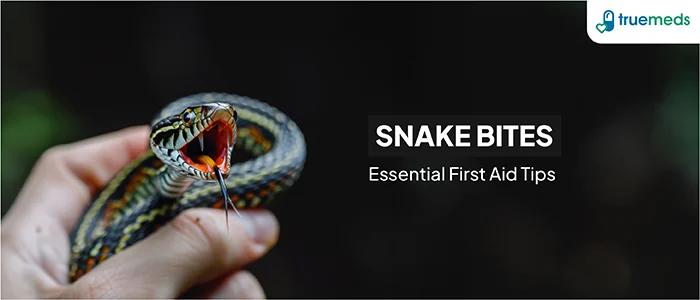
First Aid Steps for Snake Bite: What to Do and What to Avoid
Last updated on : 30 Nov, 2025
Read time : 10 min
It can happen in an instant—a walk through the woods, a step in tall grass, and suddenly, there’s a sharp bite. Panic sets in. Was it a snake? What do you do next?
Being bitten by a snake can be a terrifying experience. Although snake bites are relatively rare, they remain a significant public health concern globally, with an estimated 5.4 million people bitten each year [1]. They can be potentially life-threatening and require immediate professional medical attention [2]. Administering correct first aid can significantly slow venom absorption, potentially reduce complications, and improve survival outcomes until definitive care is provided [3]. This article aims to guide you through the essential first-aid steps for a snake bite. It highlights both the crucial dos and don’ts in such scenarios. You’ll learn how to recognise common snake bite symptoms, what immediate actions to take, and what mistakes to avoid.
Recognizing Snake Bite Symptoms
Understanding the symptoms of a snake bite is crucial for timely medical intervention. We will split these symptoms into two categories: local and systemic.
Local Symptoms:
If you observe any of these local symptoms following a snake bite, it’s imperative to seek medical attention immediately.
- Pain: The area around the bite may be severely painful, with victims often describing a burning or throbbing sensation [4].
- Swelling: Significant and rapidly spreading swelling of the affected area may occur, which can restrict circulation.
- Redness: The skin around the bite may turn red, indicating inflammation and tissue damage.
- Bruising (Ecchymosis): Bruises or discoloration could develop around the area of the bite due to damage to blood vessels.
Systemic Symptoms:
Recognising systemic symptoms is equally important as they indicate that the venom has spread throughout the body, affecting major organ systems.
- Nausea and Vomiting: These are common reactions due to systemic toxicity.
- Dizziness and Weakness: Feeling dizzy or lightheaded could be a sign of low blood pressure (hypotension) or shock.
- Difficulty Breathing (Dyspnea): Respiratory distress is a serious symptom that might occur after a snake bite, potentially due to neurotoxicity affecting the respiratory muscles [5].
- Altered Mental State: If the venom affects the nervous system (neurotoxicity), victims can experience confusion, disorientation, or even unconsciousness.
Differences Between Venomous and Non-Venomous Snake Bites
While identifying the snake is helpful, it is critical to treat every bite as potentially venomous and seek immediate medical care [2]. Nonetheless, understanding the typical features can aid in communicating information to medical staff.
|
Characteristic |
Venomous Snake Bite |
Non-Venomous Snake Bite |
| Bite Marks | Typically one or two distinct puncture marks from the fangs [4]. | Often two curved rows of smaller teeth marks; may appear as a scratch or minor abrasion. |
| Symptoms | Intense pain, rapid and spreading swelling, bruising, systemic symptoms (nausea, difficulty breathing) often occur quickly. | Mild or no pain, localised injury, symptoms are generally less severe and do not progress systemically. |
| Snake Identification | Venomous snakes often have specific physical traits, such as triangular or broad heads, elliptical or slit-like pupils, and prominent fangs. | Non-venomous snakes typically have rounded heads and round pupils. |
It’s also important to note that a venomous snake can deliver a “dry bite,” where little to no venom is injected (up to 50% of bites by some species are dry bites). This could lead to fewer or delayed symptoms than expected, but medical evaluation is still mandatory [4].
Immediate First Aid for Snake Bite
Regardless of whether you suspect a snake bite is venomous or not, it’s crucial to act swiftly and follow these first aid steps while arranging for immediate transport to a medical facility:
- Ensure the victim and bystanders are safe: First and foremost, calmly move everyone to a safe location, well away from the snake.
- Keep the victim calm and still: Reducing movement is the single most important action as physical exertion can increase circulation and accelerate venom spread [3]. Help the victim lie down and remain as still as possible.
- Position the bite at or below heart level: If possible, lay the victim down so that the affected area is kept below the level of the heart to help slow the flow of venom [2].
- Remove tight clothing and jewelry: To reduce constriction and allow for any possible swelling, immediately remove any tight clothing, rings, bracelets, or watches around the bitten area.
- Clean the wound and cover it: Gently rinse the bite with clean, running water to remove any surface contamination. Follow this by covering the wound with a clean, dry dressing or sterile bandage to prevent infection.
- Apply a Pressure Immobilization Bandage (PIB) ONLY if trained and the specific snake type is known to respond to this method (e.g., Elapids in Australia): In many parts of the world, including North America and parts of Asia, this is NOT recommended and can be harmful; check local protocols [2],[4]. If using a PIB, it should be firm, like a sprain bandage, but not so tight as to cut off circulation.
- Note the time and monitor symptoms: Keep track of when the bite occurred and monitor the victim’s symptoms closely (e.g., onset of pain, swelling, difficulty breathing). This will be crucial information for medical professionals.
Seeking Professional Medical Care and Management
Following a snake bite, the ONLY definitive treatment is professional medical care at a hospital equipped to manage envenomation. Your primary goal is rapid transportation.
The most critical factor in survival and recovery is the time taken to reach an emergency room [1]. Upon arrival, medical professionals will:
- Assess the severity of the envenomation.
- Provide supportive care (e.g., pain relief, airway management).
- Administer Antivenom (Antivenin), which is the only specific antidote that can neutralize circulating venom. Antivenom is most effective when administered quickly, ideally within the first few hours of the bite, though it may still be beneficial later [4].
Snake Bite Do’s and Don’ts: Essential First Aid Rules
In the event of a snake bite, following these rules is essential for effective management before professional help arrives:
|
DO’s |
DON’Ts |
| DO Stay Calm: It is crucial to limit panic and keep the victim as still as possible to slow venom circulation. | DO NOT Apply a Tourniquet: Restricting blood flow can cause severe tissue damage, potentially leading to the loss of a limb [2],[3]. |
| DO Seek Medical Help Immediately: Call an ambulance or drive immediately to the nearest hospital’s emergency room. | DO NOT Cut the Wound or Try to Suck Out the Venom: This is ineffective, can introduce infection, and risks causing more harm [4]. |
| DO Keep the Bite Area Still: Immobilize the affected limb with a splint or sling if possible, maintaining it at or below heart level. | DO NOT Apply Ice or Immerse the Wound in Water: Cold can cause further tissue damage and is ineffective at slowing venom spread [3]. |
| DO Note the Time and Symptoms: Record when the bite occurred and track the progression of symptoms to inform the medical team. | DO NOT Consume Alcohol, Caffeine, or Unprescribed Medication: These can alter blood pressure, affect heart rate, and interfere with medical treatment or accelerate venom spread [2]. |
| DO Leave the Snake Alone: Do not attempt to capture or kill the snake. Risking a second bite is not worth the potential identification information. | DO NOT Incise the Wound or Use Electrical Devices: These methods are scientifically proven to be ineffective and dangerous [4]. |
Common Myths and Misconceptions about Snake Bites
Now, let’s debunk some common myths associated with snake bites that can lead to dangerous errors in first aid:
| Myth |
Reality |
| Snakes are typically aggressive and eager to bite humans. | Snakes are generally timid and defensive. They would rather save their venom for hunting prey and usually bite humans only when they feel threatened, stepped on, or provoked [1]. |
| Sucking out the venom or using a tourniquet can help treat a snakebite. | Both these methods are harmful, ineffective, and should be avoided. They cause unnecessary trauma, infection, and tissue damage [3]. |
| You must identify the specific snake that bit you to receive proper treatment. | While helpful, identification is not essential. Modern antivenoms are often polyvalent (effective against several species) [4]. Doctors treat the symptoms and clinical picture, not just the snake. |
| Copperhead bites are harmless. | While copperhead bites rarely lead to fatality, they can still cause significant local tissue damage, pain, and swelling, and require prompt medical attention [5]. |
Understanding these realities about snake bites can be transformative in handling such emergencies. It equips us with the necessary knowledge to avoid common, dangerous errors in snake bite first aid.
Frequently Asked Questions (FAQs)
What should I do if I’m alone and bitten by a snake?
Stay as calm as possible, immediately call your local emergency number (if possible), or avoid strenuous exertion and drive to the nearest hospital right away.
How can I identify if a snake is venomous?
Leave identification to experts. Look for general signs like a triangular head, elliptical pupils, or a rattle, but do not risk a second bite. When unsure, treat every snake bite as potentially venomous and seek immediate care.
Is it necessary to capture the snake for identification?
No. Capturing the snake is extremely dangerous and unnecessary. Memorize its color, shape, and size to help doctors, but do not delay medical treatment [2].
What if the bite doesn’t show immediate severe symptoms?
Snake bite symptoms may not appear immediately, or the initial bite could have been a “dry bite.” However, it is crucial to seek medical help immediately, as venom can take time to show full effects, or a serious reaction may be delayed [4].
Can a snake bite be treated with home remedies?
No. Snake bite treatment needs professional medical intervention, including antivenom administration. Home remedies can worsen the condition or delay life-saving treatment [3].
How long does it take for symptoms to appear after a venomous snake bite?
Symptoms can appear within 10 minutes to several hours post-bite. The timing varies depending on the species, the amount of venom injected, and the site of the bite.
What are the long-term effects of a snake bite?
Long-term effects can range from chronic pain and tissue necrosis (death) requiring surgery to muscle weakness and psychological trauma [5]. Prompt and correct first aid significantly reduces such complications.
References
[1] World Health Organization. (2021). Snakebite Envenoming. Retrieved from https://www.who.int/news-room/fact-sheets/detail/snakebite-envenoming
[2] Parker-Cote, J., & Meggs, W. J. (2018). First Aid and Pre-Hospital management of venomous snakebites. Tropical Medicine and Infectious Disease, 3(2), 45. https://doi.org/10.3390/tropicalmed3020045
[3] Avau, B., Borra, V., Vandekerckhove, P., & De Buck, E. (2016). The treatment of snake bites in a first aid setting: A systematic review. PLoS Neglected Tropical Diseases, 10(10), e0005079. https://doi.org/10.1371/journal.pntd.0005079
[4] Bhargava, S., Kumari, K., Sarin, R. K., & Singh, R. (2020). First-hand knowledge about snakes and snake-bite management: An urgent need. Tropical Medicine and Infectious Disease, 82(4), 763–774. https://doi.org/10.18999/nagjms.82.4.763
[5] Mehta, S. R., & Sashindran, V. K. (2002). Clinical features and management of snake bite. Medical Journal, Armed Forces India, 58(3), 247–249. https://doi.org/10.1016/S0377-1237(02)80140-X















Disclaimer
Our healthcare experts have carefully reviewed and compiled the information presented here to ensure accuracy and trustworthiness. It is important to note that this information serves as a general overview of the topic and is for informational purposes only. It is not intended to diagnose, prevent, or cure any health problem. This page does not establish a doctor-patient relationship, nor does it replace the advice or consultation of a registered medical practitioner. We recommend seeking guidance from your registered medical practitioner for any questions or concerns regarding your medical condition.
Popular Articles
Recommended Articles

Recent Articles







Company
About UsHealth ArticleHealth StoriesDiseases & Health ConditionsAyurvedaAll MedicinesAll BrandsNeed HelpFAQSecuritySubscribe
Registered Office Address
Grievance Officer
Download Truemeds


Contact Us
Our customer representative team is available 7 days a week from 9 am - 9 pm.
v4.8.1

2025 - Truemeds | All rights reserved. Our content is for informational purposes only. See additional information.

Our Payment Partners




