

- Medicines
- Personal Care
- Skin Cream
- Sunscreen
- Face Wash
- Skin and Body Soap
- Acne Care
- Body Lotions
- Moisturising Lotion
- Moisturising Cream
- Mosquito Repellent
- Moisturising Gel
- Body Wash
- Hair Oils
- Hair Shampoo
- Hair Conditioners
- Hair Supplements
- Hair Colour
- Hair Serum
- Hair Mask
- Hair Solutions
- Baby Diapers and Wipes
- Baby Lotion and Moisturising Cream
- Baby Bath Essentials
- Baby Skin Care
- Baby and Infant Food
- Baby Healthcare
- Women Multivitamins
- Ovulation Test Kit and Women Intimate Care
- Sanitary Pads
- Nutritional Drinks
- Condoms
- Lubricants
- Massage Gels
- Personal Body Massagers
- Men Performance Booster
- Sexual Health Supplements
- Massage Oils
- Ayurveda
- Tooth Paste
- Mouth Ulcer Gel
- Mouthwash
- Toothache and Gum Pain
- Tooth Brush
- Gargle Solution
- Orthopaedic Supports
- Adult Diapers
- Footwear
- Mobility and Support Accessories
- Urinary Support and Care
- Health Conditions
- Bone and Joint Care
- Digestive Care
- Eye Care
- Pain Relief
- Smoking Cessation
- Liver Care
- Stomach Care
- Cold and Cough
- Heart Care
- Kidney Care
- Piles, Fissures & Fistula
- Respiratory Care
- Mental Wellness
- Derma Care
- Pre and Probiotics
- Acidity
- Gas
- Constipation
- Loose Motion/Diarrhoea
- Digestive Fibres
- Digestive Enzymes
- Eye Lubricant Drops
- Lens Solution
- Safety Eye Wear
- Eye Cream
- Eye Vitamins and Supplements
- Eye Drops
- Eye Ointment and Gel
- Nicotine Patch
- Nicotine Gum
- Nicotine Lozenges
- Cough Syrups
- Chest Rubs and Balms
- Nasal Spray
- Lozenges
- Inhalant Capsules
- Cold and Cough Tablets
- Vitamins & Supplements
- Diabetes Care
- Healthcare Devices
- Homeopathic Medicine
- Health Guide
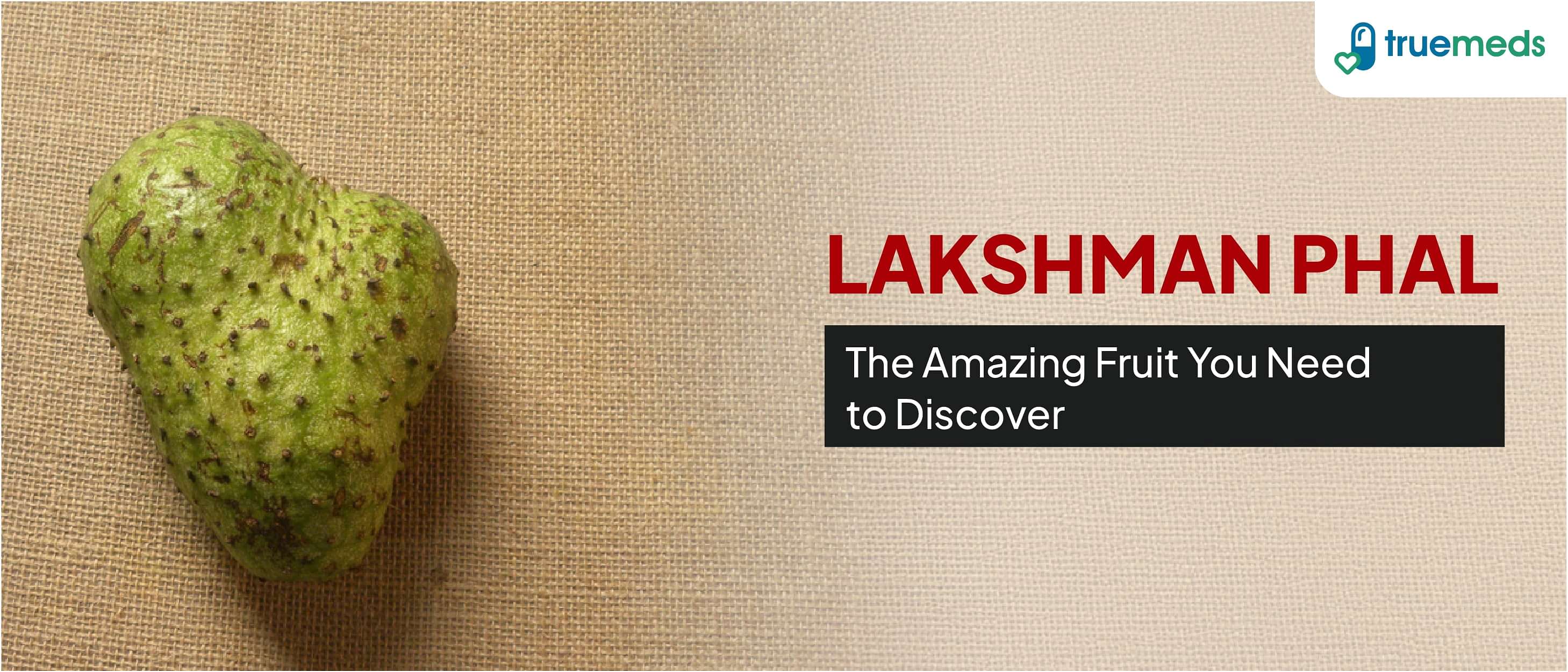
Lakshman Phal: The Amazing Fruit You Need to Discover
Last updated on : 11 Nov, 2025
Read time : 8 min
Creamy, spiky, and packed with promising nutritional potential—Lakshman Phal is not your average fruit. Also known as soursop or Annona muricata, this tropical fruit is native to the Caribbean and Central America and is now found in parts of India, especially in warmer regions. Beneath its green, thorny exterior lies a soft, white pulp that tastes like a blend of pineapple and strawberry, making it a popular ingredient in juices, smoothies, and desserts.
But Lakshman Phal isn’t just delicious. It has been historically used in traditional medicine for its reported anti-inflammatory, antioxidant, and antimicrobial properties. Preliminary studies suggest that it may support digestion and contains compounds being investigated for their potential role in managing certain chronic conditions [1], earning it a place among potential research interest areas. In this blog, we’ll dive into the verified nutritional value, safe uses, and crucial precautions related to Lakshman Phal—so you can enjoy it safely and responsibly.
Nutritional Value of Lakshman Phal
| Nutrient (per 100 g edible portion) | Amount |
| Water | 81.2 g |
| Energy | 66 kcal |
| Sugar | 13.5 g |
| Protein | 1 g |
| Carbohydrate | 16.8 g |
| Fibre | 3.3 g |
| Calcium | 14 mg |
| Iron | 0.6 mg |
| Magnesium | 21 mg |
| Phosphorus | 27 mg |
| Potassium | 278 mg |
| Sodium | 14 mg |
| Vitamin C | 20.6 mg |
4 Different Ways to Consume Lakshman Phal
- Fresh Fruit: The most common way to consume Lakshman phal is as fresh fruit. The ripe fruit can be cut in half and the creamy white pulp can be scooped out and eaten directly. It is crucial to remove the black seeds before eating the fruit, as they contain high levels of a neurotoxic compound [2].
- Juice or Smoothie: The pulp of the fruit can be blended with water, milk, or yoghurt to make a refreshing juice or smoothie. You can also add other fruits or honey to enhance the flavour.
- Desserts: The fruit pulp can be used to make ice cream, sorbet, or other frozen desserts. It can also be used in pies, tarts, or as a topping for cakes and pastries.
- Tea: Lakshman Phal leaves are occasionally used to prepare herbal tea in traditional practices. It is essential to consume this in strict moderation, and medical guidance is strongly recommended before using it for any health purpose due to potential neurotoxicity associated with chronic consumption [3].
10 Areas of Research and Potential Health Support of Lakshman Phal (Soursop)
1. Rich in Antioxidants
Contains vitamin C, flavonoids, and annonaceous acetogenins that may help fight free radicals and potentially reduce oxidative stress in the body [1].
2. Preliminary Research into Anti-Cancer Properties
Compounds such as annonacin and acetogenins have demonstrated the ability to inhibit cancer cell growth in laboratory (in vitro) and animal studies [4]. Crucially, these findings are promising but are NOT yet proven in human clinical trials, and the fruit is NOT a substitute for standard cancer treatment.
3. May Support Immune Function
With 20.6 mg of vitamin C per 100 g, Lakshman Phal may contribute to your daily immune-support needs as part of a balanced diet.
4. Aids Digestion & Eases Constipation
Its fibre content (3.3 g per 100 g) supports healthy digestion and regular bowel movements [5].
5. Potential for Urinary Health Support
The mildly acidic nature of the fruit may help reduce the risk of urinary tract infections by discouraging bacterial growth in the urinary tract. This traditional use requires further clinical investigation.
6. May Promote Bone Health
Contains calcium, magnesium, and phosphorus—all essential nutrients that help maintain bone density when consumed as part of a complete diet [5].
7. May Help Regulate Blood Pressure
Its potassium content (278 mg per 100 g) helps balance sodium levels, potentially supporting blood pressure regulation [5].
8. Traditional Use for Mouth Sores
It is traditionally used for its reported anti-inflammatory properties, which may help relieve oral discomfort. Evidence for this is primarily anecdotal.
9. Potential for Healthy Cholesterol Levels
Soluble fibre in the fruit may help manage LDL (bad cholesterol) and support HDL (good cholesterol) as part of a fibre-rich diet.
10. Mild Sedative Properties (Anecdotal)
Some traditional systems use soursop leaf tea to reportedly support relaxation. This effect is not well-established in clinical research and long-term consumption of the tea is discouraged due to safety concerns [3].
6 Crucial Precautions and Safety Information
Lakshman Phal, specifically the ripe fruit pulp, should be consumed responsibly. Due to the presence of neurotoxic annonacin, here are some essential precautions to keep in mind:
- Avoid Seeds & Unripe Fruit: Ripe fruit pulp is generally considered safe in moderation, but unripe soursop and its seeds must be avoided. They contain high levels of annonacin, a neurotoxin that has been epidemiologically linked to a form of atypical Parkinson’s disease (Atypical Parkinsonism) in regions where consumption is high [2].
- Limit Leaf Tea & Extract Use: Chronic or high-dose use of soursop leaf tea or concentrated supplements is NOT advised due to a risk of neurotoxic effects from annonacin [3]. Consult a physician before considering any long-term or concentrated preparation.
- Pregnancy & Breastfeeding: Avoid consumption during pregnancy and lactation due to potential uterine stimulating and neurological effects that are not well-studied for safety.
- Drug Interactions: May interact with medications for blood pressure (potentiating hypotensive effects), diabetes (potentiating hypoglycemic effects), or depression (as it may contain monoamine oxidase inhibitors). Always consult your doctor or pharmacist before consuming Soursop if you are on any chronic medication.
- Not a Cancer Cure: Let us be absolutely clear: Soursop is NOT a replacement for chemotherapy, radiation, or any clinical cancer treatment. Relying on Soursop as a primary treatment may result in life-threatening delays in receiving effective, established medical care.
- Allergy Risk: Rare but possible. Watch for signs of an allergic reaction such as itching, swelling, or difficulty breathing.
Takeaway
Lakshman Phal, or soursop, is a tropical fruit with a unique taste and a promising nutritional profile. Rich in antioxidants, fibre, and minerals, it may support digestion, bone health, and immunity as part of a healthy diet. Laboratory studies suggest potential cancer-fighting properties, but strong human clinical research is still pending, and its consumption is NOT a treatment for cancer.
If you’re looking to explore new fruits in your wellness journey, the ripe pulp of Lakshman Phal can be a nutrient-dense choice, as long as it’s eaten ripe and in strict moderation. It is a critical safety point to avoid leaf or seed-based preparations unless under the direct guidance of a qualified professional, and always consult your doctor before consuming it in conjunction with any medical treatments.
FAQs
Can Lakshman Phal be eaten daily?
It’s generally considered safe to eat ripe soursop pulp in moderate amounts a few times a week. Due to the potential for annonacin accumulation, avoid daily consumption of the fruit or long-term use of leaf tea or supplements unless supervised by a doctor.
Is soursop juice better than the fruit?
The whole fruit provides significantly more fibre and is less likely to spike blood sugar than juice. Juice may also concentrate certain compounds like annonacin if the seeds are accidentally processed with the pulp. Therefore, the whole, ripe fruit is generally the better choice.
Does Lakshman Phal cause drowsiness?
Some traditional users report mild sedative effects from the leaves, but this has not been confirmed in controlled clinical studies. Avoid driving or operating machinery if you feel drowsy after consuming it.
Can children eat Lakshman Phal?
Ripe pulp is generally considered safe in moderation for children over 2 years old. You must ensure all seeds are removed and avoid giving them leaf-based preparations.
References
[1] Jahan, A. (2018). Graviola: The Miracle Fruit. American Journal of Clinical Nutrition, 31(11), 15. https://www.researchgate.net/publication/328760235_Graviola_The_miracle_fruit
[2] Caparros-Lefebvre, D., & Elbaz, A. (1999). Annona muricata and Parkinson’s disease. The Lancet, 353(9152), 656–658. https://doi.org/10.1016/S0140-6736(98)10166-6
[3] Lannuzel, A., Michel, P. P., Höglinger, G. U., Champy, P., Javelot, H., Koenig, N., Bohl, J., Bories, C., Stadelmann, E., Lombard, J., Dizin, E., Triller, A., Ruberg, M., & Hirsch, E. C. (2003). The mitochondrial complex I inhibitor annonacin is a potent dopaminergic neurotoxin. Movement Disorders: Official Journal of the Movement Disorder Society, 18(suppl 7). https://pubmed.ncbi.nlm.nih.gov/14675150/
[4] Mutakin, M., Fauziati, R., Fadhilah, F. N., Zuhrotun, A., Amalia, R., & Hadisaputri, Y. E. (2022). Pharmacological Activities of Soursop (Annona muricata Lin.). Molecules, 27(4), 1201. https://doi.org/10.3390/molecules27041201
[5] Santos, I. L., Da Cruz Rodrigues, A. M., Amante, E. R., & Da Silva, L. H. M. (2023). Soursop Annona muricata Properties and Perspectives for Integral Valorization.Foods 12(7), 1448.https://doi.org/10.3390/foods12071448
















Disclaimer
Our healthcare experts have carefully reviewed and compiled the information presented here to ensure accuracy and trustworthiness. It is important to note that this information serves as a general overview of the topic and is for informational purposes only. It is not intended to diagnose, prevent, or cure any health problem. This page does not establish a doctor-patient relationship, nor does it replace the advice or consultation of a registered medical practitioner. We recommend seeking guidance from your registered medical practitioner for any questions or concerns regarding your medical condition.
Popular Articles



Recommended Articles




Recent Articles










Company
About UsHealth ArticleHealth StoriesDiseases & Health ConditionsAyurvedaAll MedicinesAll BrandsNeed HelpFAQSecuritySubscribe
Registered Office Address
Grievance Officer
Download Truemeds


Contact Us
Our customer representative team is available 7 days a week from 9 am - 9 pm.
v4.6.2

2025 - Truemeds | All rights reserved. Our content is for informational purposes only. See additional information.

Our Payment Partners