

- Medicines
- Personal Care
- Skin Cream
- Sunscreen
- Face Wash
- Skin and Body Soap
- Acne Care
- Body Lotions
- Moisturising Lotion
- Moisturising Cream
- Mosquito Repellent
- Moisturising Gel
- Body Wash
- Hair Oils
- Hair Shampoo
- Hair Conditioners
- Hair Supplements
- Hair Colour
- Hair Serum
- Hair Mask
- Hair Solutions
- Baby Diapers and Wipes
- Baby Lotion and Moisturising Cream
- Baby Bath Essentials
- Baby Skin Care
- Baby and Infant Food
- Baby Healthcare
- Women Multivitamins
- Ovulation Test Kit and Women Intimate Care
- Sanitary Pads
- Nutritional Drinks
- Condoms
- Lubricants
- Massage Gels
- Personal Body Massagers
- Men Performance Booster
- Sexual Health Supplements
- Massage Oils
- Ayurveda
- Tooth Paste
- Mouth Ulcer Gel
- Mouthwash
- Toothache and Gum Pain
- Tooth Brush
- Gargle Solution
- Orthopaedic Supports
- Adult Diapers
- Footwear
- Mobility and Support Accessories
- Urinary Support and Care
- Health Conditions
- Bone and Joint Care
- Digestive Care
- Eye Care
- Pain Relief
- Smoking Cessation
- Liver Care
- Stomach Care
- Cold and Cough
- Heart Care
- Kidney Care
- Piles, Fissures & Fistula
- Respiratory Care
- Mental Wellness
- Derma Care
- Pre and Probiotics
- Acidity
- Gas
- Constipation
- Loose Motion/Diarrhoea
- Digestive Fibres
- Digestive Enzymes
- Eye Lubricant Drops
- Lens Solution
- Safety Eye Wear
- Eye Cream
- Eye Vitamins and Supplements
- Eye Drops
- Eye Ointment and Gel
- Nicotine Patch
- Nicotine Gum
- Nicotine Lozenges
- Cough Syrups
- Chest Rubs and Balms
- Nasal Spray
- Lozenges
- Inhalant Capsules
- Cold and Cough Tablets
- Vitamins & Supplements
- Diabetes Care
- Healthcare Devices
- Homeopathic Medicine
- Health Guide
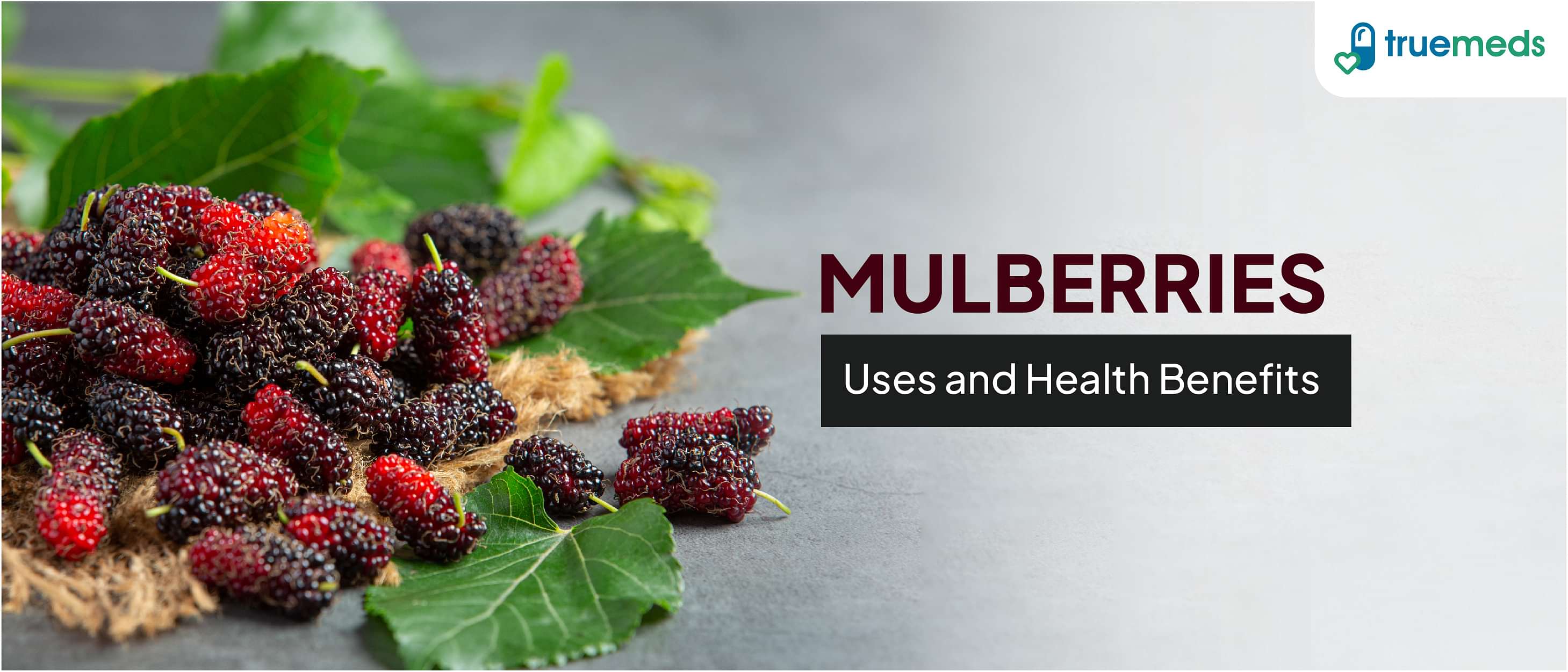
Mulberry (Shahtoot): Potential Benefits, Uses, Side Effects, and More
Last updated on : 01 Dec, 2025
Read time : 9 min
Mulberries or ‘Shahtoot’ as they are fondly known in India, are a type of sweet and juicy fruit that grows on the mulberry tree (Morus species). Found in an assortment of colours including white, red, and black, these mulberry fruits can be commonly spotted across various Indian states, from Karnataka and Andhra Pradesh to Himachal Pradesh and Punjab. The taste of mulberries can range from sweet to slightly tart, depending on the variety. But one thing that remains constant is their popularity among people for their nutritional value and potential health benefits. Let’s take a look at what makes mulberries a valuable addition to the diet.
Nutritional Profile of Mulberry Fruit
Mulberries are not just delicious but also packed with essential nutrients. They serve as a good source of vitamins C, A, E, and K, which function as important micronutrients and antioxidants in the body. They also supply vital nutrients like potassium, iron, and magnesium.
Mulberries are particularly noted for their content of polyphenols, specifically anthocyanins, which are responsible for the deep colour in red and black varieties and are potent natural antioxidants [1].
Here are the primary nutrients in a 3.5-ounce (100-gram) serving of fresh mulberries:
|
Nutrient |
Amount per 100g |
| Calories | 43 kcal |
| Water | 88% |
| Protein | 1.4 g |
| Carbs | 9.8 g |
| Sugar | 8.1 g |
| Fiber | 1.7 g |
| Fat | 0.4 g |
Exploring the Potential Health Benefits of Mulberries
Incorporating mulberries into your daily diet may offer several health advantages due to their rich nutritional and phytochemical composition.
1. May Support Blood Sugar Management
Mulberry leaves, and to a lesser extent the fruit, contain a compound called 1-deoxynojirimycin (DNJ). Studies suggest that DNJ may inhibit an enzyme in the gut responsible for breaking down complex carbohydrates into glucose, thereby potentially slowing the absorption of sugar into the bloodstream [2], [3]. This effect is primarily seen with mulberry leaf extract but offers a context for the fruit’s traditional use.
2. Contributes to Digestive Health
With 1.7 grams of dietary fibre per 100g, mulberries can aid in digestion. Fibre adds bulk to stool, supporting regular bowel movements and helping to alleviate occasional constipation, bloating, and cramps [4].
3. Source of Antioxidants for Cellular Health
Mulberries are rich in antioxidants, including Vitamin C, Vitamin E, and significant levels of anthocyanins, a type of flavonoid [1]. These compounds help to neutralise harmful free radicals in the body, which may reduce cellular damage and support overall health.
4. May Promote Heart Health
The high content of potassium in mulberries may help regulate blood pressure by balancing the effects of sodium [5]. Additionally, the antioxidant, resveratrol, and other flavonoids in mulberries may contribute to improved circulation and protect against oxidative damage to blood vessels, thus supporting cardiovascular health [1].
5. Supports Immunity and Vitality
The vitamin C and specific alkaloids present in mulberries are known to support a healthy immune response. Vitamin C is essential for the function of various immune cells and also acts as a potent antioxidant.
6. Potential Role in Eye Health
Mulberries contain the antioxidant zeaxanthin [1]. Zeaxanthin is known to accumulate in the retina of the eye, where it helps filter harmful blue light. A diet rich in zeaxanthin and other carotenoids is often associated with the maintenance of good retinal health and may help slow the progression of age-related macular degeneration [6].
How Mulberries May Benefit Hair Health
The nutritional components of mulberries can also play a role in maintaining hair health:
- Antioxidants: The high antioxidant content may help protect hair follicles from environmental stress and damage caused by free radicals, potentially maintaining hair lustre.
- Collagen Support: Vitamin C is a vital cofactor in the synthesis of collagen, a structural protein important for hair and skin [7].
- Iron Content: Iron deficiency is a recognised cause of hair loss [8]. The iron content in mulberries helps ensure sufficient oxygen transport to hair roots, which is crucial for promoting growth and preventing thinning.
Incorporating Mulberries into Your Diet: Uses
Mulberry fruit can be consumed fresh, dried, or incorporated into various recipes.
- Fresh Fruit: Simply eating them fresh makes for a delicious, healthy snack.
- Smoothies and Yogurt: Blend mulberries into smoothies or use them as a topping for oatmeal or Greek yogurt.
- Baking: Incorporate them into muffins, pies, or pancakes for a flavour and nutrition boost.
- Dried Mulberries: Use dried mulberries as a substitute for raisins in trail mix or cereals.
- Mulberry Leaf Tea: Brewing dried mulberry leaves into a tea is a traditional practice, especially noted for the potential metabolic benefits associated with the leaf compounds [2].
- Syrups and Jams: Cook down mulberries with minimal sugar to create delightful, natural toppings.
Important Considerations: Potential Side Effects and Interactions
While generally safe for most people when consumed in moderate amounts, it’s important to be aware of the potential side effects and interactions associated with mulberries:
|
Potential Concern |
Detail and Precaution |
| Allergic Reactions | Some individuals may experience allergic reactions, particularly those with known allergies to fig or birch pollen, due to a phenomenon called cross-reactivity [9]. |
| Digestive Issues | Due to their moderate fibre content, consuming very large quantities of mulberries may lead to digestive discomfort such as bloating, gas, or mild diarrhoea in sensitive individuals. |
| Medication Interactions | Mulberry leaves, and potentially the fruit, may lower blood sugar levels [2]. This effect could interact with anti-diabetic medications, increasing the risk of hypoglycemia (low blood sugar). If you are on such medications, it is essential to monitor your blood sugar closely and consult your doctor. |
| Pregnancy and Breastfeeding | There is a lack of high-quality, clinical safety data available regarding the consumption of mulberry during pregnancy and breastfeeding. Therefore, it is best to exercise caution and consult a healthcare professional before consumption during these periods. |
| Precaution before Surgery | As mulberries can potentially affect blood sugar levels, it’s a general safety recommendation to stop consuming them at least two weeks before any scheduled surgery to help maintain stable glucose control during and after the procedure. |
Conclusion
The potential benefits of mulberries are manifold – from being loaded with vital nutrients and antioxidants to possibly supporting blood sugar regulation and heart health. Yet, it is critical to remember that while nutritious, they are a supplemental food, not a cure. They should be enjoyed in moderation as part of a balanced diet. If you have any specific health concerns, chronic conditions, or are taking regular medications, always consult your family doctor or a registered clinical nutritionist before making significant dietary changes.
Frequently Asked Questions (FAQs)
What is mulberry called in India?
In India, the mulberry fruit is commonly referred to as ‘Shahtoot’ (Shah-toot).
What are mulberries good for?
Mulberries are rich in anthocyanin antioxidants, vitamins C and K, and fibre, making them beneficial for cellular health, digestive health, and potentially supporting the immune system and heart health.
How many mulberries should I eat a day?
There is no official recommended daily intake, but consuming a small, regular serving, such as a handful (approximately 10-15 fruits), as part of a varied diet is generally considered appropriate for most healthy individuals.
Why are mulberries considered a superfood?
With their high nutrient density, including a beneficial combination of vitamins, minerals, fibre, and a wide array of antioxidants, mulberries are considered a nutritionally dense food that promotes overall well-being.
Is mulberry a blueberry?
No, a mulberry is not a blueberry. Though both are small berries, they belong to different plant families (Mulberries are from the Moraceae family; Blueberries are from the Ericaceae family) and have distinct nutritional and phytochemical profiles.
References
[1] Mertz, C., Cheynier, V., Fanning, K., Souquet, J., Rutledge, D., & Rigou, P. (2021). Polyphenol composition of mulberry (Morus sp.) fruit varieties and health benefits. Antioxidants, 10(10), 1523. https://doi.org/10.3390/antiox10101523
[2] Kandylis, P., Kouris, D., & Ganas, C. (2021). Bioactive compounds and health-promoting effects of white mulberry (Morus alba L.) fruit and leaves: A review. Molecules, 26(21), 6614. https://doi.org/10.3390/molecules26216614
[3] National Center for Complementary and Integrative Health. (2023, September). White mulberry leaf: Usefulness and safety. U.S. Department of Health and Human Services. https://www.nccih.nih.gov/health/white-mulberry-leaf
[4] Anderson, J. W., Baird, P., Davis, R. H., Jr., Ferreri, S., Knudtson, M., Koraym, A., Waters, V., & Williams, C. L. (2009). Health implications of dietary fiber. Nutrition Reviews, 67(4), 188–205. https://doi.org/10.1111/j.1753-4887.2009.00189.x
[5] Houston, M. C. (2005). The importance of potassium in managing hypertension. Current Hypertension Reports, 7(1), 48–56. https://doi.org/10.1007/s11906-005-0044-z
[6] Ranard, K. M., Jeon, S., & Erdman, J. W. (2017). Synergistic effects of lutein and zeaxanthin on retinal function in the human eye: A review of the evidence. Nutrients, 9(9), 978. https://doi.org/10.3390/nu9090978
[7] Pullar, J. M., Carr, A. C., & Vissers, M. C. M. (2017). The roles of vitamin C in skin health. Nutrients, 9(8), 866. https://doi.org/10.3390/nu9080866
[8] Malkud, S. (2015). Telogen effluvium: A review. Journal of Clinical and Diagnostic Research : JCDR, 9(9), WE01–WE03. https://doi.org/10.7860/JCDR/2015/15217.6492
[9] Radakovic, S., Vuckovic, N., Sarac, L., & Randelovic, M. (2019). Fig-induced anaphylaxis in children: A case report and review of the literature. The Journal of Allergy and Clinical Immunology: In Practice, 7(1), 329–331. https://doi.org/10.1016/j.jaip.2018.06.012













Disclaimer
Our healthcare experts have carefully reviewed and compiled the information presented here to ensure accuracy and trustworthiness. It is important to note that this information serves as a general overview of the topic and is for informational purposes only. It is not intended to diagnose, prevent, or cure any health problem. This page does not establish a doctor-patient relationship, nor does it replace the advice or consultation of a registered medical practitioner. We recommend seeking guidance from your registered medical practitioner for any questions or concerns regarding your medical condition.
Popular Articles


Recommended Articles



Recent Articles









Company
About UsHealth ArticleHealth StoriesDiseases & Health ConditionsAyurvedaAll MedicinesAll BrandsNeed HelpFAQSecuritySubscribe
Registered Office Address
Grievance Officer
Download Truemeds


Contact Us
Our customer representative team is available 7 days a week from 9 am - 9 pm.
v4.8.1

2025 - Truemeds | All rights reserved. Our content is for informational purposes only. See additional information.

Our Payment Partners




