

- Medicines
- Personal Care
- Skin Cream
- Sunscreen
- Face Wash
- Skin and Body Soap
- Acne Care
- Body Lotions
- Moisturising Lotion
- Moisturising Cream
- Mosquito Repellent
- Moisturising Gel
- Body Wash
- Hair Oils
- Hair Shampoo
- Hair Conditioners
- Hair Supplements
- Hair Colour
- Hair Serum
- Hair Mask
- Hair Solutions
- Baby Diapers and Wipes
- Baby Lotion and Moisturising Cream
- Baby Bath Essentials
- Baby Skin Care
- Baby and Infant Food
- Baby Healthcare
- Women Multivitamins
- Ovulation Test Kit and Women Intimate Care
- Sanitary Pads
- Nutritional Drinks
- Condoms
- Lubricants
- Massage Gels
- Personal Body Massagers
- Men Performance Booster
- Sexual Health Supplements
- Massage Oils
- Ayurveda
- Tooth Paste
- Mouth Ulcer Gel
- Mouthwash
- Toothache and Gum Pain
- Tooth Brush
- Gargle Solution
- Orthopaedic Supports
- Adult Diapers
- Footwear
- Mobility and Support Accessories
- Urinary Support and Care
- Health Conditions
- Bone and Joint Care
- Digestive Care
- Eye Care
- Pain Relief
- Smoking Cessation
- Liver Care
- Stomach Care
- Cold and Cough
- Heart Care
- Kidney Care
- Piles, Fissures & Fistula
- Respiratory Care
- Mental Wellness
- Derma Care
- Pre and Probiotics
- Acidity
- Gas
- Constipation
- Loose Motion/Diarrhoea
- Digestive Fibres
- Digestive Enzymes
- Eye Lubricant Drops
- Lens Solution
- Safety Eye Wear
- Eye Cream
- Eye Vitamins and Supplements
- Eye Drops
- Eye Ointment and Gel
- Nicotine Patch
- Nicotine Gum
- Nicotine Lozenges
- Cough Syrups
- Chest Rubs and Balms
- Nasal Spray
- Lozenges
- Inhalant Capsules
- Cold and Cough Tablets
- Vitamins & Supplements
- Diabetes Care
- Healthcare Devices
- Homeopathic Medicine
- Health Guide
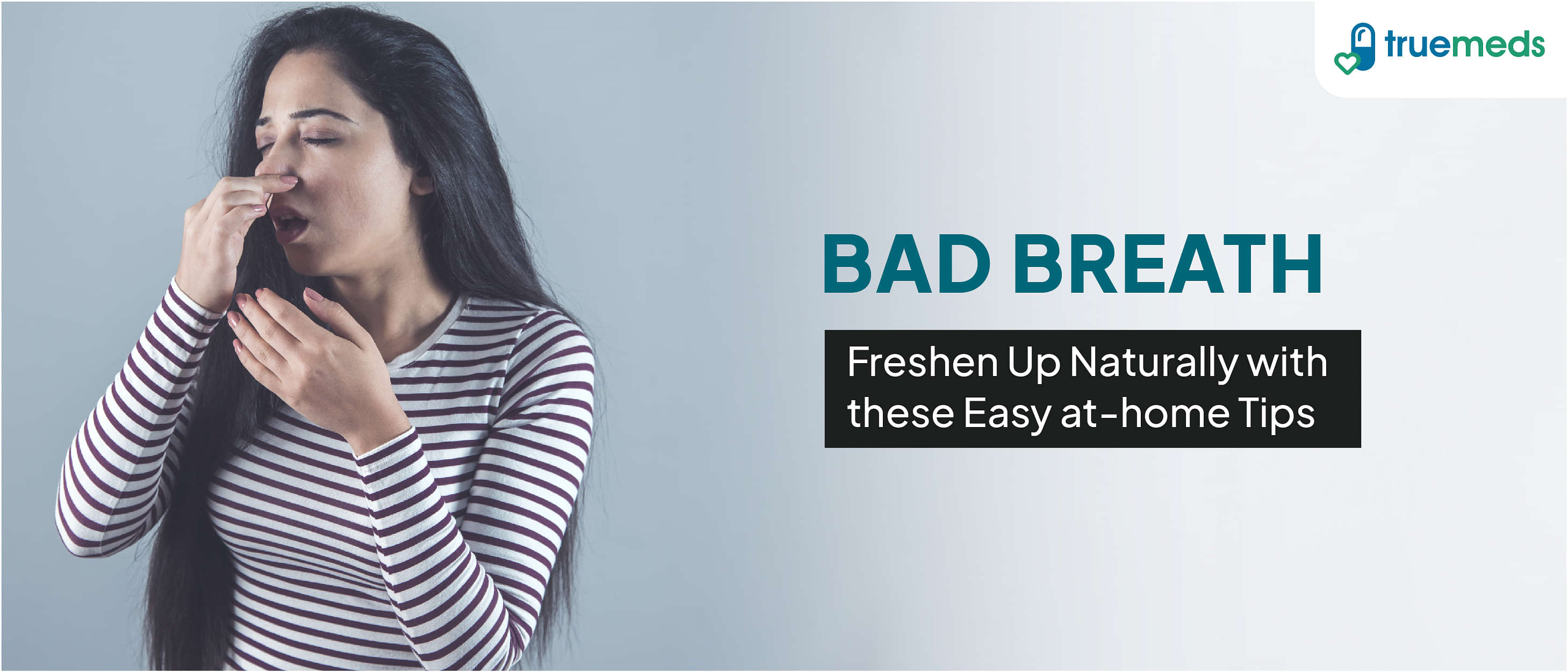
9 Natural Home Remedies for Bad Breath
Last updated on : 01 Dec, 2025
Read time : 8 min
Struggling with bad breath (halitosis)? You’re not alone. This common condition affects an estimated 25% of the global population [1] and is often caused by poor oral hygiene, dry mouth, or certain foods. The good news? While home remedies can offer significant relief, many effective natural methods can help freshen your breath and restore your confidence.
In this blog, discover 9 natural ways to get rid of bad breath, along with expert-backed tips for long-term oral health.
Top 9 Home Remedies to Combat Bad Breath Naturally
Bad breath, also known as halitosis, can be an embarrassing problem. Fortunately, several simple home remedies may help naturally freshen your breath.
Let’s explore some effective ways to combat bad breath at home:
1. Good dental hygiene
Maintaining good oral hygiene is the foundation of fresh breath.
- Brush your teeth at least twice a day with fluoride toothpaste, specifically focusing on brushing all surfaces of the teeth and the back of the tongue [2].
- Don’t forget to floss daily to remove food particles and plaque from between your teeth.
- Regularly clean your tongue, as the tongue is a major reservoir for odour-causing bacteria [3], bridges, dentures, retainers, and mouthguards to reduce bacterial buildup.
2. Use Baking Soda Baking
soda (sodium bicarbonate) is a natural remedy for neutralising odours and maintaining oral hygiene. It may help balance the pH in your mouth, making it less conducive for bacteria to thrive [4].Mix a small amount of baking soda with water to use as a mouthwash, or brush your teeth with it.
3. Parsley
Parsley contains a high concentration of chlorophyll, which may help temporarily neutralise the odour-causing sulphur compounds in the mouth and has been traditionally used as a breath freshener [5]. Simply chew on fresh parsley leaves to effectively minimise bad breath.
4. Water
Drinking at least eight glasses of water per day encourages saliva production, which may help wash away bacteria and food particles in the mouth [2]. A dry mouth is a primary contributor to halitosis. Avoid caffeinated and sugary drinks, as they can dry out the mouth, which is a common cause of bad breath.
5. Yoghurt
Plain, nonfat yoghurt contains probiotics like Lactobacillus that may help combat harmful bacteria in the mouth.Research suggests that daily yoghurt consumption can help reduce bad breath [6]. The probiotics in yoghurt are effective in reducing the severity of bad breath. When selecting yoghurt, choose one with live and active cultures and minimal added sugar.
6. Milk
Drinking a glass of low- or full-fat milk during or after meals containing strong-smelling foods like garlic and onions can help neutralise bad breath by significantly reducing the concentration of volatile sulphur compounds (VSCs) [7]. Milk’s casein helps bind to these sulphur compounds, reducing their odour.
7. Fennel or anise seeds
Fennel seeds and anise seeds contain aromatic essential oils that give the breath a fresh scent. These seeds can be eaten plain, roasted, or coated with sugar and are commonly used in parts of India as “mukhwas,” or mouth fresheners. Their action is primarily due to their pleasant aroma masking the bad odour, while also stimulating saliva flow.
8. Orange
Oranges are rich in vitamin C, which may help increase saliva production. Saliva plays a crucial role in washing away foul-smelling bacteria from the mouth [2]. Eating oranges or other citrus fruits, such as lemons and grapefruits, may support dental hygiene and reduce bad breath. This is particularly helpful for individuals with mild dry mouth.
9. Zinc
Zinc is an effective mineral used in commercial mouthwashes and chewing gums because it helps inhibit bacterial growth and directly neutralises volatile sulphur compounds (VSCs) [8]. Using zinc-containing chewing gum or taking zinc dietary supplements can help combat bad breath, especially in cases of dry mouth. Consult a healthcare provider before starting any dietary supplement.
Dietary Tips to Prevent Bad Breath
Follow these tips to prevent bad breath:
- Eat crunchy fruits and vegetables: Foods like apples, celery, and carrots help cleanse your mouth by removing bacteria and increasing saliva production due to their high fibre and water content [2].
- Avoid sugary and refined foods: These foods can feed harmful bacteria in your mouth, leading to bad breath.
- Avoid strong-smelling foods: Foods like onions and garlic can cause temporary bad breath. While effective for some, eating a dairy product afterwards can help neutralise the odour.
- Hydrate regularly: Drink plenty of water to keep your mouth moist and prevent dry mouth.
- Chew sugar-free gum: This stimulates saliva production and helps clean your mouth.
When to see a doctor
If you’ve tried various home remedies and your bad breath persists, it may be time to consult a doctor. Persistent bad breath, especially when accompanied by other symptoms such as a sore throat, fever, or difficulty swallowing, may indicate an underlying health issue.
Gum disease, sinus infections, diabetes, and gastroesophageal reflux disease (GERD) are some conditions that require medical attention to treat the root cause of bad breath effectively [1].
Conclusion
Bad breath is often a result of poor oral hygiene, dry mouth, or dietary habits, and in most cases, it can be effectively managed at home. By following simple yet powerful remedies, such as staying hydrated, maintaining good oral hygiene, using natural ingredients like baking soda, yoghurt, and parsley, and improving your diet, you can significantly reduce bad breath.
Remember that persistent halitosis may be a symptom of a deeper medical issue, therefore, if symptoms persist, consult a dentist or healthcare provider to rule out underlying health conditions.
Expert Quote: “Most cases of bad breath are caused by bacterial buildup due to poor oral hygiene or dry mouth. Fortunately, simple remedies like tongue cleaning, chewing on herbs like parsley or fennel, and staying well-hydrated can significantly help. However, if bad breath does not resolve within a week of consistently applying these measures, a dental check-up is warranted to rule out periodontal disease or other issues.”
– Dr Anubha Karol
Frequently Asked Question (FAQs)
How can I eliminate bad breath?
To get rid of smelly breath, practice good oral hygiene by brushing and flossing twice a day, cleaning your tongue, and staying hydrated to promote saliva production.
How can I permanently get rid of bad breath?
Permanently managing bad breath involves maintaining consistent oral hygiene, attending regular dental check-ups (at least twice a year), avoiding tobacco, and addressing any underlying health issues that may contribute to the problem.
What is the fastest home remedy for bad breath?
The quickest home remedy for bad breath is chewing a small amount of fresh parsley or using a homemade mouthwash with baking soda, which may help reduce bacterial growth and freshen breath effectively.
What drink kills bad breath?
Drinking water is essential for maintaining oral hygiene, as it keeps the mouth hydrated and stimulates saliva production, which helps wash away bacteria and food particles that cause bad breath [2].
Why does my breath smell bad?
Bad breath can be caused by poor oral hygiene, consuming certain foods like garlic and onions, dry mouth, tobacco use, gum disease, and sometimes underlying health conditions [1].
References
[1] Johns Hopkins Medicine. (n.d.). Halitosis (Bad Breath). Retrieved October 30, 2025, from https://www.hopkinsmedicine.org/health/conditions-and-diseases/halitosis-bad-breath
[2] American Dental Association. (2024). Bad Breath. Retrieved October 30, 2025, from https://www.mouthhealthy.org/all-topics-a-z/bad-breath
[3] Renvert, S., & Persson, G. R. (2002). Tonsilloliths and halitosis. International Dental Journal, 52(S5P1), 211–216. https://doi.org/10.1002/j.1875-595x.2002.tb00928.x
[4] Shetty, S. B., Meharwade, P., Malavalli, P. L., Thimmaiah, C., & Ramlan, A. (2022). Evaluation of the Effect of Probiotic Yogurt Consumption on Salivary pH, Buffering Capacity and Calcium Level in 6–12-year-old Children: An In Vivo Study. International Journal of Clinical Pediatric Dentistry, 15(2), 194–198. https://doi.org/10.5005/jp-journals-10005-2368
[5] Nishino, R., Koike, K., & Kimura, E. (2000). Inhibitory effects of essential oils on the growth of Porphyromonas gingivalis. Oral Diseases, 6(6), 332-336. https://doi.org/10.1111/j.1601-0825.2000.tb00318.x
[6] Shetty, S. B., Meharwade, P., Malavalli, P. L., Thimmaiah, C., & Ramlan, A. (2022). Evaluation of the Effect of Probiotic Yogurt Consumption on Salivary pH, Buffering Capacity and Calcium Level in 6–12-year-old Children: An In Vivo Study. International Journal of Clinical Pediatric Dentistry, 15(2), 194–198. https://doi.org/10.5005/jp-journals-10005-2368
[7] Mata, M. V., Clevenger, J. L., & Craig, B. A. (2010). Milk and mint reduce the malodorous compounds from garlic breath. Journal of Food Science, 75(4), C317–C322. https://doi.org/10.1111/j.1750-3841.2010.01525.x
[8] Young, A., & Jervøe-Storm, P. M. (2007). Zinc in oral care. In P. M. Jervøe-Storm & A. Young (Eds.), Halitosis and Oral Malodour: Principles and Practical Approaches (pp. 119–130). Karger. https://doi.org/10.1159/000100742














Disclaimer
Our healthcare experts have carefully reviewed and compiled the information presented here to ensure accuracy and trustworthiness. It is important to note that this information serves as a general overview of the topic and is for informational purposes only. It is not intended to diagnose, prevent, or cure any health problem. This page does not establish a doctor-patient relationship, nor does it replace the advice or consultation of a registered medical practitioner. We recommend seeking guidance from your registered medical practitioner for any questions or concerns regarding your medical condition.
Popular Articles


Recommended Articles



Recent Articles








Company
About UsHealth ArticleHealth StoriesDiseases & Health ConditionsAyurvedaAll MedicinesAll BrandsNeed HelpFAQSecuritySubscribe
Registered Office Address
Grievance Officer
Download Truemeds


Contact Us
Our customer representative team is available 7 days a week from 9 am - 9 pm.
v4.8.1

2025 - Truemeds | All rights reserved. Our content is for informational purposes only. See additional information.
Our Payment Partners