

- Medicines
- Personal Care
- Skin Cream
- Sunscreen
- Face Wash
- Skin and Body Soap
- Acne Care
- Body Lotions
- Moisturising Lotion
- Moisturising Cream
- Mosquito Repellent
- Moisturising Gel
- Body Wash
- Hair Oils
- Hair Shampoo
- Hair Conditioners
- Hair Supplements
- Hair Colour
- Hair Serum
- Hair Mask
- Hair Solutions
- Baby Diapers and Wipes
- Baby Lotion and Moisturising Cream
- Baby Bath Essentials
- Baby Skin Care
- Baby and Infant Food
- Baby Healthcare
- Women Multivitamins
- Ovulation Test Kit and Women Intimate Care
- Sanitary Pads
- Nutritional Drinks
- Condoms
- Lubricants
- Massage Gels
- Personal Body Massagers
- Men Performance Booster
- Sexual Health Supplements
- Massage Oils
- Ayurveda
- Tooth Paste
- Mouth Ulcer Gel
- Mouthwash
- Toothache and Gum Pain
- Tooth Brush
- Gargle Solution
- Orthopaedic Supports
- Adult Diapers
- Footwear
- Mobility and Support Accessories
- Urinary Support and Care
- Health Conditions
- Bone and Joint Care
- Digestive Care
- Eye Care
- Pain Relief
- Smoking Cessation
- Liver Care
- Stomach Care
- Cold and Cough
- Heart Care
- Kidney Care
- Piles, Fissures & Fistula
- Respiratory Care
- Mental Wellness
- Derma Care
- Pre and Probiotics
- Acidity
- Gas
- Constipation
- Loose Motion/Diarrhoea
- Digestive Fibres
- Digestive Enzymes
- Eye Lubricant Drops
- Lens Solution
- Safety Eye Wear
- Eye Cream
- Eye Vitamins and Supplements
- Eye Drops
- Eye Ointment and Gel
- Nicotine Patch
- Nicotine Gum
- Nicotine Lozenges
- Cough Syrups
- Chest Rubs and Balms
- Nasal Spray
- Lozenges
- Inhalant Capsules
- Cold and Cough Tablets
- Vitamins & Supplements
- Diabetes Care
- Healthcare Devices
- Homeopathic Medicine
- Health Guide
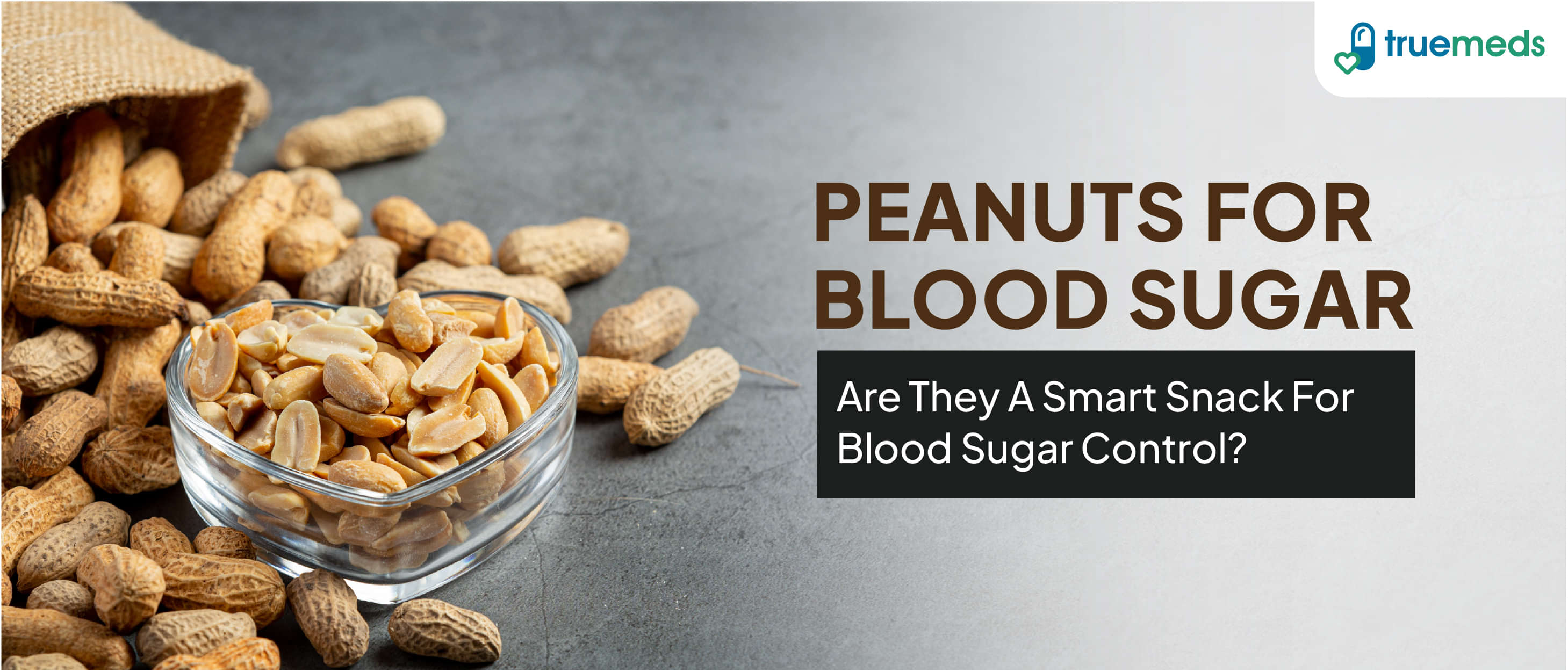
Are Peanuts Good for Diabetics? Benefits, Risks and Tips
Last updated on : 01 Dec, 2025
Read time : 9 min
Managing diabetes effectively requires a thoughtful and balanced approach to nutrition. Among various food options, peanuts are often discussed for their potential health benefits in diabetes care. Due to their low glycaemic index (GI) and nutrient-rich profile, peanuts may be a beneficial addition to a diabetes-friendly diet when consumed in moderation [1]. They may offer advantages for blood sugar management, heart health, and satiety. However, due to their high caloric and fat content, portion control and food quality remain essential. This article explores the evidence-based benefits and risks of eating peanuts for individuals with diabetes, along with practical dietary tips.
Are Peanuts Good for Diabetics?
Peanuts can be a healthy and effective addition to the diet of individuals managing diabetes. With a low glycemic index, peanuts do not significantly raise blood sugar levels and offer various nutritional benefits [2]. However, it is crucial to consume them in moderation due to their high calorie and fat content. As with any fat- and calorie-dense food, excessive intake can lead to weight gain, which negatively impacts blood sugar control [3]. Some key points to consider include:
- Low Glycemic Index (GI): This may help manage post-meal blood sugar levels.
- Nutrient Density: They are rich in protein, healthy fats, and fibre.
- Cardiometabolic Support: Their healthy fat and nutrient content may support heart health, a key co-morbidity in diabetes [4].
- Essential Micronutrients: High in essential vitamins and minerals like magnesium.
- Potential Risks: Must be consumed mindfully due to allergies and high-calorie content.
Benefits of Peanuts for Diabetes Patients
Peanuts provide several health benefits for diabetes patients, making them a valuable component of a balanced diet in measured portions [5].
Low Glycemic Index (GI)
Peanuts have a low glycaemic index of approximately 13–15 [6]. Their slow digestion rate, relative to high-GI foods, may help reduce post-meal blood sugar spikes [7]. Their combination of protein, fat, and fibre also promotes a slower gastric emptying rate, helping to stabilise blood sugar.
Rich in Protein and Fibre
Peanuts are an excellent source of plant-based protein, providing approximately 7 grams of protein per 1-ounce (28g) serving. This protein, combined with high fibre content (about 2.4 grams per serving), enhances satiety and may assist with weight management — a key factor in type 2 diabetes control [8].
Healthy Fats
The majority of fats in peanuts are heart-healthy mono- and polyunsaturated fats [6]. These fats may help improve cholesterol profiles, potentially enhancing insulin sensitivity, and reducing chronic inflammation, which is often associated with diabetes progression [4].
Heart Health
Peanuts may reduce cardiovascular risks common in diabetes due to their healthy fats, antioxidants, and minerals like magnesium [5]. Studies suggest that consistent nut consumption is associated with a lower risk of cardiovascular disease in diabetic patients [4].
Vitamins and Minerals
Peanuts provide essential micronutrients, including magnesium, which plays a role in glucose metabolism and insulin secretion; phosphorus; and thiamine, which may enhance energy, heart health, and insulin sensitivity [6].
Tips for Including Peanuts in a Diabetes-Friendly Diet
To reap the benefits of peanuts for blood sugar management, consider these tips when incorporating them into your diet:
- Practice Moderation: While peanuts offer numerous health benefits, they are also calorie-dense (around 160-170 calories per serving). Stick to a serving size of about one-quarter cup, 28 peanuts, or 1 ounce, to avoid overconsuming calories [8].
- Choose Pure Forms: Opt for peanuts and peanut butter that are dry-roasted or raw and are minimally processed and free from added salt or sugar to maximise their nutritional value and minimise sodium and carbohydrate load [1].
- Make Them a Meal Component: Add peanuts or natural peanut butter to your morning oatmeal or whole-grain cereals to help stabilise blood sugar levels throughout the day by increasing the meal’s protein and fat content [7].
- Snack Smart: A measured handful of peanuts as a mid-afternoon snack can help curb hunger and maintain steady blood sugar levels between meals, preventing overeating later [7].
- Combine with Other Healthy Foods: Enhance the nutritional value of salads, whole grains, or fruits by adding a small amount of peanuts, which can also help manage blood sugar spikes due to the fibre/fat content [8].
Risk Of Peanuts for People with Diabetes
While peanuts offer several potential benefits for individuals with diabetes, it’s important to be aware of certain risks and considerations to maintain overall health and blood sugar control.
- High Caloric and Fat Density: Peanuts are high in calories and fat, with an estimated 80% of their calories coming from fat [6]. This density can easily lead to weight gain if consumed in excess. This is particularly important for diabetic patients who need to manage their weight to control blood sugar levels [3].
- Allergies: Peanut allergies can be severe and even life-threatening. Diabetic patients with peanut allergies must avoid peanuts entirely.
- Processed Products: Processed peanut products like peanut butter with added sugars or oils can be detrimental to blood sugar control and overall health. It is crucial to always opt for plain, unsalted peanuts or natural peanut butter. Check the ingredient label carefully for hidden sugars, hydrogenated oils, or excessive sodium [1].
- Portion Control: Due to their high fat and calorie content, peanuts must be consumed in moderation. The recommended serving size is approximately 28 grams (1 ounce) per day to avoid excessive calorie intake [8].
Conclusion
Peanuts can be a healthy and satisfying snack for individuals with diabetes when consumed mindfully and in moderation. Their low GI, high protein, fibre, and healthy fat content contribute to improved blood sugar regulation, appetite control, and heart health [4], [5]. However, the risk of excess calorie intake leading to weight gain is a serious consideration. Stick to unsalted, plain peanuts or natural peanut butter, and incorporate them as part of an overall balanced diet. Always consult your dietitian or healthcare provider before making major dietary changes, especially if you are on medications that affect blood glucose.
Frequently Asked Questions (FAQs)
Can peanuts raise blood sugar levels?
Typically, no. Peanuts have a low glycemic index (GI) of around 13-14, which means they do not significantly raise blood sugar levels in diabetic patients when consumed in moderation [6], [7].
Are peanuts better than almonds for diabetics?
Peanuts and almonds offer similar benefits for diabetics; they may help control blood glucose levels effectively. They are generally considered nutritionally comparable, and neither is conclusively superior to the other for diabetes management [9].
Are peanuts good for diabetes?
Yes, peanuts are generally beneficial for diabetes management as they may help control blood sugar, aid in weight loss (through satiety), and lower the risk of cardiovascular disease when part of a healthy eating plan [1], [4], [8].
How many peanuts can a diabetic eat a day?
Most dietary guidelines suggest limiting intake to one to two servings (approximately 1-2 ounces or 28-56 grams) per day [8]. This translates to about 28-60 peanuts, as part of a balanced diet, to ensure moderate caloric and fat intake.
Can a diabetic eat roasted peanuts?
Yes, diabetics can eat roasted peanuts, but it is advisable to choose dry-roasted and unsalted or lightly salted options to avoid excessive sodium intake which can impact blood pressure [1].
What is the peanut trick for diabetes?
The “peanut trick” refers to consuming peanuts or natural peanut butter, often with a meal high in carbohydrates, to help control blood sugar throughout the day by stabilising glucose levels and reducing insulin spikes, largely due to the satiety and slow gastric emptying provided by the fat, protein, and fibre [7].
References
[1] Nishi, S. K., Viguiliouk, E., Kendall, C. W. C., Jenkins, D. J. A., Hu, F. B., Sievenpiper, J. L., Atzeni, A., Misra, A., & Salas-Salvadó, J. (2023). Nuts in the Prevention and Management of Type 2 Diabetes. Nutrients, 15(4), 878. https://doi.org/10.3390/nu15040878
[2] Jiang, R. (2002). Nut and Peanut Butter Consumption and Risk of Type 2 Diabetes in Women. JAMA, 288(20), 2554. https://doi.org/10.1001/jama.288.20.2554
[3] Educator, C. T. D. +. D., & Russin, H. (2024, April 12). Is peanut butter good for type 2 diabetes? Signos. https://www.signos.com/blog/is-peanut-butter-good-for-type-2-diabetes
[4] Xia, J., Yu, J., Xu, D., Yang, C., Xia, H., & Sun, G. (2021). The effects of peanuts and tree nuts on lipid profile in Type 2 Diabetic Patients: A Systematic Review and Meta-Analysis of Randomized, Controlled-Feeding Clinical Studies. Frontiers in Nutrition, 8. https://doi.org/10.3389/fnut.2021.765571
[5] Bonku, R., & Yu, J. (2020). Health aspects of peanuts as an outcome of its chemical composition. Food Science and Human Wellness, 9(1), 21–30. https://doi.org/10.1016/j.fshw.2019.12.005
[6] Wien, M., Oda, K., & Sabaté, J. (2014). A randomized controlled trial to evaluate the effect of incorporating peanuts into an American Diabetes Association meal plan on the nutrient profile of the total diet and cardiometabolic parameters of adults with type 2 diabetes. Nutrition Journal, 13(1). https://doi.org/10.1186/1475-2891-13-10
[7] Reis, C. E. G., Ribeiro, D. N., Costa, N. M. B., Bressan, J., Alfenas, R. C. G., & Mattes, R. D. (2012). Acute and second-meal effects of peanuts on glycaemic response and appetite in obese women with high type 2 diabetes risk: a randomised cross-over clinical trial. British Journal of Nutrition, 109(11), 2015–2023. https://doi.org/10.1017/s0007114512004217
[8] Wien, M., Oda, K., & Sabaté, J. (2014). Effects of a peanut-containing, DASH-type diet on 24-h ambulatory blood pressure and endothelial function in mildly hypercholesterolemic subjects: a randomized controlled trial. The American Journal of Clinical Nutrition, 99(1), 25-32. https://doi.org/10.3945/ajcn.113.064560
[9] Hou, Y., Ojo, O., Wang, L., Wang, Q., Jiang, Q., Shao, X., & Wang, X. (2018). A Randomized Controlled Trial to Compare the Effect of Peanuts and Almonds on the Cardio-Metabolic and Inflammatory Parameters in Patients with Type 2 Diabetes Mellitus. Nutrients, 10(11), 1565. https://doi.org/10.3390/nu10111565
















Disclaimer
Our healthcare experts have carefully reviewed and compiled the information presented here to ensure accuracy and trustworthiness. It is important to note that this information serves as a general overview of the topic and is for informational purposes only. It is not intended to diagnose, prevent, or cure any health problem. This page does not establish a doctor-patient relationship, nor does it replace the advice or consultation of a registered medical practitioner. We recommend seeking guidance from your registered medical practitioner for any questions or concerns regarding your medical condition.
Popular Articles



Recommended Articles




Recent Articles









Company
About UsHealth ArticleHealth StoriesDiseases & Health ConditionsAyurvedaAll MedicinesAll BrandsNeed HelpFAQSecuritySubscribe
Registered Office Address
Grievance Officer
Download Truemeds


Contact Us
Our customer representative team is available 7 days a week from 9 am - 9 pm.
v4.8.1

2025 - Truemeds | All rights reserved. Our content is for informational purposes only. See additional information.

Our Payment Partners




