

- Medicines
- Personal Care
- Skin Cream
- Sunscreen
- Face Wash
- Skin and Body Soap
- Acne Care
- Body Lotions
- Moisturising Lotion
- Moisturising Cream
- Mosquito Repellent
- Moisturising Gel
- Body Wash
- Hair Oils
- Hair Shampoo
- Hair Conditioners
- Hair Supplements
- Hair Colour
- Hair Serum
- Hair Mask
- Hair Solutions
- Baby Diapers and Wipes
- Baby Lotion and Moisturising Cream
- Baby Bath Essentials
- Baby Skin Care
- Baby and Infant Food
- Baby Healthcare
- Women Multivitamins
- Ovulation Test Kit and Women Intimate Care
- Sanitary Pads
- Nutritional Drinks
- Condoms
- Lubricants
- Massage Gels
- Personal Body Massagers
- Men Performance Booster
- Sexual Health Supplements
- Massage Oils
- Ayurveda
- Tooth Paste
- Mouth Ulcer Gel
- Mouthwash
- Toothache and Gum Pain
- Tooth Brush
- Gargle Solution
- Orthopaedic Supports
- Adult Diapers
- Footwear
- Mobility and Support Accessories
- Urinary Support and Care
- Health Conditions
- Bone and Joint Care
- Digestive Care
- Eye Care
- Pain Relief
- Smoking Cessation
- Liver Care
- Stomach Care
- Cold and Cough
- Heart Care
- Kidney Care
- Piles, Fissures & Fistula
- Respiratory Care
- Mental Wellness
- Derma Care
- Pre and Probiotics
- Acidity
- Gas
- Constipation
- Loose Motion/Diarrhoea
- Digestive Fibres
- Digestive Enzymes
- Eye Lubricant Drops
- Lens Solution
- Safety Eye Wear
- Eye Cream
- Eye Vitamins and Supplements
- Eye Drops
- Eye Ointment and Gel
- Nicotine Patch
- Nicotine Gum
- Nicotine Lozenges
- Cough Syrups
- Chest Rubs and Balms
- Nasal Spray
- Lozenges
- Inhalant Capsules
- Cold and Cough Tablets
- Vitamins & Supplements
- Diabetes Care
- Healthcare Devices
- Homeopathic Medicine
- Health Guide
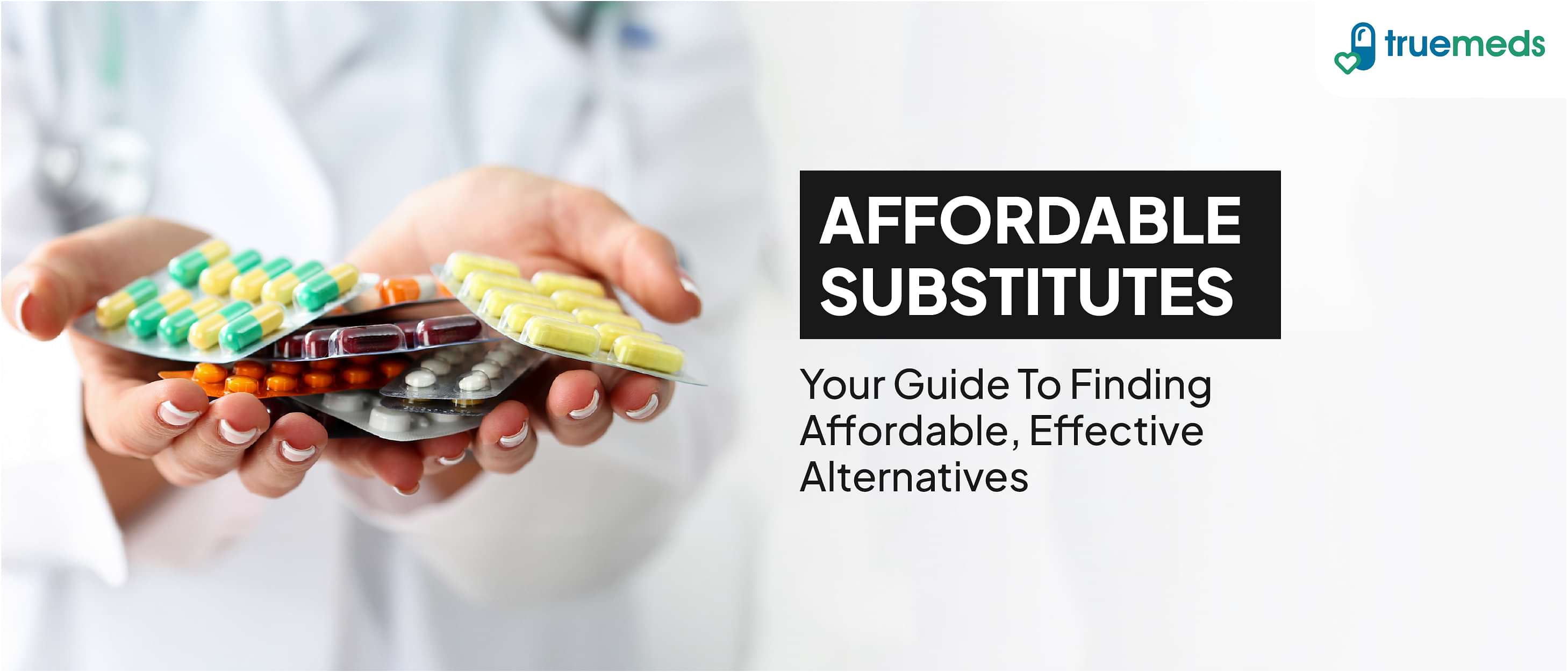
How to Find Affordable Generic Substitutes for Prescribed Medicines
Last updated on : 01 Dec, 2025
Read time : 7 min
Are you looking for ways to reduce your healthcare expenses without compromising the quality of your care? Understanding how to find affordable generic substitutes for your prescribed medications can be an excellent solution. In this blog, we’ll guide you through the process of identifying and accessing cost-effective alternatives to brand-name drugs, helping you navigate this journey with ease and evidence-based knowledge.
Why Consider Generic Substitutes?
Generic substitutes provide a budget-friendly alternative to brand-name medications, offering the same level of safety and efficacy. They are chemically identical to their brand-name counterparts in active ingredients, dosage form, route of administration, quality, performance characteristics, and intended use [3].
Let’s explore the key benefits of choosing generic drugs:
1. Significant Cost Savings
One of the most compelling reasons to opt for generic substitutes is the significant cost savings they offer. Generic drugs can be substantially less expensive than their brand-name counterparts, often costing 80% to 85% less, making them a highly economical choice for managing your medication expenses [3]. By switching to generic alternatives, you can substantially reduce your healthcare costs without sacrificing the quality of your treatment.
2. Assured Effectiveness and Bioequivalence
It’s crucial to understand that generic equivalents are manufactured using the same active ingredients as their brand-name versions. These generic medications undergo rigorous testing and approval processes by regulatory authorities, such as the U.S. Food and Drug Administration (FDA), to ensure they meet the same standards for pharmaceutical equivalence and bioequivalence. This means they must deliver the same amount of active ingredient to the bloodstream in the same amount of time as the original brand-name drugs [3]. You can confidently choose generic substitutes, knowing that they will deliver the same therapeutic benefits as the original brand-name drugs.
3. Wider Availability and Access
Generic substitutes are widely accessible, with over 9 out of 10 prescriptions filled being for generics when an equivalent is available in the US [3]. Pharmacists are often permitted to substitute brand-name medications with their generic counterparts, following state laws and regulations. This means that you can easily obtain generic substitutes at most pharmacies, making it convenient to switch to more affordable options without any hassle.
How to Find Affordable Generic Substitutes
If you’re looking to save money on your prescription medications, finding affordable generic substitutes can be a great option. Follow these clear steps:
- Consult with your doctor or pharmacist about potential generic alternatives or therapeutic substitutes for your current medications. Your pharmacist is an excellent resource for comparing generic availability and cost.
- Check with your insurance provider to see if generic versions of your medications are covered under your plan’s formulary (the list of covered drugs).
- You can also use online tools and pharmacy websites to compare prices and availability of generic drugs.
- Additionally, ask your insurance provider about low-cost generic programmes, which can significantly reduce your prescription costs. Many commonly prescribed medications have affordable generic substitutes available.
Assurance of Generic Drug Safety and Effectiveness
Generic drugs are a safe, effective, and quality alternative to brand-name medications. The confidence in generic drugs stems from a consistent regulatory process:
- Generic drugs undergo rigorous testing and approval by the FDA to ensure they meet the same standards of pharmaceutical equivalence and bioequivalence as their brand-name counterparts [3].
- They must provide the same clinical benefits and risks as brand-name medicines, with an identical therapeutic effect and safety profile [3].
- Generic drugs are manufactured under the same strict quality standards as brand-name medications, with regular inspections and postmarketing surveillance to ensure their safety and efficacy [3].
- Numerous global research studies have consistently shown that generic drugs are equally effective as their brand-name equivalents, with minimal, clinically insignificant differences in performance [2].
Essential Considerations Before Switching to Generic Substitutes
Before making the switch to generic substitutes, several factors should be considered to ensure a safe and effective transition. This step-by-step approach ensures your safety and continuity of care.
1. Consult Your Doctor and Pharmacist:
It is essential to discuss the possibility of switching to a generic substitute with your doctor and pharmacist. They can provide personalised advice based on your specific condition and medical history, ensuring that the generic equivalent or alternative is suitable for you. Your doctor’s initial prescription and your pharmacist’s final dispensing check are the crucial steps in determining the best course of action when considering a switch to generic medications.
2. Confirm Compatibility:
When exploring generic substitutes, it is essential to verify that the medication contains the same active ingredients, dosage, and administration route as the brand-name version. Additionally, ensure that the generic substitute meets the FDA’s standards for bioequivalence. While inactive ingredients (like dyes or fillers) may differ, which can rarely cause an allergic reaction in sensitive patients, the active ingredient’s performance is guaranteed to be the same [3]. By verifying compatibility, you can minimise the risk of adverse reactions and ensure that the generic substitute will work as effectively as the original medication.
3. Understanding Potential Side Effects and Quality Assurance:
While generic substitutes are generally considered safe, it is important to be aware that they carry the same risks and side effects as their brand-name counterparts because they share the same active ingredient and mechanism of action [3]. In the rare instances of quality concerns, such as the widely publicized issue of nitrosamine impurities, regulatory bodies like the FDA issue immediate recalls and quality alerts, ensuring public safety and maintaining the integrity of the drug supply [1]. Being informed about potential side effects enables you to make an informed decision and closely monitor your health when transitioning to a generic substitute.
Tips for Saving More on Medications
In addition to opting for generic substitutes, there are several strategies you can employ to maximise your savings on medications:
- Discuss with your doctor the option of prescribing generic versions of your required medications, as they are often the default choice due to their proven safety and effectiveness.
- Check with your pharmacy, as network pharmacies may automatically substitute generic drugs for brand-name drugs if available, but it’s always good to confirm.
- Compare prices across different pharmacies or use online price comparison tools to find the best deals on generic medications.
- Explore patient assistance programmes offered by pharmaceutical companies and health organisations, which can help reduce the cost of generic medications for eligible individuals.
- Consider buying medications in bulk, if allowed by your insurance and prescription, as this can sometimes lead to additional savings.
Conclusion
Transitioning to generic substitutes can be an effective way to reduce medication costs without compromising efficacy. However, it is crucial to approach the process with caution and diligence. By consulting your doctor and pharmacist, confirming compatibility, and being aware of potential side effects, you can make a safe switch to more affordable generic alternatives. This approach ensures that you continue to receive effective treatment while managing your healthcare expenses in a more sustainable manner.
Expert Quote:
“Generic substitutes offer the same therapeutic benefits as branded medicines but at a far lesser cost. With the proper guidance from your doctor and pharmacist, you can manage chronic conditions at a fraction of the cost without compromising on quality.”
– Dr. Sachin Singh
References
[1] Center for Drug Evaluation, & Research. (2024, October 4). Generic Drugs: Questions & Answers. U.S. Food and Drug Administration. Retrieved October 31, 2025, from https://www.fda.gov/drugs/frequently-asked-questions-popular-topics/generic-drugs-questions-answers
[2] Dunne, S. S., & Dunne, C. P. (2015). What do people really think of generic medicines? A systematic review and critical appraisal of literature on stakeholder perceptions of generic drugs. BMC Medicine, 13(1), 173. https://doi.org/10.1186/s12916-015-0415-3
[3] U.S. Food and Drug Administration (FDA). (2024, February 16). Facts About Generic Drugs. https://www.fda.gov/drugs/generic-drugs/facts-about-generic-drugs
[4] Joshi, S. S., Shetty, Y. C., & Karande, S. (2019). Generic drugs – The Indian scenario. Journal of Postgraduate Medicine, 65(2), 67–69. https://doi.org/10.4103/jpgm.JPGM_420_18
[5] Hassali, M. A., Alrasheedy, A. A., McLachlan, A., Nguyen, T. A., Al-Tamimi, S. K., Ibrahim, M. I. M., & Aljadhey, H. (2014). The experiences of implementing generic medicine policy in eight countries: A review and recommendations for a successful promotion of generic medicine use. Saudi Pharmaceutical Journal: SPJ: The Official Publication of the Saudi Pharmaceutical Society, 22(6), 491–503. https://doi.org/10.1016/j.jsps.2013.12.017














Disclaimer
Our healthcare experts have carefully reviewed and compiled the information presented here to ensure accuracy and trustworthiness. It is important to note that this information serves as a general overview of the topic and is for informational purposes only. It is not intended to diagnose, prevent, or cure any health problem. This page does not establish a doctor-patient relationship, nor does it replace the advice or consultation of a registered medical practitioner. We recommend seeking guidance from your registered medical practitioner for any questions or concerns regarding your medical condition.
Popular Articles

Recommended Articles


Recent Articles










Company
About UsHealth ArticleHealth StoriesHealth LibraryDiseases & Health ConditionsAyurvedaAll MedicinesAll BrandsNeed HelpFAQSecuritySubscribe
Registered Office Address
Grievance Officer
Download Truemeds


Contact Us
Our customer representative team is available 7 days a week from 9 am - 9 pm.
v4.9.0

2025 - Truemeds | All rights reserved. Our content is for informational purposes only. See additional information.

Our Payment Partners




