

- Medicines
- Personal Care
- Skin Cream
- Sunscreen
- Face Wash
- Skin and Body Soap
- Acne Care
- Body Lotions
- Moisturising Lotion
- Moisturising Cream
- Mosquito Repellent
- Moisturising Gel
- Body Wash
- Hair Oils
- Hair Shampoo
- Hair Conditioners
- Hair Supplements
- Hair Colour
- Hair Serum
- Hair Mask
- Hair Solutions
- Baby Diapers and Wipes
- Baby Lotion and Moisturising Cream
- Baby Bath Essentials
- Baby Skin Care
- Baby and Infant Food
- Baby Healthcare
- Women Multivitamins
- Ovulation Test Kit and Women Intimate Care
- Sanitary Pads
- Nutritional Drinks
- Condoms
- Lubricants
- Massage Gels
- Personal Body Massagers
- Men Performance Booster
- Sexual Health Supplements
- Massage Oils
- Ayurveda
- Tooth Paste
- Mouth Ulcer Gel
- Mouthwash
- Toothache and Gum Pain
- Tooth Brush
- Gargle Solution
- Orthopaedic Supports
- Adult Diapers
- Footwear
- Mobility and Support Accessories
- Urinary Support and Care
- Health Conditions
- Bone and Joint Care
- Digestive Care
- Eye Care
- Pain Relief
- Smoking Cessation
- Liver Care
- Stomach Care
- Cold and Cough
- Heart Care
- Kidney Care
- Piles, Fissures & Fistula
- Respiratory Care
- Mental Wellness
- Derma Care
- Pre and Probiotics
- Acidity
- Gas
- Constipation
- Loose Motion/Diarrhoea
- Digestive Fibres
- Digestive Enzymes
- Eye Lubricant Drops
- Lens Solution
- Safety Eye Wear
- Eye Cream
- Eye Vitamins and Supplements
- Eye Drops
- Eye Ointment and Gel
- Nicotine Patch
- Nicotine Gum
- Nicotine Lozenges
- Cough Syrups
- Chest Rubs and Balms
- Nasal Spray
- Lozenges
- Inhalant Capsules
- Cold and Cough Tablets
- Vitamins & Supplements
- Diabetes Care
- Healthcare Devices
- Homeopathic Medicine
- Health Guide
Nagarmotha
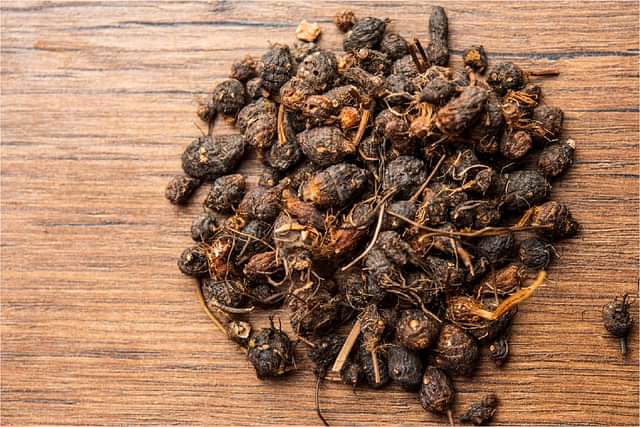
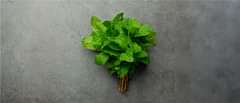
Nagarmotha (Cyperus rotundus), also known as Musta or purple nutsedge, is a perennial plant whose dried rhizomes and tubers are traditionally used in Ayurveda, particularly for digestive support. Its aromatic oil is used in perfumery and aromatherapy, while certain plant parts have also been used as flavouring ingredients in some regional food traditions.
 50
50Last updated on : 15 Sep, 2026
Read time : 10 mins
What is Nagarmotha?
Nagarmotha, scientifically known as Cyperus rotundus, is commonly called nutgrass or purple nutsedge. It belongs to the sedge family and is native to Africa, southern Europe and South Asia, and is now found across much of the tropical and subtropical world.
In India, Nagarmotha is commonly grown in states including Uttar Pradesh and Gujarat, alongside China and other parts of Southeast Asia. While valued in Ayurveda for its traditional medicinal use, Cyperus rotundus is also recognised internationally as a persistent agricultural weed due to its rapid growth and difficulty to control.
Key Facts
| Feature | Details |
| Botanical name | Cyperus rotundus
|
| Family | Cyperaceae (sedge family)
|
| Part used | Underground tubers (rhizomes)
|
| Key active compounds | Cyperene, rotundone, patchoulenone, caryophyllene oxide and related terpenoids |
| Traditional uses | Digestive comfort, skin care, aromatherapy
|
| Common forms | Dried tubers, powder, essential oil
|
| General dosage | Varies by form
|
| Best taken | Powder is typically taken with water or honey; oil is used topically after a skin test |
| Key safety note | Avoid oral use during pregnancy and breastfeeding unless advised by a healthcare professional; discontinue use if an allergic reaction occurs. |
Alternative Names of Nagarmotha
Nagarmotha is known by a range of names across languages and regions, reflecting its wide traditional use:
- English: Nutgrass, purple nutsedge, coco grass
- Urdu: Kaphur
- Hindi: Motha, Nagarmotha
- Sanskrit: Musta, Mustaka, Bhadramusta, Nagarmustaka
- Tamil: Korai kizhangu, Muthakach
- Telugu: Tunga mustalu
- Malayalam: Muthanga
- Kannada: Tunge gadde
- Marathi: Motha, Nagarmoth, Bimbal
- Gujarati: Moth, Nagarmoth
- Bengali: Mutha, Musta
- Punjabi: Mutha, Motha
Chemical Constituents of Nagarmotha
Nagarmotha's traditional actions are linked to several compounds found in its tubers and essential oil, including:
- Cyperene and rotundone (sesquiterpenes)
- Caryophyllene oxide
- α-pinene and β-pinene
- Patchoulenone
Medicinal Properties of Nagarmotha
Nagarmotha's traditional actions in the body are understood in Ayurveda to include:
- Deepana-Pachana (digestive and carminative): traditionally supports digestion and eases bloating (Kamala et al., 2018)
- Anti-inflammatory: traditionally used to support relief from minor inflammation (Rocha et al., 2020)
- Antimicrobial: traditionally supports wound and skin care (Kamala et al., 2018)
- Antispasmodic: traditionally used to ease cramping
- Antioxidant: associated with antioxidant activity in preliminary research (Dechakhamphu et al., 2023)
These properties describe traditional Ayurvedic understanding of Nagarmotha's actions and some preliminary phytochemical and preclinical research, rather than clinically confirmed effects in humans.
How is Nagarmotha Made?
Nagarmotha is not manufactured but harvested and processed from the wild or cultivated plant:
- Cleaning: The underground medicinal material is collected, authenticated, and cleaned to remove soil and debris.
- Separation: The underground tubers, the part used medicinally, are separated from the rest of the plant.
- Washing: The tubers are washed thoroughly to remove any remaining soil.
- Drying: The cleaned tubers are sun-dried or dried at a controlled temperature.
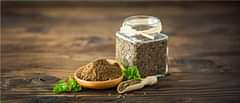
- Processing: The dried tubers are ground into powder, or processed further to extract essential oil.
- Packaging: The finished powder or oil is packaged for use in herbal products, perfumery and aromatherapy.
Key Health Benefits of Nagarmotha
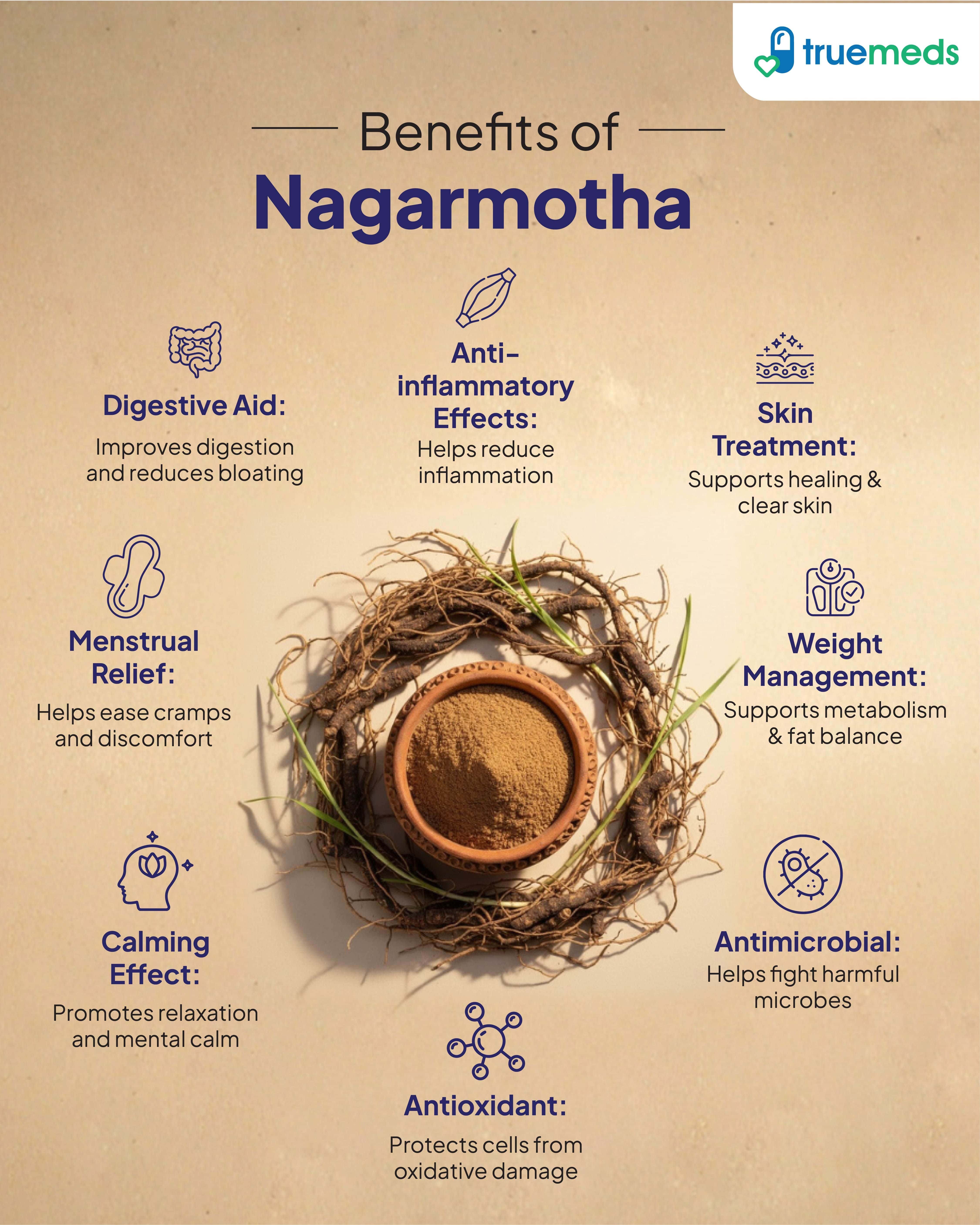
Nagarmotha is traditionally used mainly to support digestion and ease digestive discomfort such as bloating and gas. It is also associated with traditional uses for inflammation, skin health and menstrual discomfort, while its antioxidant and antimicrobial effects are mainly supported by preliminary research. Evidence for weight management and calming effects in humans remains limited.
1. Digestive Aid
Nagarmotha is mainly well known for its ability to improve digestion. It also assists in conditions such as indigestion, bloating, and gassiness. It has carminative effects that help ease the tract and, therefore, can be used to treat stomach aches.
2. Anti-inflammatory Effects
The plant has compounds that have anti-inflammatory effects. This makes Nagarmotha beneficial in controlling inflammation in different illnesses and remedying pain and inflammation, particularly in arthritis and other related diseases.
3. Skin Treatment
Nagarmotha is beneficial in skin diseases like acne, eczema, and rashes. It has applications in skin infections, inflammation, and general skin care.
4. Weight Management
This herb is said to help lose weight since it helps to increase the metabolic rate. It also helps control blood sugar levels, which helps control hunger and thus helps correct eating.
5. Menstrual Relief
Nagarmotha helps treat stomach aches related to menstrual cramps and can also be used to control cycles. It has an antispasmodic effect, which helps to relax the muscles of the pelvic area and gives a woman a certain amount of comfort during menstruation.
6. Calming Effect
Nagarmotha essential oil is used in aromatherapy and has calming and balancing properties on the body. It helps manage stress and anxiety and aids in relaxation and concentration.
7. Antioxidant Properties
It contains antioxidant substances that help the body avoid being a victim of oxidation and forming free radicals. This property allows the body's overall well-being and possibly reduces the number of people affected by chronic diseases.
8. Antimicrobial Activity
It has been established that Nagarmotha has antibacterial activity and helps combat infections. It can be applied to minor injuries to prevent bacterial infections because of its inherent disinfecting abilities.
Common Uses of Nagarmotha
Nagarmotha is commonly used in Ayurvedic digestive preparations, aromatherapy, perfumery and some traditional foods and beverages. Its essential oil is also traditionally used as a natural insect repellent, although evidence for this use is limited.
1. In Ayurvedic Digestive Formulations
Nagarmotha powder is a common ingredient in traditional Ayurvedic digestive blends, often combined with other carminative herbs (Kamala et al., 2018).
2. In Aromatherapy and Perfumery
Nagarmotha's essential oil, distilled from its tubers, is valued in aromatherapy and perfumery for its distinctive woody aroma.
3. In Food and Beverages
Nagarmotha is used as a flavouring ingredient in some traditional Indian foods and drinks.
4. As a Natural Insect Repellent
Nagarmotha is traditionally used as a natural insect repellent (Nour et al., 2025), although evidence for its effectiveness in humans and real-world settings is limited.
Precautions While Taking Nagarmotha
Nagarmotha is traditionally considered safe for most adults when used as directed, but the following precautions should be reviewed first:
1. Pregnancy and Breastfeeding
Pregnant or breastfeeding women should consult a doctor before using Nagarmotha, as its safety during these periods has not been well established.
2. Allergies
Do not use Nagarmotha if you have previously had an allergic reaction to Cyperus rotundus or any ingredient in the product. Stop topical use if irritation, itching, swelling or allergic reaction occurs.
3. People on Medication
People taking blood thinners, diabetes medication, or medicines for other chronic conditions should consult a doctor before use.
4. Product Quality
Use a high-quality, reputable Nagarmotha product to reduce the risk of contamination, and follow the recommended dose rather than increasing it without professional advice.
Herbs Traditionally Used With Nagarmotha
| Herb | Traditional Pairing |
| Ginger (Zingiber officinale) | Ginger is traditionally combined with Nagarmotha in digestive blends for its complementary carminative and warming properties. |
| Fennel (Foeniculum vulgare) | Fennel is traditionally paired with Nagarmotha to support digestive comfort and ease bloating as part of a balanced digestive blend. |
| Coriander (Coriandrum sativum) | Coriander is traditionally used alongside Nagarmotha in classical digestive formulations for its cooling and soothing properties. |
Recommended Dosage of Nagarmotha
Dosage varies by form and should be confirmed with a doctor or Ayurvedic practitioner, particularly for children, elderly people, or anyone on other medication. General guidance:
1. Children
Nagarmotha is not generally recommended for young children without medical guidance. For older children, use should only be under the direction of a paediatrician or qualified practitioner.
2. Teenagers
If advised by a healthcare provider, lower adult amounts may be used, with the exact dose determined by the healthcare provider based on age and health needs.
3. Adults
- Powder: 1 to 3 grams daily, dissolved in water or honey.
- Decoction: 1 to 2 cups daily, made from 1 to 2 teaspoons of dried tubers.
- Essential oil: 1 to 2 drops diluted in a carrier oil, applied topically after a patch test.
- Capsules: 250 to 500 mg, taken one to three times daily.
4. Elderly
Elderly users should generally start at the lower end of the adult amount and consult a doctor before regular use, particularly if taking other medication.
Side Effects of Nagarmotha
Nagarmotha is generally well tolerated, but the following side effects may occur:
1. Constipation
Excessive use of Nagarmotha may cause constipation in some people. Reducing the dose or stopping use may help resolve the symptoms.
2. Allergic Reactions
People with known plant allergies may experience skin irritation or other allergic symptoms and should stop use if these occur.
Interaction of Nagarmotha With Other Drugs
Nagarmotha may interact with certain medicines, and the following should be discussed with a doctor before combining them:
1. Antidiabetic Medication
Because Nagarmotha may affect blood sugar levels (Raut & Gaikwad, 2006), combining it with antidiabetic medication should be discussed with a doctor to reduce the potential risk of low blood sugar (hypoglycaemia).
2. Blood-Thinning Medication
Nagarmotha may affect blood clotting based on preliminary research (Seo et al., 2011), so anyone taking blood-thinning medication should consult a doctor before use.
Storage of Nagarmotha
Store Nagarmotha powder, tubers or oil in an airtight container, in a cool, dark and dry place, away from direct sunlight and moisture. Check periodically for signs of spoilage or deterioration, such as an unusual smell or change in colour, and discard if these appear.
Key Takeaways
- Nagarmotha (Cyperus rotundus), also known as nutgrass, is a multipurpose plant traditionally used in Ayurveda, aromatherapy and food preparation.
- It is traditionally used to support digestion, skin health and general wellbeing, though robust human clinical evidence for these uses is limited.
- Nagarmotha is not a treatment for diabetes or menstrual disorders, and these should be assessed and managed by a doctor.
- It may cause constipation or allergic reactions in some people, particularly those with known plant allergies.
- It should be avoided during pregnancy and breastfeeding unless a doctor advises otherwise, and used cautiously by anyone taking blood-thinning or diabetes medication.
- Always consult a qualified healthcare professional before using Nagarmotha regularly, particularly if you have a chronic condition or take other medicines.
FAQs
What are the uses of Nagarmotha for hair?
How to make Nagarmotha oil?
What are the benefits of Nagarmotha oil?
Can Nagarmotha cause bloating?
Is Nagarmotha suitable for stomach disorders?
Does Nagarmotha help with diabetes?
Is Nagarmotha safe to use every day?
Can Nagarmotha help with skin brightening?
Can Nagarmotha interact with medicines?
Can Nagarmotha cause constipation?
Can Nagarmotha be used during pregnancy or breastfeeding?
References
- Raut, N. A., & Gaikwad, N. J. (2006). Antidiabetic activity of hydro-ethanolic extract of Cyperus rotundus in alloxan-induced diabetes in rats. Fitoterapia, 77(7–8), 585–588. https://doi.org/10.1016/j.fitote.2006.09.006
- Seo, E. J., Lee, D. U., Kwak, J. H., Lee, S. M., Kim, Y. S., & Jung, Y. S. (2011). Antiplatelet effects of Cyperus rotundus and its component (+)-nootkatone. Journal of Ethnopharmacology, 135(1), 48–54. https://doi.org/10.1016/j.jep.2011.02.025
- Kamala, A., Middha, S. K., & Karigar, C. S. (2018). Plants in traditional medicine with special reference to Cyperus rotundus L.: A review. 3 Biotech, 8(7), 309. https://doi.org/10.1007/s13205-018-1328-6
- Nour, A. H., Idris, A. A., Ishag, O. A., Nour, A., & Alara, O. R. (2025). Chemical constituents and cockroach repellent activity of Sudanese Cyperus rotundus rhizomes essential oil. Journal of Research in Pharmacy. https://dergipark.org.tr/en/pub/jrespharm/article/1689661
- Dechakhamphu, A., Wongchum, N., Chumroenphat, T., Tanomtong, A., Pinlaor, S., & Siriamornpun, S. (2023). In vitro and in vivo evaluation for antioxidant and anti-diabetic properties of Cyperus rotundus L. kombucha. Foods, 12(22), 4059. https://pmc.ncbi.nlm.nih.gov/articles/PMC10670513/
- Rocha, F. G., Brandenburg, M. M., Pawloski, P. L., Soley, B. D. S., Costa, S. C. A., Meinerz, C. C., Baretta, I. P., Otuki, M. F., & Cabrini, D. A. (2020). Preclinical study of the topical anti-inflammatory activity of Cyperus rotundus L. extract (Cyperaceae) in models of skin inflammation. Journal of Ethnopharmacology, 254, 112709. https://doi.org/10.1016/j.jep.2020.112709

Explore other categories
Latest health articles





Top Health Essentials




Top-selling ayurvedic products












Disclaimer
Top-Selling Medicines:
...View more
Top-OTC medicines:
...View more
Top-selling healthcare devices:
...View more
Company
About UsHealth ArticleHealth StoriesHealth LibraryDiseases & Health ConditionsAyurvedaUnderstanding Generic MedicinesAll MedicinesAll BrandsNeed HelpFAQSecuritySavings CalculatorAdvertise with UsSubscribe
Registered Office Address
Grievance Officer
Download Truemeds


Contact Us
Our customer representative team is available 7 days a week from 9 am - 9 pm.
v4.28.13

2026 - Truemeds | All rights reserved. Our content is for informational purposes only. See additional information.

Our Payment Partners