Key Takeaways
- Hypothyroidism slows metabolism, causing weight gain and cold sensitivity, while hyperthyroidism speeds it up, causing weight loss and heat intolerance.
- Both conditions can cause fatigue and goitre, making blood tests essential for accurate diagnosis.
- Hashimoto's disease is the reason for most hypothyroidism cases, whereas Graves' disease is the reason for most hyperthyroidism cases.
- Treatment approaches are opposite: hypothyroidism requires hormone replacement, while hyperthyroidism requires reducing hormone production.
- With proper treatment, most people can manage either condition effectively.
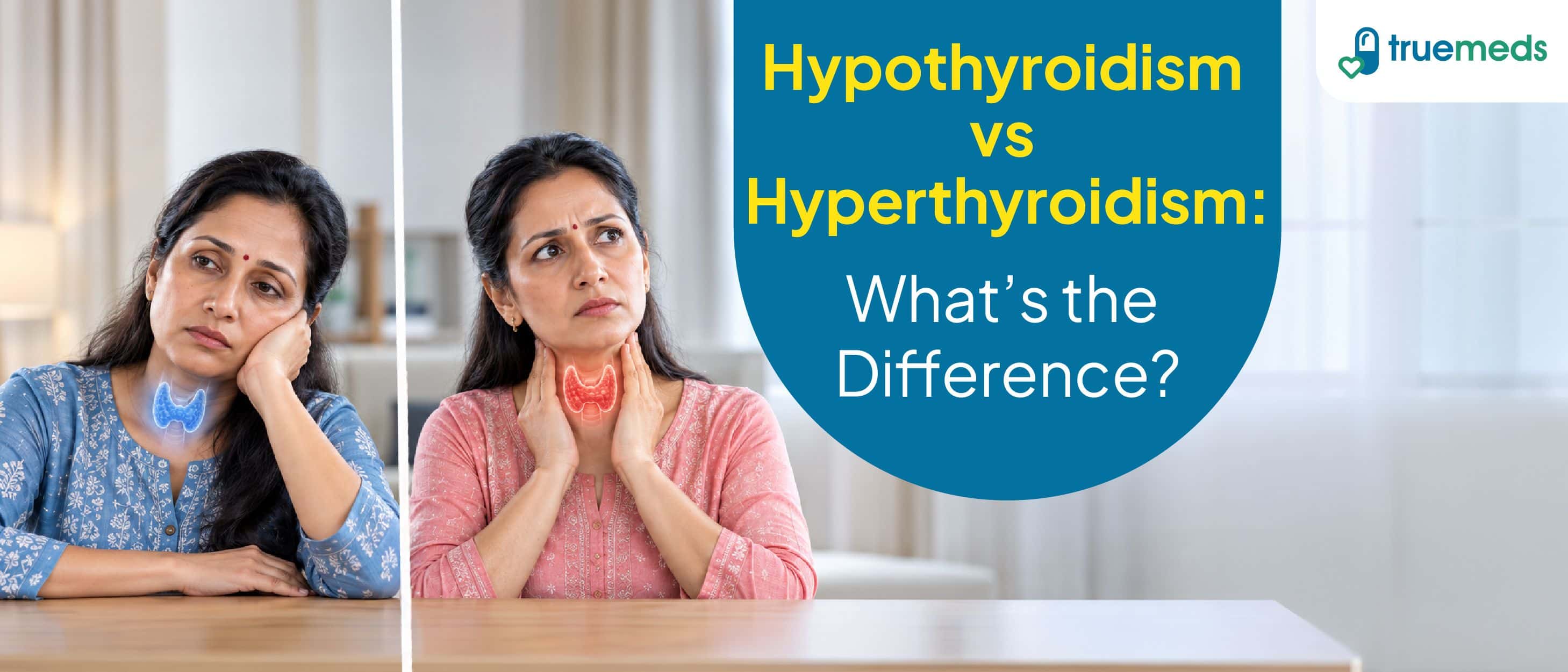
The difference between hypothyroidism and hyperthyroidism matters when you notice unusual changes in your energy, weight, or mood. These two thyroid conditions are near-opposites: when your thyroid gland produces too little hormone, hypothyroidism occurs , whereas hyperthyroidism develops when it produces too much[1].
Despite causing opposite effects on your metabolism, both conditions can share symptoms like fatigue and an enlarged thyroid, making professional diagnosis critical[1]. This article explains how these conditions differ in diagnosis, causes, symptoms, and treatment to help you have informed conversations with your healthcare provider.
What is Hypothyroidism?
Hypothyroidism, or underactive thyroid, occurs when your thyroid gland does not produce enough thyroid hormones[2]. These hormones regulate metabolism, affecting how your body uses energy, produces heat, and burns fat[3]. When thyroid hormone levels fall too low, your body's processes slow down. This can result in weight gain, constipation, slowed heart rate, and increased sensitivity to cold temperatures[1].
The most common cause of hypothyroidism is Hashimoto's disease. In this autoimmune condition, your immune system attacks and damages the thyroid gland, preventing it from producing adequate hormones[4].
What is Hyperthyroidism?
Hyperthyroidism, or overactive thyroid, develops when your thyroid gland produces excessive amounts of thyroid hormones[5]. This excess speeds up your body's metabolic processes[6]. Unintentional weight loss is a common experience with hyperthyroidism, along with nervousness, rapid heartbeat, frequent bowel movements, and heat sensitivity[1]. Your body essentially runs faster than normal, which can feel exhausting despite the increased activity.
The most common cause of hyperthyroidism is Graves' disease, accounting for approximately 4 out of 5 cases[6]. Like Hashimoto's disease, Graves' disease is an autoimmune condition, but instead of destroying the thyroid, the immune system stimulates it to overproduce hormones[6].
Hypothyroidism vs Hyperthyroidism: Symptoms Compared
While these conditions have opposite effects on metabolism, some symptoms overlap, which can make self-assessment challenging. The following table highlights the key differences[1],[3],[5]:
| Symptom Category | Hypothyroidism | Hyperthyroidism |
|---|---|---|
| Weight | Weight gain | Weight loss |
| Temperature | Cold intolerance | Heat intolerance |
| Heart rate | Slowed heart rate | Rapid or irregular heartbeat |
| Bowel movements | Constipation | Frequent bowel movements |
| Energy | Fatigue, sluggishness | Fatigue, nervousness |
| Skin | Dry skin | Warm, moist skin |
| Mood | Depression | Nervousness, irritability |
Both conditions can cause fatigue and goitre, which is an enlarged thyroid that may make your neck appear swollen[1]. This symptom overlap demonstrates why blood tests are essential for accurate diagnosis.
What Causes Each Condition?
Hypothyroidism Causes
An underactive thyroid can be due to several factors[3],[4]:
- Hashimoto's disease: The most common cause, where autoimmune activity damages the thyroid.
- Radiation therapy: Head and neck cancer treatment can affect thyroid function.
- Thyroid surgery: Removal of the thyroid gland - partially or completely reduces hormone production.
- Certain medications: Certain medications can interfere with thyroid hormone production. Examples include amiodarone, lithium, interferon-alpha, and some cancer medicines.
Hyperthyroidism Causes
An overactive thyroid may develop due to[5],[6]:
- Graves' disease: Autoimmune stimulation causes the thyroid to overproduce hormones.
- Thyroid nodules: Overactive nodules can produce excess hormones independently.
- Excess iodine: Consuming large amounts of iodine-rich foods like kelp or seaweed may trigger or worsen hyperthyroidism in susceptible individuals.
- Thyroiditis: Inflammation can cause stored hormones to leak into the bloodstream.
Hypothyroidism vs Hyperthyroidism: How Are They Diagnosed?
Diagnosis for both conditions follows a similar initial approach, as symptoms alone cannot confirm either disorder[2]. Your doctor will typically use[7]:
- Medical history and physical examination: Your doctor will ask about symptoms, family history of thyroid disease, and examine your neck for enlargement or nodules[2].
- Blood tests: These are the primary diagnostic tools[8]:
- TSH (Thyroid-Stimulating Hormone): High TSH typically indicates hypothyroidism; low TSH suggests hyperthyroidism
- T4 and T3 levels: T4 levels help assess thyroid function, while T3 testing is particularly useful for diagnosing or assessing hyperthyroidism
- Thyroid antibodies: Help identify autoimmune causes like Hashimoto's or Graves' disease[7]
Imaging tests: Radioactive iodine uptake and thyroid scans may help assess thyroid function and identify areas of increased or decreased activity, particularly in hyperthyroidism[8].
Professional diagnosis is essential. Do not attempt to self-diagnose based on symptoms alone.
Can Hypothyroidism Turn Into Hyperthyroidism?
While uncommon, some patients can experience a switch between these conditions. This typically occurs in people with autoimmune thyroid disease, where the type of antibodies produced by the immune system changes over time[9].
The more common pattern is evolution from Graves' disease (hyperthyroidism) to Hashimoto's disease (hypothyroidism), often following treatment. The reverse switch, from hypothyroidism to hyperthyroidism, is less common but has been documented.
If you are being treated for one thyroid condition and experience symptoms suggesting the opposite condition, consult your doctor for retesting[9].
Treatment Differences
The treatment approaches for these conditions are fundamentally different, reflecting their opposite nature.
Hypothyroidism Treatment
Treatment involves replacing the missing thyroid hormone with synthetic medication. Levothyroxine is the standard treatment, taken daily to restore normal hormone levels[3].
Key points about hypothyroidism treatment:
- Most patients require lifelong medication
- Symptom improvement typically begins within 3-4 weeks
- Complete improvement may take several months
- Regular blood tests monitor hormone levels and guide dosage adjustments[7],[10]
Dosage must be determined by a healthcare provider. Never adjust your medication without medical supervision.
Hyperthyroidism Treatment
Treatment aims to reduce thyroid hormone production or its effects. Options include[11]:
- Antithyroid medications: Methimazole is commonly used to reduce hormone production. Some patients may experience symptom remission after treatment
- Radioactive iodine therapy: Destroys overactive thyroid cells to reduce hormone output
- Surgery: Partial or complete thyroid removal in certain cases
- Beta-blockers: To manage symptoms like rapid heartbeat, beta-blockers may be prescribed while other treatments take effect
Treatment must be determined by a healthcare provider based on your specific condition.
Conclusion
Hypothyroidism and hyperthyroidism represent opposite ends of thyroid dysfunction, requiring different treatment approaches. While hypothyroidism slows your metabolism and requires hormone replacement, hyperthyroidism speeds it up and requires reducing hormone production. With proper medical care and consistent treatment, most people with thyroid disorders can effectively manage their condition and maintain good quality of life. If you experience persistent symptoms affecting your energy, weight, or mood, consult a healthcare provider for appropriate evaluation.
FAQs
Which is more common, hypothyroidism or hyperthyroidism?
Hypothyroidism is more common than hyperthyroidism. In India, thyroid disorders affect millions of people, with hypothyroidism being the predominant condition. Women are more frequently affected than men for both conditions.
How do I know if I have hyperthyroidism or hypothyroidism?
You cannot determine which condition you have based on symptoms alone, as both can cause fatigue and thyroid enlargement. Blood tests measuring TSH, T4, and T3 levels are essential for accurate diagnosis. Consult a doctor if you notice persistent symptoms.
Which is more serious, hypothyroidism or hyperthyroidism?
Both conditions require treatment and can lead to complications if left untreated. Severe hyperthyroidism can cause heart problems, while untreated hypothyroidism can affect various body functions and cause complications. With proper treatment, both can be managed.
Can stress cause thyroid problems?
Stress may play a role in triggering autoimmune thyroid conditions, particularly Graves' disease, in people with a genetic predisposition. However, stress alone does not directly cause thyroid dysfunction. Managing stress supports overall health.
Can you have hypothyroidism and hyperthyroidism symptoms at the same time?
Some people with autoimmune thyroid disease may experience a back-and-forth between overactivity and underactivity in the early stages of Hashimoto's thyroiditis.
Is thyroid disease hereditary?
Autoimmune thyroid diseases, including Hashimoto's and Graves' disease, tend to run in families. Having a close relative with thyroid disease increases your risk. However, genetic predisposition does not guarantee you will develop the condition.
How long does it take to feel better after starting treatment?
For hypothyroidism, symptom improvement typically begins within 3-4 weeks of starting levothyroxine, though full improvement may take several months. Hyperthyroidism treatment response varies depending on the method used.
Can thyroid problems affect fertility or pregnancy?
Yes, both untreated hypothyroidism and hyperthyroidism can affect fertility and pregnancy outcomes. Thyroid dysfunction may increase risks of complications during pregnancy. Women planning pregnancy should have their thyroid function evaluated and optimised.
Medical Disclaimer
This article is for informational purposes only and does not constitute medical advice. The information provided should not be used for diagnosing or treating health conditions. Always consult a qualified healthcare provider for diagnosis, treatment, and personalised medical advice. Do not disregard professional medical advice or delay seeking it because of information found in this article. If you have a medical emergency, contact your doctor or emergency services immediately.
References
National Institutes of Health. (2021). Hypothyroidism vs. hyperthyroidism: What's the difference? NIH MedlinePlus Magazine. https://magazine.medlineplus.gov/article/hypothyroidism-vs-hyperthyroidism-whats-the-difference
Hypothyroidism (Underactive thyroid). (2025, October 3). National Institute of Diabetes and Digestive and Kidney Diseases. https://www.niddk.nih.gov/health-information/endocrine-diseases/hypothyroidism
Zamwar, U. M., & Muneshwar, K. N. (2023). Epidemiology, types, causes, clinical presentation, diagnosis, and treatment of hypothyroidism. Cureus, 15(9), e46241.
National Institute of Diabetes and Digestive and Kidney Diseases. (2025). Hashimoto's Disease. NIDDK. https://www.niddk.nih.gov/health-information/endocrine-diseases/hashimotos-disease