Docetaxel
Uses of Docetaxel
Docetaxel is a taxane chemotherapy medicine used to treat several types of cancer.
It is commonly used for:
• Breast cancer: Treats various stages of breast cancer.
• Non-small cell lung cancer: Manages this common type of lung cancer.
• Prostate cancer: Treats advanced prostate cancer.
• Gastric and head and neck cancers: Used as part of chemotherapy regimens for these cancers, often combined with other medicines, as prescribed by your oncologist.
Side effects of Docetaxel
Hair loss
Mouth ulcers
Diarrhoea
Nausea and vomiting
Fatigue
How Docetaxel works
Docetaxel works by stabilising microtubules, structures inside cells that help them divide.
By promoting the formation of microtubules and preventing them from breaking down normally, Docetaxel disrupts the cell division process.
This particularly affects rapidly dividing cancer cells, leading to their death and helping to control the growth and spread of cancer.
Certified content
Written By

BDS, MDS
Reviewed By

BAMS, FMC, MD Resident
Expert Advice
Dosage Forms Available
Docetaxel can be administered intravenously (infusion).
Age and Dose Restrictions
Docetaxel is typically prescribed for usage in adult patients.
Contraindications
Docetaxel should not be given to patients who have severe hypersensitivity to Docetaxel or to polysorbate 80. It is also contraindicated for individuals with neutrophil counts less than 1,500 cells/mm³ or severe liver impairment.
Other Medications to Avoid
Docetaxel can interact with strong inhibitors of cytochrome P450 3A4 (such as ketoconazole, itraconazole, and clarithromycin), and inducers of cytochrome P450 3A4 (like phenytoin, and carbamazepine).
Overdose and Missed Dose
If an overdose of Docetaxel occurs, it may result in severe side effects. In such instances, immediate medical attention should be sought.
In case a dose of Docetaxel is missed, it is recommended to take it as soon as you remember. However, if it is close to the time for your next dose, skip the missed one and continue with your regular dosing schedule.
Management of Side Effects
Most side effects are temporary and generally harmless, resolving on discontinuation of the medicine. However, if you experience severe side effects or worsening of symptoms, please consult your doctor.
For nausea and vomiting, try taking this medicine with food.
To manage mouth sores, maintain good oral hygiene and avoid eating spicy foods.
Drinking plenty of water may help to manage neuropathy and diarrhoea.
Use in Driving and Operating Machinery
Docetaxel may cause dizziness or fatigue. These side effects could potentially impact your ability to drive or operate heavy machinery. Avoid such activities if you feel affected.
Use in Pregnancy and Lactation
Docetaxel may cause harm to the foetus. Women of childbearing potential should use effective contraception during treatment and for at least 6 months after the last dose. Lactating women are advised to avoid breastfeeding while receiving Docetaxel.
Caution in Other Conditions
Caution should be exercised if the patient has mild to moderate liver impairment or pre-existing neuropathy.
Care must be taken in patients with impaired cardiac function.
Special Dietary and Lifestyle Recommendations
Avoid being around people who are ill or have infections, as Docetaxel can lower the ability of your immune system to fight infections.
Regular monitoring of blood counts is recommended during treatment with Docetaxel.
Frequently asked questions
Does Docetaxel have any impact on mood or emotions?
Docetaxel, like other chemotherapy medications, does not directly affect mood or emotions. However, side effects such as fatigue or changes in physical appearance due to hair loss might indirectly influence mood or emotions.
How long does Docetaxel remain in the body after administration?
The half-life of Docetaxel is approximately 11 to 48 hours, meaning it takes this long for half the medicine to be eliminated from your body. However, it may take several days for the complete elimination of the medication.
Are there any natural alternatives to Docetaxel?
There are no known natural alternatives that offer equivalent effectiveness to Docetaxel for treating cancer. Always consult your doctor before starting any alternative treatments.
Is there a specific test required before starting treatment with Docetaxel?
Your doctor may perform certain tests such as blood tests and liver function tests before starting treatment with Docetaxel, to ensure its safety and efficacy.
Can Docetaxel cause an allergic reaction?
Yes, Docetaxel may cause allergic reactions in some individuals. This can include symptoms such as rash, hives, swelling, and difficulty breathing. If you experience any of these symptoms after receiving Docetaxel, you should seek immediate medical attention.
Is Docetaxel a steroid?
No, Docetaxel is not a steroid. It is a chemotherapy medication used to manage various types of cancer.
Will Docetaxel affect fertility?
Yes, Docetaxel may cause harm to the foetus; hence, women of childbearing potential are advised to use effective contraception during the treatment and for at least 6 months after the last dose.
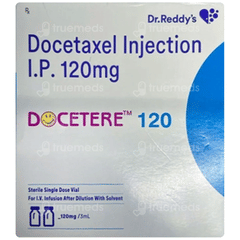
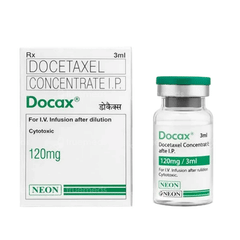
List of medicines for Docetaxel

Company
About UsHealth ArticleHealth StoriesHealth LibraryDiseases & Health ConditionsAyurvedaUnderstanding Generic MedicinesAll MedicinesAll BrandsNeed HelpFAQSecuritySavings CalculatorAdvertise with UsSubscribe
Registered Office Address
Grievance Officer
Download Truemeds


Contact Us
Our customer representative team is available 7 days a week from 9 am - 9 pm.
v4.28.23

2026 - Truemeds | All rights reserved. Our content is for informational purposes only. See additional information.

Our Payment Partners