

- Medicines
- Personal Care
- Skin Cream
- Sunscreen
- Face Wash
- Skin and Body Soap
- Acne Care
- Body Lotions
- Moisturising Lotion
- Moisturising Cream
- Mosquito Repellent
- Moisturising Gel
- Body Wash
- Hair Oils
- Hair Shampoo
- Hair Conditioners
- Hair Supplements
- Hair Colour
- Hair Serum
- Hair Mask
- Hair Solutions
- Baby Diapers and Wipes
- Baby Lotion and Moisturising Cream
- Baby Bath Essentials
- Baby Skin Care
- Baby and Infant Food
- Baby Healthcare
- Women Multivitamins
- Ovulation Test Kit and Women Intimate Care
- Sanitary Pads
- Nutritional Drinks
- Condoms
- Lubricants
- Massage Gels
- Personal Body Massagers
- Men Performance Booster
- Sexual Health Supplements
- Massage Oils
- Ayurveda
- Tooth Paste
- Mouth Ulcer Gel
- Mouthwash
- Toothache and Gum Pain
- Tooth Brush
- Gargle Solution
- Orthopaedic Supports
- Adult Diapers
- Footwear
- Mobility and Support Accessories
- Urinary Support and Care
- Health Conditions
- Bone and Joint Care
- Digestive Care
- Eye Care
- Pain Relief
- Smoking Cessation
- Liver Care
- Stomach Care
- Cold and Cough
- Heart Care
- Kidney Care
- Piles, Fissures & Fistula
- Respiratory Care
- Mental Wellness
- Derma Care
- Pre and Probiotics
- Acidity
- Gas
- Constipation
- Loose Motion/Diarrhoea
- Digestive Fibres
- Digestive Enzymes
- Eye Lubricant Drops
- Lens Solution
- Safety Eye Wear
- Eye Cream
- Eye Vitamins and Supplements
- Eye Drops
- Eye Ointment and Gel
- Nicotine Patch
- Nicotine Gum
- Nicotine Lozenges
- Cough Syrups
- Chest Rubs and Balms
- Nasal Spray
- Lozenges
- Inhalant Capsules
- Cold and Cough Tablets
- Vitamins & Supplements
- Diabetes Care
- Healthcare Devices
- Homeopathic Medicine
- Health Guide
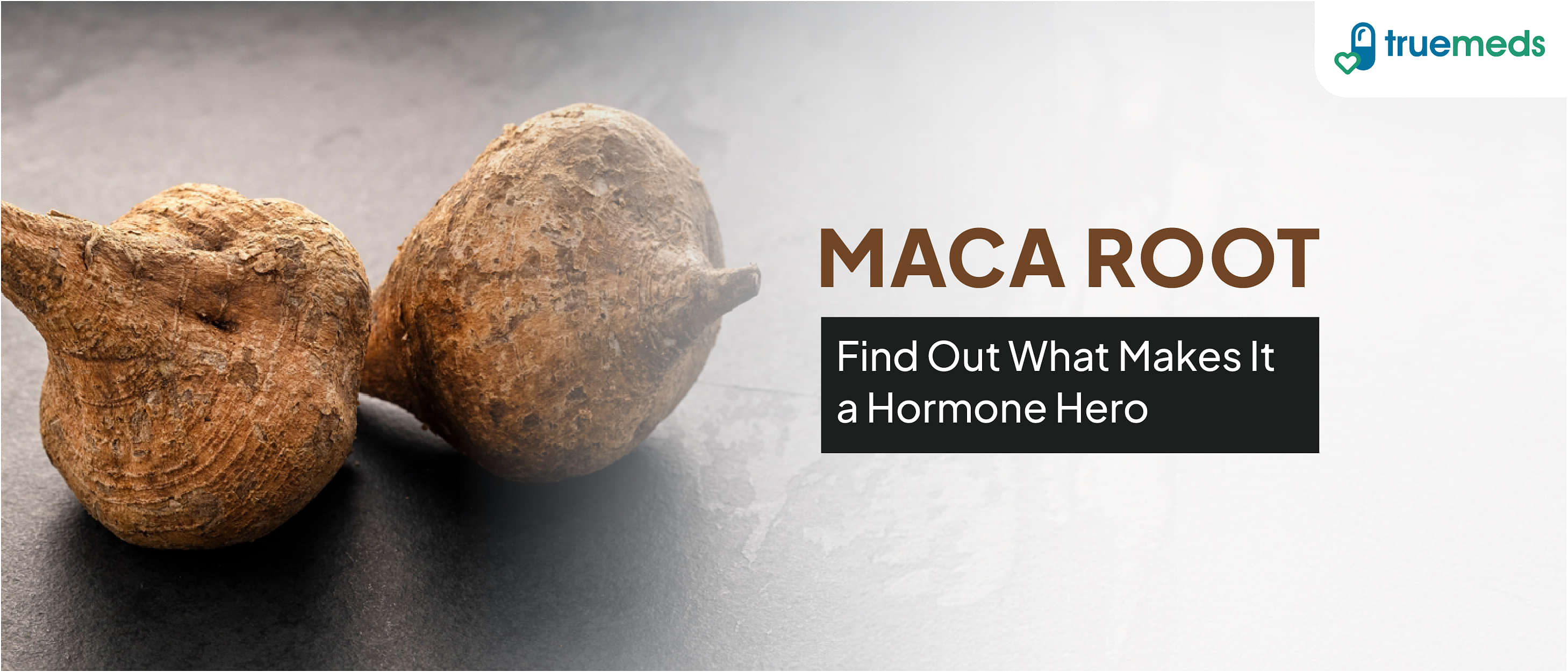
Maca Root: Potential Health Benefits and Side Effects
Last updated on : 30 Nov, 2025
Read time : 7 min
Maca root (Lepidium meyenii), a cruciferous vegetable from the Peruvian Andes, has gained attention as a potential superfood and adaptogen due to its traditional use in supporting fertility, sexual function, and energy. Cultivated for millennia at high altitudes, it’s a staple in local diets. As modern research investigates its properties, maca is increasingly popular as a nutritional supplement. Its adaptogenic properties are believed to help the body manage stress and maintain hormonal balance [1].
Let’s explore the potential properties of this fascinating root.
Health Benefits of Maca Root
Maca root is packed with essential nutrients and beneficial bioactive compounds, which may contribute to overall well-being.
1. Maca Root’s Potential for Men’s Health
Maca root is most studied for its effects on male sexual health. Several clinical studies suggest that daily maca consumption may boost libido or sexual desire [2], and potentially enhance aspects of semen quality, including sperm concentration and motility, without significantly altering systemic hormone levels like testosterone [3]. It may also offer a modest benefit in improving erectile dysfunction [4]. These effects could support better sexual performance and reproductive health in men. Maca’s impact extends beyond male-specific health, offering advantages for women as well.
2. Maca Root’s Potential for Women’s Health
Women may benefit from maca root’s potential to support hormonal balance, which has been shown in some studies to help alleviate psychological symptoms and sexual dysfunction, particularly in postmenopausal women [5]. Maca is also being studied for its potential effectiveness in reducing common menopausal symptoms such as night sweats, mood swings, and sleep disturbances [5]. Furthermore, its rich nutritional profile, including calcium, contributes to the maintenance of bone health, which is particularly important during and after menopause when bone density naturally declines [1].
3. Maca Root for Energy and Physical Performance
Athletes and active individuals often turn to maca root for its potential to enhance endurance and reduce fatigue [1]. Research suggests that maca’s bioactive compounds, like macamides and macaenes, may help improve physical performance and resilience during activity by boosting stamina [6]. Its ability to act as an adaptogen also supports the body’s overall physical response to the stress of intense exercise, aiding in energy maintenance.
4. Maca Root’s Role as an Adaptogen and Mood Support
As an adaptogen, maca root is believed to help the body adapt to physical and mental stress by supporting hormonal regulation [1]. This adaptogenic effect is associated with improved mood, and some clinical data suggest it may help reduce symptoms of anxiety and depression [5]. Through its role in stress management, maca may indirectly contribute to sustained energy and mental vitality, making it a valuable ally for overall well-being.
Potential Side Effects and Safety Concerns of Maca Root
While maca root is generally considered safe for most people when consumed in moderate doses, it is crucial to be aware of potential side effects and contraindications.
- Hormone-Sensitive Conditions: As maca may influence hormonal pathways, individuals with hormone-sensitive cancers (e.g., breast, ovarian, uterine) or conditions like endometriosis or uterine fibroids should exercise extreme caution. The potential for interactions means consultation with a specialist is mandatory before use [1].
- Digestive Issues: Some users have reported mild gastrointestinal discomfort, including stomach distress and cramping, after consuming maca. Starting with a very low dose can help minimize this risk.
- Thyroid Concerns: Maca contains glucosinolates, which, in high amounts, could potentially interfere with thyroid function, especially in individuals with iodine deficiency [1].
- Pregnancy and Breastfeeding: Due to a lack of sufficient safety data, it is advisable for pregnant or nursing women to avoid consuming maca [1].
- Raw Maca Consumption: Traditionally, maca is cooked before consumption. Ingesting raw maca is generally not recommended as it can cause digestive upset and may contain goitrogens (substances that interfere with thyroid hormone production).
Conclusion
Maca root is a nutrient-dense adaptogen that shows promise in supporting sexual health, energy, and mood, particularly in managing menopausal symptoms. It’s important to remember that most human studies are limited in scope or duration, and the effects can vary significantly among individuals [1]. When incorporating maca root into your health regimen, always prioritize a consultation with a qualified healthcare professional, especially if you have pre-existing health conditions, are on medication, or are pregnant or nursing. Start with the lowest effective dose and monitor your body’s response closely.
Disclaimer: This article is for informational purposes only and should not be considered a substitute for professional medical advice, diagnosis, or treatment. Always seek the advice of a qualified healthcare professional with any questions you may have regarding a medical condition or before starting, stopping, or changing any treatment, supplement, or diet.
Frequently Asked Questions (FAQs)
Can maca root help with fertility?
Studies suggest that maca root may improve semen parameters like sperm concentration and motility in men [3]. However, its direct impact on live birth rates or female fertility requires further high-quality human research.
Is maca root safe to use?
Maca root is generally safe at moderate doses for healthy adults. It is NOT safe if you are pregnant, breastfeeding, or have a hormone-sensitive condition (like certain cancers). Always consult your doctor.
How does maca root help with energy?
As an adaptogen, maca root is believed to enhance stamina and resilience to physical stress by supporting the body’s overall homeostatic balance [1].
Can maca root cause any side effects?
Side effects are generally mild and may include digestive upset or insomnia. However, due to potential hormonal influences and the presence of glucosinolates, caution is needed for those with thyroid or hormone-sensitive conditions [1].
What is the best way to take maca root?
Maca root is typically consumed as a powder in smoothies, oats, or in capsule form. A common dose range in clinical trials is 1.5–3 grams daily. Always start with a low dose and follow product instructions.
References
[1] Ulloa Del Carpio, N., Alvarado-Corella, D., Quiñones-Laveriano, D. M., Araya-Sibaja, A., Vega-Baudrit, J., Monagas-Juan, M., Navarro-Hoyos, M., & Villar-López, M. (2024). Exploring the chemical and pharmacological variability of Lepidium meyenii: a comprehensive review of the effects of maca. Frontiers in Pharmacology, 15, 1360422. https://doi.org/10.3389/fphar.2024.1360422
[2] Shin, D., Jeon, S. H., Piao, J., Park, H. J., Tian, W. J., Moon, D. G., Ahn, S. T., Jeon, K.-H., Zhu, G. Q., Park, I., Park, H.-J., Bae, W. J., Cho, H. J., Hong, S.-H., & Kim, S. W. (2023). Efficacy and safety of Maca (Lepidium meyenii) in patients with symptoms of late-onset hypogonadism: A randomized, double-blind, placebo-controlled clinical trial. The World Journal of Men’s Health, 41(3), 692–700. https://doi.org/10.5534/wjmh.220112
[3] Lee, H. W., Lee, M. S., Qu, F., Lee, J.-W., & Kim, E. (2022). Maca (Lepidium meyenii Walp.) on semen quality parameters: A systematic review and meta-analysis. Frontiers in Pharmacology, 13, 934740. https://doi.org/10.3389/fphar.2022.934740
[4] Lee, H. W., Lee, M. S., & Kil, K. J. (2023). Maca (L. meyenii) for erectile dysfunction: a systematic review and meta-analysis. Journal of Men’s Health, 19(1), 1-6. https://oss.jomh.org/files/article/20230130-20/pdf/JOMH15305.pdf
[5] Bower-Cargill, C., Yarandi, N., & Petróczi, A. (2022). A systematic review of the versatile effects of the Peruvian Maca Root (Lepidium meyenii) on sexual dysfunction, menopausal symptoms and related conditions. Phytomedicine Plus: International Journal of Phytotherapy and Phytopharmacology, 2(4), 100326. https://doi.org/10.1016/j.phyplu.2022.100326
[6] Tireki, S. (2021). Ashwagandha, Rhodiola rosea and Maca as Adaptogens. Modern Concepts & Developments in Agronomy, 8(5). https://www.academia.edu/download/67730227/MCDA.000696_makale_suzan.pdf
















Disclaimer
Our healthcare experts have carefully reviewed and compiled the information presented here to ensure accuracy and trustworthiness. It is important to note that this information serves as a general overview of the topic and is for informational purposes only. It is not intended to diagnose, prevent, or cure any health problem. This page does not establish a doctor-patient relationship, nor does it replace the advice or consultation of a registered medical practitioner. We recommend seeking guidance from your registered medical practitioner for any questions or concerns regarding your medical condition.
Popular Articles



Recommended Articles




Recent Articles










Company
About UsHealth ArticleHealth StoriesDiseases & Health ConditionsAyurvedaAll MedicinesAll BrandsNeed HelpFAQSecuritySubscribe
Registered Office Address
Grievance Officer
Download Truemeds


Contact Us
Our customer representative team is available 7 days a week from 9 am - 9 pm.
v4.8.0

2025 - Truemeds | All rights reserved. Our content is for informational purposes only. See additional information.

Our Payment Partners




