

- Medicines
- Personal Care
- Skin Cream
- Sunscreen
- Face Wash
- Skin and Body Soap
- Acne Care
- Body Lotions
- Moisturising Lotion
- Moisturising Cream
- Mosquito Repellent
- Moisturising Gel
- Body Wash
- Hair Oils
- Hair Shampoo
- Hair Conditioners
- Hair Supplements
- Hair Colour
- Hair Serum
- Hair Mask
- Hair Solutions
- Baby Diapers and Wipes
- Baby Lotion and Moisturising Cream
- Baby Bath Essentials
- Baby Skin Care
- Baby and Infant Food
- Baby Healthcare
- Women Multivitamins
- Ovulation Test Kit and Women Intimate Care
- Sanitary Pads
- Nutritional Drinks
- Condoms
- Lubricants
- Massage Gels
- Personal Body Massagers
- Men Performance Booster
- Sexual Health Supplements
- Massage Oils
- Ayurveda
- Tooth Paste
- Mouth Ulcer Gel
- Mouthwash
- Toothache and Gum Pain
- Tooth Brush
- Gargle Solution
- Orthopaedic Supports
- Adult Diapers
- Footwear
- Mobility and Support Accessories
- Urinary Support and Care
- Health Conditions
- Bone and Joint Care
- Digestive Care
- Eye Care
- Pain Relief
- Smoking Cessation
- Liver Care
- Stomach Care
- Cold and Cough
- Heart Care
- Kidney Care
- Piles, Fissures & Fistula
- Respiratory Care
- Mental Wellness
- Derma Care
- Pre and Probiotics
- Acidity
- Gas
- Constipation
- Loose Motion/Diarrhoea
- Digestive Fibres
- Digestive Enzymes
- Eye Lubricant Drops
- Lens Solution
- Safety Eye Wear
- Eye Cream
- Eye Vitamins and Supplements
- Eye Drops
- Eye Ointment and Gel
- Nicotine Patch
- Nicotine Gum
- Nicotine Lozenges
- Cough Syrups
- Chest Rubs and Balms
- Nasal Spray
- Lozenges
- Inhalant Capsules
- Cold and Cough Tablets
- Vitamins & Supplements
- Diabetes Care
- Healthcare Devices
- Homeopathic Medicine
- Health Guide
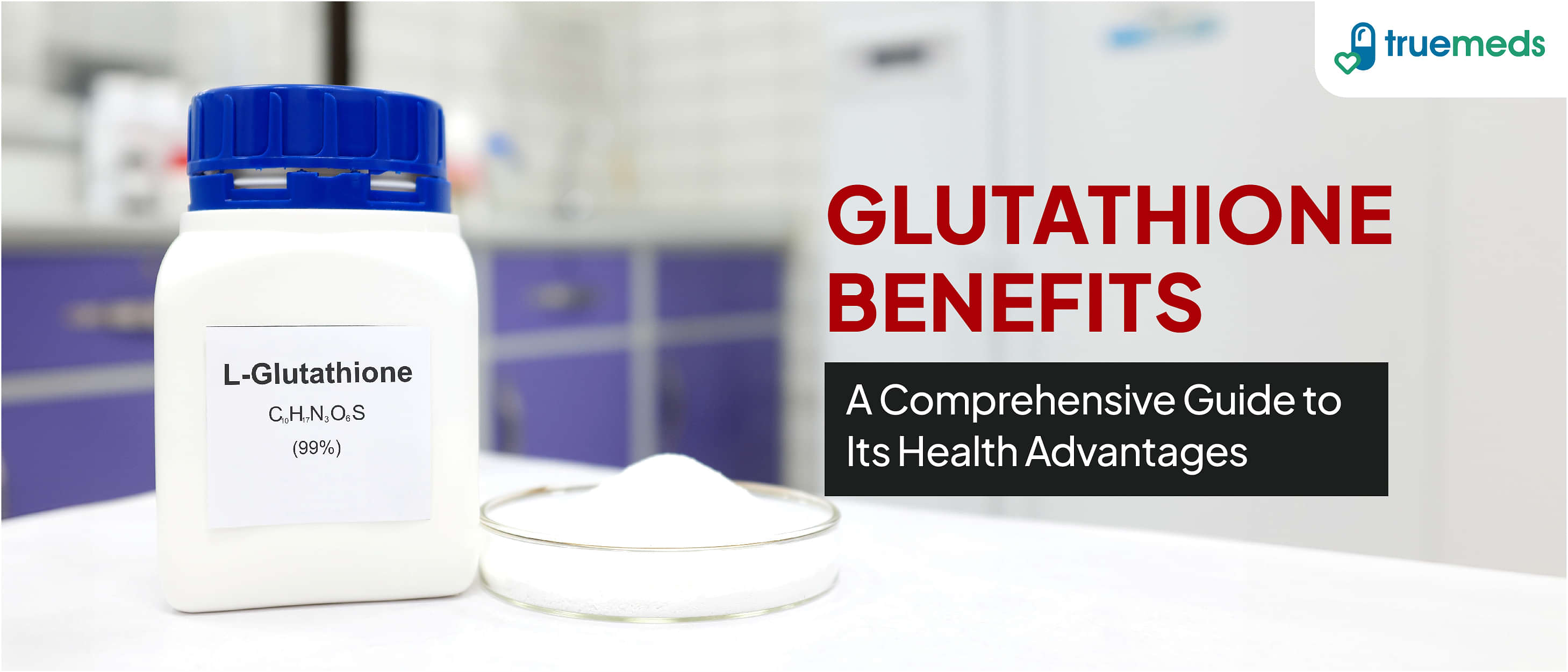
Glutathione Benefits: How This Master Antioxidant Supports Skin, Liver, and Immunity
Last updated on : 01 Dec, 2025
Read time : 14 min
Looking for ways to improve cellular health, bolster your immune system, and support natural detoxification? Glutathione, often called the “master antioxidant,” is a compound your body produces naturally.
Primarily synthesised in the liver, glutathione plays a critical role in protecting your cells from oxidative damage and environmental toxins. However, factors like chronic stress, advancing age, and a poor diet can deplete your natural reserves. This comprehensive guide explores what glutathione is, its scientifically-backed health benefits, safe ways to increase your levels naturally or through supplementation, and the clinical evidence behind its claims.
What Is Glutathione and Why Is It Important?
Glutathione is a tripeptide, a small molecule composed of three amino acids: glutamine, glycine, and cysteine [4]. It is one of the body’s most critical antioxidants, acting as a primary line of defence to:
- Protect cells from damage caused by free radicals and oxidative stress [4].
- Support the liver’s natural detoxification processes, helping to clear toxins and harmful compounds [6].
- Help maintain a robust immune system and support cellular repair.
Optimal levels are crucial for efficient energy generation, supporting detoxification pathways, and maintaining general cellular health. Because levels naturally decline with age and can be further depleted by illness or a poor lifestyle, maintaining sufficient reserves is key to long-term wellness.
How Glutathione Works in Your Body
Glutathione’s function is intrinsically linked to its role as an antioxidant. It primarily works in the following ways:
- Free Radical Neutralisation: Glutathione directly neutralises reactive oxygen species (free radicals), thereby shielding cellular components like DNA and proteins from damage [4].
- Detoxification Support: In the liver, glutathione binds to fat-soluble toxins, heavy metals, and certain environmental pollutants, making them water-soluble so the body can excrete them [4].
- Immune System Modulation: It helps immune cells, such as lymphocytes, function correctly and supports the body’s inflammatory response.
- Recycling Other Antioxidants: Glutathione is unique because it can help regenerate other key antioxidants, such as Vitamin C and Vitamin E, effectively recycling them to prolong their protective effects [4].
Types of Glutathione: GSH vs GSSG
Glutathione exists in two primary states within the body:
- Reduced Glutathione (GSH): This is the active and functional form. GSH is a potent antioxidant that performs the work of neutralising free radicals.
- Oxidised Glutathione (GSSG): This is the inactive form that results after GSH has been oxidised by neutralising a free radical.
Maintaining a high ratio of GSH to GSSG is a vital marker of cellular health and low oxidative stress. The body has enzymatic processes to convert GSSG back to the active GSH, but this process can be strained during periods of high oxidative stress.
Top Clinically-Relevant Benefits of Glutathione
Glutathione’s roles in antioxidant defence and detoxification are associated with several potential health benefits. It is important to note that while research is promising, glutathione is a support, not a primary treatment, for medical conditions.
- Reduces Oxidative Stress – As the body’s primary endogenous antioxidant, glutathione combats oxidative stress by directly neutralising free radicals. This fundamental action helps protect against cellular damage linked to the development of chronic diseases such as cardiovascular conditions and ageing [4].
- May Support Skin Health and Appearance – Glutathione has been widely researched for its role in skin appearance. It may help by inhibiting the enzyme tyrosinase, which is involved in melanin production, thus potentially leading to skin brightening effects [1]. Furthermore, its antioxidant properties help protect skin cells from environmental damage, which is a factor in conditions like psoriasis [5].
- Reduces Cell Damage in Fatty Liver Disease – Glutathione is concentrated in the liver, where it performs detoxification. Clinical studies suggest that supplementation may help reduce cellular damage and inflammation in individuals with non-alcoholic fatty liver disease (NAFLD) by decreasing oxidative stress markers in the liver [6].
- May Improve Insulin Sensitivity – Glutathione may help manage metabolic health. By lowering oxidative stress and chronic inflammation, it supports pathways involved in glucose metabolism. Research has explored its potential to improve insulin sensitivity in certain populations, which is beneficial for those at risk of or managing Type 2 Diabetes [7].
- Helps Manage Symptoms of Parkinson’s Disease – Oxidative stress is considered a significant factor in the progression of neurodegenerative disorders like Parkinson’s disease. Glutathione plays a neuroprotective role by protecting brain cells (neurons) from this damage. Intravenous administration of glutathione has been studied as a potential way to alleviate some symptoms, such as tremors and stiffness, though more robust clinical data is needed [2].
- Potential Role in Autoimmune Conditions – Autoimmune diseases are characterised by excessive inflammation and oxidative stress. By supporting immune cell regulation and reducing overall oxidative burden, glutathione is thought to be a valuable aid in managing these conditions. However, this is a supportive role, and it is not a substitute for conventional medical treatment.
- Support for Inflammatory Bowel Conditions – Research indicates that glutathione supplementation may help improve oxidative damage in the colon lining associated with inflammatory conditions like ulcerative colitis [3]. Its ability to reduce oxidative stress helps support tissue repair and reduce chronic inflammation at the cellular level.
Natural Ways to Support Glutathione Levels
The most sustainable way to maintain optimal glutathione is by providing the body with the necessary building blocks (amino acids) and cofactors (vitamins/minerals).
- Consume Sulfur-Rich Foods – Cysteine, one of the three amino acids in glutathione, is often the rate-limiting factor in its production. Sulfur-rich foods are excellent sources of this essential building block. Examples are Garlic, onions, broccoli, cauliflower, kale, and other cruciferous vegetables.
- Increase Vitamin C and Vitamin E Intake – These vitamins work synergistically with glutathione. Vitamin C helps recycle and regenerate the active form of glutathione (GSH), while Vitamin E is a fat-soluble antioxidant that also works to reduce oxidative stress, thereby sparing glutathione [4]. Examples are Citrus fruits, bell peppers, berries (Vitamin C); nuts, seeds, vegetable oils (Vitamin E).
- Add Selenium-Rich Foods to Your Diet – Selenium is a crucial mineral cofactor for the enzyme glutathione peroxidase, which is central to glutathione’s function. Examples are Brazil nuts (excellent source, but should be consumed in moderation), sunflower seeds, eggs, and fish.
- Try Turmeric Extract (Curcumin) – The active compound in turmeric, curcumin, has been shown to stimulate the production of glutathione and enhance the activity of related enzymes, thereby boosting the body’s overall antioxidant defences [8].
- Optimise Lifestyle Factors – Lifestyle choices have a direct impact on glutathione reserves:
- Prioritise Sleep: Adequate sleep is essential for the body’s repair and detoxification cycles, which depend on healthy glutathione levels. Aim for 7-9 hours of quality sleep [9].
- Exercise Regularly: Consistent physical activity, when not overtraining, upregulates glutathione production and enhances the body’s overall antioxidant capacity [10].
- Limit Alcohol Intake: Excessive alcohol consumption significantly depletes glutathione stores in the liver as the body uses the antioxidant to neutralise the toxins generated by alcohol breakdown. Practising moderation is key [11].
Should You Consider Glutathione Supplements?
Glutathione supplements are available in various forms, including oral capsules, liposomal forms (which may enhance absorption), and intravenous (IV) solutions. Consulting a healthcare provider is essential before starting any supplementation, as they can assess whether your individual health profile suggests a need for a supplement and which form is most suitable.
Potential Benefits of Glutathione Supplements
For individuals with documented low levels or those with specific chronic conditions associated with high oxidative stress, supplementation may offer support:
- Enhanced Detoxification: Providing the liver with a readily available supply of the compound.
- Oxidative Stress Reduction: Directly helping to neutralise free radicals.
- Adjunct Support for Specific Conditions: Research continues to explore the role of supplementation in conditions like NAFLD and Parkinson’s disease [2].
Is Glutathione Safe? Dosage and Side Effects
Glutathione is generally considered safe when taken appropriately and under medical guidance. However, as with any supplement, side effects are possible.
Potential Side Effects to Discuss with Your Doctor:
- Gastrointestinal: May cause mild side effects like stomach discomfort, bloating, or cramping in some individuals.
- Allergic Reactions: Rare cases of allergic reactions (rash, itching) have been reported.
- Nutrient Interaction: High doses of supplemental glutathione have been shown to reduce zinc levels in the body, requiring careful monitoring [12].
- Inhalation Risk: Long-term inhalation (e.g., through nebulised solutions) may be associated with respiratory issues for those with underlying conditions like asthma.
Before starting a glutathione supplement, a thorough consultation with a doctor is non-negotiable, especially if you have pre-existing medical conditions or are taking any prescription medications.
Myths and Clarifications
There are many anecdotal and marketing claims about glutathione.
- Clarification on Disease Treatment: While glutathione supports cellular health, it must not be relied upon as a primary treatment or cure for any serious medical condition (e.g., cancer, diabetes, or autoimmune diseases). It is a supportive nutrient only.
- Clarification on Oral Absorption: The efficacy of standard oral glutathione supplements is often debated in the scientific community due to the molecule’s breakdown in the digestive tract. Liposomal and sublingual formulations are often marketed as having better absorption, but IV administration is considered the most effective way to raise blood glutathione levels, and it must be done by a qualified medical professional.
Is Glutathione Worth It?
Glutathione is undoubtedly a powerful, essential molecule critical for immune defence, liver detoxification, and cellular integrity. Its value lies not in supplementation for everyone, but in understanding its foundational role in health.
For those with a balanced diet and healthy lifestyle, supporting the body’s natural production is often sufficient. For those with compromised health, high oxidative stress, or specific conditions, glutathione supplementation, guided by a healthcare provider, can be a valuable addition to a comprehensive health strategy.
Expert Quote:
“Glutathione’s role as the master cellular detoxifier and primary free-radical neutraliser is undisputed. For clinical practice, the focus should be on optimising the body’s ability to produce and recycle its own glutathione through targeted nutrition and lifestyle changes, and only using supplementation as a targeted, physician-guided tool when a deficiency or high-demand state is confirmed.”
– Dr Lakshmi Vaswani
Frequently Asked Questions (FAQs)
What should I avoid while taking glutathione?
Avoid excessive consumption of alcohol and tobacco, as they severely deplete the body’s glutathione reserves, counteracting the supplement’s effects. Also, ensure your doctor reviews all your current medications for potential interactions, particularly acetaminophen (paracetamol), which is known to strain liver glutathione stores.
What to consider before taking glutathione?
You should consult a medical doctor to determine if a supplement is appropriate, especially if you have any existing medical conditions or are on medication. Be mindful that different supplement forms have varying absorption rates. Always choose a reputable brand and follow the dosage recommended by your doctor.
What is the safest way to take glutathione?
The safest way to consume glutathione is by focusing on a diet rich in its precursors (sulfur-rich foods, Vitamin C, etc.). If supplementation is required, the safest forms are generally oral capsules or liposomal supplements at a physician-recommended dose. Intravenous (IV) injections, while offering optimal absorption, must only be administered by a qualified doctor in a clinical setting.
What does glutathione do for the body?
Glutathione is the body’s master antioxidant. It protects cells from damage by neutralising free radicals, supports the immune system, and is essential for liver detoxification processes.
Is it OK to take glutathione every day?
Yes, glutathione supplements are generally safe for daily use at standard doses. However, it is advisable to consult a healthcare provider before any long-term supplementation to ensure it is necessary and to monitor for any side effects or interactions.
What is glutathione best for?
Glutathione is best known for its ability to reduce oxidative stress and support the liver’s detoxification pathways, thereby contributing to a strong immune system and overall cellular longevity.
Does glutathione have side effects?
Glutathione is usually well-tolerated, but some people may experience mild side effects such as bloating, stomach cramps, or, rarely, allergic reactions. Always inform your doctor if you experience any adverse effects.
Disclaimer: This content is for informational purposes only and is not a substitute for professional medical advice, diagnosis, or treatment. Always consult a qualified healthcare professional, such as a doctor or registered dietitian, before making any changes to your health routine, starting a new supplement, or if you have any health concerns.
References
[1] Arjinpathana, N., & Asawanonda, P. (2012). Glutathione as an oral whitening agent: a randomised, double-blind, placebo-controlled study. Journal of Dermatological Treatment, 23(2), 97–102. https://doi.org/10.3109/09546634.2011.583542
[2] Martin, H. L., & Teismann, P. (2009). Glutathione—a review on its role and significance in Parkinson’s disease. The FASEB Journal, 23(10), 3263–3272. https://doi.org/10.1096/fj.08-125443
[3] Loguercio, C., D’argenio, G., Delle Cave, M., Cosenza, V., Della Valle, N., Mazzacca, G., & Blanco, C. D. V. (2003). Glutathione supplementation improves oxidative damage in experimental colitis. Digestive and Liver Disease, 35(9), 635–641. https://doi.org/10.1016/S1590-8658(03)00379-7
[4] Averill-Bates, D. A. (2023). The antioxidant glutathione. In G. G. H. R. J. B. (Ed.), Vitamins and Hormones: Volume 121 (pp. 109–141). Academic Press. https://doi.org/10.1016/bs.vh.2022.09.002
[5] Campione, E., Mazzilli, S., Di Prete, M., Dattola, A., Cosio, T., Barbato, D. L., Costanza, G., Lanna, C., Manfreda, V., Schumak, R. G., Prignano, F., Coniglione, F., Ciprani, F., Aquilano, K., & Bianchi, L. (2022). The role of Glutathione-S transferase in psoriasis and associated comorbidities and the effect of dimethyl fumarate in this pathway. Frontiers in Medicine, 9. https://doi.org/10.3389/fmed.2022.760852
[6] Honda, Y., Kessoku, T., Sumida, Y., Kobayashi, T., Kato, T., Ogawa, Y., Tomeno, W., Imajo, K., Fujita, K., Yoneda, M., Kataoka, K., Taguri, M., Yamanaka, T., Seko, Y., Tanaka, S., Saito, S., Ono, M., Oeda, S., Eguchi, Y., . . . Nakajima, A. (2017). Efficacy of glutathione for the treatment of nonalcoholic fatty liver disease: an open-label, single-arm, multicenter, pilot study. BMC Gastroenterology, 17(1). https://doi.org/10.1186/s12876-017-0652-3
[7] Søndergård, S. D., Cintin, I., Kuhlman, A. B., Morville, T. H., Bergmann, M. L., Kjær, L. K., Poulsen, H. E., Giustarini, D., Rossi, R., Dela, F., Helge, J. W., & Larsen, S. (2021). The effects of 3 weeks of oral glutathione supplementation on whole body insulin sensitivity in obese males with and without type 2 diabetes: a randomized trial. Applied Physiology, Nutrition, and Metabolism, 46(9), 1133–1142. https://doi.org/10.1139/apnm-2020-1099
[8] Soni, K. B., & Kuttan, R. (1992). Effect of oral curcumin administration on serum peroxides and cholesterol levels in human volunteers. Indian Journal of Physiology and Pharmacology, 36(4), 273–275. https://ijpp.com/IJPP%20archives/1992_36_4/273-275.pdf
[9] Chou, Y. C., Hsaio, P. C., Tzang, B. S., Liu, J. Y., Lu, F. J., Shih, M. Y., Huang, H. S., & Lai, J. Y. (2023). Sleep deprivation induces oxidative stress and impairs the glutathione synthesis pathway in the livers of rats. Antioxidants, 12(7), 1332. https://doi.org/10.3390/antiox12071332
[10] Ljujić, B., Zarković, M., Stojanov, V., Bunić-Stamenković, D., Stanković, R., Srećković, N., & Veličković, M. (2018). The effect of acute and chronic physical exercise on glutathione system: A comprehensive review. Oxidative Medicine and Cellular Longevity, 2018, 1–17. https://doi.org/10.1155/2018/8501097
[11] Boveris, A., Vissich, T. A., & Costa, L. E. (2018). Ethanol and reactive oxygen species: Oxidative stress and the pathology of ethanol. Biological Research, 51(1). https://doi.org/10.4067/s0716-97602018000100201
[12] Witschi, A., Reddy, S., Stofer, B., & Lauterburg, B. H. (1992). The systemic availability of oral glutathione. European Journal of Clinical Pharmacology, 43(6), 667–669. https://doi.org/10.1007/bf00318071













Disclaimer
Our healthcare experts have carefully reviewed and compiled the information presented here to ensure accuracy and trustworthiness. It is important to note that this information serves as a general overview of the topic and is for informational purposes only. It is not intended to diagnose, prevent, or cure any health problem. This page does not establish a doctor-patient relationship, nor does it replace the advice or consultation of a registered medical practitioner. We recommend seeking guidance from your registered medical practitioner for any questions or concerns regarding your medical condition.
Popular Articles

Recommended Articles



Recent Articles








Company
About UsHealth ArticleHealth StoriesDiseases & Health ConditionsAyurvedaAll MedicinesAll BrandsNeed HelpFAQSecuritySubscribe
Registered Office Address
Grievance Officer
Download Truemeds


Contact Us
Our customer representative team is available 7 days a week from 9 am - 9 pm.
v4.8.1

2025 - Truemeds | All rights reserved. Our content is for informational purposes only. See additional information.

Our Payment Partners




