

- Medicines
- Personal Care
- Skin Cream
- Sunscreen
- Face Wash
- Skin and Body Soap
- Acne Care
- Body Lotions
- Moisturising Lotion
- Moisturising Cream
- Mosquito Repellent
- Moisturising Gel
- Body Wash
- Hair Oils
- Hair Shampoo
- Hair Conditioners
- Hair Supplements
- Hair Colour
- Hair Serum
- Hair Mask
- Hair Solutions
- Baby Diapers and Wipes
- Baby Lotion and Moisturising Cream
- Baby Bath Essentials
- Baby Skin Care
- Baby and Infant Food
- Baby Healthcare
- Women Multivitamins
- Ovulation Test Kit and Women Intimate Care
- Sanitary Pads
- Nutritional Drinks
- Condoms
- Lubricants
- Massage Gels
- Personal Body Massagers
- Men Performance Booster
- Sexual Health Supplements
- Massage Oils
- Ayurveda
- Tooth Paste
- Mouth Ulcer Gel
- Mouthwash
- Toothache and Gum Pain
- Tooth Brush
- Gargle Solution
- Orthopaedic Supports
- Adult Diapers
- Footwear
- Mobility and Support Accessories
- Urinary Support and Care
- Health Conditions
- Bone and Joint Care
- Digestive Care
- Eye Care
- Pain Relief
- Smoking Cessation
- Liver Care
- Stomach Care
- Cold and Cough
- Heart Care
- Kidney Care
- Piles, Fissures & Fistula
- Respiratory Care
- Mental Wellness
- Derma Care
- Pre and Probiotics
- Acidity
- Gas
- Constipation
- Loose Motion/Diarrhoea
- Digestive Fibres
- Digestive Enzymes
- Eye Lubricant Drops
- Lens Solution
- Safety Eye Wear
- Eye Cream
- Eye Vitamins and Supplements
- Eye Drops
- Eye Ointment and Gel
- Nicotine Patch
- Nicotine Gum
- Nicotine Lozenges
- Cough Syrups
- Chest Rubs and Balms
- Nasal Spray
- Lozenges
- Inhalant Capsules
- Cold and Cough Tablets
- Vitamins & Supplements
- Diabetes Care
- Healthcare Devices
- Homeopathic Medicine
- Health Guide
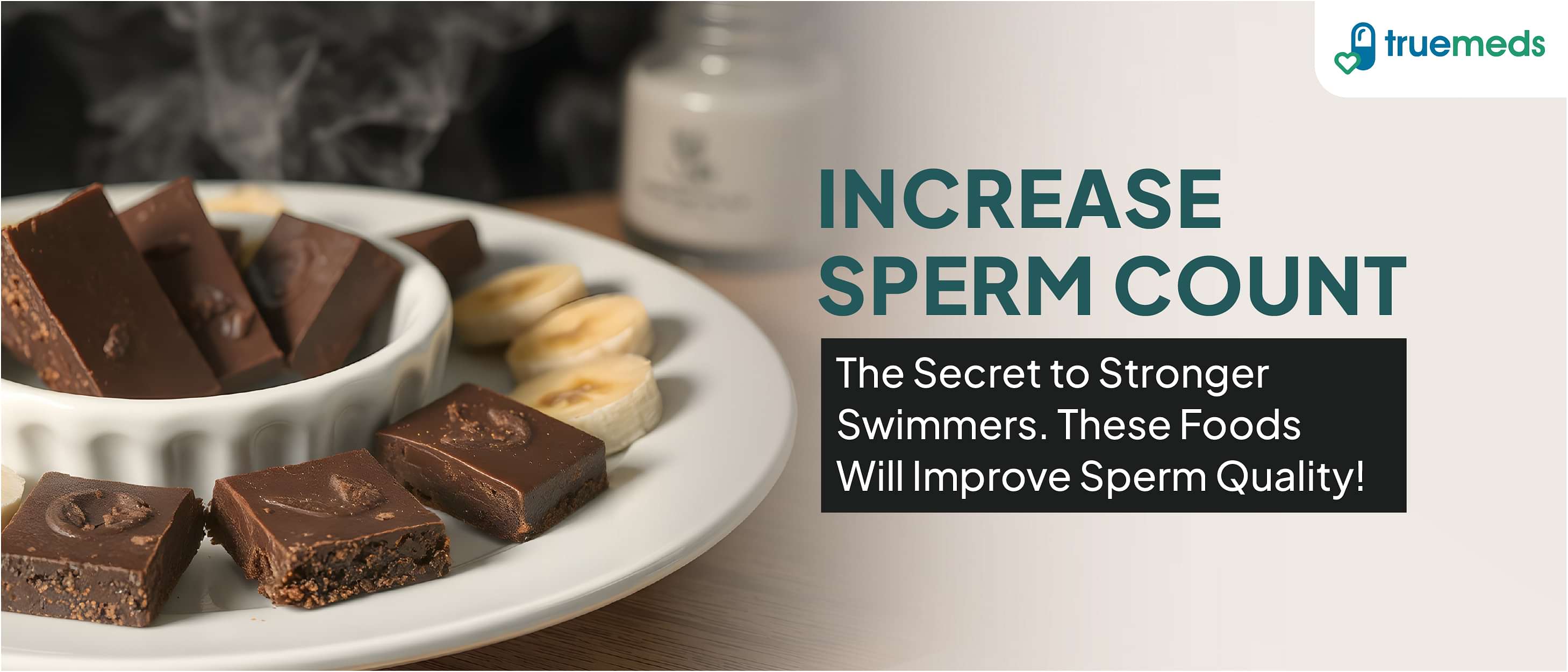
Why Certain Foods May Support Male Reproductive Health
Last updated on : 01 Dec, 2025
Read time : 8 min
A balanced diet rich in specific nutrients is thought to support male reproductive health and sperm quality. In this article, we explore eight foods that research suggests could help maintain healthy sperm by contributing essential vitamins and minerals [1].
Key Nutrients for Healthy Sperm
To potentially support sperm health, focus on incorporating these essential nutrients into your diet:
- Zinc: Crucial for sperm production, motility, and morphology [2]. Find it in oysters, fortified cereals, whole grains, beans, and nuts.
- Vitamin C: An antioxidant that may help protect sperm from oxidative damage, potentially improving count and motility [3]. Load up on citrus fruits, sweet peppers, kiwi, and broccoli.
- Omega-3 Fatty Acids: Research indicates they may enhance sperm volume and motility [4]. Incorporate walnuts, salmon, and pumpkin seeds into your meals for a nutritious boost.
- Antioxidants: Help shield sperm from environmental damage. Indulge in dark chocolate, berries, and asparagus.
Top 8 Foods That May Aid Sperm Quality
Incorporating specific nutrient-rich foods into your diet can contribute to better sperm quality, which is a factor in overall fertility. Let’s explore 8 foods that can potentially help support this goal, starting with oysters.
1. Oysters
Oysters are an excellent source of bioavailable zinc, a mineral crucial for testosterone production, sperm count, and motility [2]. They also contain taurine, an amino acid that is believed to enhance adrenal gland function, allowing for efficient secretion of male sex hormones. If oysters aren’t your favourite, certain sources of dark chocolate also offer zinc.
2. Spinach
Spinach is rich in folate (Vitamin B9), a nutrient that has been linked to improved sperm density and motility [5]. Folate is essential for healthy sperm production, making spinach a valuable addition to a diet that supports fertility.
3. Bananas
Bananas are packed with vitamins C, A, and B6 (instead of B1, which is less relevant), as well as the enzyme Bromelain, which is often associated with enhancing sperm quality and motility. These nutrients may support the manufacture of healthier and stronger sperm cells.
4. Walnuts
Walnuts are loaded with omega-3 fatty acids, which studies show can boost sperm volume and may promote efficient blood flow to the genitals [4]. They also contain antioxidants that help remove toxins from the bloodstream.
5. Garlic
Garlic contains allicin, a compound that laboratory studies suggest may protect sperm from damage and aid in sperm production. It is also a source of selenium and vitamin B6, which are necessary for regulating hormones and maintaining sperm health [6].
6. Salmon
Salmon is rich in omega-3 fatty acids, which can improve the motility of sperm by providing the necessary fats for healthy membrane function [4]. This supports overall sperm health and fertility.
7. Eggs
Eggs are a rich source of vitamin E and protein, both of which may protect sperm cells from the damaging effects of free radicals [3]. This contributes to increasing sperm count and motility.
8. Berries
Berries, such as raspberries and strawberries, are rich in antioxidants like Vitamin C, which may improve sperm count and motility [3]. These antioxidants also protect sperm from environmental damage and enhance their viability.
Foods to Consume in Moderation for Male Reproductive Health
To maintain optimal sperm count and motility, it is essential to be mindful of certain foods that can negatively impact male fertility. Additionally, trans fats, commonly found in processed foods and high-fat dairy products, are associated with reduced sperm counts [7]. Soy-based foods, including tofu and soy milk, should be consumed in moderation, as they may affect sperm quality due to their phytoestrogen content [8]. By moderating these foods in your diet, you can create a more favourable environment for sperm health.
Lifestyle Tips for Improving Sperm Count
Incorporating simple lifestyle modifications can significantly enhance your sperm count and overall fertility. Here are some key tips to consider:
- Aim to maintain a healthy body weight, as it helps balance hormones crucial for sperm production and overall reproductive health.
- Prioritise fresh, whole foods rich in antioxidants and vitamins, particularly vitamins C and E.
- Engage in regular exercise, aiming for at least 150 minutes of moderate-intensity physical activity per week. Avoid excessive, high-intensity endurance training, which may temporarily reduce sperm quality [9].
- Steer clear of processed and fast foods, which can negatively impact sperm quality.
- Consult with a healthcare provider before taking appropriate vitamins and supplements to ensure your body receives the necessary nutrients for optimal sperm production.
Conclusion
In conclusion, incorporating specific nutrient-rich foods into your diet is a supportive strategy for male reproductive health. Foods high in zinc, omega-3 fatty acids, and antioxidants are particularly beneficial for male fertility. Additionally, a balanced diet that includes folate-rich vegetables, vitamin C-packed fruits, and whole grains can support optimal sperm health. These simple, evidence-based dietary changes can naturally contribute to your fertility and overall reproductive well-being.
Frequently Asked Questions (FAQs)
Which foods may support sperm health the most?
Foods rich in zinc (oysters), omega-3 fatty acids (walnuts, salmon), and antioxidants (spinach, asparagus, berries) are considered beneficial for sperm count and motility.
How do I support my sperm count naturally?
Consume foods high in zinc, omega-3 fatty acids, and antioxidants, such as oysters, walnuts, spinach, asparagus, and berries. It is also recommended to avoid excessive exposure to environmental toxins like pesticides and BPA-containing foods.
Which fruit is good for sperm health?
Bananas, due to their high content of vitamins A, B6, and C, as well as the enzyme bromelain, are often cited as being beneficial for sperm quality and motility.
Is milk good for sperm quality?
Studies have suggested that low-fat milk is associated with higher sperm concentration and progressive motility, especially when consumed in moderate amounts [10].
What helps grow sperm fast?
Consuming foods like oysters, walnuts, and asparagus, which are rich in zinc, omega-3 fatty acids, and antioxidants, can help replenish nutrients that support male reproductive health and motility. It is important to remember that sperm production is a continuous process that takes approximately 74 days, so nutritional changes take time to show full effect.
What drink can increase sperm count?
No single drink is proven to rapidly increase sperm count. Consuming water and avoiding sugary drinks can help maintain overall health, including reproductive health, which may support sperm production.
How much sperm is produced in 24 hours?
The exact amount varies, but a healthy male typically produces millions of sperm per day. However, the precise quantity can differ between individuals.
How to increase the chances of having a baby boy?
While diet can influence overall fertility, there is no scientific evidence for any specific food or method proven to increase the chances of having a baby boy, as gender determination is largely genetic.
Disclaimer
This article is for informational purposes only and does not replace professional medical advice. Consult a Certified Wellness Coach or a healthcare provider for personalised guidance on fertility and dietary changes.
References
[1] Balawender, K., & Orkisz, S. (2020). The impact of selected modifiable lifestyle factors on male fertility in the modern world. Central European Journal of Urology, 73(4), 514–520. https://doi.org/10.5173/ceju.2020.1975
[2] Fallah, A., Mohammad-Hasani, H., & Colagar, A. H. (2018). Zinc is an essential element for male fertility: A review of the role of zinc in male reproductive functions. Journal of Reproduction & Infertility, 19(2), 69–81. https://www.ncbi.nlm.nih.gov/pmc/articles/PMC6010824/
[3] Aitken, R. J., & Roman, S. D. (2008). Antioxidant systems and oxidative stress in the testis. Oxidative Medicine and Cellular Longevity, 1(1), 15–24. https://doi.org/10.4161/oxim.1.1.6669
[4] Safarinejad, M. R. (2011). Effect of omega-3 polyunsaturated fatty acid supplementation on semen quality and anti-oxidant status in men with idiopathic oligoasthenoteratozoospermia. Clinical Nutrition, 30(4), 488–496. https://doi.org/10.1016/j.clnu.2011.01.002
[5] Wong, W. Y., Merkus, H. M., Thomas, C. M., Menkveld, R., Zielhuis, G. A., & Steegers-Theunissen, R. P. (2002). Effects of folic acid and zinc sulfate on male factor subfertility: A double-blind, randomized, placebo-controlled trial. Fertility and Sterility, 77(3), 491–498. https://doi.org/10.1016/S0015-0282(01)03229-0
[6] Lotfi, F., Ziamajidi, N., Abbasalipourkabir, R., Goodarzi, M. T., & Asl, S. S. (2021). Impacts of garlic extract on testicular oxidative stress and sperm characteristics in type 1 and 2 diabetic rats: An experimental study. International Journal of Reproductive BioMedicine (IJRM), 19(10), 929–942. https://doi.org/10.18502/ijrm.v19i10.9825
[7] Afeiche, M. C., Bridges, N. D., Gaskins, A. J., Williams, P. L., Mendiola, J., Jørgensen, N., Swan, S. H., & Chavarro, J. E. (2014). Margarine and other dietary sources of trans fats and their association with semen quality in American men. Andrology, 2(1), 114–120. https://doi.org/10.1111/j.2047-2927.2013.00150.x
[8] Chavarro, J. E., Toth, T. L., Sadio, S. M., & Hauser, R. (2008). Soy food and isoflavone intake in relation to semen quality parameters among men from an infertility clinic. Human Reproduction, 23(11), 2584–2590. https://doi.org/10.1093/humrep/den243
[9] Bertolla, R. P. (2020). Sperm biology and male reproductive health. Scientific Reports, 10(1), 21876. https://doi.org/10.1038/s41598-020-78861-7
[10] Afeiche, M. C., Bridges, N. D., Gaskins, A. J., Chiu, Y. H., Williams, P. L., Mendiola, J., Jørgensen, N., Swan, S. H., & Chavarro, J. E. (2014). Dairy intake and semen quality among men attending a fertility clinic. Human Reproduction, 29(10), 2282–2289. https://doi.org/10.1093/humrep/deu177
















Disclaimer
Our healthcare experts have carefully reviewed and compiled the information presented here to ensure accuracy and trustworthiness. It is important to note that this information serves as a general overview of the topic and is for informational purposes only. It is not intended to diagnose, prevent, or cure any health problem. This page does not establish a doctor-patient relationship, nor does it replace the advice or consultation of a registered medical practitioner. We recommend seeking guidance from your registered medical practitioner for any questions or concerns regarding your medical condition.
Popular Articles



Recommended Articles



Recent Articles









Company
About UsHealth ArticleHealth StoriesDiseases & Health ConditionsAyurvedaAll MedicinesAll BrandsNeed HelpFAQSecuritySubscribe
Registered Office Address
Grievance Officer
Download Truemeds


Contact Us
Our customer representative team is available 7 days a week from 9 am - 9 pm.
v4.8.1

2025 - Truemeds | All rights reserved. Our content is for informational purposes only. See additional information.

Our Payment Partners




