

- Medicines
- Personal Care
- Skin Cream
- Sunscreen
- Face Wash
- Skin and Body Soap
- Acne Care
- Body Lotions
- Moisturising Lotion
- Moisturising Cream
- Mosquito Repellent
- Moisturising Gel
- Body Wash
- Hair Oils
- Hair Shampoo
- Hair Conditioners
- Hair Supplements
- Hair Colour
- Hair Serum
- Hair Mask
- Hair Solutions
- Baby Diapers and Wipes
- Baby Lotion and Moisturising Cream
- Baby Bath Essentials
- Baby Skin Care
- Baby and Infant Food
- Baby Healthcare
- Women Multivitamins
- Ovulation Test Kit and Women Intimate Care
- Sanitary Pads
- Nutritional Drinks
- Condoms
- Lubricants
- Massage Gels
- Personal Body Massagers
- Men Performance Booster
- Sexual Health Supplements
- Massage Oils
- Ayurveda
- Tooth Paste
- Mouth Ulcer Gel
- Mouthwash
- Toothache and Gum Pain
- Tooth Brush
- Gargle Solution
- Orthopaedic Supports
- Adult Diapers
- Footwear
- Mobility and Support Accessories
- Urinary Support and Care
- Health Conditions
- Bone and Joint Care
- Digestive Care
- Eye Care
- Pain Relief
- Smoking Cessation
- Liver Care
- Stomach Care
- Cold and Cough
- Heart Care
- Kidney Care
- Piles, Fissures & Fistula
- Respiratory Care
- Mental Wellness
- Derma Care
- Pre and Probiotics
- Acidity
- Gas
- Constipation
- Loose Motion/Diarrhoea
- Digestive Fibres
- Digestive Enzymes
- Eye Lubricant Drops
- Lens Solution
- Safety Eye Wear
- Eye Cream
- Eye Vitamins and Supplements
- Eye Drops
- Eye Ointment and Gel
- Nicotine Patch
- Nicotine Gum
- Nicotine Lozenges
- Cough Syrups
- Chest Rubs and Balms
- Nasal Spray
- Lozenges
- Inhalant Capsules
- Cold and Cough Tablets
- Vitamins & Supplements
- Diabetes Care
- Healthcare Devices
- Homeopathic Medicine
- Health Guide
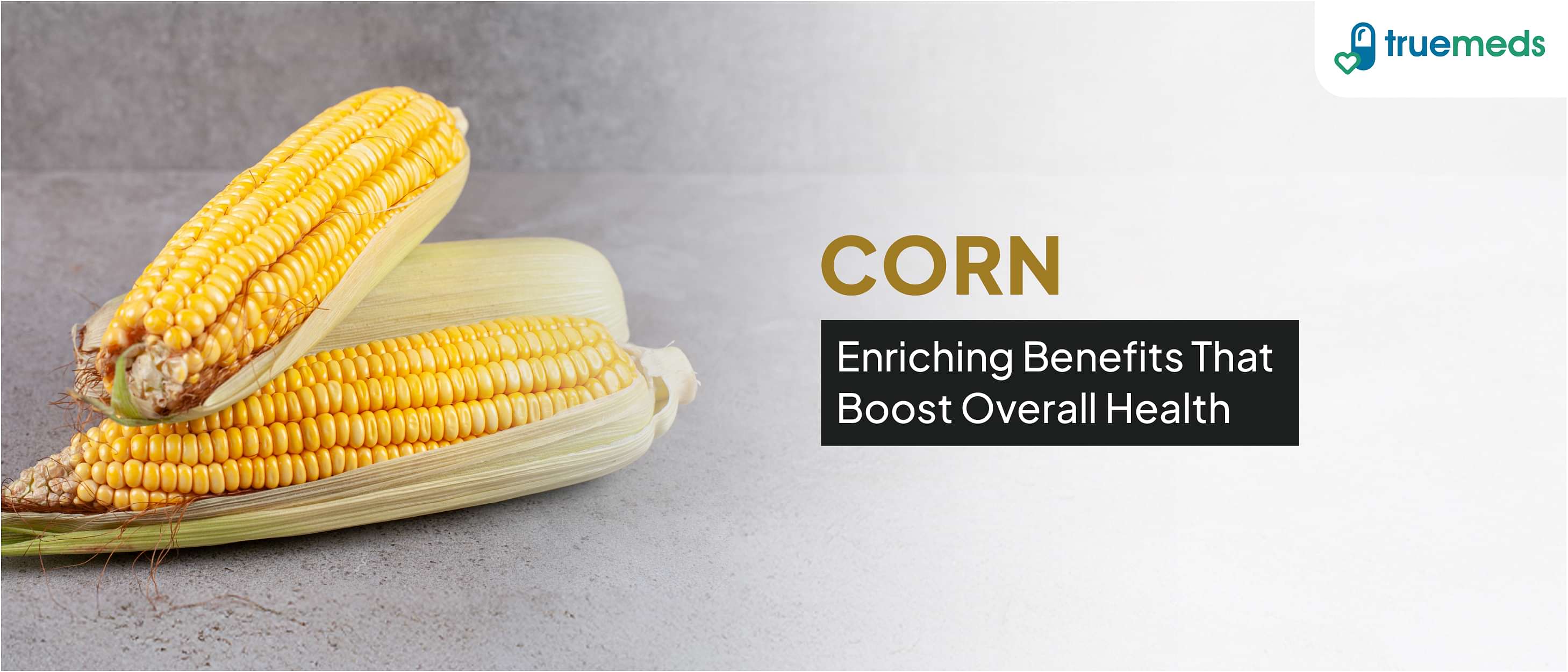
Corn: Nutrition, Health Benefits, Calories & Best Type for You
Last updated on : 01 Dec, 2025
Read time : 9 min
Corn, a staple food enjoyed worldwide, is not only delicious but also packed with nutrition. From the sweet, juicy kernels of fresh corn to the satisfying crunch of popcorn, this versatile grain offers a variety of health benefits.
Let’s explore the nutritional value, calorie content, and best types of corn to include in your diet.
Understanding Different Types of Corn
Corn, also known as maize, is a versatile and nutritious grain that comes in various types, each offering unique nutritional properties. The most common types include sweet corn, popcorn, and flint or Indian corn [1].
1. Sweet Corn: Nutritional Value & Benefits
Sweet corn is a popular variety enjoyed for its sweet taste and tender texture.
Nutritional Value of Sweet Corn (Per 100g, Boiled) [2]
|
Nutrient |
Amount |
| Calories | 96 |
| Protein | 3.4g |
| Carbohydrates | 21g |
| Sugar | 4.5g |
| Fiber | 2.4g |
| Fat | 1.5g |
Health Benefits:
- Supports Eye Health: Sweet corn contains carotenoids such as lutein and zeaxanthin, which accumulate in the retina and may help support healthy vision and potentially reduce the risk of age-related macular degeneration (AMD) [3].
- Aids Digestive Health: The fiber content in sweet corn may help regulate bowel movements and promote the growth of beneficial gut bacteria, contributing to overall digestive health.
- Blood Sugar Management: The fiber in sweet corn may help moderate blood sugar levels by slowing down the absorption of glucose, making it a viable component of a balanced diet for individuals managing blood sugar [4].
2. Popcorn: Nutritional Value & Benefits
Popcorn is a whole-grain snack that is naturally low in calories and high in fiber when prepared without added oils or butter.
Nutritional Value of Air-Popped Popcorn (Per 100g) [2]
|
Nutrient |
Amount |
| Calories | 387 (Original value was for 1 cup popped, changed to 100g for consistency) |
| Protein | 13g |
| Carbohydrates | 78g |
| Fiber | 15g |
| Fat | 4.3g |
Health Benefits:
- Excellent Source of Fiber: As an intact whole grain, popcorn is an exceptional source of dietary fiber, which is key for maintaining regular bowel movements and a healthy digestive system.
- Potential Lowering of Diverticular Disease Risk: Some large-scale studies suggest that consuming popcorn, as part of a high-fiber diet, may be associated with a reduced risk of developing diverticular disease, though more clinical evidence is needed to confirm a direct causal link [5].
- Provides Essential Minerals and Antioxidants: Popcorn contains minerals like potassium and is a source of polyphenolic antioxidants, which may help support healthy blood pressure levels and heart health [6].
3. Corn (Maize) – Flint or Indian Corn
Maize, also known as flint or Indian corn, is a type of corn that is primarily processed for human food (like cornmeal) or animal feed.
Nutritional Value of Maize (Per 100g, Dry) [2]
|
Nutrient |
Amount |
| Calories | 365 (Reflecting dry grain) |
| Protein | 9.4g |
| Carbohydrates | 74g |
| Sugar | 0.6g |
| Fiber | 7.3g |
| Fat | 4.7g |
Health Benefits:
- Antioxidant Rich: Maize contains various antioxidants like carotenoids and phenolic compounds, which may help combat oxidative stress in the body and support overall health [1].
- Supports Cardiovascular Health: Similar to other varieties, maize is a good source of fiber and potassium, which are important nutrients for regulating blood pressure levels and reducing the risk of heart disease [4].
Comprehensive Health Benefits of Corn
Incorporating corn into a balanced eating pattern can offer several systemic health advantages, regardless of the variety.
- Supports Eye Health: Yellow varieties of corn are significant sources of the powerful carotenoid antioxidants lutein and zeaxanthin, which are essential for protecting the eyes from light-induced damage [3].
- Aids Digestive Function: The high dietary fiber, including insoluble fiber, acts as a bulking agent to promote regular bowel movements. Additionally, the resistant starch found in corn functions as a prebiotic, nourishing the beneficial microbes in your digestive tract and supporting a healthy gut microbiome [7].
- Contributes to Heart Health: Corn’s soluble fiber helps lower total and LDL (“bad”) cholesterol levels by binding to cholesterol in the gut. Its potassium content further assists in blood pressure regulation, collectively supporting cardiovascular health [4].
- Provides Protective Antioxidants: Corn contains a wide spectrum of phytochemicals and antioxidants, including ferulic acid and anthocyanins (especially in blue/purple varieties), which may help neutralize free radicals and contribute to a lower risk of chronic conditions such as type 2 diabetes and certain types of cancer [1].
Potential Considerations and Downsides of Corn
While nutritious, it’s important to consume corn mindfully and be aware of a few potential considerations.
- Blood Sugar Impact: Due to its high total carbohydrate content, corn, especially in large portions, can cause a rise in blood glucose levels. Individuals with diabetes or those following low-carbohydrate diets should practice portion control and pair corn with healthy fats and proteins to mitigate rapid blood sugar spikes [4].
- Antinutrient Content: Corn contains antinutrients, such as phytic acid, which can interfere with the absorption of certain minerals like iron and zinc. This is typical of most grains and legumes, and proper food preparation (e.g., soaking or processing) can help reduce their levels [8].
- Mycotoxin Risk: Corn is susceptible to contamination by molds that produce mycotoxins, such as aflatoxins, particularly when improperly stored or grown in humid conditions. Choosing reputable suppliers and ensuring proper storage is key to minimizing this risk [9].
- Genetically Modified Organisms (GMO): A significant portion of corn grown globally is genetically modified. For consumers with concerns, choosing certified organic or non-GMO labeled corn is the most direct way to avoid genetically modified varieties.
Conclusion
Corn is a versatile and nutritious whole grain that offers substantial amounts of fiber, vitamins, and protective antioxidants. These nutrients are valuable for improving eye health, supporting digestive function, and contributing to overall well-being. By being mindful of potential concerns—such as carbohydrate impact and mycotoxin risk—and making informed choices about the type and preparation method, individuals can successfully integrate whole or minimally processed corn into a healthy, balanced diet.
Frequently Asked Questions (FAQs)
Is it good to eat corn every day?
Eating corn daily can be beneficial due to its fiber and antioxidants, but portion control is essential due to its carbohydrate content, and it should be balanced with other nutrient-dense foods.
Is corn keto-friendly?
Corn is generally not considered keto-friendly due to its high carbohydrate content, which makes it difficult to maintain the required low-carb intake for ketosis.
How many calories are in a cup of corn?
A cup of cooked sweet corn kernels contains approximately 125 to 135 calories [2].
Is corn good for diabetics?
Corn can be included in a diabetic’s diet, but strict portion control and being mindful of the total carbohydrate count in a meal are crucial. It’s best consumed alongside proteins and fats to help slow glucose absorption.
Is popcorn healthier than sweet corn?
Both popcorn and sweet corn offer health benefits. Air-popped popcorn is a whole grain, is significantly lower in sugar, and is an excellent source of fiber. Sweet corn offers a richer source of the antioxidants lutein and zeaxanthin. The “healthier” choice depends on your specific dietary goals.
Disclaimer
This article is for informational purposes only and is not intended to be a substitute for professional medical advice, diagnosis, or treatment. Please consult a qualified healthcare provider or a registered dietitian before making significant changes to your diet or beginning any new wellness practice, especially if you have an existing medical condition or are on medication.
References
[1] Siyuan, S., Tong, L., & Liu, R. (2018). Corn phytochemicals and their health benefits. Food Science and Human Wellness, 7(3), 185–195. https://doi.org/10.1016/j.fshw.2018.09.003
[2] U.S. Department of Agriculture (USDA), Agricultural Research Service. (2024). FoodData Central. Retrieved October 25, 2025, from https://fdc.nal.usda.gov/
[3] Ai, Y., & Jane, J. (2016). Macronutrients in Corn and Human Nutrition. Comprehensive Reviews in Food Science and Food Safety, 15(3), 581–598. https://doi.org/10.1111/1541-4337.12192
[4] Rouf Shah, T., Prasad, K., & Kumar, P. (2016). Maize – A potential source of human nutrition and health: A review. Cogent Food & Agriculture, 2(1). https://doi.org/10.1080/23311932.2016.1166995
[5] Strate, L. L., Liu, Y. L., Syngal, S., Aldoori, W. H., & Giovannucci, E. L. (2008). Nut, corn, and popcorn consumption and the incidence of diverticular disease. JAMA, 300(8), 907–914. https://doi.org/10.1001/jama.300.8.907
[6] Jelena Vukadinović, Jelena Srdić, Natalija Kravić, Snežana Mladenović Drinić, Milena Simić, Brankov, M., & Vesna Dragičević. (2024). Assessment of Popcorn’s Bioactive Status in Response to Popping. Molecules, 29(4), 807–807. https://doi.org/10.3390/molecules29040807
[7] O’Grady, M. R., & Sreenivasan, S. (2020). Resistant Starch: A Systematic Review of the Health Benefits, Sources, and Applications. Food and Nutrition Sciences, 11(11), 1080-1090. https://doi.org/10.4236/fns.2020.1111076
[8] Okafor, U. I., Omemu, A. M., Obadina, A. O., Bankole, M. O., & Adeyeye, S. A. O. (2018). Nutritional composition and antinutritional properties of maize ogi cofermented with pigeon pea. Food Science & Nutrition, 6(2), 424–439. https://doi.org/10.1002/fsn3.571
[9] Peraica, M., & Domijan, A. M. (2021). Chronic Toxicity of Mycotoxins on Human Health. Food and Chemical Toxicology, 151, 112111. https://doi.org/10.1016/j.fct.2021.112111














Disclaimer
Our healthcare experts have carefully reviewed and compiled the information presented here to ensure accuracy and trustworthiness. It is important to note that this information serves as a general overview of the topic and is for informational purposes only. It is not intended to diagnose, prevent, or cure any health problem. This page does not establish a doctor-patient relationship, nor does it replace the advice or consultation of a registered medical practitioner. We recommend seeking guidance from your registered medical practitioner for any questions or concerns regarding your medical condition.
Popular Articles


Recommended Articles



Recent Articles








Company
About UsHealth ArticleHealth StoriesDiseases & Health ConditionsAyurvedaAll MedicinesAll BrandsNeed HelpFAQSecuritySubscribe
Registered Office Address
Grievance Officer
Download Truemeds


Contact Us
Our customer representative team is available 7 days a week from 9 am - 9 pm.
v4.8.0

2025 - Truemeds | All rights reserved. Our content is for informational purposes only. See additional information.

Our Payment Partners




