Key Takeaways
- Winter air pollution worsens because cold air traps pollutants close to the ground
- PM2.5 concentrations in Indian cities can exceed safe limits by 20 to 40 times during winter
- Children, elderly people, and those with respiratory conditions face the highest risk
- Staying indoors, using properly fitted N95, KN95 or FFP2 respirators when outside, and monitoring air quality can reduce exposure
- Seek immediate medical attention for severe breathing difficulties or a persistent cough
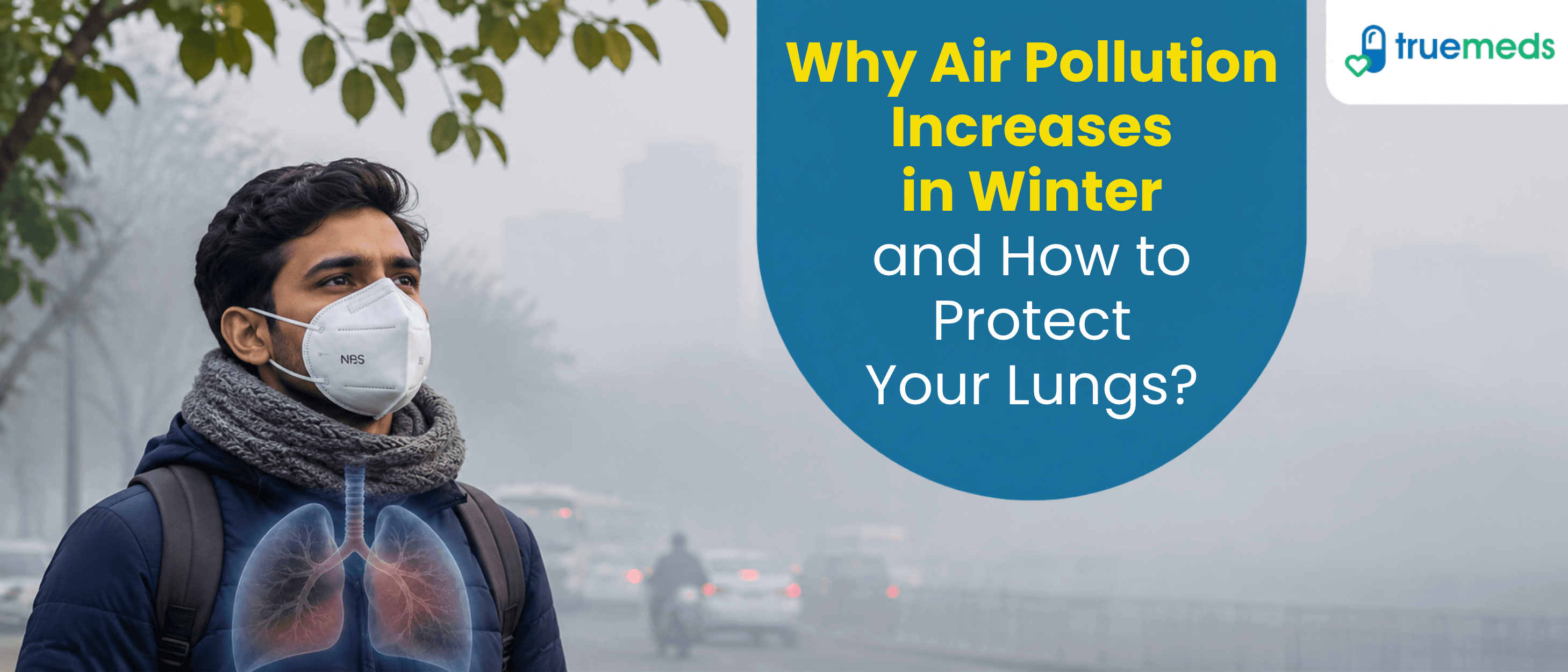
Air pollution in winter poses a serious health threat to millions of Indians, particularly in the northern states where pollution levels spike dramatically during colder months. Air pollution is the leading environmental health risk factor, causing approximately 6.6 million deaths globally every year[1]. Understanding why winter air pollution worsens and how it affects your lungs is crucial for protecting yourself and your family. This article explains the science behind seasonal pollution patterns and provides practical strategies for adults and children to stay healthy during high-pollution periods.
Why does air pollution increase in winter?
Winter creates conditions that concentrate pollutants near ground level. Multiple factors combine to make the cold months particularly hazardous for respiratory health.
How does cold weather trap pollutants near the ground?
Under normal conditions, warm air near the ground rises and carries pollutants upward, dispersing them into the atmosphere. However, winter disrupts this natural cleaning process through a phenomenon called thermal inversion[2].
During thermal inversion, a layer of warm air sits above cooler air near the surface. This warm layer acts like a lid, preventing the cooler air near the ground and the pollutants it contains from rising and dispersing[2]. Low temperatures, reduced mixing heights, and stagnant winds further limit the dispersion of pollutants, allowing them to accumulate close to the ground, where people breathe them directly[3].
Which winter sources add to air pollution?
While industrial emissions remain relatively constant throughout the year, several pollution sources increase significantly during winter. Wood burning for heating releases substantial amounts of particulate matter and carbon monoxide[2].
In India, winter air pollution is further aggravated by crop stubble burning in agricultural regions and episodic emissions from firecrackers during festivals[3].
Is air pollution worse in winter or summer?
Data from Indian cities highlights the severity of winter air pollution, particularly across the Indo-Gangetic Plain. During November to January, PM2.5 concentrations in many cities across the region exceed the Indian 24-hour standard of 60 µg/m³ by two to eight times. More alarmingly, these levels can exceed World Health Organization guidelines by 20 to 40 times[4].
This extreme winter air pollution is recurrent across the Indo-Gangetic Plain, affecting cities from Delhi to Kolkata[4]. The combination of thermal inversions, increased emissions, and calm winter winds creates conditions that contribute to prolonged and severe pollution episodes.
How does winter air pollution affect your lungs and health?
Fine particles, particularly PM2.5, pose a significant threat because they can penetrate deep into lung passageways[5]. These fine particles can reach the bronchioles and alveoli (the tiny air sacs in the lungs where oxygen exchange takes place)[6].
Exposure to air pollution may increase the risk of respiratory infections, heart disease, stroke, and lung cancer. People who are already ill, including children, elderly individuals, and those living in poverty, may experience more severe effects[5].
Long-term exposure to air pollution can contribute to asthma onset and the development of chronic obstructive pulmonary disease (COPD). Even healthy individuals may experience coughing, throat irritation, and reduced lung function during high pollution days[6].
Consult your doctor if you notice respiratory symptoms worsening during winter months.
Who is most at risk from winter air pollution?
Certain groups face greater vulnerability to pollution-related health effects[7], [8]:
- People with pre-existing respiratory conditions: Individuals with asthma, COPD and other chronic respiratory diseases are more vulnerable because air pollution can trigger airway inflammation, worsen symptoms and increase the risk of disease exacerbation.
- Children: Their developing lungs, organs and immune systems, along with higher breathing rates and greater air intake per kilogram of body weight, increase their vulnerability to air pollution.
- Older adults: Age is an important vulnerability factor, and older adults are at greater risk of adverse respiratory effects from air pollution.
- Pregnant women and unborn babies: Exposure to air pollution during pregnancy can increase the risk of premature birth, low birth weight and babies being small for their gestational age.
- People living in deprivation: Individuals experiencing relative or absolute deprivation may face greater exposure to air pollution, increasing their vulnerability to its adverse health effects.
- Athletes: Individuals who engage in endurance-based training are more vulnerable because increased breathing rates and air intake during exercise expose their airways to greater amounts of pollutants, increasing the risk of airway injury and respiratory dysfunction.
How can adults protect their lungs from air pollution?
Several practical strategies can reduce your pollution exposure[9]:
- Stay indoors: Keep windows and doors closed and seal gaps around them to prevent smoke and polluted air from entering the home.
- Avoid outdoor exercise: Limit outdoor physical activity when pollution levels are high, or smoke is present, and rest more frequently.
- Monitor air quality: Check local air quality information and weather forecasts for expected smoke and pollution levels.
- Use air purifiers: Use an air cleaner with a HEPA filter or set the air conditioner to recirculate indoor air.
- Wear protective masks: Wear a P2 or N95 mask when outdoors in polluted or smoky conditions and indoors if necessary.
- Reduce indoor pollution: Avoid smoking or vaping indoors and minimise the use of wood-burning heaters and stoves.
These measures complement but do not replace medical advice. Consult your healthcare provider for personalised guidance.
Read about - Ayurvedic Herbs for Immunity and Respiratory Health
How can you protect children from winter air pollution?
Protecting children requires extra vigilance given their increased vulnerability. Air pollution damages health during childhood and may increase the risk of diseases later in life[8].
Practical steps to protect children include[8]:
- Limit children's exposure to polluted areas, particularly near busy roads and traffic emissions
- Encourage schools to establish clean air zones, restrict traffic and introduce no-idling zones
- Ensure adequate indoor ventilation and minimise exposure to mould and toxic chemicals
- Encourage children to use alternative walking or cycling routes away from busy roads and traffic congestion
- Maintain smoke-free homes, vehicles, schools and childcare environments to reduce exposure to second-hand smoke
Consult your paediatrician if your child develops persistent respiratory symptoms during winter months.
Do masks and air purifiers really help?
Masks and air purifiers can help reduce exposure to air pollution, particularly fine particulate matter (PM2.5). Properly fitted N95, KN95 or FFP2 respirators can filter airborne particles and provide better protection than ordinary cloth or surgical masks. However, the WHO notes that evidence supporting the health benefits of respirators under real-world conditions remains limited. Their use may be considered for short periods during severe air pollution episodes, such as wildfires, rather than as a routine preventive measure[10].
Similarly, portable air purifiers equipped with HEPA filters can reduce indoor particulate pollution. Their effectiveness depends on room size, filter quality and maintenance. Keeping windows closed during periods of high outdoor pollution and reducing indoor pollution sources, such as incense and cooking smoke, can further improve indoor air quality[10].
When should you see a doctor about pollution-related symptoms?
Schedule an appointment with your doctor if[11]:
- Your shortness of breath worsens during normal activities or when lying down
- You have been coughing for three weeks or more
- You have swollen ankles
Seek emergency medical care (by calling 108 or 112) immediately if you experience[11]:
- Severe difficulty breathing where you are gasping, choking, or unable to speak
- Your chest feels tight or heavy
- Your lips or skin are turning very pale, blue, or grey
- Pain that spreads to the arms, back or neck
Early medical attention can prevent complications and help identify underlying conditions that may require treatment.
Conclusion
Winter air pollution in India presents serious health risks, but understanding its causes empowers you to take protective action. Thermal inversions trap pollutants near the ground, while increased emissions from heating and vehicles worsen air quality. Children, elderly individuals, and those with pre-existing conditions face the greatest risk.
Protect yourself by monitoring daily AQI levels, staying indoors during peak pollution times, using N95 masks when necessary, and investing in indoor air purification. Seek medical attention promptly if you experience persistent respiratory symptoms. Taking these precautions can significantly reduce your exposure and protect your lung health throughout the winter months.
FAQs
Which time of day is air pollution highest in winter?
Air pollution levels often increase during peak traffic hours, particularly in the morning and evening. During these times, traffic emissions combine with cold temperatures and reduced atmospheric mixing. Planning outdoor activities during midday when pollution tends to be lower can reduce your exposure.
Do cloth masks protect against air pollution?
Cloth masks provide very limited protection against PM2.5 particles. For effective pollution protection, use N95 or KN95 respirators that filter at least 95% of fine particles. Ensure the mask fits tightly around your face without gaps for maximum effectiveness.
Can air pollution cause asthma in children?
Yes, long-term exposure to air pollution can trigger asthma onset in children and worsen existing asthma symptoms. Children's developing lungs are particularly vulnerable. Protecting children from pollution exposure during their developmental years is important for long-term respiratory health.
Is it safe to exercise outdoors on high-pollution days?
Outdoor exercise should be limited or avoided when air pollution levels are high. People with respiratory or cardiovascular conditions, children and older adults should take extra precautions. Check the local Air Quality Index (AQI) before exercising and consider moving physical activities indoors when air quality is poor.
Can indoor plants clean the air?
Plants may absorb certain pollutants, but their air-cleaning capacity is limited compared with mechanical filtration. HEPA air purifiers are far more effective at reducing indoor PM2.5 levels. Plants offer other benefits but should not be relied upon as your primary air purification method.
Does air pollution affect people with no lung disease?
Yes, air pollution can affect healthy individuals as well. Even people without pre-existing conditions may experience coughing, throat irritation, and temporarily reduced lung function during high-pollution days. Long-term exposure can contribute to developing respiratory conditions over time.
Medical Disclaimer
This article is for informational purposes only and does not constitute medical advice. The information provided should not be used for diagnosing or treating health conditions. Always consult a qualified healthcare provider for diagnosis, treatment, and personalised medical advice. Do not disregard professional medical advice or delay seeking it because of information found in this article. If you have a medical emergency, contact your doctor or emergency services immediately.
References
World Health Organization. (2026). Health effects of air pollution: evidence and implications: technical brief. World Health Organization. https://www.who.int/publications/i/item/B09563
University Corporation for Atmospheric Research. (2026). How weather affects air quality. UCAR Center for Science Education. https://scied.ucar.edu/learning-zone/air-quality/how-weather-affects-air-quality
Ministry of Environment, Forest and Climate Change. (2024). Parliament question: Air pollution caused by stubble burning. Press Information Bureau, Government of India. https://www.pib.gov.in/PressReleaseIframePage.aspx?PRID=2076918®=48&lang=2
The Energy and Resources Institute. (2025). Beyond emergency measures: Long-term solutions to India's winter air pollution crisis. TERI. https://www.teriin.org/article/beyond-emergency-measures-long-term-solutions-indias-winter-air-pollution-crisis