Key Takeaways
- A 2,000-calorie Indian diet plan provides about 2,000 kcal per day using everyday foods like roti, rice, dal, vegetables, curd, paneer, eggs, chicken, fish, and healthy fats.
- It can support weight maintenance or weight loss depending on individual calorie needs, along with regular physical activity and professional guidance.
- The 7-day meal plan is a flexible sample, and portion sizes must be adjusted based on age, body size, activity level, and health conditions.
- Focus on whole grains, pulses, seasonal vegetables, fruits, lean proteins, and healthy fats; limit processed foods, sugary drinks, fried snacks, and refined grains.
- Drink an adequate amount of water based on your individual needs, unless your doctor has restricted fluids.
- Consult a doctor or registered dietitian if you are pregnant, breastfeeding, have diabetes or kidney disease, or are taking regular medication.
Maintaining a healthy lifestyle is crucial for overall well-being, and eating the right number of calories is an important part of a balanced diet. However, calorie requirements vary from person to person depending on factors such as age, sex, body weight, physical activity, and overall health. According to the World Health Organization (WHO), adults should consume at least 400 g of fruits and vegetables daily as part of a healthy diet to help support overall health and reduce the risk of diet-related conditions. By focusing on nutrient-dense foods and proper portion control, a 2,000-calorie Indian diet plan may be suitable for some moderately active adults to provide the essential nutrients needed to support optimal health and maintain a healthy weight[1]. Explore the benefits, food choices, and a practical 7-day meal plan designed around the Indian diet, along with key considerations to help you follow it safely.
What is a 2,000-calorie diet?
A 2,000-calorie Indian diet plan is a structured eating plan that provides approximately 2,000 kcal per day through balanced meals including roti, dal, vegetables, lean proteins, and healthy fats. It may suit some moderately active adults.
In the context of an Indian diet, this meal plan can incorporate traditional staples such as roti, dal, vegetables, lean proteins (like grilled chicken or paneer), and healthy fats (such as ghee in moderation). The inclusion of regional favourites, such as yoghurt and seasonal fruits, can further enhance the micronutrient diversity of the diet[2].
Consult a qualified healthcare professional before making dietary changes, especially if you have a medical condition or specific nutritional requirements.
What are the benefits of a 2,000-calorie Indian diet?
A 2,000-calorie diet is commonly used as a reference intake for adults and can support overall health when appropriately balanced. When planned with a variety of nutrient-dense foods, it helps provide sufficient energy and essential nutrients to support daily activities, metabolic health, and weight maintenance. However, athletes and highly active individuals often require higher caloric intakes to meet increased energy expenditure and recovery demands.
Key benefits of this eating plan include[3]:
- Supports daily energy needs: Provides enough fuel to sustain routine physical activities and mental focus throughout the day.
- Promotes balanced nutrition: Helps meet daily requirements for essential vitamins, minerals, and dietary fibre when meals include a variety of nutrient-dense foods.
- Aids weight maintenance: Can support maintaining a healthy weight when matched with individual energy needs and regular physical activity.
- Supports metabolic health: Contributes to efficient metabolic function, which may help lower the long-term risk of lifestyle-related chronic diseases.
Note: Individual calorie needs may vary based on age, sex, activity level, and health status.
Foods to include in a 2,000-calorie indian diet
To meet your calorie requirements and ensure balanced nutrition, focus on incorporating these key food groups and meal suggestions into this Indian diet:
- Whole Grains: Opt for nutritious options such as brown rice, whole-wheat bread, and whole-grain rotis to provide your body with complex carbohydrates and fibre.
- Vegetables: Include a colourful array of vegetables such as spinach, bell peppers, and carrots in your meals to ensure a rich supply of vitamins, minerals, and antioxidants.
- Legumes: Incorporate protein-packed legumes like lentils, chickpeas, and kidney beans into your diet to maintain muscle mass and promote satiety[2].
- Fruits: Enjoy a variety of seasonal fruits such as mangoes, bananas, and apples to boost your intake of essential vitamins and antioxidants in appropriate portions.
- Protein Sources: Include lean proteins such as chicken, fish, and tofu, as well as dairy products like milk and yoghurt, to support muscle growth and repair.
- Healthy Fats: Use heart-healthy oils such as mustard oil, groundnut oil, or olive oil (for low-heat cooking), and include nutrient-dense nuts like almonds to provide your body with beneficial fats[4].
Sample 7-day meal plan for a 2,000-calorie Indian diet
Here is a practical 7-day meal plan for a 2,000-calorie Indian diet that includes a variety of nutrient-dense foods to ensure balanced nutrition[2]:
(Each day provides approximately 1,950–2,000 kcal)
A balanced Indian meal plan typically provides ~50–55% carbohydrates, 15–20% protein, and 25–30% fats, depending on food choices.
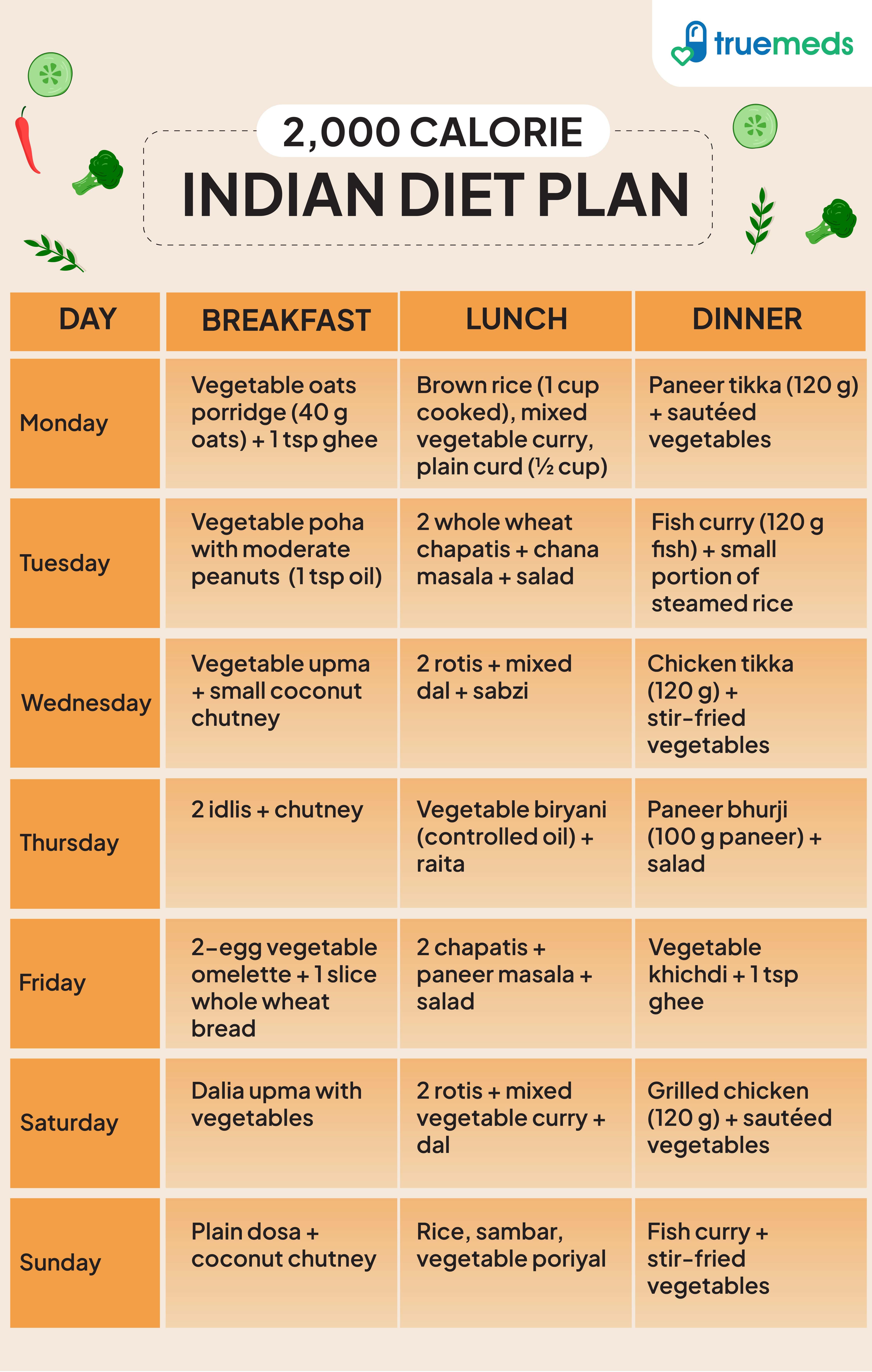
How to Get 2,000 Calories Per Day: Weekly Breakdown
The meal plan below outlines a practical day-by-day guide on how to consume 2,000 calories per day through balanced Indian meals. Each day provides approximately 1,950–2,000 kcal, distributed across breakfast, lunch, dinner, and snacks, with built-in adjustment options for days when your energy needs are slightly higher or lower. Individual calorie requirements may vary, which is why you should consult your dietitian if you need a personalised plan.
Monday (~1980 kcal)
- Breakfast (400 kcal): Vegetable oats porridge (50 g oats) + 2 tsp ghee
- Lunch (580 kcal): Brown rice (1 cup cooked), mixed vegetable curry, plain curd (½ cup)
- Dinner (540 kcal): Paneer tikka (120 g) + sautéed vegetables
- Snacks (460 kcal): Apple (80 kcal), roasted chana (30 g – 120 kcal), almonds (10–12 – 120 kcal), plain milk (2 cups – 140 kcal)
- Adjustment option: Add ½ cup extra vegetables or 1 tbsp curd if intake feels low (+20–30 kcal)
Tuesday (~1970 kcal)
- Breakfast (360 kcal): Vegetable poha (moderate peanuts, 1 tsp oil)
- Lunch (590 kcal): 2 whole wheat chapatis + chana masala + salad
- Dinner (590 kcal): Fish curry (120 g fish) + a slightly larger portion of steamed rice
- Snacks (430 kcal): Banana (100 kcal), roasted makhana (25 g – 90 kcal), plain curd (½ cup – 80 kcal), peanuts (15 g – 80 kcal), 1 orange (≈80 kcal)
- Adjustment option: Add 1 extra fruit (orange/guava) or slightly increase the intake of rice at dinner (+40–60 kcal)
Wednesday (~1990 kcal)
- Breakfast (370 kcal): Vegetable upma (1 cup cooked) + small coconut chutney (2 tbsp)
- Lunch (580 kcal): 2 rotis + mixed dal + sabzi
- Dinner (550 kcal): Chicken tikka (120 g) + stir-fried vegetables
- Snacks (490 kcal): Fruit chaat (120 kcal), roasted chana (30 g – 120 kcal), unsweetened lassi (2 cups – 200 kcal), 2 dates (≈50 kcal)
- Adjustment option: Add 1 tsp ghee to lunch (+45 kcal).
Thursday (~1950 kcal)
- Breakfast (450 kcal): 3 idlis + chutney + sambar
- Lunch (600 kcal): Vegetable biryani (controlled oil) + raita
- Dinner (540 kcal): Paneer bhurji (100 g paneer) + salad
- Snacks (360 kcal): Banana (100), cashews (10–12 – 90 kcal), roasted makhana (25 g – 90 kcal), plain milk (1 cup – 80 kcal)
- Adjustment option: Increase raita or sabzi portion slightly (+30–50 kcal)
Friday (~1980 kcal)
- Breakfast (360 kcal): 2-egg vegetable omelette + 1 slice whole wheat bread
- Lunch (580 kcal): 2 chapatis + paneer masala + salad
- Dinner (680 kcal): Vegetable khichdi (1½ cups) + 1 tsp ghee + 1 cup plain curd
- Snacks (360 kcal): Apple (80 kcal), plain curd (½ cup – 80 kcal), almonds (10–12 – 120), small jaggery piece (≈80 kcal)
- Adjustment option: Add ½ cup of dal or vegetable soup (+50–70 kcal)
Saturday (~1960 kcal)
- Breakfast (370 kcal): Dalia upma with vegetables
- Lunch (580 kcal): 2 rotis + mixed vegetable curry + dal
- Dinner (600 kcal): Grilled chicken (150 g) + sautéed vegetables
- Snacks (410 kcal): Fruit bowl (120 kcal), roasted peanuts (30 g – 160 kcal), buttermilk (1 cup – 60 kcal), 2 dates (≈70 kcal)
- Adjustment option: Slightly increase dal or chicken portion (+40–60 kcal)
Sunday (~1950–1980 kcal)
- Breakfast (350 kcal): Plain dosa + coconut chutney
- Lunch (600 kcal): Rice, sambar, vegetable poriyal
- Dinner (540 kcal): Fish curry + stir-fried vegetables
- Snacks (360 kcal): Banana (100 kcal), plain curd (½ cup) + 1 tsp honey (≈120 kcal), pistachios (15 – 80 kcal), roasted makhana (25 g – 60 kcal)
- Adjustment option: Add ½ cup extra rice or poriyal at lunch (+80–100 kcal)
If daily intake feels low or higher energy needs are present, add one of the following:
- 1 extra teaspoon of oil or ghee in any meal (~45 kcal), OR
- ½ cup extra cooked rice or dal (~80–100 kcal), OR
- 1 additional fruit (~50–70 kcal)
This keeps daily intake within the 1950–2050 kcal range without altering meal balance.
This sample meal plan is for general informational purposes only and is not a substitute for medical or nutritional advice. Individual calorie and dietary needs vary. Consult a qualified healthcare professional before making dietary changes.
Foods to avoid in a 2,000-calorie Indian diet
When following this diet, it's crucial to limit or avoid certain foods to maintain a balanced intake of nutrients[1].
- Processed foods like packaged snacks should be minimised due to their high calorie and sodium content[5].
- Sugary snacks and excess fats from sources like fried foods or high-sugar desserts can disrupt calorie balance and may contribute to health issues[1].
- Refined grains should be replaced with whole grains to ensure adequate fibre and nutrient intake[2].
By being mindful of these foods to avoid, you can better adhere to the meal plan and achieve your health goals.
How to adjust portion sizes for a 2,000-calorie meal plan
Adjusting portion sizes is key to maintaining a balanced daily diet[2].
- Start by measuring food portions using a food scale or measuring cups to ensure accuracy[6].
- Eat whole grains like brown rice and whole wheat roti instead of refined grains, and opt for lean proteins such as chicken or fish.
- Limit high-calorie sauces and use herbs for flavour instead.
- Finally, control the quantity of nuts and seeds due to their high calorie density.
Consult a healthcare provider or a registered dietitian for personalised portion guidance.
By making these simple adjustments to your portion sizes, you can effectively manage your calorie intake while still enjoying a variety of nutritious foods.
Importance of hydration in a 2,000-calorie diet
Staying hydrated is essential when following a 2,000-calorie diet plan[7]. Here are some reasons why:
- Adequate fluid intake may support physical performance, energy levels, and normal cognitive function throughout the day.
- Maintaining hydration is also associated with regular urine output, with pale yellow urine often used as a general indicator of sufficient hydration. Urine colour may vary due to supplements or medical conditions.
- According to the ICMR-NIN Dietary Guidelines for Indians (2024), a healthy adult should drink about eight glasses (approximately 2 litres) of water, including beverages, each day. Fluid requirements may increase during hot weather, prolonged physical activity, or other conditions that increase fluid loss.
- While water is typically recommended as the primary source of fluids, other beverages and water-rich foods, such as fruits, can also contribute to overall daily fluid intake.
By incorporating these hydration tips into your 2,000-calorie Indian diet plan, you can support your overall health and well-being.
When to Seek Medical Advice
Consult a doctor or a registered dietitian before following this meal plan if you:
- Have diabetes, kidney disease, liver disease, heart disease, or any other medical condition that requires a specialised diet.
- Are pregnant, breastfeeding, recovering from an illness or surgery, or have increased nutritional requirements.
- Need a personalised calorie intake for weight loss, weight gain, sports performance, or managing a specific health condition.
- Experience persistent fatigue, unintended weight changes, digestive problems, or difficulty meeting your nutritional needs despite following a balanced diet.
FAQs
What is a 2000-calorie Indian diet plan?
It is a balanced meal plan that includes whole grains, lean proteins, vegetables, and healthy fats, providing 2000 calories per day.
How can I customise a 2000-calorie diet for my dietary needs?
You can customise a this diet plan by adjusting macronutrient ratios, swapping ingredients (e.g., tofu for paneer), or modifying portion sizes while maintaining calorie goals.
Can I lose weight on a 2000-calorie diet?
Yes, you can lose weight on a 2,000-calorie diet if it creates a calorie deficit based on your body's needs, activity level, and metabolism.
Are there any foods I should avoid while following a 2000-calorie diet plan?
Limit processed snacks, sugary drinks, and high-fat fried foods; instead, prioritise whole grains, lean proteins, and vegetables.
How can I adjust my portion sizes on a 2000-calorie diet?
To adjust portion sizes, use measuring tools, prioritise protein and vegetables, and reduce calorie-dense foods whilst tracking your intake.
What happens if you eat 2,000 calories in one day?
Eating 2,000 calories in a day is generally appropriate for many adults, but its effect depends on your individual energy needs. If it matches your daily calorie requirement, it may help maintain your weight. Consistently eating more or fewer calories than needed may lead to weight changes over time.
Is 2,000 calories a day a lot for a woman?
Not necessarily. Whether this calorie intake is appropriate depends on factors such as age, body weight, height, physical activity, and overall health. Some women may maintain their weight on this intake, while others may require fewer or more calories to meet their nutritional needs.
What to eat for 2,000 calories per day?
A balanced meal plan should include whole grains, pulses, lean proteins, milk or dairy products, fruits, vegetables, nuts, seeds, and healthy fats. Choosing a variety of nutrient-dense foods in appropriate portions helps meet your daily energy and nutrient requirements.
Which food has the highest calories?
Foods rich in fats, such as cooking oils, ghee, butter, nuts, seeds, and nut butters, are among the most calorie-dense. While these foods provide essential nutrients, they should be consumed in moderation as part of a balanced and varied diet.
Medical Disclaimer
This article is for informational purposes only and does not constitute medical advice. The information provided should not be used for diagnosing or treating health conditions. Always consult a qualified healthcare provider for diagnosis, treatment, and personalised medical advice. Do not disregard professional medical advice or delay seeking it because of information found in this article. If you have a medical emergency, contact your doctor or emergency services immediately.
References
World Health Organisation. (2020, April 29). Healthy diet. World Health Organisation. https://www.who.int/news-room/fact-sheets/detail/healthy-diet
National Institute of Nutrition. (2024). Dietary guidelines for Indians. National Institute of Nutrition, Indian Council of Medical Research. https://www.nin.res.in/dietaryguidelines/pdfjs/locale/DGI07052024P.pdf
Cena, H., & Calder, P. C. (2020). Defining a Healthy Diet: Evidence for The Role of Contemporary Dietary Patterns in Health and Disease. Nutrients, 12(2), 334. https://doi.org/10.3390/nu12020334
Fats in foods. (n.d.). www.heart.org. https://www.heart.org/en/healthy-living/healthy-eating/eat-smart/fats/fats-in-foods